
VS

Ford Transit Connect vs Ford Transit Courier comparison

Compare performance (150 HP vs 136 HP), boot space and price (26,700 £ vs 18,900 £ ) at a glance. Find out which car is the better choice for you – Ford Transit Connect or Ford Transit Courier?

Ford Transit Connect vs Ford Transit Courier: Key differences

Ford Transit Connect

  • very slightly more power
  • considerably more efficient

Ford Transit Courier

  • significantly cheaper
  • clearly more electric range
  • visibly lighter
Transit Connect

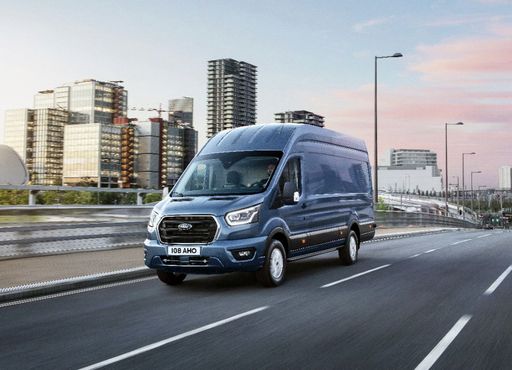
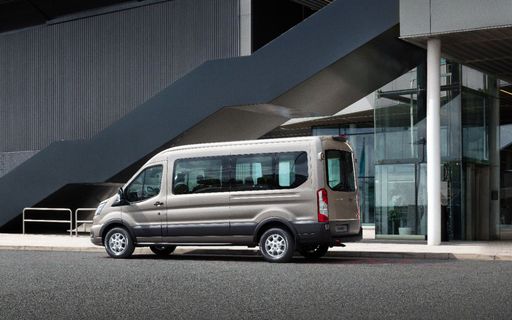
The Ford Transit Connect and Ford Transit Courier are two prominent additions to the Ford commercial vehicle lineup, each designed to cater to the needs of professionals seeking versatility and reliability. This comparison will delve into their technical specifications, innovative features, and practical applications to help you determine which vehicle is the better fit for your business needs.
Transit Courier

Body Type and Design

Both the Ford Transit Connect and Transit Courier are engineered as cargo vans, emphasizing functionality and robustness. The Transit Connect measures longer at 4,853 mm compared to the Courier's 4,344 mm. This size difference allows the Connect to offer a more spacious cargo area, making it ideal for businesses that require additional storage capacity for larger loads.

Transit Connect

Powertrain Options

The engine lineup showcases the diversity offered by both models. The Transit Connect provides choices between diesel and plug-in hybrid engines, with power outputs ranging from 102 to 150 HP. In contrast, the Transit Courier also offers a selection of petrol, diesel, and electric options, with power reaching up to 136 HP. Notably, the Courier features a fully electric variant with an impressive range of 293 km, appealing to companies aiming for greener operations.

Transit Courier

Transmission and Drive System

Both vehicles come with front-wheel drive and offer manual and automatic transmission options. The Transit Connect presents a dual-clutch automatic gearbox for a seamless driving experience, making it more responsive in various driving conditions. On the other hand, the Transit Courier also provides versatility with its array of transmission choices, enhancing user convenience.

Transit Connect

Performance Metrics

Acceleration and top speed are crucial performance metrics for these vans. The Transit Connect accelerates from 0 to 100 km/h in as little as 11.4 seconds, with a top speed of 175 km/h. Meanwhile, the Transit Courier matches these performance levels, although slightly less in acceleration yet competitive with top speeds reaching 125 km/h. Both vehicles are designed to navigate urban environments effectively, providing efficient performance when needed.

Transit Courier

Torque and Power Delivery

Torque plays a significant role in load-carrying capabilities. The Transit Connect provides torque outputs ranging from 280 to 350 Nm, ensuring it can handle heavier loads effectively. The Transit Courier, while slightly lower in torque at 170 to 290 Nm, still presents competent performance for most small to medium payloads, making it suitable for various business needs.

Dimensions and Capacity

Size matters when it comes to the interior and cargo space. The Transit Connect’s larger dimensions afford it a greater cargo volume, which is essential for businesses requiring extensive storage. However, the Transit Courier's compact size is advantageous for urban driving and parking, making it a practical choice for city-based trades.

Innovative Features

Both vehicles are equipped with advanced technology and safety features, including driver assistance systems that enhance overall safety. The Transit Courier, particularly in its latest model year, incorporates state-of-the-art connectivity options and the latest infotainment systems, essential for fleet management. The Transit Connect also includes innovative tech, focusing on improving driver comfort and efficiency in the workspace.

Conclusion: Which One is Right for You?

In summary, choosing between the Ford Transit Connect and Transit Courier ultimately hinges on your specific requirements. If you need more cargo space, higher power outputs, and a variety of engine options, the Transit Connect may be the ideal choice. Meanwhile, if you prioritize urban maneuverability, electric availability, and a more compact design, the Transit Courier could better suit your needs. Both vehicles uphold Ford's promise of reliability and efficiency, ensuring that whatever your choice, you won't be disappointed in your investment.

Here’s where it gets real: The technical differences in detail

Transit Connect

Costs and Efficiency:

Price and efficiency are key factors when choosing a car – and this is often where the real differences emerge.

Ford Transit Courier is significantly cheaper – starting at 18,900 £ , while the Ford Transit Connect costs 26,700 £ . That’s a price difference of around 7,803 £.

Fuel consumption also shows a difference: the Ford Transit Connect uses 0.5 L/100km and is considerably more efficient than the Ford Transit Courier with 5.1 L/100km. The difference is about 4.6 L/100km.

As for electric range, the Ford Transit Courier offers clearly more range – reaching up to 293 km, about 175 km more than the Ford Transit Connect.

Transit Courier

Engine and Performance:

Under the bonnet, it becomes clear which model is tuned for sportiness and which one takes the lead when you hit the accelerator.

When it comes to engine power, the Ford Transit Connect offers very slightly more power – delivering 150 HP compared to 136 HP. That’s roughly 14 HP more horsepower.

There’s also a difference in torque: the Ford Transit Connect delivers a bit more torque with 350 Nm compared to 290 Nm. That’s about 60 Nm more.

Transit Connect

Space and Everyday Use:

Cabin size, boot volume and payload all play a role in everyday practicality. Here, comfort and flexibility make the difference.

Both vehicles offer seating for 5 people.

In terms of curb weight, Ford Transit Courier is visibly lighter – 1,230 kg compared to 1,477 kg. The difference is around 247 kg.

For maximum load capacity, the Ford Transit Connect offers noticeably more capacity – up to 3,700 L, about 800 L more than the Ford Transit Courier.

When it comes to payload, the Ford Transit Connect carries a bit more – 792 kg compared to 710 kg. That’s a difference of about 82 kg.

Who wins the race in the data check?

The Ford Transit Connect is far ahead overall in the objective data comparison.
This result only shows which model scores more points on paper – not which of the two cars feels right for you.

from £26,700
Transit Connect

Ford Transit Connect

  • Engine Type : Diesel, Plugin Hybrid
  • Transmission : Manuel, Automatic
  • Drive Type : Front-Wheel Drive, All-Wheel Drive
  • Power HP : 102 - 150 HP
  • Consumption L/100km : 0.5 - 5.8 L/100km
  • Electric Range : 118 km
Ford Transit Connect
Ford Transit Courier

Costs and Consumption

View detailed analysis

Engine and Performance

View detailed analysis

Dimensions and Body

View detailed analysis

Ford Transit Connect

The Ford Transit Connect is the go-to compact workhorse for urban professionals who need cargo space without driving a full-size van. It balances practicality and everyday manners with clever storage ideas and a surprisingly comfortable ride, making it a sensible choice for small businesses and families who value function over flair.

details

Ford Transit Courier

The Ford Transit Courier is a compact, city-friendly van that hides surprising practicality behind a neat, no-nonsense exterior. Ideal for small businesses and urban runs, it pairs easy maneuverability and clever load solutions with a colleague-friendly driving position — proof that you don't need a giant van to get big jobs done.

details
Ford Transit Connect
Ford Transit Courier

Costs and Consumption

Price
26,700 - 41,500 £
Price
18,900 - 31,100 £
Consumption L/100km
0.5 - 5.8 L/100km
Consumption L/100km
5.1 - 6.9 L/100km
Consumption kWh/100km
-
Consumption kWh/100km
17.1 kWh/100km
Electric Range
118 km
Electric Range
293 km
Battery Capacity
19.7 kWh
Battery Capacity
-
co2
11 - 153 g/km
co2
0 - 158 g/km
Fuel tank capacity
32 - 50 L
Fuel tank capacity
44 - 45 L

Dimensions and Body

Body Type
Cargo Van
Body Type
Cargo Van
Seats
2 - 5
Seats
2 - 5
Doors
4
Doors
3 - 4
Curb weight
1,477 - 1,866 kg
Curb weight
1,230 - 1,549 kg
Trunk capacity
-
Trunk capacity
-
Length
4,500 - 4,868 mm
Length
4,337 - 4,344 mm
Width
1,855 mm
Width
1,800 - 1,813 mm
Height
1,856 - 1,860 mm
Height
1,827 - 1,839 mm
Max trunk capacity
2,500 - 3,700 L
Max trunk capacity
2,900 L
Payload
602 - 792 kg
Payload
529 - 710 kg

Engine and Performance

Engine Type
Diesel, Plugin Hybrid
Engine Type
Petrol, Diesel, Electric
Transmission
Manuel, Automatic
Transmission
Manuel, Automatic
Transmission Detail
Manual Gearbox, Dual-Clutch Automatic
Transmission Detail
Manual Gearbox, Dual-Clutch Automatic, Reduction Gearbox
Drive Type
Front-Wheel Drive, All-Wheel Drive
Drive Type
Front-Wheel Drive
Power HP
102 - 150 HP
Power HP
100 - 136 HP
Acceleration 0-100km/h
11.4 - 13.5 s
Acceleration 0-100km/h
-
Max Speed
175 - 186 km/h
Max Speed
-
Torque
280 - 350 Nm
Torque
170 - 290 Nm
Number of Cylinders
4
Number of Cylinders
3 - 4
Power kW
75 - 110 kW
Power kW
74 - 100 kW
Engine capacity
1,498 - 1,968 cm3
Engine capacity
998 - 1,499 cm3

General

Model Year
2,024 - 2,025
Model Year
2,023 - 2,025
CO2 Efficiency Class
E, B
CO2 Efficiency Class
E, D, A, F
Brand
Ford
Brand
Ford
DriveDuel uses data analysis and artificial intelligence to evaluate vehicle data and create content. Content is regularly reviewed and improved. The displayed prices are estimates based on German list prices, adjusted to the respective country’s VAT. Country-specific registration taxes are not included. This information is not legally binding.








