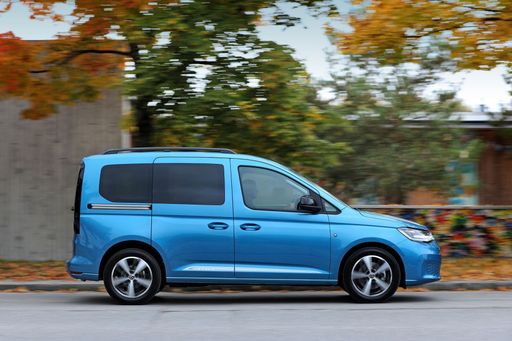
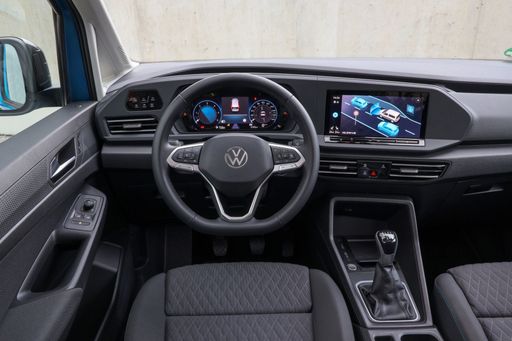
@ Ford Motor Company / Ford Media Center
@ Volkswagen AG / VW Media
VS

Ford Transit Courier vs VW Caddy – Which model is better for everyday use?

Two cars, one duel: Ford Transit Courier meets VW Caddy.
Which one wins in performance, efficiency and value for money? Find out now!

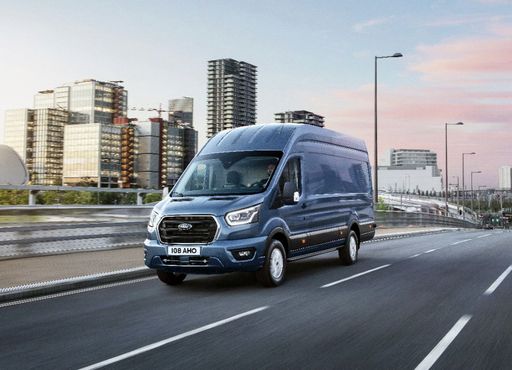
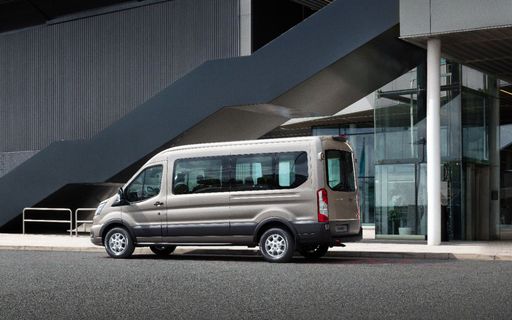
Transit Courier @ Ford Motor Company / Ford Media Center

When Functionality Meets Innovation: Ford Transit Courier vs. VW Caddy

The compact van segment continues to cater to businesses and individuals seeking a fine balance between functionality and innovation. Two stalwarts in this category, the Ford Transit Courier and the Volkswagen Caddy, have risen to prominence. Both models offer distinct features and advantages, making them worthy contenders for anyone considering a reliable cargo solution.

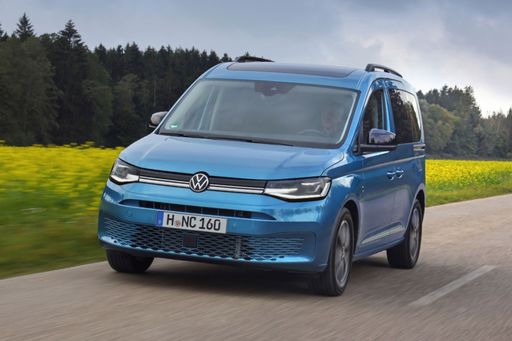
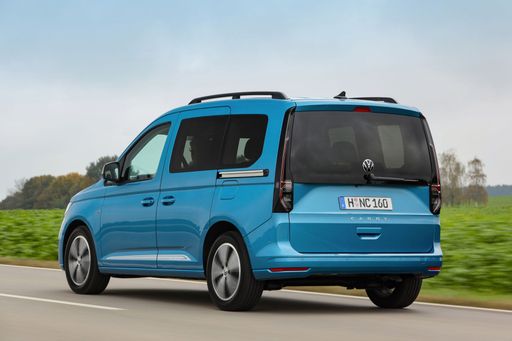
Caddy @ Volkswagen AG / VW Media

Engine and Performance: Power Meets Efficiency

The Ford Transit Courier is available in petrol, diesel, and an electric variant, showcasing versatility in meeting different performance needs. The models harness between 100 to 136 HP, with torque maxing out at 290 Nm in its diesel version. Notably, the electric model boasts a commendable range of 293 km, supplemented by a 43.5 kWh battery capacity. It's all about choice with the Transit Courier, allowing users to adapt their vehicle to specific needs, from a manual to an automatic gearbox.

Conversely, the VW Caddy offers robust petrol and diesel engines, and a plug-in hybrid option. With power ranging from 102 to 150 HP, and torque up to 320 Nm, the Caddy offers punchy performance. Although its electric range is significantly lesser at approximately 119-121 km, the Caddy remains a solid choice for those favoring hybrid efficiency. VW’s implementation of a dual-clutch automatic transmission provides a smooth driving experience, particularly for those delving into the minutiae of varied driving conditions.


Transit Courier @ Ford Motor Company / Ford Media Center

Dimensions and Load Capacity: Making Space for Utility

Size matters when balancing urban maneuverability and cargo capacity. The Ford Transit Courier measures around 4344 mm in length, 1813 mm in width, and up to 1839 mm in height. With options for two or five seats, the Transit Courier can adapt to different user needs, all while maintaining a compact footprint. Its 45-liter fuel tank keeps it running longer between stops.

In comparison, the VW Caddy carries a longer presence at 4500 mm, potentially extending to 4853 mm depending on the model variation. The height ranges up to 1860 mm, storing a large interior fit for hauling needs. With a payload capacity that can reach up to 710 kg, the Caddy fits the bill for heavier loads while offering seating configurations accommodating five to seven passengers.

Caddy @ Volkswagen AG / VW Media

Technological Innovation and Features

Both models prioritize technological innovation. The Ford Transit Courier, with its electric variant, exemplifies Ford’s commitment to sustainable driving. Its impressive electric range can significantly reduce operational costs and curb emissions, evident from its CO2 efficiency class rated at “A”. This aligns with modern environmental sensibilities, making it a forward-thinking choice for eco-conscious users.

The VW Caddy integrates modern technology with practicality, offering an advanced driver assistance suite to enhance safety and convenience. It caters to various preferences through its extensive CO2 ratings, from efficient hybrid engines to robust petrol and diesel offerings. This multi-faceted approach ensures the Caddy remains relevant across several sectors, from small businesses to larger enterprises.

Transit Courier @ Ford Motor Company / Ford Media Center

Final Verdict: Choosing the Right Partner

Ultimately, the choice between the Ford Transit Courier and VW Caddy boils down to specific needs. The Transit Courier stands out for those seeking eco-friendly options and versatility in powertrains. Meanwhile, the VW Caddy appeals to individuals who prioritize capacity and hybrid alternatives without compromising performance. Both models reflect their manufacturer's focus on innovation, practicality, and reliability, promising to deliver value in every mile they cover.

Here’s where it gets real: The technical differences in detail

Caddy @ Volkswagen AG / VW Media

Costs and Efficiency:

Looking at overall running costs, both models reveal some interesting differences in everyday economy.

Ford Transit Courier has a convincingly advantage in terms of price – it starts at 18900 £, while the VW Caddy costs 27800 £. That’s a price difference of around 8838 £.

Fuel consumption also shows a difference: VW Caddy manages with 0.50 L and is therefore convincingly more efficient than the Ford Transit Courier with 5.10 L. The difference is about 4.60 L per 100 km.

As for range, the Ford Transit Courier performs significantly better – achieving up to 293 km, about 172 km more than the VW Caddy.

Engine and Performance:

Power, torque and acceleration say a lot about how a car feels on the road. This is where you see which model delivers more driving dynamics.

When it comes to engine power, the VW Caddy has a minimal edge – offering 150 HP compared to 136 HP. That’s roughly 14 HP more horsepower.

There’s also a difference in torque: VW Caddy pulls hardly perceptible stronger with 320 Nm compared to 290 Nm. That’s about 30 Nm difference.

Space and Everyday Use:

Cabin size, boot volume and payload all play a role in everyday practicality. Here, comfort and flexibility make the difference.

Seats: VW Caddy offers noticeable more seating capacity – 7 vs 5.

In curb weight, Ford Transit Courier is noticeable lighter – 1230 kg compared to 1575 kg. The difference is around 345 kg.

In maximum load capacity, the VW Caddy performs noticeable better – up to 3700 L, which is about 800 L more than the Ford Transit Courier.

Maximum payload is identical – both can carry up to 710 kg.

Who comes out on top?

Overall, the VW Caddy shows itself to be outperforms in nearly all aspects and secures the title of DriveDuel Champion.
It convinces with the more balanced overall package and proves to be the more versatile choice for everyday use.

from about £27,800
Caddy @ Volkswagen AG / VW Media

VW Caddy

  • Engine Type : Petrol, Diesel, Plugin Hybrid
  • Transmission : Manuel, Automatic
  • Drive Type : Front-Wheel Drive, All-Wheel Drive
  • Power HP : 102 - 150 HP
  • Consumption L/100km : 0.5 - 6.9 L
  • Electric Range : 116 - 121 km

Ford Transit Courier

The Ford Transit Courier is a compact and versatile van that offers practicality and efficiency for urban driving. With its spacious interior and smart storage solutions, it caters well to the needs of small businesses and delivery drivers. The vehicle's design combines functionality with a modern aesthetic, making it a popular choice in the light commercial vehicle market.

details

VW Caddy

The VW Caddy is the Swiss-army knife of compact vans — practical, surprisingly refined, and ready to swap a weekend adventure for a grocery run without breaking a sweat. It’s user-friendly, comfortable enough for daily driving, and sensible for buyers who want utility with a dash of style and no drama.

details
Ford Transit Courier
VW Caddy
Transit Courier @ Ford Motor Company / Ford Media Center
Caddy @ Volkswagen AG / VW Media

Costs and Consumption

Price
18900 - 31100 £
Price
27800 - 45900 £
Consumption L/100km
5.1 - 6.9 L
Consumption L/100km
0.5 - 6.9 L
Consumption kWh/100km
17.10 kWh
Consumption kWh/100km
-
Electric Range
293 km
Electric Range
116 - 121 km
Battery Capacity
43.50 kWh
Battery Capacity
19.70 kWh
co2
0 - 158 g/km
co2
10 - 165 g/km
Fuel tank capacity
44 - 45 L
Fuel tank capacity
50 L

Dimensions and Body

Body Type
Cargo Van
Body Type
High Roof Estate
Seats
2 - 5
Seats
5 - 7
Doors
3 - 5
Doors
5
Curb weight
1230 - 1549 kg
Curb weight
1575 - 1998 kg
Trunk capacity
-
Trunk capacity
-
Length
4337 - 4344 mm
Length
4500 - 4853 mm
Width
1800 - 1813 mm
Width
1855 mm
Height
1819 - 1839 mm
Height
1819 - 1860 mm
Max trunk capacity
2400 - 2900 L
Max trunk capacity
2556 - 3700 L
Payload
529 - 710 kg
Payload
501 - 710 kg

Engine and Performance

Engine Type
Petrol, Diesel, Electric
Engine Type
Petrol, Diesel, Plugin Hybrid
Transmission
Manuel, Automatic
Transmission
Manuel, Automatic
Transmission Detail
Manual Gearbox, Dual-Clutch Automatic, Reduction Gearbox
Transmission Detail
Manual Gearbox, Dual-Clutch Automatic
Drive Type
Front-Wheel Drive
Drive Type
Front-Wheel Drive, All-Wheel Drive
Power HP
100 - 136 HP
Power HP
102 - 150 HP
Acceleration 0-100km/h
-
Acceleration 0-100km/h
11.4 - 14 s
Max Speed
-
Max Speed
173 - 186 km/h
Torque
170 - 290 Nm
Torque
220 - 320 Nm
Number of Cylinders
3 - 4
Number of Cylinders
4
Power kW
74 - 100 kW
Power kW
75 - 110 kW
Engine capacity
998 - 1499 cm3
Engine capacity
1498 - 1968 cm3

General

Model Year
2023 - 2025
Model Year
2024
CO2 Efficiency Class
E, D, A, F
CO2 Efficiency Class
E, F, B
Brand
Ford
Brand
VW
What drive types are available for the Ford Transit Courier?

The Ford Transit Courier is available as Front-Wheel Drive.

The prices and data displayed are estimates based on German list prices and may vary by country. This information is not legally binding.