VS

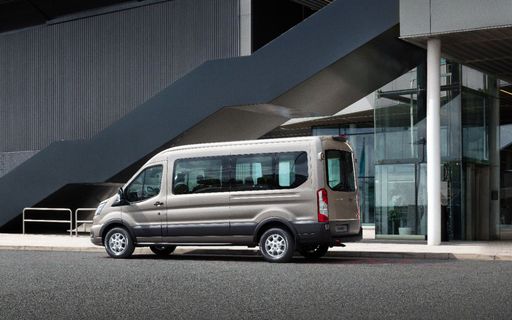
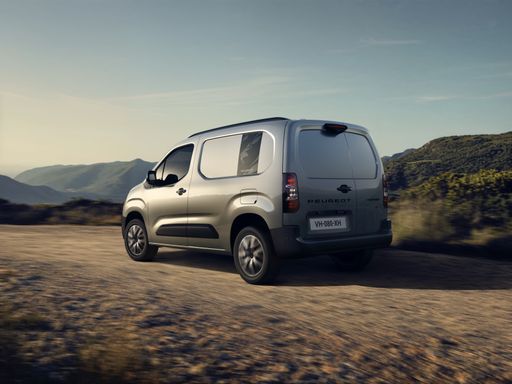
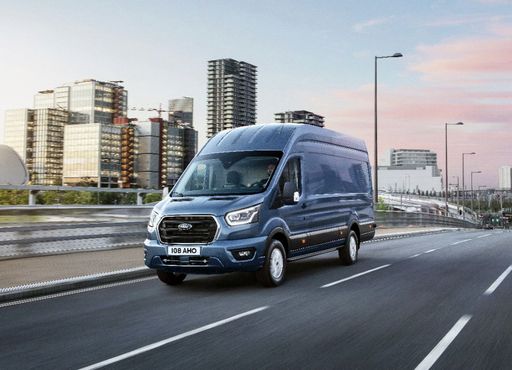
Ford Transit Connect vs Peugeot Partner comparison

Compare performance (122 HP vs 136 HP), boot space and price (30,800 £ vs 26,100 £ ) at a glance. Find out which car is the better choice for you – Ford Transit Connect or Peugeot Partner?

Ford Transit Connect vs Peugeot Partner: Key differences

Ford Transit Connect

details

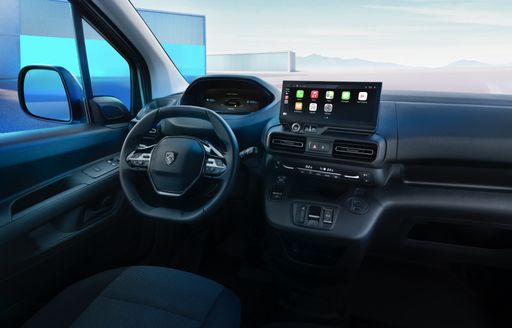
Peugeot Partner

  • moderately cheaper
  • moderately more power
  • barely quicker 0–100 km/h
  • moderately lighter
details

By Achim Sedelmaier

Transit Connect

Ford Transit Connect vs. Peugeot Socio: The Battle of the Cargo Vans

In the rapidly evolving world of utility vehicles, two stalwarts stand out for offering versatility and innovation: the Ford Transit Connect and the Peugeot Socio. With the 2024 models, both manufacturers continue to push boundaries in terms of power, efficiency, and utility. This article delves into the specifics, comparing their technical specs and innovations to help you decide which van fits your needs better.
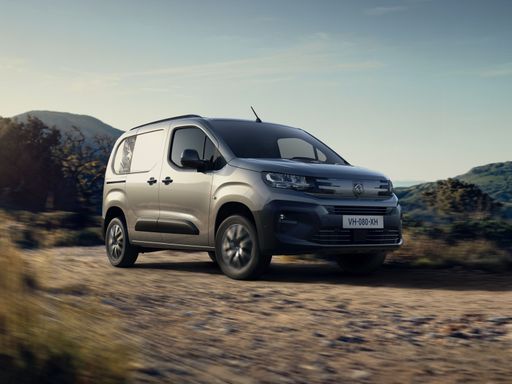
Partner

Engine and Powertrain Options

The Ford Transit Connect offers a diverse range of engine types, catering to varying needs. Buyers can choose between a diesel engine or a plug-in hybrid. The diesel variants range from 102 to 150 HP, providing sufficient power across different versions, while the plug-in hybrid offers a perfect blend of efficiency and performance.

On the other hand, the Peugeot Socio showcases its commitment to green technology with options in electric, diesel, and petrol engines. The electric version delivers an impressive 136 HP with an equivalent power output of 100 kW, and an electric range of 354 km, making it an ideal choice for eco-conscious drivers.

Transit Connect

Transmission and Drive Type

Both vehicles offer front-wheel drive, promoting maneuverability and efficiency. The Transit Connect provides both manual and dual-clutch automatic transmissions, catering to drivers who prefer either. Conversely, the Socio includes manual and automatic gearbox options, along with a specialized reduction gearbox for electric models, further enhancing driving dynamics.

Partner

Performance and Efficiency

In terms of acceleration, the Ford Transit Connect varies between 11.4 and 13.5 seconds from 0 to 100 km/h, which is respectable for a cargo van. Top speed reaches up to 186 km/h, which is notable for the segment. Torque ranges from 280 to 350 Nm, offering robust pulling power.

The Socio offers similar acceleration capabilities, clocking 0 to 100 km/h times between 11.2 and 14.8 seconds. However, it distinguishes itself with its electric variant that provides 17.4 kWh/100km consumption, emphasizing efficiency. The highest speed achievable with petrol models is 184 km/h. Peugeot's torque options range from 205 to 300 Nm, ensuring competent performance under load.

Transit Connect

Capacity and Space

Flexibility being a key factor, the Transit Connect can accommodate between 2 to 5 seats with a generous cargo capacity highlighted by its body length that ranges up to 4868 mm. Its fuel tank capacity stands at 50 liters, balancing long hauls and refueling stops.

The Socio outdoes its competitor in trunk space, boasting a trunk capacity of 1800 liters. Coupled with seating for up to 5 people and payloads reaching as high as 991 kg, this Peugeot van ensures you’re prepared for extensive cargo loads.

Partner

Conclusion: Choose What Fits Yours Needs

In summary, both the Ford Transit Connect and the Peugeot Socio cater to the evolving needs of the modern driver, supporting sustainability, performance, and practicality. The Transit Connect shines with its hybrid innovations and a breadth of diesel options, while the Socio stands out with its electric model's low emissions and substantial cargo capacity. Your choice will hinge on whether efficiency or traditional powertrain dynamics are more aligned with your operational demands. Regardless of your decision, both vans deliver robust solutions for today's transportation and commercial needs.

Here’s where it gets real: The technical differences in detail

Transit Connect

Costs and Efficiency:

When it comes to price and running costs, the biggest differences usually appear. This is often where you see which car fits your budget better in the long run.

Peugeot Partner is moderately cheaper – starting at 26,100 £ , while the Ford Transit Connect costs 30,800 £ . That’s a price difference of around 4,692 £.

Partner

Engine and Performance:

Power, torque and acceleration say a lot about how a car feels on the road. This is where you see which model delivers more driving dynamics.

When it comes to engine power, the Peugeot Partner offers moderately more power – delivering 136 HP compared to 122 HP. That’s roughly 14 HP more horsepower.

When accelerating from 0 to 100 km/h, the Peugeot Partner is barely quicker – completing the sprint in 11.2 s, while the Ford Transit Connect takes 11.4 s. That’s about 0.2 s quicker.

There’s also a difference in torque: the Ford Transit Connect delivers only slightly more torque with 320 Nm compared to 300 Nm. That’s about 20 Nm more.

Transit Connect

Space and Everyday Use:

Whether family car or daily driver – which one offers more room, flexibility and comfort?

Seats: Peugeot Partner offers more seats – 3 vs 2.

In terms of curb weight, Peugeot Partner is moderately lighter – 1,371 kg compared to 1,575 kg. The difference is around 204 kg.

When it comes to payload, the Peugeot Partner carries only slightly more – 781 kg compared to 780 kg. That’s a difference of about 1 kg.

Who wins the race in the data check?

The Peugeot Partner holds a solid overall lead in the objective data comparison.
This result only shows which model scores more points on paper – not which of the two cars feels right for you.

from £26,100
Partner

Peugeot Partner

  • Engine Type : Electric, Diesel
  • Transmission : Automatic, Manuel
  • Drive Type : Front-Wheel Drive
  • Power HP : 102 - 136 HP
  • Consumption L/100km : 5.2 - 5.4 L/100km
  • Consumption kWh/100km : 17.4 kWh/100km
  • Electric Range : 354 km
Ford Transit Connect
Peugeot Partner

Costs and Consumption

View detailed analysis

Engine and Performance

View detailed analysis

Dimensions and Body

View detailed analysis

Ford Transit Connect

The Ford Transit Connect is the go-to compact workhorse for urban professionals who need cargo space without driving a full-size van. It balances practicality and everyday manners with clever storage ideas and a surprisingly comfortable ride, making it a sensible choice for small businesses and families who value function over flair.

details

Peugeot Partner

The Peugeot Partner is a no-nonsense workhorse that doubles as a surprisingly comfy family mover, combining clever storage solutions with an easy-to-live-in cabin. It won’t win any beauty contests, but for small businesses and active families it’s practical, economical and utterly reliable when the day gets busy.

details
Ford Transit Connect
Peugeot Partner

Costs and Consumption

Price
30,800 - 35,300 £
Price
26,100 - 33,500 £
Consumption L/100km
-
Consumption L/100km
5.2 - 5.4 L/100km
Consumption kWh/100km
-
Consumption kWh/100km
17.4 kWh/100km
Electric Range
-
Electric Range
354 km
Battery Capacity
-
Battery Capacity
-
co2
-
co2
0 - 143 g/km
Fuel tank capacity
-
Fuel tank capacity
-

Dimensions and Body

Body Type
Cargo Van
Body Type
Cargo Van
Seats
2
Seats
3
Doors
-
Doors
-
Curb weight
1,575 - 1,620 kg
Curb weight
1,371 - 1,674 kg
Trunk capacity
-
Trunk capacity
-
Length
-
Length
-
Width
1,855 mm
Width
1,848 mm
Height
-
Height
-
Max trunk capacity
-
Max trunk capacity
-
Payload
775 - 780 kg
Payload
645 - 781 kg

Engine and Performance

Engine Type
Diesel
Engine Type
Electric, Diesel
Transmission
Manuel
Transmission
Automatic, Manuel
Transmission Detail
Manual Gearbox
Transmission Detail
Reduction Gearbox, Manual Gearbox, Automatic Gearbox
Drive Type
All-Wheel Drive
Drive Type
Front-Wheel Drive
Power HP
122 HP
Power HP
102 - 136 HP
Acceleration 0-100km/h
11.4 - 11.8 s
Acceleration 0-100km/h
11.2 s
Max Speed
-
Max Speed
-
Torque
320 Nm
Torque
250 - 300 Nm
Number of Cylinders
4
Number of Cylinders
4
Power kW
90 kW
Power kW
75 - 100 kW
Engine capacity
1,968 cm3
Engine capacity
1,499 cm3

General

Model Year
2025
Model Year
2025
CO2 Efficiency Class
-
CO2 Efficiency Class
A, E
Brand
Ford
Brand
Peugeot
DriveDuel uses data analysis and artificial intelligence to evaluate vehicle data and create content. Content is regularly reviewed and improved. The displayed prices are estimates based on German list prices, adjusted to the respective country’s VAT. Country-specific registration taxes are not included. This information is not legally binding.