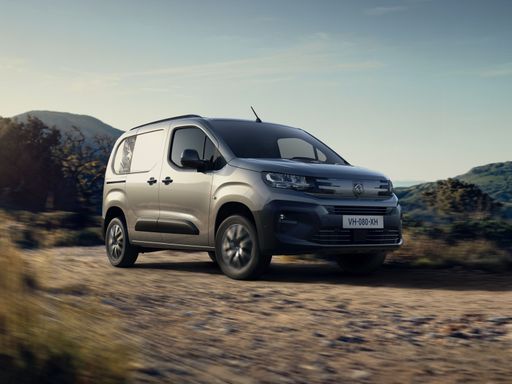
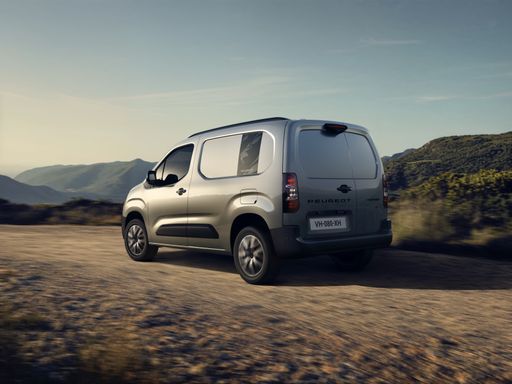
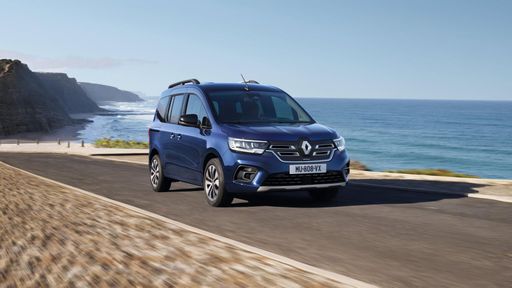
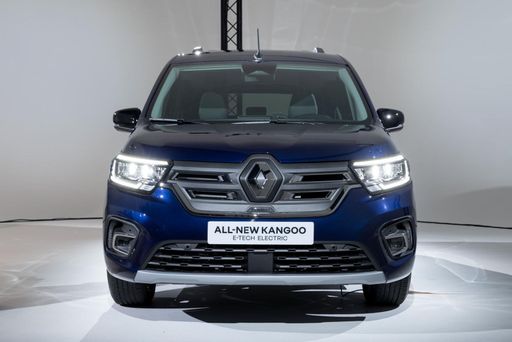
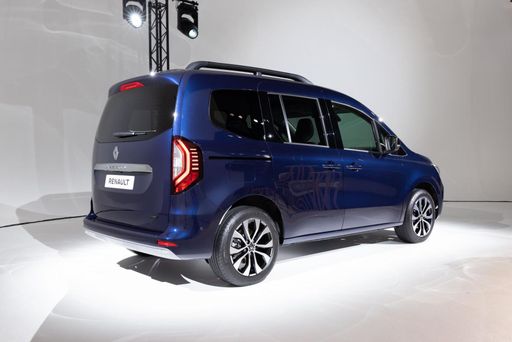
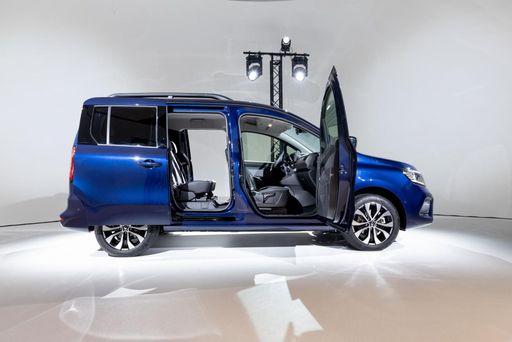
Compare performance (136 HP vs 130 HP), boot space and price (22400 £ vs 25700 £ ) at a glance. Find out which car is the better choice for you – Peugeot Partner or Renault Kangoo?
Price and efficiency are often the first things buyers look at. Here it becomes clear which model has the long-term edge – whether at the pump, the plug, or in purchase price.
Peugeot Partner has a slightly advantage in terms of price – it starts at 22400 £ , while the Renault Kangoo costs 25700 £ . That’s a price difference of around 3325 £.
Both cars consume an average of 5.20 L per 100 km – no difference here.
In terms of energy consumption, the advantage goes to the Peugeot Partner: with 17.40 kWh per 100 km, it’s to a small extent more efficient than the Renault Kangoo with 20.20 kWh. That’s a difference of about 2.80 kWh.
As for electric range, the Peugeot Partner performs to a small extent better – achieving up to 354 km, about 69 km more than the Renault Kangoo.
Under the bonnet, it becomes clear which model is tuned for sportiness and which one takes the lead when you hit the accelerator.
When it comes to engine power, the Peugeot Partner has a hardly perceptible edge – offering 136 HP compared to 130 HP. That’s roughly 6 HP more horsepower.
In acceleration from 0 to 100 km/h, the Peugeot Partner is hardly perceptible quicker – completing the sprint in 11.20 s, while the Renault Kangoo takes 11.60 s. That’s about 0.40 s faster.
In terms of top speed, the Peugeot Partner performs distinct better – reaching 183 km/h, while the Renault Kangoo tops out at 135 km/h. The difference is around 48 km/h.
There’s also a difference in torque: Peugeot Partner pulls barely noticeable stronger with 300 Nm compared to 270 Nm. That’s about 30 Nm difference.
Whether family car or daily driver – which one offers more room, flexibility and comfort?
Seats: Renault Kangoo offers evident more seating capacity – 7 vs 5.
In curb weight, Peugeot Partner is to a small extent lighter – 1329 kg compared to 1489 kg. The difference is around 160 kg.
In terms of boot space, the Peugeot Partner offers decisively more room – 1800 L compared to 950 L. That’s a difference of about 850 L.
In maximum load capacity, the Peugeot Partner performs evident better – up to 4000 L, which is about 950 L more than the Renault Kangoo.
When it comes to payload, Peugeot Partner evident takes the win – 991 kg compared to 610 kg. That’s a difference of about 381 kg.
The Peugeot Partner is decisively ahead in the objective data comparison.
This result only shows which model scores more points on paper – not which of the two cars feels right for you.
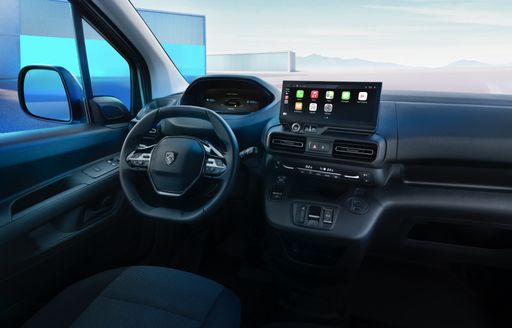
The Peugeot Partner is a no-nonsense workhorse that doubles as a surprisingly comfy family mover, combining clever storage solutions with an easy-to-live-in cabin. It won’t win any beauty contests, but for small businesses and active families it’s practical, economical and utterly reliable when the day gets busy.
detailsThe Renault Kangoo is the pragmatic chameleon of small vans, marrying van-like practicality with carlike comfort and a cheerful, friendly face that suits both family runs and workday hauls. It's sensible, versatile and annoyingly useful — easy to live with, cheap to run and clever where it counts, so you get more space and fewer compromises than the price suggests.
detailsCosts and Consumption |
|
|---|---|
|
Price
22400 - 33800 £
|
Price
25700 - 36200 £
|
|
Consumption L/100km
5.2 - 6.3 L
|
Consumption L/100km
5.2 - 7.4 L
|
|
Consumption kWh/100km
17.40 kWh
|
Consumption kWh/100km
20.2 - 21.5 kWh
|
|
Electric Range
354 km
|
Electric Range
278 - 285 km
|
|
Battery Capacity
-
|
Battery Capacity
-
|
|
co2
0 - 143 g/km
|
co2
0 - 168 g/km
|
|
Fuel tank capacity
53 - 61 L
|
Fuel tank capacity
-
|
Dimensions and Body |
|
|---|---|
|
Body Type
Cargo Van
|
Body Type
High Roof Estate
|
|
Seats
2 - 5
|
Seats
5 - 7
|
|
Doors
4 - 5
|
Doors
5
|
|
Curb weight
1329 - 1813 kg
|
Curb weight
1489 - 2041 kg
|
|
Trunk capacity
1800 L
|
Trunk capacity
500 - 950 L
|
|
Length
4403 - 4753 mm
|
Length
4486 - 4911 mm
|
|
Width
1848 mm
|
Width
1860 - 1919 mm
|
|
Height
1796 - 1812 mm
|
Height
1838 - 1869 mm
|
|
Max trunk capacity
3300 - 4000 L
|
Max trunk capacity
2500 - 3050 L
|
|
Payload
611 - 991 kg
|
Payload
459 - 610 kg
|
Engine and Performance |
|
|---|---|
|
Engine Type
Electric, Diesel, Petrol
|
Engine Type
Electric, Petrol, Diesel
|
|
Transmission
Automatic, Manuel
|
Transmission
Automatic, Manuel
|
|
Transmission Detail
Reduction Gearbox, Manual Gearbox, Automatic Gearbox
|
Transmission Detail
Reduction Gearbox, Manual Gearbox, Dual-Clutch Automatic
|
|
Drive Type
Front-Wheel Drive
|
Drive Type
Front-Wheel Drive
|
|
Power HP
102 - 136 HP
|
Power HP
95 - 130 HP
|
|
Acceleration 0-100km/h
11.20 s
|
Acceleration 0-100km/h
11.6 - 16.7 s
|
|
Max Speed
135 - 183 km/h
|
Max Speed
130 - 135 km/h
|
|
Torque
205 - 300 Nm
|
Torque
240 - 270 Nm
|
|
Number of Cylinders
3 - 4
|
Number of Cylinders
4
|
|
Power kW
75 - 100 kW
|
Power kW
70 - 96 kW
|
|
Engine capacity
1199 - 1499 cm3
|
Engine capacity
1332 - 1461 cm3
|
General |
|
|---|---|
|
Model Year
2024 - 2025
|
Model Year
2022 - 2025
|
|
CO2 Efficiency Class
A, E
|
CO2 Efficiency Class
A, F, E
|
|
Brand
Peugeot
|
Brand
Renault
|
Available configurations include Front-Wheel Drive.