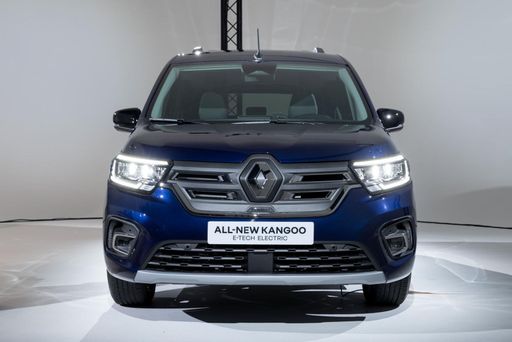
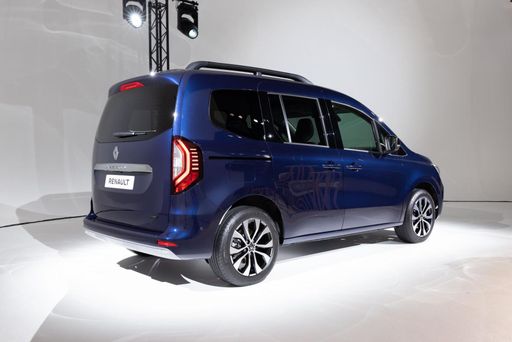
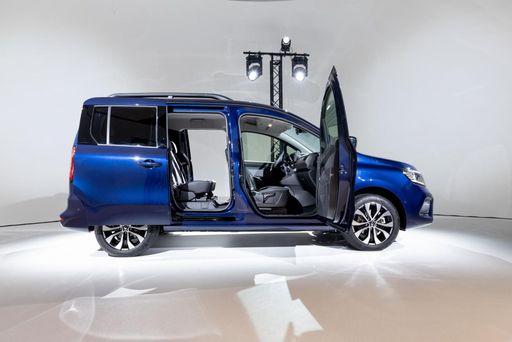
@ Renault Group Media
VS

Mercedes Citan vs Renault Kangoo – Which one offers the better deal?

Both models have their strengths – but which one suits you more?
Compare performance, efficiency, price and space directly: Mercedes Citan or Renault Kangoo?

Kangoo @ Renault Group Media

Compact Commuters Collide: Mercedes Citan vs. Renault Kangoo

In the world of high roof wagons, vehicles often share design elements and features, yet possess unique characteristics that set them apart. This is especially true when comparing the Mercedes Citan and the Renault Kangoo. As both models cater to a similar audience, their offerings in terms of performance, efficiency, and comfort are intriguing to compare.
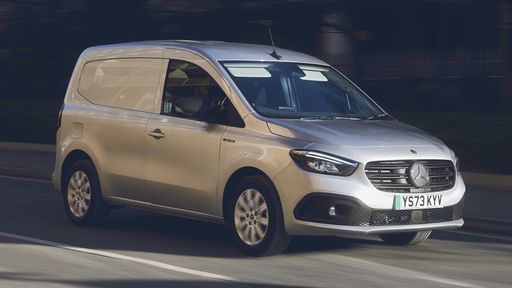
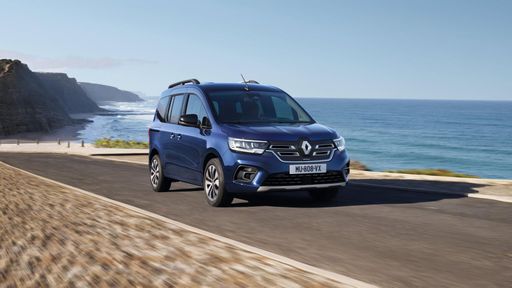
Kangoo @ Renault Group Media

Engine Variety and Performance: A Power Play

The Mercedes Citan comes with versatile engine options. From petrol and diesel to electric, it covers a broad spectrum. Notably, the electric version provides a range between 265 and 280 km on a 45 kWh battery, offering an eco-friendly option to enthusiasts. The power outputs for the Citan range from 95 to 131 HP, promising promising acceleration and agility in city driving.

On the other hand, the Renault Kangoo delivers similar versatility with its petrol, diesel, and electric variants. Its electric model edges out slightly with a range of up to 285 km. The power range of the Kangoo stands at 95 to 130 HP, comparable to the Citan but with a slight advantage in higher power configurations.

Kangoo @ Renault Group Media

Sophisticated Transmissions and Drive Type

Both vehicles offer manual and dual-clutch automatic transmission options, making them adaptable to varied driving preferences. These front-wheel-drive vehicles are designed to handle urban environments efficiently, offering smooth rides irrespective of driving conditions.

Kangoo @ Renault Group Media

Interior Comfort and Cargo Capacity: Space Matters

When discussing interior space, both the Citan and Kangoo provide practical solutions. The Mercedes Citan offers a trunk capacity of up to 551 liters, sufficient for most family and business needs. Seating capacity is fixed at five, ensuring comfortable accommodation for all occupants.

In comparison, the Renault Kangoo demonstrates versatility with seating options for five or seven passengers, depending on the configuration. The trunk offers generous storage space, with capacities reaching 950 liters in some variants—ideal for cargo-heavy trips.

Kangoo @ Renault Group Media

Efficiency: Fuel and Environmental Friendliness

Fuel consumption figures of both cars are competitive. The Citan's consumption ranges from 5.3 to 7.1 L/100 km for its different engine types, whereas its electric model consumes between 19.3 and 20.7 kWh/100 km. CO2 emissions align with efficiency classes from A to F, depending on the model.

The Renault Kangoo mirrors these efficiency classes with a similar fuel consumption range of 5.2 to 7.1 L/100 km. Its electric consumption is slightly higher, at 20.2 to 21.5 kWh/100 km, but remains competitive with a CO2 efficiency class ranging up to A for selective models.

Kangoo @ Renault Group Media

Design Excellence and Dimensions

Design-wise, both vehicles boast comparable dimensions, making them suitable for urban and suburban environments. The Mercedes Citan's length and width stand at 4498 mm and 1859 mm respectively, with height options reaching up to 1830 mm. The Renault Kangoo is slightly shorter in length at 4486 mm, with a bit more height at up to 1869 mm, offering a more imposing presence on the road.

Conclusion: A Tight Verdict

Choosing between the Mercedes Citan and Renault Kangoo can be challenging as both offer exceptional value, performance, and efficiency. The Citan might attract those seeking a prestigious badge with slightly better urban maneuverability, whereas the Kangoo’s strengths lie in its cargo capacity and passenger flexibility.

Ultimately, deciding between these two well-rounded vehicles will depend heavily on individual priorities – be it brand loyalty, feature preferences, or specific use-case needs.

Here’s where it gets real: The technical differences in detail

Costs and Efficiency:

Price and efficiency are key factors when choosing a car – and this is often where the real differences emerge.

Mercedes Citan has a minimal advantage in terms of price – it starts at 22400 £, while the Renault Kangoo costs 23100 £. That’s a price difference of around 614 £.

Both cars consume an average of 5.20 L per 100 km – no difference here.

In terms of energy consumption, the advantage goes to the Mercedes Citan: with 19.30 kWh per 100 km, it’s minimal more efficient than the Renault Kangoo with 20.20 kWh. That’s a difference of about 0.90 kWh.

As for range, the Renault Kangoo performs slight better – achieving up to 285 km, about 5 km more than the Mercedes Citan.

Engine and Performance:

Under the bonnet, it becomes clear which model is tuned for sportiness and which one takes the lead when you hit the accelerator.

When it comes to engine power, the Mercedes Citan has a hardly perceptible edge – offering 131 HP compared to 130 HP. That’s roughly 1 HP more horsepower.

In acceleration from 0 to 100 km/h, the Renault Kangoo is a bit quicker – completing the sprint in 11.60 s, while the Mercedes Citan takes 13 s. That’s about 1.40 s faster.

In terms of top speed, the Renault Kangoo performs minimal better – reaching 184 km/h, while the Mercedes Citan tops out at 183 km/h. The difference is around 1 km/h.

Both models offer the same torque – 270 Nm.

Space and Everyday Use:

Beyond pure performance, interior space and usability matter most in daily life. This is where you see which car is more practical and versatile.

Seats: Renault Kangoo offers clearly perceptible more seating capacity – 7 vs 5.

In curb weight, Mercedes Citan is slight lighter – 1556 kg compared to 1585 kg. The difference is around 29 kg.

In terms of boot space, the Renault Kangoo offers convincingly more room – 950 L compared to 551 L. That’s a difference of about 399 L.

In maximum load capacity, the Mercedes Citan performs a bit better – up to 3660 L, which is about 610 L more than the Renault Kangoo.

When it comes to payload, Mercedes Citan minimal takes the win – 644 kg compared to 609 kg. That’s a difference of about 35 kg.

Who comes out on top?

Overall, the Renault Kangoo shows itself to be offers a more balanced package and secures the title of DriveDuel Champion.
It convinces with the more balanced overall package and proves to be the more versatile choice for everyday use.

from about £23,100
Kangoo @ Renault Group Media

Renault Kangoo

  • Engine Type : Diesel, Petrol, Electric
  • Transmission : Manuel, Automatic
  • Drive Type : Front-Wheel Drive
  • Power HP : 95 - 130 HP
  • Consumption L/100km : 5.2 - 7.1 L
  • Consumption kWh/100km : 20.2 - 21.5 kWh
  • Electric Range : 278 - 285 km

Mercedes Citan

The Mercedes-Benz Citan High Roof Van is a versatile option in the compact van segment, offering a perfect blend of practicality and style. Its sleek design combined with the brand's hallmark attention to detail ensures that it stands out on city streets and motorways alike. Inside, the spacious cabin provides ample room for passengers or cargo, making it an ideal choice for both urban professionals and families seeking flexibility.

details

Renault Kangoo

The Renault Kangoo is the pragmatic chameleon of small vans, marrying van-like practicality with carlike comfort and a cheerful, friendly face that suits both family runs and workday hauls. It's sensible, versatile and annoyingly useful — easy to live with, cheap to run and clever where it counts, so you get more space and fewer compromises than the price suggests.

details
Mercedes Citan
Renault Kangoo
Kangoo @ Renault Group Media

Costs and Consumption

Price
22400 - 30100 £
Price
23100 - 36200 £
Consumption L/100km
5.2 - 7.4 L
Consumption L/100km
5.2 - 7.1 L
Consumption kWh/100km
19.3 - 20.7 kWh
Consumption kWh/100km
20.2 - 21.5 kWh
Electric Range
265 - 280 km
Electric Range
278 - 285 km
Battery Capacity
45 kWh
Battery Capacity
-
co2
0 - 167 g/km
co2
0 - 161 g/km
Fuel tank capacity
54 L
Fuel tank capacity
54 L

Dimensions and Body

Body Type
High Roof Estate
Body Type
High Roof Estate
Seats
5
Seats
5 - 7
Doors
5
Doors
5
Curb weight
1556 - 2010 kg
Curb weight
1585 - 2041 kg
Trunk capacity
0 - 551 L
Trunk capacity
500 - 950 L
Length
4498 - 4922 mm
Length
4486 - 4911 mm
Width
1859 mm
Width
1860 - 1919 mm
Height
1811 - 1830 mm
Height
1838 - 1869 mm
Max trunk capacity
1979 - 3660 L
Max trunk capacity
1296 - 3050 L
Payload
485 - 644 kg
Payload
400 - 609 kg

Engine and Performance

Engine Type
Petrol, Diesel, Electric
Engine Type
Diesel, Petrol, Electric
Transmission
Manuel, Automatic
Transmission
Manuel, Automatic
Transmission Detail
Manual Gearbox, Dual-Clutch Automatic, Reduction Gearbox
Transmission Detail
Manual Gearbox, Dual-Clutch Automatic, Reduction Gearbox
Drive Type
Front-Wheel Drive
Drive Type
Front-Wheel Drive
Power HP
95 - 131 HP
Power HP
95 - 130 HP
Acceleration 0-100km/h
13 - 15.5 s
Acceleration 0-100km/h
11.6 - 15.6 s
Max Speed
132 - 183 km/h
Max Speed
130 - 184 km/h
Torque
200 - 270 Nm
Torque
200 - 270 Nm
Number of Cylinders
4
Number of Cylinders
4
Power kW
70 - 96 kW
Power kW
70 - 96 kW
Engine capacity
1332 - 1461 cm3
Engine capacity
1332 - 1461 cm3

General

Model Year
2021 - 2024
Model Year
2022 - 2024
CO2 Efficiency Class
F, E, A
CO2 Efficiency Class
E, F, D, A
Brand
Mercedes-Benz
Brand
Renault
What drive types are available for the Mercedes Citan?

Available configurations include Front-Wheel Drive.

The prices and data displayed are estimates based on German list prices and may vary by country. This information is not legally binding.