VS

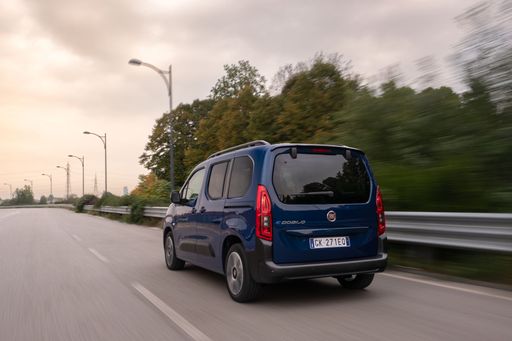
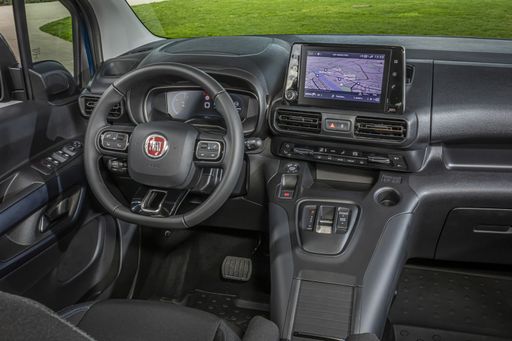
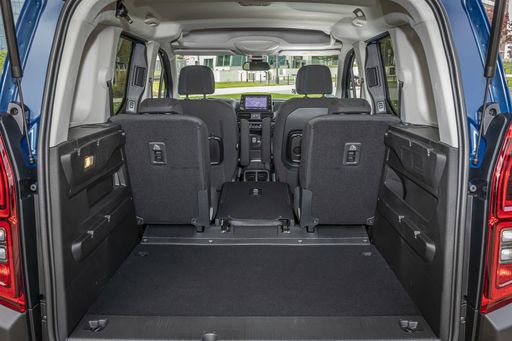
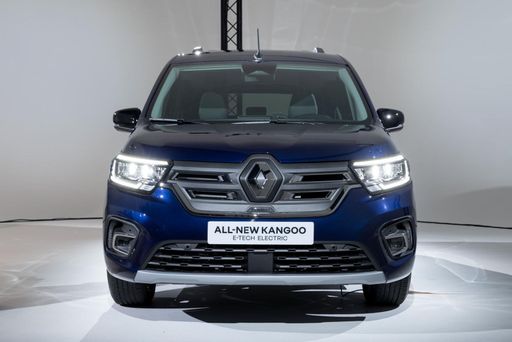
Fiat Doblò vs Renault Kangoo comparison

Compare performance (130 HP vs 130 HP), boot space and price (25,900 £ vs 25,700 £ ) at a glance. Find out which car is the better choice for you – Fiat Doblò or Renault Kangoo?

Fiat Doblò vs Renault Kangoo: Key differences

Fiat Doblò

Renault Kangoo

5 (1 Reviews)
rate
  • marginally cheaper
  • very slightly more efficient
  • only slightly lighter

By Achim Sedelmaier

Doblò

Fiat Doblò vs Renault Kangoo: A Battle of Versatility and Innovation

In the world of versatile and practical vehicles, the Fiat Doblò and Renault Kangoo have long stood as favorites for those in need of functionality without sacrificing modern comforts. As two of the most recognizable panel vans that have transcended their utilitarian roots to become family and business staples, how do they stack up against each other in terms of technical prowess and innovative features? Let's delve deeper.
Kangoo

Design and Dimensions: Space Utilization

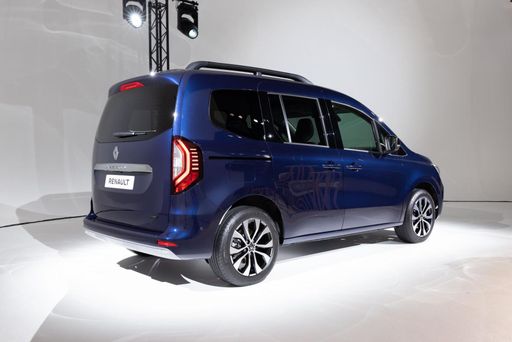
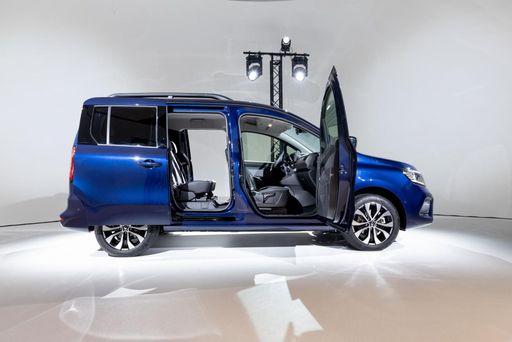
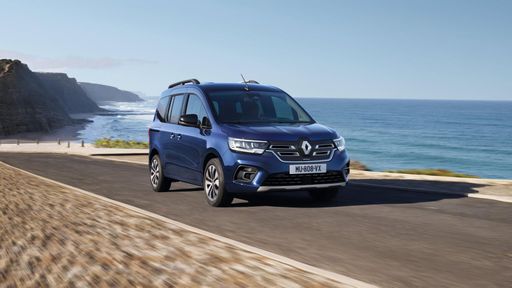
The Renault Kangoo distinguishes itself as a high roof wagon, providing an airy and spacious interior optimized for cargo and passenger comfort. Measuring 4911mm in length, 1919mm in width, and standing 1838mm tall, the Kangoo offers ample room for both its seven or five-seat configurations. It features a notable trunk capacity ranging from 513 to a generous 950 liters.

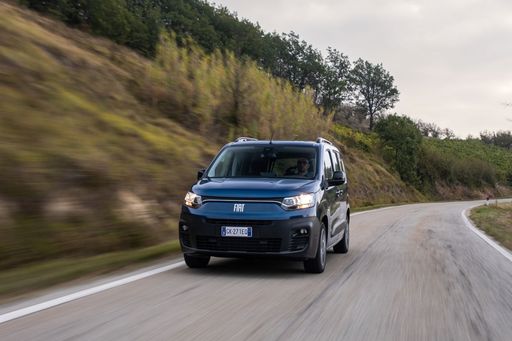
The Fiat Doblò, unfortunately, doesn't provide specific product data, but historically it is known for its boxy design which maximizes interior space, making it ideal for those who prioritize practicality.

Doblò

Powertrains and Performance: Beyond the Basics

Renault offers the Kangoo with an impressive variety of engine options, including diesel, petrol, and electric variants. The power output ranges from 95 to 130 HP for conventional engines, facilitating a flexible choice based on speed (with maximum speeds reaching up to 184 km/h) and fuel efficiency expectations. For eco-conscious drivers, the electric Kangoo variant provides a striking range between 278 km and 285 km, with energy consumption figures of 20.2 to 21.5 kWh/100km.

Acceleration aspirations slightly temper the Kangoo's range of power, with its 0-100 km/h timings extending from 11.6 to 15.6 seconds, which is a reasonable spectrum for its class of vehicle. Moreover, the notion of a front-wheel-drive system provides steady handling suitable for urban environments and light trekking.

Kangoo

Innovation and Technology: Connectivity and Comfort

Renault's Kangoo comes packing a kernel of innovative features. Its availability with a dual-clutch automatic transmission ensures smoother shifts and enhanced driving fluidity, alongside a traditional manual gearbox and a reduction gearbox option for the electric variant. The various driving modes cater to dynamic use-case scenarios, complete with CO2 efficiency stages ranging from class A for electric to E for some diesel and petrol models, reflecting an environmentally considerate design effort.

Leaps in safety and convenience technology can be expected from both models, with modern iterations typically equipped with advanced driver-assistance systems, improved audio connectivity, and upgraded infotainment interfaces, competing head-on with established automotive tech trends.

Doblò

Conclusion: Tailoring to Your Needs

The Renault Kangoo certainly carries itself with robust versatility, marked by an expansive variety of engine choices and a thoughtfully designed interior suited to both family and business contexts. While Fiat Doblò's specific modern specs remain veiled, its historic appeal rests in simplicity and utilitarian appeal.

Ultimately, the choice between the Fiat Doblò and Renault Kangoo will depend on individual priorities—be it the need for sophisticated tech and varied engine options with the Kangoo, or the potential straightforward utility promised by the Doblò. Either way, both remain quintessential representations of practical, everyday motoring.

Here’s where it gets real: The technical differences in detail

Doblò

Costs and Efficiency:

Looking at overall running costs, both models reveal some interesting differences in everyday economy.

Renault Kangoo is marginally cheaper – starting at 25,700 £ , while the Fiat Doblò costs 25,900 £ . That’s a price difference of around 143 £.

Fuel consumption also shows a difference: the Renault Kangoo uses 5.2 L/100km and is very slightly more efficient than the Fiat Doblò with 5.5 L/100km. The difference is about 0.3 L/100km.

Kangoo

Engine and Performance:

Power, torque and acceleration say a lot about how a car feels on the road. This is where you see which model delivers more driving dynamics.

Both models deliver identical power – 130 HP each.

There’s also a difference in torque: the Fiat Doblò delivers only slightly more torque with 300 Nm compared to 270 Nm. That’s about 30 Nm more.

Doblò

Space and Everyday Use:

Whether family car or daily driver – which one offers more room, flexibility and comfort?

Seats: Renault Kangoo offers more seats – 7 vs 5.

In terms of curb weight, Renault Kangoo is only slightly lighter – 1,489 kg compared to 1,530 kg. The difference is around 41 kg.

When it comes to payload, the Fiat Doblò carries visibly more – 840 kg compared to 610 kg. That’s a difference of about 230 kg.

Who wins the race in the data check?

The Renault Kangoo is clearly superior overall in the objective data comparison.
This result only shows which model scores more points on paper – not which of the two cars feels right for you.

from £25,700
Kangoo

Renault Kangoo

  • Engine Type : Electric, Petrol, Diesel
  • Transmission : Automatic, Manuel
  • Drive Type : Front-Wheel Drive
  • Power HP : 95 - 130 HP
  • Consumption L/100km : 5.2 - 7.4 L/100km
  • Consumption kWh/100km : 20.2 - 21.5 kWh/100km
  • Electric Range : 278 - 285 km
Fiat Doblò
Renault Kangoo

Costs and Consumption

View detailed analysis

Engine and Performance

View detailed analysis

Dimensions and Body

View detailed analysis

Fiat Doblò

The Fiat Doblò is Fiat’s pragmatic workhorse that doubles as a family companion—deceptively roomy, easy to live with and built to swallow awkward loads without drama. It won’t win style prizes, but its sensible packaging, no-nonsense character and low-stress ownership make it a very practical choice for buyers who prefer usefulness over flash.

details

Renault Kangoo

The Renault Kangoo is the pragmatic chameleon of small vans, marrying van-like practicality with carlike comfort and a cheerful, friendly face that suits both family runs and workday hauls. It's sensible, versatile and annoyingly useful — easy to live with, cheap to run and clever where it counts, so you get more space and fewer compromises than the price suggests.

details
Fiat Doblò
Renault Kangoo

Costs and Consumption

Price
25,900 - 29,600 £
Price
25,700 - 36,200 £
Consumption L/100km
5.5 - 5.8 L/100km
Consumption L/100km
5.2 - 7.4 L/100km
Consumption kWh/100km
-
Consumption kWh/100km
20.2 - 21.5 kWh/100km
Electric Range
-
Electric Range
278 - 285 km
Battery Capacity
-
Battery Capacity
-
co2
144 - 152 g/km
co2
0 - 168 g/km
Fuel tank capacity
-
Fuel tank capacity
-

Dimensions and Body

Body Type
High Roof Estate
Body Type
High Roof Estate
Seats
5
Seats
5 - 7
Doors
-
Doors
5
Curb weight
1,530 - 1,658 kg
Curb weight
1,489 - 2,041 kg
Trunk capacity
-
Trunk capacity
500 - 950 L
Length
-
Length
4,486 - 4,911 mm
Width
1,848 mm
Width
1,860 - 1,919 mm
Height
-
Height
1,838 - 1,869 mm
Max trunk capacity
-
Max trunk capacity
2,500 - 3,050 L
Payload
722 - 840 kg
Payload
459 - 610 kg

Engine and Performance

Engine Type
Diesel
Engine Type
Electric, Petrol, Diesel
Transmission
Manuel, Automatic
Transmission
Automatic, Manuel
Transmission Detail
Manual Gearbox, Automatic Gearbox
Transmission Detail
Reduction Gearbox, Manual Gearbox, Dual-Clutch Automatic
Drive Type
Front-Wheel Drive
Drive Type
Front-Wheel Drive
Power HP
102 - 130 HP
Power HP
95 - 130 HP
Acceleration 0-100km/h
-
Acceleration 0-100km/h
11.6 - 16.7 s
Max Speed
-
Max Speed
130 - 135 km/h
Torque
250 - 300 Nm
Torque
240 - 270 Nm
Number of Cylinders
4
Number of Cylinders
4
Power kW
75 - 96 kW
Power kW
70 - 96 kW
Engine capacity
1,499 cm3
Engine capacity
1,332 - 1,461 cm3

General

Model Year
2,025
Model Year
2,022 - 2,025
CO2 Efficiency Class
E
CO2 Efficiency Class
A, F, E
Brand
Fiat
Brand
Renault
DriveDuel uses data analysis and artificial intelligence to evaluate vehicle data and create content. Content is regularly reviewed and improved. The displayed prices are estimates based on German list prices, adjusted to the respective country’s VAT. Country-specific registration taxes are not included. This information is not legally binding.