VS

Renault Express vs Renault Kangoo comparison

Compare performance (102 HP vs 130 HP), boot space and price (17,100 £ vs 25,700 £ ) at a glance. Find out which car is the better choice for you – Renault Express or Renault Kangoo?

Renault Express vs Renault Kangoo: Key differences

Renault Express

5 (1 Reviews)
rate
  • considerably cheaper
  • a bit more efficient
  • moderately lighter

Renault Kangoo

5 (1 Reviews)
rate
  • markedly more power
  • only slightly quicker 0–100 km/h
Express

As the automotive landscape continues to evolve, Renault has positioned itself at the forefront with two versatile models: the Renault Express and the Renault Kangoo. Each vehicle offers unique features and capabilities that cater to both commercial needs and everyday use. In this article, we explore the technical aspects, innovations, and key comparisons between these two popular models.
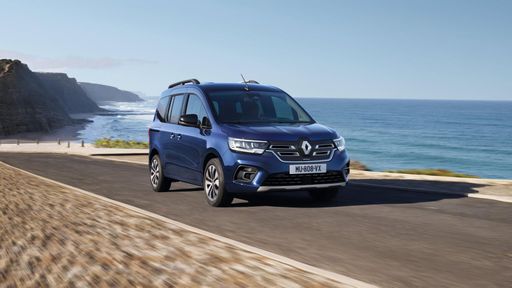
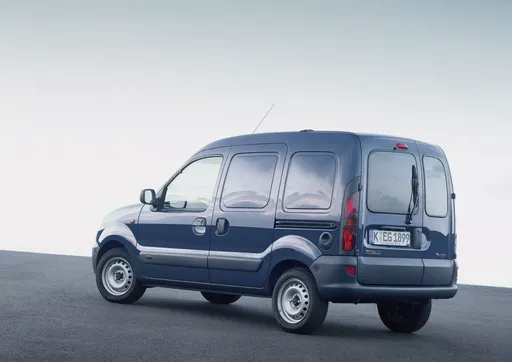
Kangoo

Body Type and Interior Configuration

The Renault Express is designed primarily as a cargo van, boasting a practical 4-door layout that emphasizes functionality. Measuring 4393 mm in length and 1775 mm in width, its design is compact yet efficient, making it suitable for urban deliveries and tight spaces.

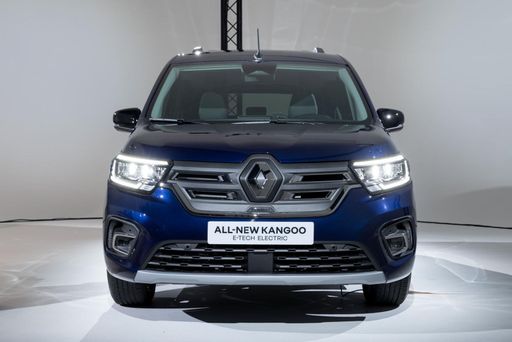
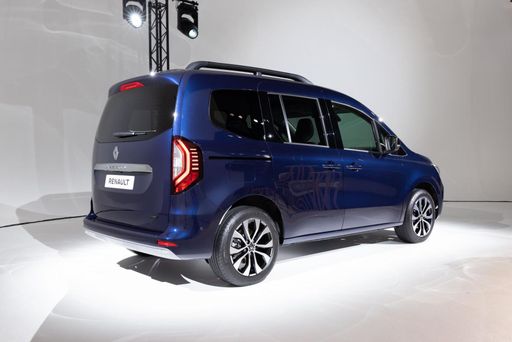
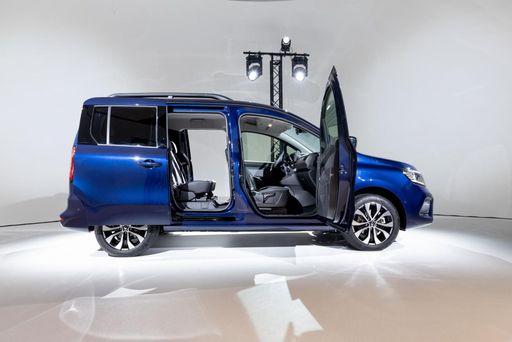
On the other hand, the Renault Kangoo comes as a high-roof wagon, providing a more spacious interior. With dimensions spanning 4911 mm in length and up to 1919 mm in width, the Kangoo can seat 5 to 7 passengers comfortably, making it ideal for larger families or transport needs.

Powertrain Variations

When it comes to engines, both models offer a range of options. The Renault Express is equipped with diesel and petrol engines delivering various power outputs, including 75, 95, and 102 HP. Its engine options also feature torque ranging from 200 to 240 Nm, with accelerations from 0 to 100 km/h clocking in between 11.9 and 16.3 seconds.

In contrast, the Renault Kangoo presents a more diverse lineup, including petrol, diesel, and electric engines. Power outputs range from 95 to 130 HP, with an impressive torque range peaking at 270 Nm. The Kangoo is capable of accelerating from 0 to 100 km/h in as little as 11.6 seconds, showcasing its agility and performance.

Fuel Efficiency and Emissions

The Renault Express demonstrates commendable fuel efficiency, with consumption figures ranging from 4.6 to 6.6 L/100 km, depending on the engine variant. Its CO2 emissions fall within the D and E efficiency classes, ensuring a relatively low environmental impact for a commercial vehicle.

Meanwhile, the Renault Kangoo, with its wide array of engine options, has fuel consumption varying from 5.2 to 7.1 L/100 km. The electric version further reduces emissions to zero, with an impressive electric range of up to 285 km, positioning the Kangoo as an eco-friendly alternative in urban settings.

Innovations and Technology

Renault has integrated several technological advancements in both models. The Express features a manual transmission with a simple yet functional design tailored for ease of use in commercial environments. Its payload capacity ranges from 575 to 700 kg, enhancing its utility as a cargo van.

The Kangoo, however, steps up the technology game with options for automatic transmission and an innovative dual-clutch gearbox. Its spacious interiors and cargo configurations, including trunk capacities from 500 to 950 liters, make it extraordinarily adaptable. Moreover, the Kangoo is equipped with advanced safety features, including emergency braking and lane departure warnings.

Choosing the Right Model

Ultimately, the choice between the Renault Express and the Renault Kangoo boils down to specific needs. The Express stands out for businesses requiring a robust and efficient cargo van, while the Kangoo caters to those needing versatility for both family and commercial use.

With Renault's commitment to fuel efficiency, performance, and innovative designs, both the Express and Kangoo remain competitive options in a crowded market. Whether for work or play, these models offer a reliable driving experience that meets the varied demands of today's drivers.

Here’s where it gets real: The technical differences in detail

Express

Costs and Efficiency:

Price and efficiency are key factors when choosing a car – and this is often where the real differences emerge.

Renault Express is considerably cheaper – starting at 17,100 £ , while the Renault Kangoo costs 25,700 £ . That’s a price difference of around 8,589 £.

Fuel consumption also shows a difference: the Renault Express uses 4.6 L/100km and is a bit more efficient than the Renault Kangoo with 5.2 L/100km. The difference is about 0.6 L/100km.

Kangoo

Engine and Performance:

Under the bonnet, it becomes clear which model is tuned for sportiness and which one takes the lead when you hit the accelerator.

When it comes to engine power, the Renault Kangoo offers markedly more power – delivering 130 HP compared to 102 HP. That’s roughly 28 HP more horsepower.

When accelerating from 0 to 100 km/h, the Renault Kangoo is only slightly quicker – completing the sprint in 11.6 s, while the Renault Express takes 11.9 s. That’s about 0.3 s quicker.

Looking at top speed, the Renault Express is slightly faster – reaching 167 km/h, while the Renault Kangoo tops out at 135 km/h. The difference is around 32 km/h.

There’s also a difference in torque: the Renault Kangoo delivers slightly more torque with 270 Nm compared to 240 Nm. That’s about 30 Nm more.

Space and Everyday Use:

Cabin size, boot volume and payload all play a role in everyday practicality. Here, comfort and flexibility make the difference.

Seats: Renault Kangoo offers more seats – 7 vs 2.

In terms of curb weight, Renault Express is moderately lighter – 1,296 kg compared to 1,489 kg. The difference is around 193 kg.

For maximum load capacity, the Renault Express offers very slightly more capacity – up to 3,300 L, about 250 L more than the Renault Kangoo.

When it comes to payload, the Renault Express carries somewhat more – 700 kg compared to 610 kg. That’s a difference of about 90 kg.

Who wins the race in the data check?

The Renault Kangoo is far ahead overall in the objective data comparison.
This result only shows which model scores more points on paper – not which of the two cars feels right for you.

from £25,700
Kangoo

Renault Kangoo

  • Engine Type : Electric, Petrol, Diesel
  • Transmission : Automatic, Manuel
  • Drive Type : Front-Wheel Drive
  • Power HP : 95 - 130 HP
  • Consumption L/100km : 5.2 - 7.4 L/100km
  • Consumption kWh/100km : 20.2 - 21.5 kWh/100km
  • Electric Range : 278 - 285 km
Renault Express
Renault Kangoo

Costs and Consumption

View detailed analysis

Engine and Performance

View detailed analysis

Dimensions and Body

View detailed analysis

Renault Express

The Renault Express is a no-nonsense city van that pairs clever packaging and practical cargo space with an easy-to-drive, fuss-free character. Built for small businesses and active families, it delivers rugged reliability and low running costs without pretension — a sensible workhorse with a wink.

details

Renault Kangoo

The Renault Kangoo is the pragmatic chameleon of small vans, marrying van-like practicality with carlike comfort and a cheerful, friendly face that suits both family runs and workday hauls. It's sensible, versatile and annoyingly useful — easy to live with, cheap to run and clever where it counts, so you get more space and fewer compromises than the price suggests.

details
Renault Express
Renault Kangoo

Costs and Consumption

Price
17,100 - 19,500 £
Price
25,700 - 36,200 £
Consumption L/100km
4.6 - 6.6 L/100km
Consumption L/100km
5.2 - 7.4 L/100km
Consumption kWh/100km
-
Consumption kWh/100km
20.2 - 21.5 kWh/100km
Electric Range
-
Electric Range
278 - 285 km
Battery Capacity
-
Battery Capacity
-
co2
121 - 149 g/km
co2
0 - 168 g/km
Fuel tank capacity
50 L
Fuel tank capacity
-

Dimensions and Body

Body Type
Cargo Van
Body Type
High Roof Estate
Seats
2
Seats
5 - 7
Doors
4
Doors
5
Curb weight
1,296 - 1,390 kg
Curb weight
1,489 - 2,041 kg
Trunk capacity
-
Trunk capacity
500 - 950 L
Length
4,393 mm
Length
4,486 - 4,911 mm
Width
1,775 mm
Width
1,860 - 1,919 mm
Height
1,811 mm
Height
1,838 - 1,869 mm
Max trunk capacity
3,300 L
Max trunk capacity
2,500 - 3,050 L
Payload
575 - 700 kg
Payload
459 - 610 kg

Engine and Performance

Engine Type
Diesel, Petrol
Engine Type
Electric, Petrol, Diesel
Transmission
Manuel
Transmission
Automatic, Manuel
Transmission Detail
Manual Gearbox
Transmission Detail
Reduction Gearbox, Manual Gearbox, Dual-Clutch Automatic
Drive Type
Front-Wheel Drive
Drive Type
Front-Wheel Drive
Power HP
75 - 102 HP
Power HP
95 - 130 HP
Acceleration 0-100km/h
11.9 - 16.3 s
Acceleration 0-100km/h
11.6 - 16.7 s
Max Speed
100 - 167 km/h
Max Speed
130 - 135 km/h
Torque
200 - 240 Nm
Torque
240 - 270 Nm
Number of Cylinders
4
Number of Cylinders
4
Power kW
55 - 75 kW
Power kW
70 - 96 kW
Engine capacity
1,332 - 1,461 cm3
Engine capacity
1,332 - 1,461 cm3

General

Model Year
2,021
Model Year
2,022 - 2,025
CO2 Efficiency Class
D, E
CO2 Efficiency Class
A, F, E
Brand
Renault
Brand
Renault
DriveDuel uses data analysis and artificial intelligence to evaluate vehicle data and create content. Content is regularly reviewed and improved. The displayed prices are estimates based on German list prices, adjusted to the respective country’s VAT. Country-specific registration taxes are not included. This information is not legally binding.