@ Ford Motor Company / Ford Media Center
@ Opel / Stellantis Media
VS

Ford Transit Connect vs Vauxhall Combo – Which model is better for everyday use?

Both models have their strengths – but which one suits you more?
Compare performance, efficiency, price and space directly: Ford Transit Connect or Vauxhall Combo?

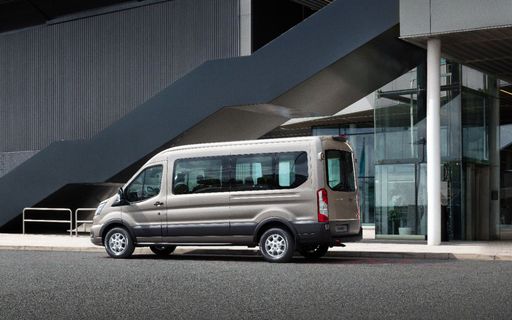
Transit Connect @ Ford Motor Company / Ford Media Center

Ford Transit Connect vs. Vauxhall Combo: A Comprehensive Comparison

As we venture further into 2024, the light commercial vehicle segment is bustling with innovations, making it a compelling year for prospective buyers. Two such vehicles leading the charge are the Ford Transit Connect and the Vauxhall Combo. Both models present unique propositions tailored for various business needs, each integrating advancements to challenge the norm in this competitive market.
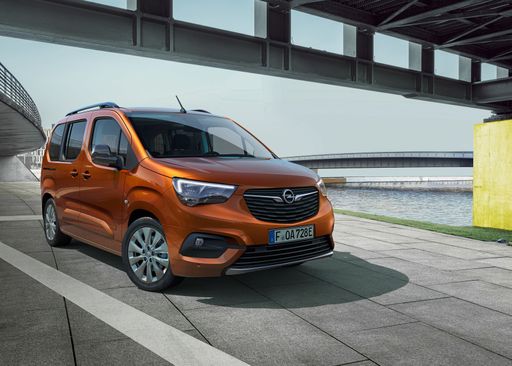
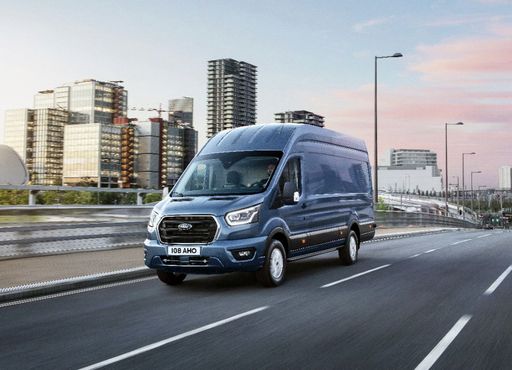
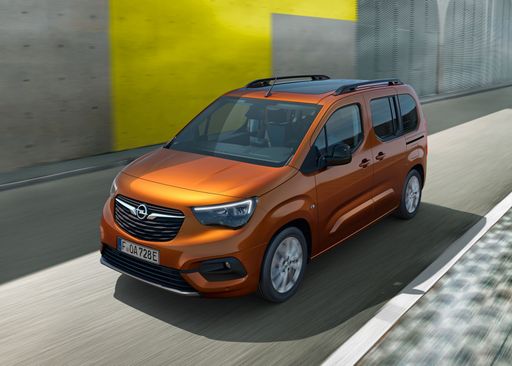
Combo @ Opel / Stellantis Media

Design and Dimensions

The Ford Transit Connect, with its Cargo Van design, presents a robust and utilitarian exterior, optimized for urban and suburban delivery tasks. Its length ranges from 4,500mm to 4,868mm, with a consistent width of 1,855mm and a height peaking at 1,860mm. This makes it a formidable presence on the road, ideal for carrying substantial loads.

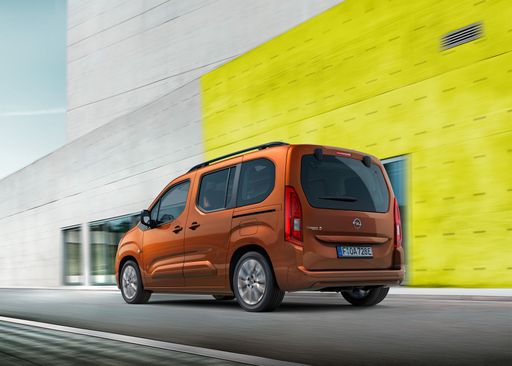
In contrast, the Vauxhall Combo, offered in the High Roof Wagon body type, showcases a blend of practicality and space efficiency. It extends up to 4,760mm in length, slightly more compact in width at 1,848mm, and features a height of up to 1,818mm. This design focuses on maximizing interior space, catering well to both small business needs and family utility.

Transit Connect @ Ford Motor Company / Ford Media Center

Performance and Powertrains

The Transit Connect provides a spectrum of powertrains. Buyers can choose between traditional diesel engines with outputs ranging from 102 to 150 HP, or a plug-in hybrid option offering a progressive step towards sustainability. Transmission choices include a manual gearbox and a dual-clutch automatic, both driving the front wheels, with torque figures stretching between 280 Nm and 350 Nm.

Conversely, the Vauxhall Combo introduces a more diverse engine lineup, featuring pure electric, as well as diesel variants. The electric model delivers 136 HP with a torque of 270 Nm, boasting a significant range of up to 345 km. For those inclined towards diesel, options provide between 102 and 130 HP. The available transmissions include both manual and automatic gearboxes, demonstrating flexibility and wide appeal.

Combo @ Opel / Stellantis Media

Efficiency and Environment

The Transit Connect's diesel models record CO2 emissions commensurate with traditional vehicles, while the plug-in hybrid variant reflects a more environmentally conscious footprint with its battery capacity of 19.7 kWh, designed for reduced emissions during urban commutes.

Meanwhile, the Vauxhall Combo stands out for its high-efficiency electric version with zero CO2 output, perfectly aligning with the ever-growing demand for eco-friendly mobility solutions. Diesel versions, however, emit between 145g/km and 155g/km of CO2, placing them within a broader efficiency classification.

Transit Connect @ Ford Motor Company / Ford Media Center

Interior and Versatility

Inside the Transit Connect, seating configurations range from 2 to 5 seats, balancing between driver-focused designs and spaciousness for additional passages or cargo. The cabin combines functionality with comfort, perfect for lengthy workdays on the road.

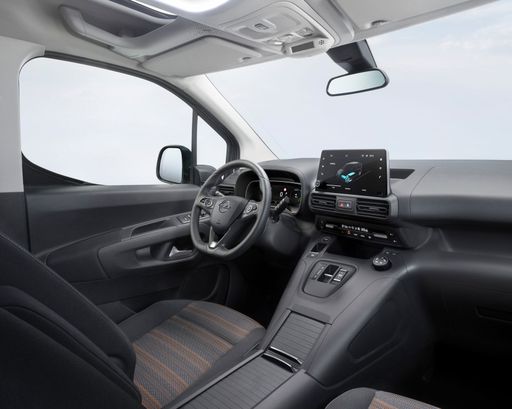
The Vauxhall Combo enhances its versatility with configurations accommodating 5 or 7 seats, appealing directly to small businesses requiring flexibility or families needing additional passenger capacity. The trunk space varies generously to 850 liters, significantly surpassing typical market offerings.

Combo @ Opel / Stellantis Media

Conclusion: Which Suits Your Needs?

Both the Ford Transit Connect and Vauxhall Combo excel in their own right, emphasized by their distinct emphasis on innovation and efficiency. The Transit Connect is ideal for businesses seeking reliable load-carrying capability with a hint of electrified powertrain options. Meanwhile, the Combo targets those desiring a balance between versatility, modern propulsion methods, and environmental consideration.

The decision ultimately hinges on business needs or personal preferences, whether you lean towards Ford's robust cargo functionality or Opel's balanced practicality embedded in the Vauxhall Combo.

Here’s where it gets real: The technical differences in detail

Costs and Efficiency:

Price and efficiency are key factors when choosing a car – and this is often where the real differences emerge.

Vauxhall Combo has a minimal advantage in terms of price – it starts at 24800 £, while the Ford Transit Connect costs 26700 £. That’s a price difference of around 1876 £.

Fuel consumption also shows a difference: Ford Transit Connect manages with 0.50 L and is therefore decisively more efficient than the Vauxhall Combo with 5.50 L. The difference is about 5 L per 100 km.

As for range, the Vauxhall Combo performs significantly better – achieving up to 345 km, about 227 km more than the Ford Transit Connect.

Engine and Performance:

Power, torque and acceleration are the classic benchmarks for car enthusiasts – and here, some clear differences start to show.

When it comes to engine power, the Ford Transit Connect has a slight edge – offering 150 HP compared to 136 HP. That’s roughly 14 HP more horsepower.

In acceleration from 0 to 100 km/h, the Vauxhall Combo is barely noticeable quicker – completing the sprint in 11.30 s, while the Ford Transit Connect takes 11.40 s. That’s about 0.10 s faster.

In terms of top speed, the Ford Transit Connect performs minimal better – reaching 186 km/h, while the Vauxhall Combo tops out at 184 km/h. The difference is around 2 km/h.

There’s also a difference in torque: Ford Transit Connect pulls a bit stronger with 350 Nm compared to 300 Nm. That’s about 50 Nm difference.

Space and Everyday Use:

Beyond pure performance, interior space and usability matter most in daily life. This is where you see which car is more practical and versatile.

Seats: Vauxhall Combo offers clearly perceptible more seating capacity – 7 vs 5.

In curb weight, Ford Transit Connect is hardly perceptible lighter – 1477 kg compared to 1530 kg. The difference is around 53 kg.

In maximum load capacity, the Ford Transit Connect performs distinct better – up to 3700 L, which is about 1007 L more than the Vauxhall Combo.

When it comes to payload, Vauxhall Combo barely noticeable takes the win – 840 kg compared to 792 kg. That’s a difference of about 48 kg.

Who comes out on top?

Overall, the Ford Transit Connect shows itself to be is largely superior and secures the title of DriveDuel Champion.
It convinces with the more balanced overall package and proves to be the more versatile choice for everyday use.

from about £26,700
Transit Connect @ Ford Motor Company / Ford Media Center

Ford Transit Connect

  • Engine Type : Diesel, Plugin Hybrid
  • Transmission : Manuel, Automatic
  • Drive Type : Front-Wheel Drive, All-Wheel Drive
  • Power HP : 102 - 150 HP
  • Consumption L/100km : 0.5 - 5.8 L
  • Electric Range : 118 km

Ford Transit Connect

The Ford Transit Connect is a versatile compact van that seamlessly combines functionality with a comfortable driving experience. Its spacious interior is designed to accommodate both passengers and cargo, making it an ideal choice for small businesses and active families alike. With its efficient engine and agile handling, the Transit Connect offers a reliable and economical option for urban and suburban driving.

details

Vauxhall Combo

The Opel Combo is a hardworking and surprisingly polished small van that blends van-like practicality with car-like comfort, making it a sensible choice for families and tradespeople who need versatility without fuss. It may not grab attention on the style front, but clever packaging and a levelheaded approach mean you spend more time getting things done and less time worrying about compromise.

details
Ford Transit Connect
Vauxhall Combo
Transit Connect @ Ford Motor Company / Ford Media Center
Combo @ Opel / Stellantis Media

Costs and Consumption

Price
26700 - 41500 £
Price
24800 - 36500 £
Consumption L/100km
0.5 - 5.8 L
Consumption L/100km
5.5 - 5.9 L
Consumption kWh/100km
-
Consumption kWh/100km
18.5 - 18.8 kWh
Electric Range
118 km
Electric Range
333 - 345 km
Battery Capacity
19.70 kWh
Battery Capacity
-
co2
11 - 153 g/km
co2
0 - 155 g/km
Fuel tank capacity
32 - 50 L
Fuel tank capacity
53 L

Dimensions and Body

Body Type
Cargo Van
Body Type
High Roof Estate
Seats
2 - 5
Seats
5 - 7
Doors
4
Doors
4 - 5
Curb weight
1477 - 1866 kg
Curb weight
1530 - 1922 kg
Trunk capacity
-
Trunk capacity
597 - 850 L
Length
4500 - 4868 mm
Length
4410 - 4760 mm
Width
1855 mm
Width
1848 mm
Height
1856 - 1860 mm
Height
1812 - 1818 mm
Max trunk capacity
2500 - 3700 L
Max trunk capacity
2126 - 2693 L
Payload
602 - 792 kg
Payload
430 - 840 kg

Engine and Performance

Engine Type
Diesel, Plugin Hybrid
Engine Type
Electric, Diesel
Transmission
Manuel, Automatic
Transmission
Automatic, Manuel
Transmission Detail
Manual Gearbox, Dual-Clutch Automatic
Transmission Detail
Reduction Gearbox, Manual Gearbox, Automatic Gearbox
Drive Type
Front-Wheel Drive, All-Wheel Drive
Drive Type
Front-Wheel Drive
Power HP
102 - 150 HP
Power HP
102 - 136 HP
Acceleration 0-100km/h
11.4 - 13.5 s
Acceleration 0-100km/h
11.30 s
Max Speed
175 - 186 km/h
Max Speed
135 - 184 km/h
Torque
280 - 350 Nm
Torque
250 - 300 Nm
Number of Cylinders
4
Number of Cylinders
4
Power kW
75 - 110 kW
Power kW
75 - 100 kW
Engine capacity
1498 - 1968 cm3
Engine capacity
1499 cm3

General

Model Year
2024 - 2025
Model Year
2024
CO2 Efficiency Class
E, B
CO2 Efficiency Class
A, E
Brand
Ford
Brand
Vauxhall
What drive types are available for the Ford Transit Connect?

The Ford Transit Connect is available as Front-Wheel Drive or All-Wheel Drive.

The prices and data displayed are estimates based on German list prices and may vary by country. This information is not legally binding.