VS

Ford Transit Custom Transporter vs Mercedes V Class comparison

Compare performance (286 HP vs 237 HP), boot space and price (36300 £ vs 48200 £ ) at a glance. Find out which car is the better choice for you – Ford Transit Custom Transporter or Mercedes V Class?

Transit Custom Transporter

In the world of commercial vehicles, the Ford Transit Custom Transporter and the Mercedes V-Klasse stand out as two prominent options. Each offers its own set of features tailored to meet the diverse needs of businesses and families alike. This article will provide a detailed comparison of both vehicles, focusing on technical aspects and innovations that make them leaders in their segments.
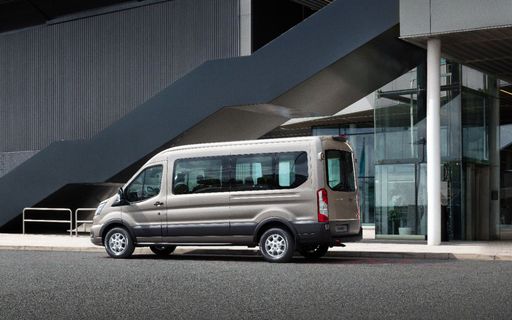
V Class

Design and Build Quality

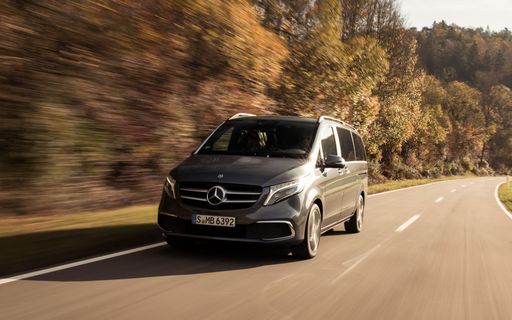
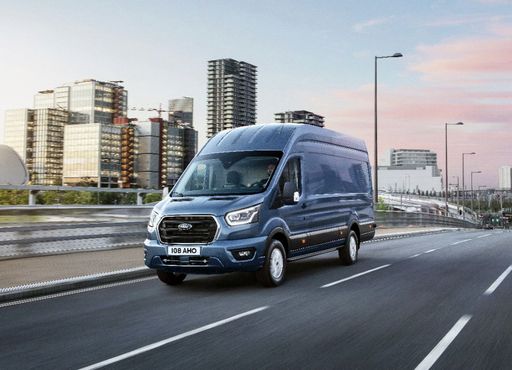
The Ford Transit Custom Transporter is designed primarily as a cargo van, measuring between 5050 mm to 5450 mm in length. With its robust construction, it offers exceptional payload capabilities, ranging from 640 kg to over 1332 kg, depending on the configuration. Meanwhile, the Mercedes V-Klasse presents a more luxurious bus design, suitable for transporting passengers and cargo seamlessly. Its compact size and elegant styling make it ideal for urban environments.

Transit Custom Transporter

Powertrains and Performance

Under the hood, the Ford Transit Custom Transporter offers a versatile range of engine types including electric, diesel, and plug-in hybrid options. The power output ranges from 110 HP to an impressive 286 HP. This provides a broad selection for varying business needs, while the electricity consumption can go as low as 1.6 L/100 km, and for electric variants, it operates efficiently at 22.4 kWh/100 km with a maximum electric range of up to 327 km.

On the other hand, the Mercedes V-Klasse is powered by diesel and petrol engines, with outputs from 163 HP to 237 HP. The consumption figures are on the higher side, ranging from 7.1 to 10.2 L/100 km, aligning with the V-Klasse's intentions of providing a luxurious travel experience. The V-Klasse also boasts impressive performance, with acceleration from 0-100 km/h being as swift as 7.4 seconds in its most powerful configurations.

V Class

Transmission and Drive Options

The Ford Transit Custom offers various transmission options such as automatic, manual, and even a reduction gearbox for its diesel models. It features drive options including both rear-wheel-drive and front-wheel-drive layouts, catering to users looking for versatility in different driving conditions.

Conversely, the Mercedes V-Klasse standardizes with an automatic transmission, ensuring smooth gear changes with its advanced automatic gearbox system. It provides a choice of both rear-wheel and all-wheel drive, making it suitable for a variety of environments, from city streets to rural settings.

Transit Custom Transporter

Interior Comfort and Technology

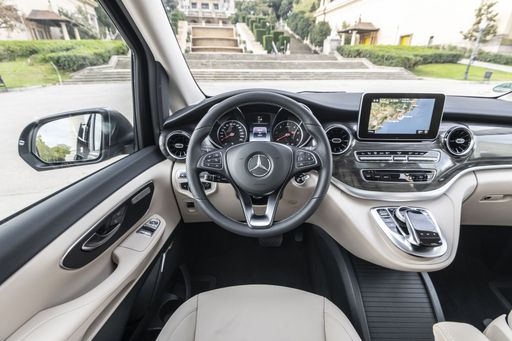
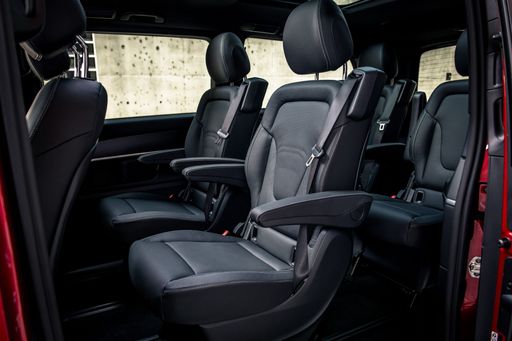
When it comes to interior quality, no one can deny the luxury that the Mercedes V-Klasse brings to the table. It comfortably seats up to six passengers, with options to add high-end features such as ambient lighting, premium audio systems, and multifunctional displays that enhance the driving experience.

The Ford Transit Custom, while functional, prioritizes utility over luxury. It comes with seating for three in its basic configuration, although more accommodating versions are available. Its technological features, however, are impressive, including an advanced infotainment system and driver assistance technologies that enhance safety and convenience.

V Class

Safety Features and Innovations

Both vehicles come equipped with a suite of safety features aimed at ensuring driver and passenger safety. The Transit Custom includes advanced driver assistance systems such as lane-keeping assist, adaptive cruise control, and automatic emergency braking.

Similarly, the V-Klasse incorporates cutting-edge safety technologies, reinforcing its reputation as a premium transporter. With systems like active brake assist, crosswind assist, and blind-spot monitoring, the V-Klasse offers peace of mind whether on busy highways or narrow city streets.

Conclusion: Which One is Right for You?

In conclusion, the choice between the Ford Transit Custom Transporter and the Mercedes V-Klasse will largely depend on your specific needs. If you prioritize versatility, payload capacity, and an array of powertrains, the Ford Transit Custom is an excellent choice. However, if luxury, passenger comfort, and advanced safety features are more crucial to you, the Mercedes V-Klasse stands out as the better option.

Both models exemplify the best of their brands and cater to different segments of the market. Ultimately, potential buyers should consider what their primary requirements are when making this crucial decision.

Ford Transit Custom Transporter vs Mercedes V Class: Key differences

Ford Transit Custom Transporter

  • evident cheaper
  • a bit more power
  • somewhat lighter

Mercedes V Class

  • significantly quicker from 0–100 km/h

Here’s where it gets real: The technical differences in detail

Costs and Efficiency:

Price and efficiency are often the first things buyers look at. Here it becomes clear which model has the long-term edge – whether at the pump, the plug, or in purchase price.

Ford Transit Custom Transporter has a evident advantage in terms of price – it starts at 36300 £ , while the Mercedes V Class costs 48200 £ . That’s a price difference of around 11903 £.

Engine and Performance:

Power, torque and acceleration say a lot about how a car feels on the road. This is where you see which model delivers more driving dynamics.

When it comes to engine power, the Ford Transit Custom Transporter has a a bit edge – offering 286 HP compared to 237 HP. That’s roughly 49 HP more horsepower.

In acceleration from 0 to 100 km/h, the Mercedes V Class is significantly quicker – completing the sprint in 7.40 s, while the Ford Transit Custom Transporter takes 13.40 s. That’s about 6 s faster.

There’s also a difference in torque: Ford Transit Custom Transporter pulls distinct stronger with 630 Nm compared to 500 Nm. That’s about 130 Nm difference.

Space and Everyday Use:

Beyond pure performance, interior space and usability matter most in daily life. This is where you see which car is more practical and versatile.

Both vehicles offer seating for 6 people.

In curb weight, Ford Transit Custom Transporter is somewhat lighter – 1893 kg compared to 2192 kg. The difference is around 299 kg.

In maximum load capacity, the Ford Transit Custom Transporter performs noticeable better – up to 6800 L, which is about 1790 L more than the Mercedes V Class.

When it comes to payload, Ford Transit Custom Transporter evident takes the win – 1332 kg compared to 908 kg. That’s a difference of about 424 kg.

Who wins the race in the data check?

The Ford Transit Custom Transporter is far ahead overall in the objective data comparison.
This result only shows which model scores more points on paper – not which of the two cars feels right for you.

Ford Transit Custom Transporter
Mercedes V Class

Costs and Consumption

View detailed analysis

Engine and Performance

View detailed analysis

Dimensions and Body

View detailed analysis
from about £36,300
Transit Custom Transporter

Ford Transit Custom Transporter

  • Engine Type : Diesel, Plugin Hybrid, Electric
  • Transmission : Manuel, Automatic
  • Drive Type : Front-Wheel Drive, All-Wheel Drive, Rear-Wheel Drive
  • Power HP : 110 - 286 HP

Ford Transit Custom Transporter

The Transit Custom is a clever, no-nonsense workhorse that blends roomy practicality with surprisingly car-like driving manners, so your workday feels less like a chore and more like efficient transport. With a sensible interior, smart storage and tidy handling, it’s the kind of van that makes owners smile while they get on with the job — reliable, unfussy and built to keep moving.

details

Mercedes V Class

The V‑Class is the grown-up people mover that blends executive-level comfort with van practicality, ideal for those who want to ferry family and gear without sacrificing luxury. Inside it's plush and flexible, with clever touches that turn long hauls into a comfortable commute and still manage to look serious on the school run.

details
Ford Transit Custom Transporter
Mercedes V Class

Costs and Consumption

Price
36300 - 77400 £
Price
48200 - 83300 £
Consumption L/100km
-
Consumption L/100km
7.1 - 10.2 L
Consumption kWh/100km
-
Consumption kWh/100km
-
Electric Range
-
Electric Range
-
Battery Capacity
11.80 kWh
Battery Capacity
-
co2
0 g/km
co2
187 - 232 g/km
Fuel tank capacity
55 - 63 L
Fuel tank capacity
57 - 70 L

Dimensions and Body

Body Type
Cargo Van
Body Type
Bus
Seats
3 - 6
Seats
6
Doors
4
Doors
5
Curb weight
1893 - 2122 kg
Curb weight
2192 - 2464 kg
Trunk capacity
-
Trunk capacity
610 - 1410 L
Length
5050 - 5450 mm
Length
4895 - 5370 mm
Width
2032 mm
Width
1928 mm
Height
1958 - 1959 mm
Height
1901 - 1908 mm
Max trunk capacity
5800 - 6800 L
Max trunk capacity
4200 - 5010 L
Payload
802 - 1332 kg
Payload
636 - 908 kg

Engine and Performance

Engine Type
Diesel, Plugin Hybrid, Electric
Engine Type
Diesel, Petrol
Transmission
Manuel, Automatic
Transmission
Automatic
Transmission Detail
Manual Gearbox, Automatic Gearbox, CVT, Reduction Gearbox
Transmission Detail
Automatic Gearbox
Drive Type
Front-Wheel Drive, All-Wheel Drive, Rear-Wheel Drive
Drive Type
Rear-Wheel Drive, All-Wheel Drive
Power HP
110 - 286 HP
Power HP
163 - 237 HP
Acceleration 0-100km/h
13.4 - 16.9 s
Acceleration 0-100km/h
7.4 - 10.7 s
Max Speed
-
Max Speed
188 - 220 km/h
Torque
310 - 630 Nm
Torque
370 - 500 Nm
Number of Cylinders
4
Number of Cylinders
4
Power kW
81 - 210 kW
Power kW
120 - 174 kW
Engine capacity
1996 - 2488 cm3
Engine capacity
1950 - 1999 cm3

General

Model Year
2023 - 2025
Model Year
2025
CO2 Efficiency Class
A
CO2 Efficiency Class
G
Brand
Ford
Brand
Mercedes-Benz
What drive types are available for the Ford Transit Custom Transporter?

The Ford Transit Custom Transporter is available as Front-Wheel Drive, All-Wheel Drive or Rear-Wheel Drive.

The prices shown are estimates based on German list prices, adjusted for local VAT. Local registration taxes (e.g. NoVA, BPM or CO2 malus) are not included. This information is not legally binding.