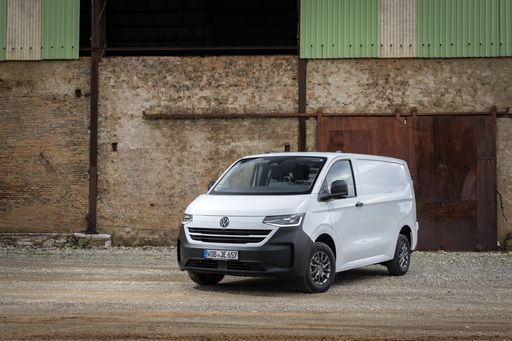
@ Ford Motor Company / Ford Media Center
VS

Ford Transit Custom Transporter vs VW Transporter Transporter – Performance, range & efficiency compared

Two cars, one duel: Ford Transit Custom Transporter meets VW Transporter Transporter.
Which one wins in performance, efficiency and value for money? Find out now!

Transit Custom Transporter @ Ford Motor Company / Ford Media Center

Ford Transit Custom Transporter vs. VW Transporter: The Definitive Cargo Van Showdown

When it comes to reliable cargo vans, two titans stand tall in the automotive market: the Ford Transit Custom Transporter and the VW Transporter. Both vehicles offer impressive specifications and state-of-the-art innovations, making them tough competitors. Let's delve into the technical aspects and innovations of these two robust vehicles to see which one edges out the other in the realms of utility, efficiency, and performance.
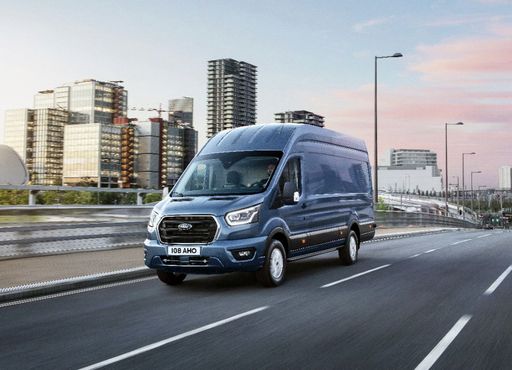
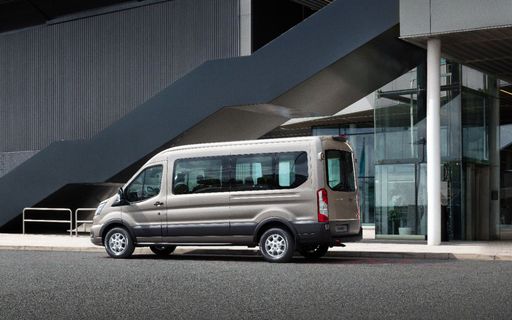
Transit Custom Transporter @ Ford Motor Company / Ford Media Center

Engine Types and Performance

The Ford Transit Custom Transporter brings a versatile range of engines to the table, offering Electric, Diesel, and Plugin Hybrid options. This provides flexibility whether you're looking for eco-friendliness or traditional power. The engine options range from 110 HP up to a potent 286 HP, catering to various business needs.

In contrast, the VW Transporter also offers a wider range of engines with Diesel, Plugin Hybrid, and Electric options. Power output ranges are similar, with options from 110 HP to 286 HP. Both vans cater to performance enthusiasts and those prioritizing fuel efficiency.

Transit Custom Transporter @ Ford Motor Company / Ford Media Center

Electric Innovation and Efficiency

The Ford Transit Custom Transporter leads in terms of electric range, capable of traveling between 308 km and 327 km on a full charge. This makes it an attractive choice for businesses aiming to reduce their carbon footprint. It features an available battery capacity of up to 64 kWh, with consumption rates ranging from 22.4 kWh to 24.5 kWh per 100 km.

The VW Transporter, however, takes a competitive stand with a similar electric range, offering 306 km to 331 km, supported by a maximum battery capacity of 63.8 kWh. The consumption rates extend a little further, between 21.9 kWh and 24.4 kWh per 100 km, giving the VW Transporter a slight edge in electric efficiency.

Transmission and Drive Types

Both models offer a variety of transmission systems. The Ford Transit Custom Transporter presents options for Automatic, Manual, and CVT transmissions, delivering better adaptability to different driving conditions and preferences. Drive types include Front-Wheel, Rear-Wheel, and All-Wheel Drive configurations.

The VW Transporter matches this variety, providing both Manual and Automatic transmissions alongside similar drive configurations. Both vans ensure a smooth driving experience regardless of the terrain.

Space, Payload, and Comfort

In terms of body dimensions and interior space, both vehicles are quite comparable. They share identical lengths at 5050 mm and 5450 mm, with a width of 2032 mm. The height, however, slightly varies, with the Ford Transit Custom at 1958 mm and 1959 mm and the VW Transporter ranging from 1966 mm to 1985 mm.

The payload capacity is robust in both vehicles, with the Ford Transit Custom Transporter reaching up to 1332 kg, while the VW Transporter is quite competitive with a capacity soaring to 1259 kg. Seating configurations are diverse with both vans offering variations, though the Transit Custom provides options for either 3 or 6 seats, while the Transporter has configurations for 2 or up to 5 passengers.

Conclusion

Both the Ford Transit Custom Transporter and the VW Transporter present outstanding features for anyone in need of a reliable cargo van. The decision between the two will largely depend on specific business needs, such as the preference for a longer electric range, higher payload capacity, or slightly better energy consumption efficiency. However, rest assured that both these industry giants deliver exceptional value and performance, making either a worthy investment for your logistical purposes.

Here’s where it gets real: The technical differences in detail

Costs and Efficiency:

Price and efficiency are often the first things buyers look at. Here it becomes clear which model has the long-term edge – whether at the pump, the plug, or in purchase price.

Ford Transit Custom Transporter has a hardly perceptible advantage in terms of price – it starts at 36300 £, while the VW Transporter Transporter costs 37500 £. That’s a price difference of around 1254 £.

In terms of energy consumption, the advantage goes to the VW Transporter Transporter: with 21.90 kWh per 100 km, it’s barely noticeable more efficient than the Ford Transit Custom Transporter with 22.40 kWh. That’s a difference of about 0.50 kWh.

As for range, the VW Transporter Transporter performs minimal better – achieving up to 331 km, about 4 km more than the Ford Transit Custom Transporter.

Engine and Performance:

Power, torque and acceleration say a lot about how a car feels on the road. This is where you see which model delivers more driving dynamics.

Both models deliver identical power – 286 HP each.

In acceleration from 0 to 100 km/h, the VW Transporter Transporter is convincingly quicker – completing the sprint in 7.40 s, while the Ford Transit Custom Transporter takes 13.40 s. That’s about 6 s faster.

There’s no difference in top speed – both reach 150 km/h.

Both models offer the same torque – 415 Nm.

Space and Everyday Use:

Beyond pure performance, interior space and usability matter most in daily life. This is where you see which car is more practical and versatile.

Seats: Ford Transit Custom Transporter offers somewhat more seating capacity – 6 vs 5.

In curb weight, VW Transporter Transporter is barely noticeable lighter – 1872 kg compared to 1893 kg. The difference is around 21 kg.

When it comes to payload, Ford Transit Custom Transporter hardly perceptible takes the win – 1332 kg compared to 1259 kg. That’s a difference of about 73 kg.

Who comes out on top?

Overall, the VW Transporter Transporter shows itself to be secures victory with a clear margin and secures the title of DriveDuel Champion.
It convinces with the more balanced overall package and proves to be the more versatile choice for everyday use.

from about £37,500
default

VW Transporter Transporter

  • Engine Type : Diesel, Plugin Hybrid, Electric
  • Transmission : Manuel, Automatic
  • Drive Type : Front-Wheel Drive, All-Wheel Drive, Rear-Wheel Drive
  • Power HP : 110 - 286 HP
  • Consumption L/100km : 7.1 - 8.4 L
  • Consumption kWh/100km : 21.9 - 24.4 kWh
  • Electric Range : 56 - 331 km

Ford Transit Custom Transporter

The Ford Transit Custom Transporter is a versatile commercial vehicle renowned for its practicality and reliability. It offers a roomy cabin with ample storage options, making it ideal for various professional needs. Its sleek design and efficient performance ensure that it remains a popular choice among businesses and tradespeople alike.

details

VW Transporter Transporter

The VW Transporter, a versatile favourite among commercial vehicles, combines practicality with modern design. Its spacious interior offers ample room for both passengers and cargo, making it a reliable choice for businesses and families alike. The vehicle's strong build and advanced technology ensure a smooth and efficient driving experience in various conditions.

details
Ford Transit Custom Transporter
VW Transporter Transporter
Transit Custom Transporter @ Ford Motor Company / Ford Media Center

Costs and Consumption

Price
36300 - 71100 £
Price
37500 - 60800 £
Consumption L/100km
-
Consumption L/100km
7.1 - 8.4 L
Consumption kWh/100km
22.4 - 24.1 kWh
Consumption kWh/100km
21.9 - 24.4 kWh
Electric Range
315 - 327 km
Electric Range
56 - 331 km
Battery Capacity
11.8 - 64 kWh
Battery Capacity
11.8 - 63.8 kWh
co2
0 g/km
co2
0 - 220 g/km
Fuel tank capacity
55 - 63 L
Fuel tank capacity
55 L

Dimensions and Body

Body Type
Cargo Van
Body Type
Cargo Van
Seats
3 - 6
Seats
2 - 5
Doors
4
Doors
4 - 5
Curb weight
1893 - 2122 kg
Curb weight
1872 - 2462 kg
Trunk capacity
-
Trunk capacity
-
Length
5050 - 5450 mm
Length
5050 - 5450 mm
Width
2032 mm
Width
2032 mm
Height
1958 - 1959 mm
Height
1966 - 1985 mm
Max trunk capacity
5800 - 6800 L
Max trunk capacity
-
Payload
802 - 1332 kg
Payload
755 - 1259 kg

Engine and Performance

Engine Type
Electric, Diesel, Plugin Hybrid
Engine Type
Diesel, Plugin Hybrid, Electric
Transmission
Automatic, Manuel
Transmission
Manuel, Automatic
Transmission Detail
Reduction Gearbox, Manual Gearbox, Automatic Gearbox, CVT
Transmission Detail
Manual Gearbox, Automatic Gearbox
Drive Type
Rear-Wheel Drive, Front-Wheel Drive, All-Wheel Drive
Drive Type
Front-Wheel Drive, All-Wheel Drive, Rear-Wheel Drive
Power HP
110 - 286 HP
Power HP
110 - 286 HP
Acceleration 0-100km/h
13.4 - 16.9 s
Acceleration 0-100km/h
7.4 - 16.9 s
Max Speed
110 - 150 km/h
Max Speed
112 - 150 km/h
Torque
310 - 415 Nm
Torque
310 - 415 Nm
Number of Cylinders
4
Number of Cylinders
4
Power kW
81 - 210 kW
Power kW
81 - 210 kW
Engine capacity
1996 - 2488 cm3
Engine capacity
1996 - 2488 cm3

General

Model Year
2023 - 2024
Model Year
2025
CO2 Efficiency Class
A
CO2 Efficiency Class
G, A
Brand
Ford
Brand
VW
What drive types are available for the Ford Transit Custom Transporter?

The Ford Transit Custom Transporter is available as Rear-Wheel Drive, Front-Wheel Drive or All-Wheel Drive.

The prices and data displayed are estimates based on German list prices and may vary by country. This information is not legally binding.