VS

Hyundai i30 Wagon vs Audi A3 Sportback comparison

Compare performance (150 HP vs 400 HP), boot space and price (25,400 £ vs 27,000 £ ) at a glance. Find out which car is the better choice for you – Hyundai i30 Wagon or Audi A3 Sportback?

Hyundai i30 Wagon vs Audi A3 Sportback: Key differences

Hyundai i30 Wagon

4.3 (2 Reviews)
rate
  • only slightly cheaper
  • barely lighter
  • clearly more trunk space
details

Audi A3 Sportback

4.1 (2 Reviews)
rate
  • clearly more power
  • clearly more efficient
  • clearly quicker 0–100 km/h
details

All details on performance, efficiency, range and trunk space can be found in the technical comparison below – including user reviews for both models.

By Achim Sedelmaier

i30 Wagon

Compact Luxury or Practical Space: Audi A3 Sportback vs Hyundai i30 Kombi

The modern car buyer faces an array of options, especially when deciding between a sleek hatchback like the Audi A3 Sportback and a spacious wagon such as the Hyundai i30 Kombi. Each model offers unique features and designs tailored to a variety of driving needs. In this article, we compare the Audi A3 Sportback and Hyundai i30 Kombi, delving into their technical specifications, innovations, and overall driving experience to help you make an informed decision.
A3 Sportback

Design and Dimensions

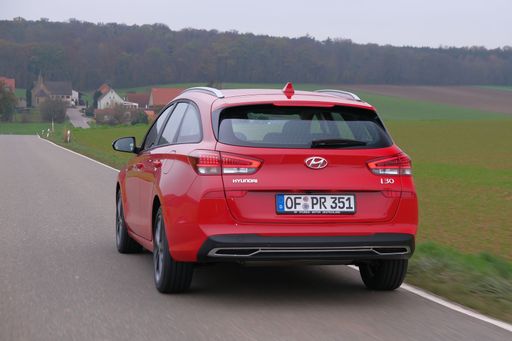
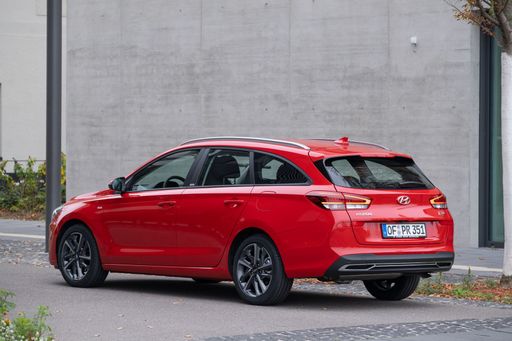
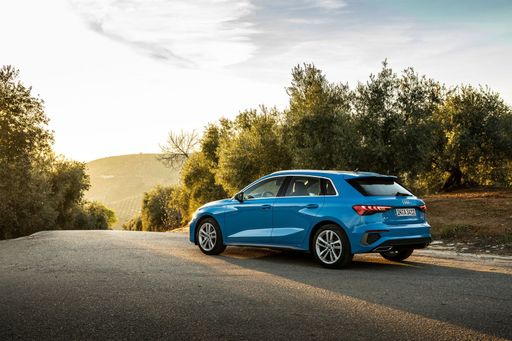
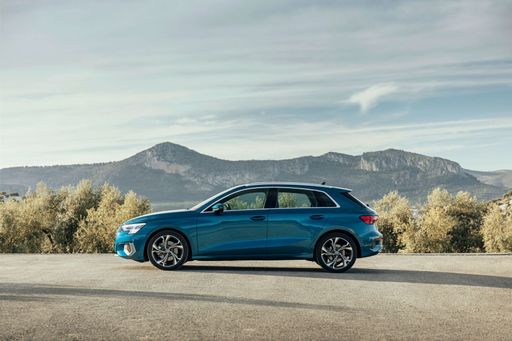
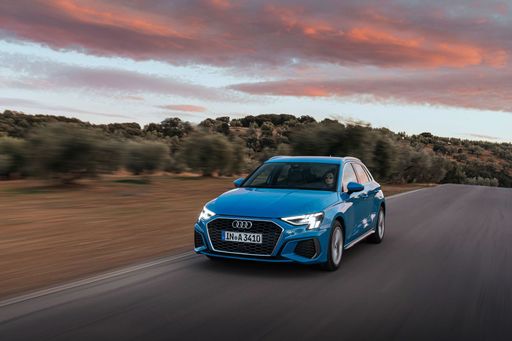
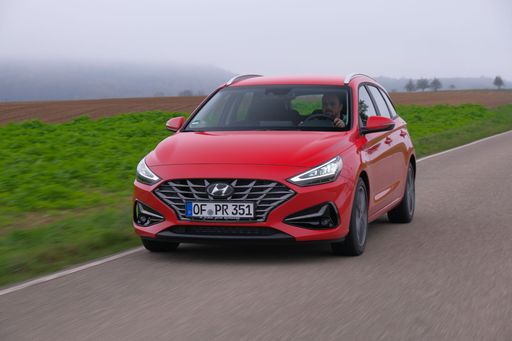
Standing out as a sporty hatchback, the Audi A3 Sportback boasts a modern and dynamic design. With dimensions stretching to 4353 mm in length, 1816 mm width, and 1415 mm in height, it presents a compact structure ideal for urban driving. Meanwhile, the Hyundai i30 Kombi provides a generous capacity with its wagon body type. Its length of 4585 mm, width of 1795 mm, and height of 1475 mm mark it as a larger vehicle, perfect for families or those requiring extra cargo space.

i30 Wagon

Engine and Performance

The Audi A3 Sportback offers a range of engine types including petrol, diesel, and hybrid variants, with power outputs ranging from 116 to a powerful 400 HP. Notably, the dual-clutch automatic transmission provides a seamless driving experience. With the ability to accelerate from 0-100 km/h in as little as 3.8 seconds for higher performance models, Audi champions speed enthusiasts. Additionally, its all-wheel drive option enhances handling and grip.

Comparatively, the Hyundai i30 Kombi remains grounded with its focus on practicality and efficiency. Fitted with petrol and mild-hybrid engines, it pushes power outputs between 100 to 140 HP. The i30's achievable acceleration of 9.8 seconds for 0-100 km/h underscores its balanced performance focused on economy over thrill. Its front-wheel drive simplifies maintenance and offers reliability.

A3 Sportback

Technology and Innovation

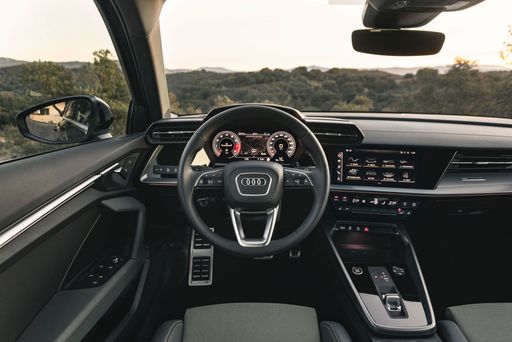
When it comes to technological advancements, Audi stands out with its integrated high-tech innovations. Features such as the Virtual Cockpit and an extensive range of connectivity options cater to tech-savvy drivers craving cutting-edge features. Additionally, the plug-in hybrid model extends the range of electric-only driving with a battery capacity of 19.7 kWh.

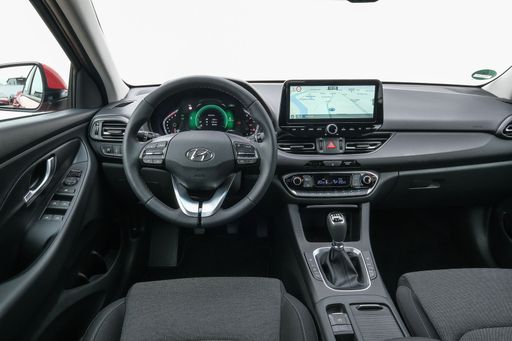
Hyundai provides a user-friendly tech ecosystem in the i30 Kombi, focused on convenient daily use. It integrates technology efficiently across its line, with intuitive infotainment systems and safety features designed to offer comfort without overwhelming complexity.

i30 Wagon

Space and Practicality

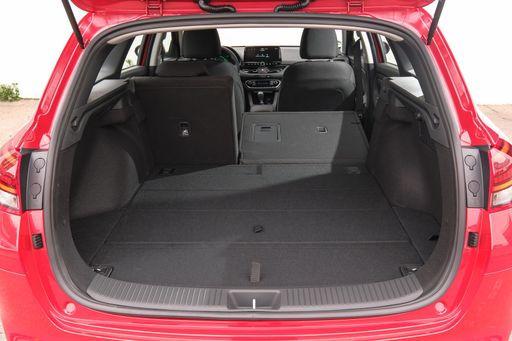
Catering to spacious needs, the Hyundai i30 Kombi excels with a trunk capacity of 602 liters, demonstrating practicality and ample space for luggage or gear. This makes it particularly attractive for those with active lifestyles or a need for extensive cargo room.

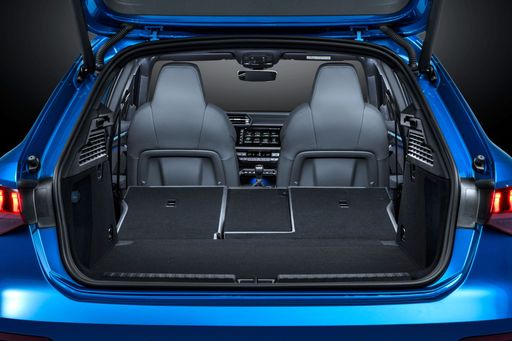
The Audi A3 Sportback's trunk capacity is notably smaller at 380 liters, aligning with its compact and sporty design. It focuses more on style and driving pleasure rather than utility, appealing to those who prioritize performance and luxury over space.

A3 Sportback

Efficiency and Sustainability

In terms of fuel efficiency, both brands make a strong case. Audi's Sportback models, with consumption figures as low as 4.8 L/100km, highlight the commitment to efficiency alongside power. Furthermore, eco-conscious drivers can opt for the plug-in hybrid to minimize carbon footprint.

Hyundai's i30 Kombi manages to hold its own here as well, with consumption values starting at 5.6 L/100km. It is designed with a focus on fuel efficiency, providing drivers with a more economical option.

i30 Wagon

The Verdict

Choosing between the Audi A3 Sportback and the Hyundai i30 Kombi comes down to personal preference and priorities. Audi's A3 Sportback represents the epitome of sporty elegance and advanced technology, attracting those enticed by luxury and performance. On the other hand, Hyundai offers a compelling case with the i30 Kombi, showcasing practicality and space at an accessible price point.

Whether you're searching for a dynamic driving experience or extensive storage capabilities, both vehicles ensure quality and reliability, crafting a choice that truly depends on individual driving needs.

Here’s where it gets real: The technical differences in detail

i30 Wagon

Costs and Efficiency:

Price and efficiency are key factors when choosing a car – and this is often where the real differences emerge.

Hyundai i30 Wagon is only slightly cheaper – starting at 25,400 £ , while the Audi A3 Sportback costs 27,000 £ . That’s a price difference of around 1,586 £.

Fuel consumption also shows a difference: the Audi A3 Sportback uses 1.1 L/100km and is clearly more efficient than the Hyundai i30 Wagon with 5.9 L/100km. The difference is about 4.8 L/100km.

A3 Sportback

Engine and Performance:

Power, torque and acceleration say a lot about how a car feels on the road. This is where you see which model delivers more driving dynamics.

When it comes to engine power, the Audi A3 Sportback offers clearly more power – delivering 400 HP compared to 150 HP. That’s roughly 250 HP more horsepower.

When accelerating from 0 to 100 km/h, the Audi A3 Sportback is clearly quicker – completing the sprint in 3.8 s, while the Hyundai i30 Wagon takes 9.1 s. That’s about 5.3 s quicker.

There’s also a difference in torque: the Audi A3 Sportback delivers significantly more torque with 500 Nm compared to 250 Nm. That’s about 250 Nm more.

i30 Wagon

Space and Everyday Use:

Whether family car or daily driver – which one offers more room, flexibility and comfort?

Both vehicles offer seating for 5 people.

In terms of curb weight, Hyundai i30 Wagon is barely lighter – 1,340 kg compared to 1,360 kg. The difference is around 20 kg.

Looking at boot space, the Hyundai i30 Wagon offers clearly more boot space – 602 L compared to 380 L. That’s a difference of about 222 L.

When it comes to payload, the Hyundai i30 Wagon carries barely more – 490 kg compared to 480 kg. That’s a difference of about 10 kg.

Who wins the race in the data check?

The Audi A3 Sportback holds a decisive overall lead in the objective data comparison.
This result only shows which model scores more points on paper – not which of the two cars feels right for you.

from £27,000
A3 Sportback

Audi A3 Sportback

  • Engine Type Petrol, Petrol MHEV, Diesel, Plugin Hybrid
  • Transmission Manuel, Automatic
  • Drive Type Front-Wheel Drive, All-Wheel Drive
  • Power HP 116 - 400 HP
  • Consumption L/100km 1.1 - 9.3 L/100km
  • Electric Range 134 - 141 km
Hyundai i30 Wagon
Audi A3 Sportback

Costs and Consumption

View detailed analysis

Engine and Performance

View detailed analysis

Dimensions and Body

View detailed analysis

Hyundai i30 Wagon

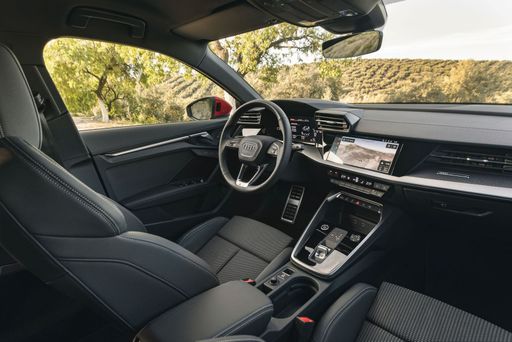
The Hyundai i30 Wagon is a practical family hauler that pairs roomy, sensible packaging with clean, modern lines and a surprisingly composed chassis. Comfortable, well-equipped and priced to make rivals sweat, it quietly ticks the boxes for daily life and weekend escapes while still managing a little grin on twisty roads.

details

Audi A3 Sportback

The Audi A3 Sportback wraps premium materials and crisp German design into a practical hatchback package that makes daily driving feel smart rather than showy. It’s nimble in the city, composed on longer trips, and carries just enough swagger to satisfy buyers who want quality without shouting about it.

details
Hyundai i30 Wagon
Audi A3 Sportback

Costs and Consumption

Price
25,400 - 32,300 £
Price
27,000 - 92,900 £
Consumption L/100km
5.9 - 6.3 L/100km
Consumption L/100km
1.1 - 9.3 L/100km
Consumption kWh/100km
-
Consumption kWh/100km
-
Electric Range
-
Electric Range
134 - 141 km
Battery Capacity
-
Battery Capacity
-
co2
134 - 142 g/km
co2
25 - 211 g/km
Fuel tank capacity
-
Fuel tank capacity
-

Dimensions and Body

Body Type
Estate
Body Type
Hatchback
Seats
5
Seats
5
Doors
-
Doors
-
Curb weight
1,340 - 1,460 kg
Curb weight
1,360 - 1,685 kg
Trunk capacity
602 L
Trunk capacity
280 - 380 L
Length
-
Length
-
Width
1,795 mm
Width
1,816 - 1,851 mm
Height
-
Height
-
Max trunk capacity
-
Max trunk capacity
-
Payload
450 - 490 kg
Payload
410 - 480 kg

Engine and Performance

Engine Type
Petrol
Engine Type
Petrol, Petrol MHEV, Diesel, Plugin Hybrid
Transmission
Manuel, Automatic
Transmission
Manuel, Automatic
Transmission Detail
Manual Gearbox, Dual-Clutch Automatic
Transmission Detail
Manual Gearbox, Dual-Clutch Automatic
Drive Type
Front-Wheel Drive
Drive Type
Front-Wheel Drive, All-Wheel Drive
Power HP
115 - 150 HP
Power HP
116 - 400 HP
Acceleration 0-100km/h
9.1 - 11.9 s
Acceleration 0-100km/h
3.8 - 10.1 s
Max Speed
-
Max Speed
-
Torque
172 - 250 Nm
Torque
220 - 500 Nm
Number of Cylinders
3 - 4
Number of Cylinders
4 - 5
Power kW
85 - 110 kW
Power kW
85 - 294 kW
Engine capacity
998 - 1,598 cm3
Engine capacity
1,498 - 2,480 cm3

General

Model Year
2026
Model Year
2,025 - 2,026
CO2 Efficiency Class
D, E
CO2 Efficiency Class
D, F, E, G, B
Brand
Hyundai
Brand
Audi
DriveDuel uses data analysis and artificial intelligence to evaluate vehicle data and create content. Content is regularly reviewed and improved. The displayed prices are estimates based on German list prices, adjusted to the respective country’s VAT. Country-specific registration taxes are not included. This information is not legally binding.