VS

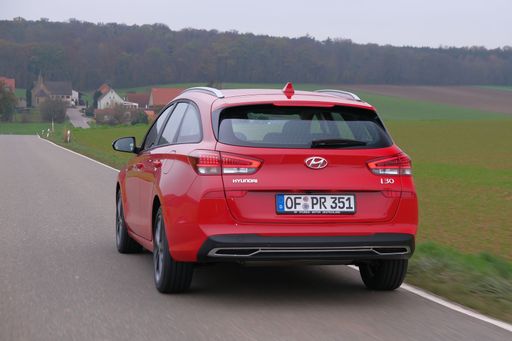
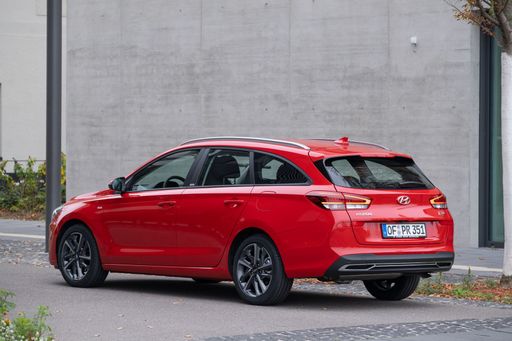
Hyundai i30 Wagon vs Ford Focus Turnier comparison

Compare performance (150 HP vs 280 HP), boot space and price (25,400 £ vs 28,500 £ ) at a glance. Find out which car is the better choice for you – Hyundai i30 Wagon or Ford Focus Turnier?

Hyundai i30 Wagon vs Ford Focus Turnier: Key differences

Hyundai i30 Wagon

4.3 (2 Reviews)
rate
  • somewhat cheaper
  • very slightly lighter
details

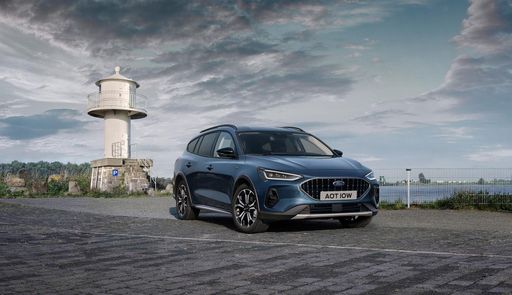
Ford Focus Turnier

  • clearly more power
  • somewhat more efficient
  • significantly quicker 0–100 km/h
  • only slightly more trunk space
details

All details on performance, efficiency, range and trunk space can be found in the technical comparison below – including user reviews for both models.

By Achim Sedelmaier

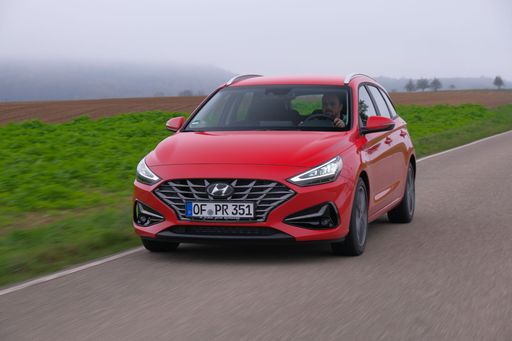
i30 Wagon

An In-Depth Look at Two Popular Wagons: Ford Focus Turnier vs. Hyundai i30 Kombi

In the world of wagons, two contenders stand out: the Ford Focus Turnier and the Hyundai i30 Kombi. Both models have carved out a niche for themselves by offering a blend of practicality, performance, and modern features. Let's delve into the details and compare these two popular choices to help you decide which wagon best suits your needs.
Focus Turnier

Dynamic Performance: Engine and Transmission

The Ford Focus Turnier comes equipped with a wide range of engine options, catering to a variety of preferences. Available in petrol, petrol mild hybrid (MHEV), and diesel variants, it boasts power outputs ranging from 115 HP to a sporty 280 HP. The 1.0 and 1.5-liter petrol engines, for example, deliver a balanced mix of efficiency and power, with the top tier 2.3-liter engine bringing a burst of performance. The Focus Turnier offers both manual and automatic transmissions, including a smooth dual-clutch automatic for those who prioritize driving ease.

In contrast, the Hyundai i30 Kombi provides two engine options: a standard petrol and a petrol MHEV. Power outputs for the i30 Kombi range from 100 HP to 140 HP. While not as powerful as the Turnier's top end, the i30's engines are known for their efficiency and reliability. Like the Focus, the i30 offers both manual and dual-clutch automatic gearboxes ensuring a flexible choice for drivers.

i30 Wagon

Efficiency and Eco-friendliness

Both vehicles take emissions and efficiency seriously. The Focus Turnier's consumption figures start from 5.3 L/100km, ensuring that even the more powerful versions remain quite efficient. Its CO2 output ranges from 120 to 183 g/km, reflecting the wide range of available engines.

The Hyundai i30 Kombi is comparable with consumption ranging from 5.6 to 5.9 L/100km and CO2 emissions between 126 and 133 g/km. While slightly behind the Ford in fuel efficiency, it still holds its own as a compact and environmentally conscientious option.

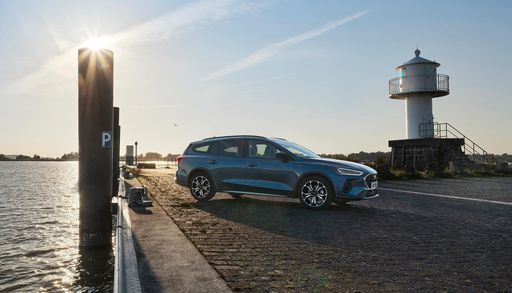
Focus Turnier

Comfort and Capacity: Interior and Cargo

On the inside, both wagons can comfortably seat five passengers. The Ford Focus Turnier edges ahead in terms of trunk capacity, offering up to 635 liters of boot space, making it a great option for families or those who frequently haul cargo. With dimensions of up to 4693 mm in length, 1844 mm in width, and a height that varies slightly across variants, the Focus manages a balance of interior spaciousness and external compactness.

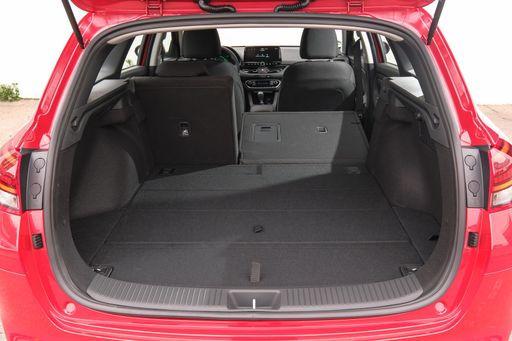
The Hyundai i30 Kombi offers a respectable 602 liters of trunk space, with dimensions slightly smaller at 4585 mm in length and 1795 mm in width. This reduction in size might appeal to those looking for a more compact wagon without significantly compromising on interior space.

i30 Wagon

Safety and Innovations

Both the Focus Turnier and i30 Kombi offer a suite of modern safety and technology features. While specific features can vary based on trim levels, expect both cars to come equipped with advanced safety systems such as lane-keeping assist, adaptive cruise control, and emergency braking.

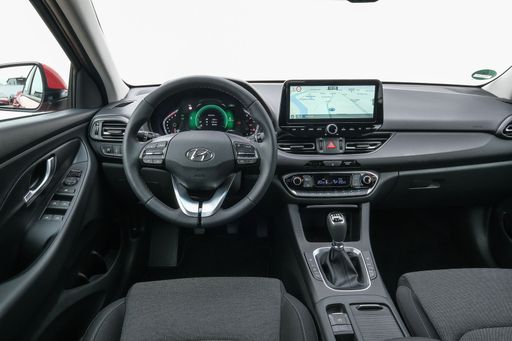
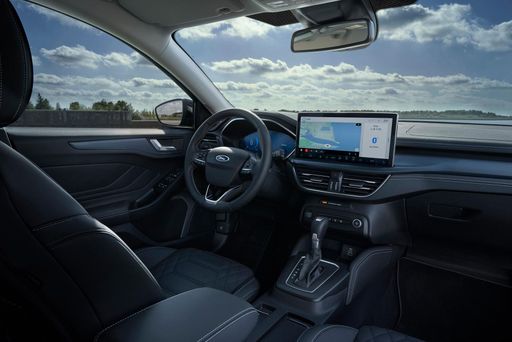
Infotainment systems are also well-developed in both models, with touchscreen controls, smartphone connectivity, and quality audio systems ensuring a comfortable and enjoyable driving experience.

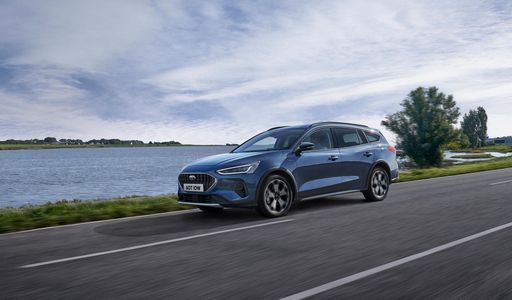
Focus Turnier

Conclusion: Making the Right Choice

When deciding between the Ford Focus Turnier and the Hyundai i30 Kombi, consider what you value more: performance variety and trunk space, or the compactness and efficiency of a slightly smaller and potentially easier-to-maneuver wagon.

Both vehicles offer a robust set of features and capabilities, ensuring that drivers will find value in either choice. Ultimately, test-driving these models and considering your specific needs will be the best way to determine which wagon deserves a spot in your driveway.

Here’s where it gets real: The technical differences in detail

i30 Wagon

Costs and Efficiency:

Price and efficiency are often the first things buyers look at. Here it becomes clear which model has the long-term edge – whether at the pump, the plug, or in purchase price.

Hyundai i30 Wagon is somewhat cheaper – starting at 25,400 £ , while the Ford Focus Turnier costs 28,500 £ . That’s a price difference of around 3,128 £.

Fuel consumption also shows a difference: the Ford Focus Turnier uses 5 L/100km and is somewhat more efficient than the Hyundai i30 Wagon with 5.9 L/100km. The difference is about 0.9 L/100km.

Focus Turnier

Engine and Performance:

Power, torque and acceleration say a lot about how a car feels on the road. This is where you see which model delivers more driving dynamics.

When it comes to engine power, the Ford Focus Turnier offers clearly more power – delivering 280 HP compared to 150 HP. That’s roughly 130 HP more horsepower.

When accelerating from 0 to 100 km/h, the Ford Focus Turnier is significantly quicker – completing the sprint in 5.8 s, while the Hyundai i30 Wagon takes 9.1 s. That’s about 3.3 s quicker.

There’s also a difference in torque: the Ford Focus Turnier delivers considerably more torque with 420 Nm compared to 250 Nm. That’s about 170 Nm more.

i30 Wagon

Space and Everyday Use:

Whether family car or daily driver – which one offers more room, flexibility and comfort?

Both vehicles offer seating for 5 people.

In terms of curb weight, Hyundai i30 Wagon is very slightly lighter – 1,340 kg compared to 1,413 kg. The difference is around 73 kg.

Looking at boot space, the Ford Focus Turnier offers only slightly more boot space – 635 L compared to 602 L. That’s a difference of about 33 L.

When it comes to payload, the Ford Focus Turnier carries a bit more – 557 kg compared to 490 kg. That’s a difference of about 67 kg.

Who wins the race in the data check?

The Ford Focus Turnier is far ahead overall in the objective data comparison.
This result only shows which model scores more points on paper – not which of the two cars feels right for you.

from £28,500
Focus Turnier

Ford Focus Turnier

  • Engine Type Petrol MHEV, Diesel, Petrol
  • Transmission Manuel, Automatic
  • Drive Type Front-Wheel Drive
  • Power HP 115 - 280 HP
  • Consumption L/100km 5 - 8 L/100km
Hyundai i30 Wagon
Ford Focus Turnier

Costs and Consumption

View detailed analysis

Engine and Performance

View detailed analysis

Dimensions and Body

View detailed analysis

Hyundai i30 Wagon

The Hyundai i30 Wagon is a practical family hauler that pairs roomy, sensible packaging with clean, modern lines and a surprisingly composed chassis. Comfortable, well-equipped and priced to make rivals sweat, it quietly ticks the boxes for daily life and weekend escapes while still managing a little grin on twisty roads.

details

Ford Focus Turnier

The Ford Focus Estate packs practical, family-friendly space into a compact, poised package that feels sharper and more grown-up than its price suggests. It steers with tidy composure, offers sensible interior flexibility, and is perfect for buyers who want everyday usability without turning into a moving van.

details
Hyundai i30 Wagon
Ford Focus Turnier

Costs and Consumption

Price
25,400 - 32,300 £
Price
28,500 - 39,900 £
Consumption L/100km
5.9 - 6.3 L/100km
Consumption L/100km
5 - 8 L/100km
Consumption kWh/100km
-
Consumption kWh/100km
-
Electric Range
-
Electric Range
-
Battery Capacity
-
Battery Capacity
-
co2
134 - 142 g/km
co2
120 - 183 g/km
Fuel tank capacity
-
Fuel tank capacity
52 L

Dimensions and Body

Body Type
Estate
Body Type
Estate
Seats
5
Seats
5
Doors
-
Doors
5
Curb weight
1,340 - 1,460 kg
Curb weight
1,413 - 1,563 kg
Trunk capacity
602 L
Trunk capacity
608 - 635 L
Length
-
Length
4,672 - 4,693 mm
Width
1,795 mm
Width
1,825 - 1,844 mm
Height
-
Height
1,459 - 1,504 mm
Max trunk capacity
-
Max trunk capacity
1,653 L
Payload
450 - 490 kg
Payload
523 - 557 kg

Engine and Performance

Engine Type
Petrol
Engine Type
Petrol MHEV, Diesel, Petrol
Transmission
Manuel, Automatic
Transmission
Manuel, Automatic
Transmission Detail
Manual Gearbox, Dual-Clutch Automatic
Transmission Detail
Manual Gearbox, Dual-Clutch Automatic, Automatic Gearbox
Drive Type
Front-Wheel Drive
Drive Type
Front-Wheel Drive
Power HP
115 - 150 HP
Power HP
115 - 280 HP
Acceleration 0-100km/h
9.1 - 11.9 s
Acceleration 0-100km/h
5.8 - 12.1 s
Max Speed
-
Max Speed
184 - 250 km/h
Torque
172 - 250 Nm
Torque
170 - 420 Nm
Number of Cylinders
3 - 4
Number of Cylinders
3 - 4
Power kW
85 - 110 kW
Power kW
85 - 206 kW
Engine capacity
998 - 1,598 cm3
Engine capacity
999 - 2,261 cm3

General

Model Year
2026
Model Year
2,023 - 2,024
CO2 Efficiency Class
D, E
CO2 Efficiency Class
D, G
Brand
Hyundai
Brand
Ford
DriveDuel uses data analysis and artificial intelligence to evaluate vehicle data and create content. Content is regularly reviewed and improved. The displayed prices are estimates based on German list prices, adjusted to the respective country’s VAT. Country-specific registration taxes are not included. This information is not legally binding.