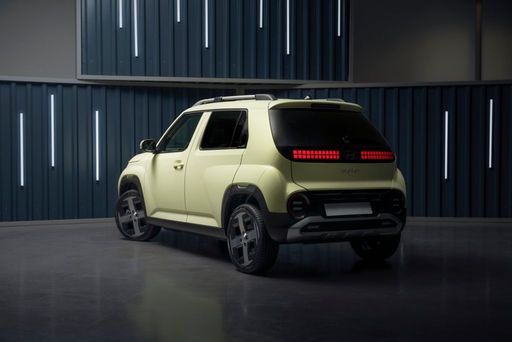
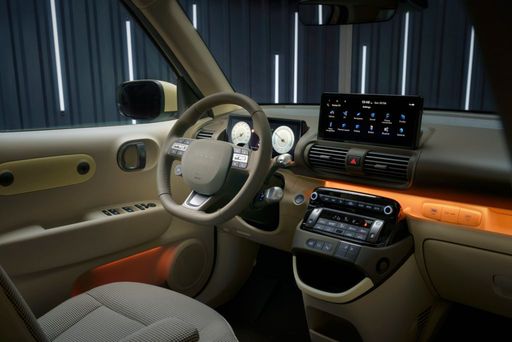
@ Hyundai Motor Company
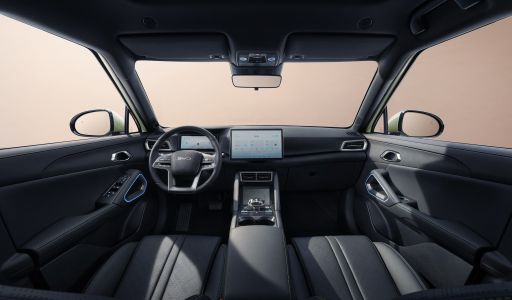
@ BYD Auto / BYD Global Media
VS

Hyundai Inster vs BYD Atto 2 – Which car suits you better?

Two cars, one duel: Hyundai Inster meets BYD Atto 2.
Which one wins in performance, efficiency and value for money? Find out now!

Hyundai Inster

BYD Atto 2

5 (1 Reviews)
rate
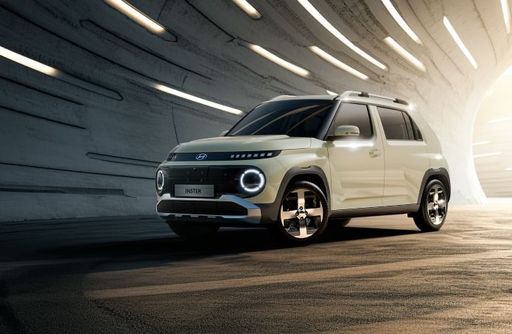
Inster @ Hyundai Motor Company

Hyundai Inster vs. BYD Atto 2: A Battle of Electric SUVs

In the rapidly evolving electric vehicle market, two contenders have emerged to capture the attention of environmentally conscious drivers: the 2025 Hyundai Inster and the 2025 BYD Atto 2. With both models hailing from esteemed manufacturers, these electric SUVs offer unique strengths and differences that cater to a variety of consumer needs. Let's delve into the technical aspects and innovations of these two groundbreaking vehicles, exploring what makes each model stand out in the ever-competitive SUV segment.
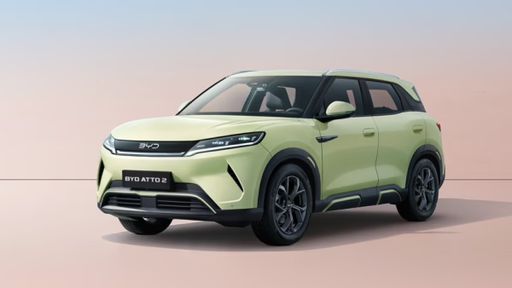
Atto 2 @ BYD Auto / BYD Global Media

Power and Performance

The Hyundai Inster comes equipped with two powertrain options, delivering power outputs of 97 HP and 115 HP, with corresponding torque of 147 Nm. Offering front-wheel drive and an automatic transmission with a reduction gearbox, the Inster accelerates from 0 to 100 km/h in 11.7 to 10.6 seconds. Its top speed reaches up to 150 km/h, making it a respectable contender in the electric SUV market.

On the other hand, the BYD Atto 2 is a powerhouse with a 177 HP motor and 290 Nm of torque. This electric SUV accelerates swiftly from 0 to 100 km/h in just 7.9 seconds and achieves a maximum speed of 160 km/h. Its impressive power and acceleration make for a thrilling driving experience, setting it apart from many competitors in the segment.

Inster @ Hyundai Motor Company

Range and Efficiency

When it comes to range, the Hyundai Inster offers a versatile lineup with electric ranges varying between 327 km and 370 km, depending on the battery capacity of either 42 kWh or 49 kWh. This capability is further supported by a highly efficient energy consumption profile, ranging from 14.3 kWh to 15.1 kWh per 100 km.

The BYD Atto 2, while less varied in its range offerings, provides a solid 312 km on a single charge. It consumes energy at a rate of 16 kWh per 100 km, ensuring a balance between performance and sustainability, backed by its A efficiency class.

Atto 2 @ BYD Auto / BYD Global Media

Design and Dimensions

Both vehicles are classified as SUVs, yet they present different dimensions and design philosophies. The Hyundai Inster is a compact SUV with a length ranging from 3825 mm to 3845 mm, a width of 1610 mm, and a height between 1575 mm and 1610 mm. With a curb weight oscillating from 1380 kg to 1433 kg, it offers a trunk capacity of 238 to 280 liters, depending on the variant.

Conversely, the BYD Atto 2 boasts more spacious dimensions, measuring 4310 mm in length, 1830 mm in width, and 1675 mm in height. This translates into a heftier curb weight of 1570 kg, but also a more generous trunk capacity of 400 liters, making it an ideal choice for families and those requiring extra cargo space.

Inster @ Hyundai Motor Company

Seating and Comfort

Inside, the Hyundai Inster provides seating for four passengers, focusing on compactness and efficiency suited for city driving. In contrast, the BYD Atto 2 comfortably accommodates five passengers, emphasizing space and comfort for longer journeys.

Conclusion

Both the Hyundai Inster and BYD Atto 2 represent the latest innovations in the electric SUV market, each offering distinctive advantages tailored to different types of drivers. The Hyundai Inster excels in efficiency and range versatility, while the BYD Atto 2 shines with its superior power and spaciousness. As the automotive world continues to pivot towards electric vehicles, these two models stand as compelling options for anyone seeking environmentally friendly transportation without compromising on modern style and performance.

Here’s where it gets real: The technical differences in detail

Costs and Efficiency:

Price and efficiency are key factors when choosing a car – and this is often where the real differences emerge.

Hyundai Inster has a noticeable advantage in terms of price – it starts at 20500 £, while the BYD Atto 2 costs 27400 £. That’s a price difference of around 6935 £.

In terms of energy consumption, the advantage goes to the Hyundai Inster: with 14.30 kWh per 100 km, it’s somewhat more efficient than the BYD Atto 2 with 16 kWh. That’s a difference of about 1.70 kWh.

As for range, the Hyundai Inster performs a bit better – achieving up to 370 km, about 58 km more than the BYD Atto 2.

Engine and Performance:

Power, torque and acceleration are the classic benchmarks for car enthusiasts – and here, some clear differences start to show.

When it comes to engine power, the BYD Atto 2 has a evident edge – offering 177 HP compared to 115 HP. That’s roughly 62 HP more horsepower.

In acceleration from 0 to 100 km/h, the BYD Atto 2 is clearly perceptible quicker – completing the sprint in 7.90 s, while the Hyundai Inster takes 10.60 s. That’s about 2.70 s faster.

In terms of top speed, the BYD Atto 2 performs barely noticeable better – reaching 160 km/h, while the Hyundai Inster tops out at 150 km/h. The difference is around 10 km/h.

There’s also a difference in torque: BYD Atto 2 pulls clearly stronger with 290 Nm compared to 147 Nm. That’s about 143 Nm difference.

Space and Everyday Use:

Cabin size, boot volume and payload all play a role in everyday practicality. Here, comfort and flexibility make the difference.

Seats: BYD Atto 2 offers a bit more seating capacity – 5 vs 4.

In curb weight, Hyundai Inster is somewhat lighter – 1380 kg compared to 1570 kg. The difference is around 190 kg.

In terms of boot space, the BYD Atto 2 offers evident more room – 400 L compared to 280 L. That’s a difference of about 120 L.

In maximum load capacity, the BYD Atto 2 performs distinct better – up to 1340 L, which is about 281 L more than the Hyundai Inster.

When it comes to payload, BYD Atto 2 a bit takes the win – 410 kg compared to 357 kg. That’s a difference of about 53 kg.

Who comes out on top?

Overall, the BYD Atto 2 shows itself to be outperforms in nearly all aspects and secures the title of DriveDuel Champion.
It convinces with the more balanced overall package and proves to be the more versatile choice for everyday use.

Hyundai Inster
BYD Atto 2

Costs and Consumption

View detailed analysis

Engine and Performance

View detailed analysis

Dimensions and Body

View detailed analysis
from about £27,400
Atto 2 @ BYD Auto / BYD Global Media

BYD Atto 2

  • Engine Type : Electric
  • Transmission : Automatic
  • Drive Type : Front-Wheel Drive
  • Power HP : 177 HP
  • Consumption kWh/100km : 16 kWh
  • Electric Range : 312 km

Hyundai Inster

The Inster has quickly captured the attention of automotive enthusiasts with its striking design and dynamic performance. This model seamlessly blends advanced technology with comfort, making it an ideal choice for both daily commutes and adventurous road trips. With its spacious interior and innovative features, the Inster promises an exhilarating driving experience that doesn’t compromise on practicality.

details

BYD Atto 2

5 (1 Reviews)
rate

The Atto 2 is making waves in the electric vehicle market with its sleek design and impressive range. This innovative model combines cutting-edge technology with captivating aesthetics, making it a standout choice for eco-conscious drivers. With its spacious interior and advanced features, the Atto 2 offers both comfort and convenience for everyday use.

details
Hyundai Inster
BYD Atto 2
Inster @ Hyundai Motor Company
Atto 2 @ BYD Auto / BYD Global Media

Costs and Consumption

Price
20500 - 25800 £
Price
27400 - 30000 £
Consumption L/100km
-
Consumption L/100km
-
Consumption kWh/100km
14.3 - 15.1 kWh
Consumption kWh/100km
16 kWh
Electric Range
327 - 370 km
Electric Range
312 km
Battery Capacity
42 - 49 kWh
Battery Capacity
-
co2
0 g/km
co2
0 g/km
Fuel tank capacity
-
Fuel tank capacity
-

Dimensions and Body

Body Type
SUV
Body Type
SUV
Seats
4
Seats
5
Doors
5
Doors
5
Curb weight
1380 - 1433 kg
Curb weight
1570 kg
Trunk capacity
238 - 280 L
Trunk capacity
400 L
Length
3825 - 3845 mm
Length
4310 mm
Width
1610 mm
Width
1830 mm
Height
1575 - 1610 mm
Height
1675 mm
Max trunk capacity
1059 L
Max trunk capacity
1340 L
Payload
317 - 357 kg
Payload
410 kg

Engine and Performance

Engine Type
Electric
Engine Type
Electric
Transmission
Automatic
Transmission
Automatic
Transmission Detail
Reduction Gearbox
Transmission Detail
Reduction Gearbox
Drive Type
Front-Wheel Drive
Drive Type
Front-Wheel Drive
Power HP
97 - 115 HP
Power HP
177 HP
Acceleration 0-100km/h
10.6 - 11.7 s
Acceleration 0-100km/h
7.90 s
Max Speed
140 - 150 km/h
Max Speed
160 km/h
Torque
147 Nm
Torque
290 Nm
Number of Cylinders
-
Number of Cylinders
-
Power kW
71 - 85 kW
Power kW
130 kW
Engine capacity
-
Engine capacity
-

General

Model Year
2025
Model Year
2025
CO2 Efficiency Class
A
CO2 Efficiency Class
A
Brand
Hyundai
Brand
BYD
What drivetrain options does the Hyundai Inster have?

Available configurations include Front-Wheel Drive.

The prices and data displayed are estimates based on German list prices and may vary by country. This information is not legally binding.

do not click