VS

Hyundai Inster vs Suzuki Ignis comparison

Compare performance (115 HP vs 83 HP), boot space and price (20,500 £ vs 15,600 £ ) at a glance. Find out which car is the better choice for you – Hyundai Inster or Suzuki Ignis?

Hyundai Inster vs Suzuki Ignis: Key differences

Hyundai Inster

5 (1 Reviews)
rate
  • noticeably more power
  • somewhat quicker 0–100 km/h
  • only slightly more trunk space
details

Suzuki Ignis

4.7 (1 Reviews)
rate
  • clearly cheaper
  • significantly lighter
details

By Achim Sedelmaier

Inster

The automotive landscape is evolving rapidly, especially in the realm of compact SUVs. In this article, we compare two distinctive models: the Suzuki Ignis and the Hyundai Inster. Each vehicle offers unique advantages and appeals to different driver preferences. Let’s dive into the technical aspects and innovations that define these contenders in the compact SUV market.

Ignis

Model Overview

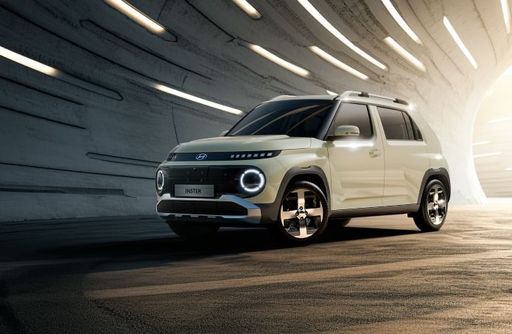
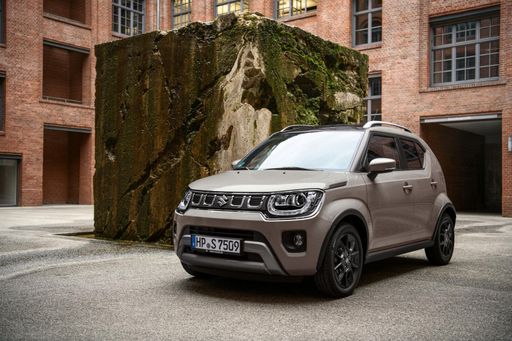
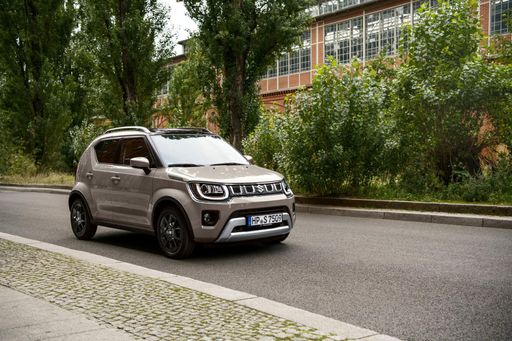
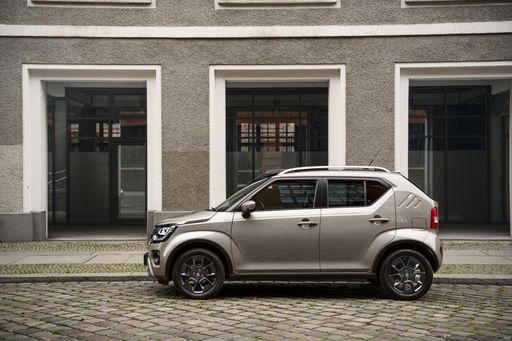
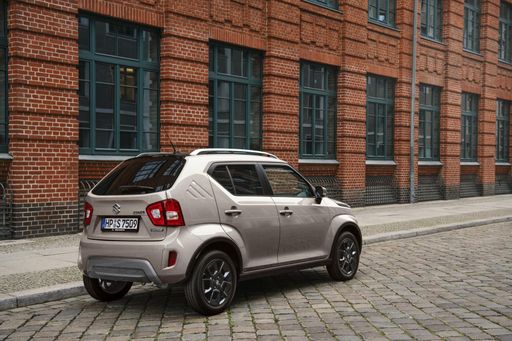
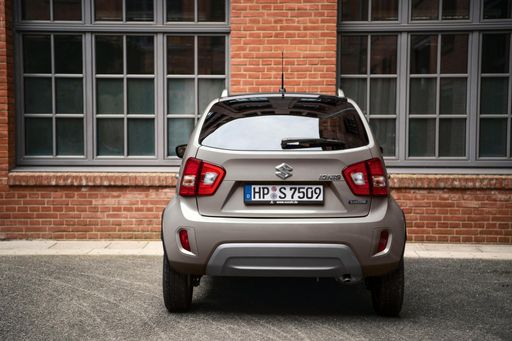
The Suzuki Ignis, a compact SUV introduced in 2020, is celebrated for its practicality and agile handling, making it a favorite for urban drivers. On the other hand, the Hyundai Inster, set to debut in 2025, represents a shift toward sustainable travel, showcasing Hyundai's commitment to electric mobility.

Inster

Engine & Transmission

The Suzuki Ignis comes equipped with a petrol MHEV (Mild Hybrid Electric Vehicle) engine, offering two transmission options: a manual gearbox and a CVT automatic. Producing 83 HP and 107 Nm of torque, it provides efficient performance with a fuel consumption ranging from 4.9 to 5.4 L/100 km, depending on driving conditions.

In contrast, the Hyundai Inster is solely an electric vehicle, featuring a powertrain capable of delivering between 97 to 115 HP and a robust torque of 147 Nm. Its automatic reduction gearbox promises smooth, responsive acceleration, and with power consumption measured at 14.3 to 15.1 kWh/100 km, it presents a sustainable alternative for eco-conscious drivers.

Ignis

Performance and Acceleration

In terms of acceleration, the Ignis takes approximately 12.7 seconds to reach 100 km/h, a respectable figure for its class. Its maximum speed reaches 165 km/h, making it suitable for both urban commutes and occasional highway journeys.

The Inster, on the other hand, features an impressive acceleration time of 10.6 seconds, showcasing its electric performance capabilities. With a max speed of 150 km/h, it is well-equipped for modern driving demands, especially within city limitations.

Inster

Dimensions and Design

The Suzuki Ignis measures 3700 mm in length, 1690 mm in width, and stands at a height of 1605 mm. This compact size makes it nimble on city streets while providing a decent trunk capacity of 267 L.

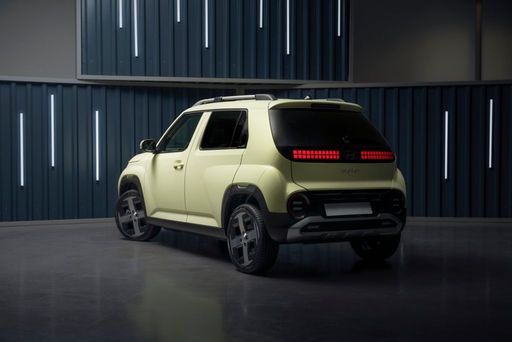
In comparison, the Hyundai Inster is slightly larger, measuring between 3825 and 3845 mm in length, and 1610 mm in width. Despite its bulkier dimensions, it offers a practical trunk capacity of up to 280 L, ideal for daily errands and weekend getaways.

Ignis

Battery and Electric Range

A notable advantage of the Inster lies in its electric capabilities, featuring battery capacities ranging from 42 to 49 kWh. This translates to an impressive electric range of up to 370 km, ensuring the vehicle is fully prepared for longer trips without the anxiety of frequent charging stops.

In contrast, the Ignis, reliant on traditional fuel, does not have the range limitations inherent to combustion engines but offers a fuel tank capacity of 32 liters, providing reasonable range on a full tank for urban utilization.

Environmental Considerations

In the realm of emissions, the Suzuki Ignis falls within B-C efficiency classes, with CO2 emissions ranging from 110 to 122 g/km. While it certainly is more efficient than many vehicles, it cannot match the Inster's zero emissions, as it operates fully on electric power, classified as A in terms of CO2 efficiency.

Final Thoughts

Choosing between the Suzuki Ignis and the Hyundai Inster ultimately depends on one’s driving needs and preferences. The Ignis is a solid choice for those seeking a compact, fuel-efficient SUV with a mild hybrid option. In contrast, the Inster appeals to eco-friendly consumers looking to transition to electric mobility without compromising on style or functionality.

Both models showcase their manufacturers' commitment to innovation, albeit in different directions. As the automotive industry shifts toward sustainability, the choice between these two distinct vehicles points to the future of urban driving.

Here’s where it gets real: The technical differences in detail

Inster

Costs and Efficiency:

Looking at overall running costs, both models reveal some interesting differences in everyday economy.

Suzuki Ignis is clearly cheaper – starting at 15,600 £ , while the Hyundai Inster costs 20,500 £ . That’s a price difference of around 4,877 £.

Ignis

Engine and Performance:

Power, torque and acceleration say a lot about how a car feels on the road. This is where you see which model delivers more driving dynamics.

When it comes to engine power, the Hyundai Inster offers noticeably more power – delivering 115 HP compared to 83 HP. That’s roughly 32 HP more horsepower.

When accelerating from 0 to 100 km/h, the Hyundai Inster is somewhat quicker – completing the sprint in 10.6 s, while the Suzuki Ignis takes 12.7 s. That’s about 2.1 s quicker.

There’s also a difference in torque: the Hyundai Inster delivers noticeably more torque with 147 Nm compared to 107 Nm. That’s about 40 Nm more.

Inster

Space and Everyday Use:

Cabin size, boot volume and payload all play a role in everyday practicality. Here, comfort and flexibility make the difference.

Seats: Suzuki Ignis offers more seats – 5 vs 4.

In terms of curb weight, Suzuki Ignis is significantly lighter – 935 kg compared to 1,380 kg. The difference is around 445 kg.

Looking at boot space, the Hyundai Inster offers only slightly more boot space – 280 L compared to 267 L. That’s a difference of about 13 L.

When it comes to payload, the Suzuki Ignis carries barely more – 395 kg compared to 357 kg. That’s a difference of about 38 kg.

Who wins the race in the data check?

The Hyundai Inster holds a decisive overall lead in the objective data comparison.
This result only shows which model scores more points on paper – not which of the two cars feels right for you.

from £20,500
Inster

Hyundai Inster

  • Engine Type : Electric
  • Transmission : Automatic
  • Drive Type : Front-Wheel Drive
  • Power HP : 97 - 115 HP
  • Consumption kWh/100km : 14.3 - 15.1 kWh/100km
  • Electric Range : 327 - 370 km
Hyundai Inster
Suzuki Ignis

Costs and Consumption

View detailed analysis

Engine and Performance

View detailed analysis

Dimensions and Body

View detailed analysis

Hyundai Inster

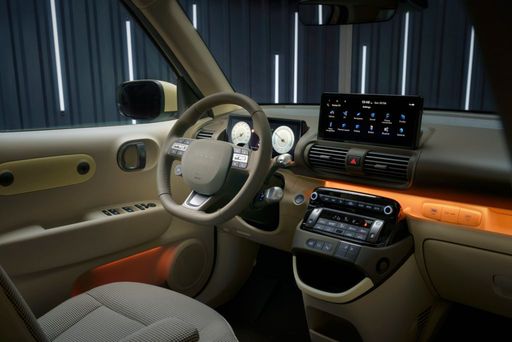
The Inster has quickly captured the attention of automotive enthusiasts with its striking design and dynamic performance. This model seamlessly blends advanced technology with comfort, making it an ideal choice for both daily commutes and adventurous road trips. With its spacious interior and innovative features, the Inster promises an exhilarating driving experience that doesn’t compromise on practicality.

details

Suzuki Ignis

The Suzuki Ignis is a cheeky compact crossover that turns city chores into cheerful adventures, with chunky styling and a surprisingly practical cabin. It won't pretend to be a sports car, but its nimble manners, low running costs and ample personality make it an ideal pick for urban buyers who want fun without pretension.

details
Hyundai Inster
Suzuki Ignis

Costs and Consumption

Price
20,500 - 25,800 £
Price
15,600 - 19,500 £
Consumption L/100km
-
Consumption L/100km
4.9 - 5.4 L/100km
Consumption kWh/100km
14.3 - 15.1 kWh/100km
Consumption kWh/100km
-
Electric Range
327 - 370 km
Electric Range
-
Battery Capacity
-
Battery Capacity
-
co2
0 g/km
co2
110 - 122 g/km
Fuel tank capacity
-
Fuel tank capacity
30 - 32 L

Dimensions and Body

Body Type
SUV
Body Type
SUV
Seats
4
Seats
4 - 5
Doors
-
Doors
5
Curb weight
1,380 - 1,433 kg
Curb weight
935 - 995 kg
Trunk capacity
238 - 280 L
Trunk capacity
204 - 267 L
Length
-
Length
3,700 mm
Width
1,610 mm
Width
1,690 mm
Height
-
Height
1,605 mm
Max trunk capacity
-
Max trunk capacity
1,086 - 1,100 L
Payload
317 - 357 kg
Payload
335 - 395 kg

Engine and Performance

Engine Type
Electric
Engine Type
Petrol MHEV
Transmission
Automatic
Transmission
Manuel, Automatic
Transmission Detail
Reduction Gearbox
Transmission Detail
Manual Gearbox, CVT
Drive Type
Front-Wheel Drive
Drive Type
Front-Wheel Drive, All-Wheel Drive
Power HP
97 - 115 HP
Power HP
83 HP
Acceleration 0-100km/h
10.6 - 11.7 s
Acceleration 0-100km/h
12.7 - 12.8 s
Max Speed
-
Max Speed
155 - 165 km/h
Torque
147 Nm
Torque
107 Nm
Number of Cylinders
-
Number of Cylinders
4
Power kW
71 - 85 kW
Power kW
61 kW
Engine capacity
-
Engine capacity
1,197 cm3

General

Model Year
2025
Model Year
2020
CO2 Efficiency Class
A
CO2 Efficiency Class
C, D
Brand
Hyundai
Brand
Suzuki
DriveDuel uses data analysis and artificial intelligence to evaluate vehicle data and create content. Content is regularly reviewed and improved. The displayed prices are estimates based on German list prices, adjusted to the respective country’s VAT. Country-specific registration taxes are not included. This information is not legally binding.