
 Deutschland
 France
 Nederland
 Great Britain
 Sverige
 Norge
Norge Danmark
 Suomi
Suomi Italia
 Polska
 España
VS
Hyundai Kona vs Porsche Boxster – Differences & prices compared
Compare performance, boot capacity, efficiency and price at a glance.
Find out which car is the better choice for you – Hyundai Kona or Porsche Boxster?
Kona
@ Hyundai Motor Company
Costs and Efficiency:
Price and efficiency are key factors when choosing a car – and this is often where the real differences emerge.
Hyundai Kona has a decisively advantage in terms of price – it starts at 23100 £, while the Porsche Boxster costs 136000 £. That’s a price difference of around 112971 £.
Fuel consumption also shows a difference: Hyundai Kona manages with 4.60 L and is therefore clearly more efficient than the Porsche Boxster with 12.70 L. The difference is about 8.10 L per 100 km.
Kona
@ Hyundai Motor Company
Engine and Performance:
Under the bonnet, it becomes clear which model is tuned for sportiness and which one takes the lead when you hit the accelerator.
When it comes to engine power, the Porsche Boxster has a significantly edge – offering 500 HP compared to 218 HP. That’s roughly 282 HP more horsepower.
In acceleration from 0 to 100 km/h, the Porsche Boxster is clearly quicker – completing the sprint in 3.40 s, while the Hyundai Kona takes 7.80 s. That’s about 4.40 s faster.
In terms of top speed, the Porsche Boxster performs noticeable better – reaching 308 km/h, while the Hyundai Kona tops out at 210 km/h. The difference is around 98 km/h.
There’s also a difference in torque: Porsche Boxster pulls significantly stronger with 450 Nm compared to 265 Nm. That’s about 185 Nm difference.
Kona
@ Hyundai Motor Company
Space and Everyday Use:
Beyond pure performance, interior space and usability matter most in daily life. This is where you see which car is more practical and versatile.
Seats: Hyundai Kona offers convincingly more seating capacity – 5 vs 2.
In curb weight, Hyundai Kona is hardly perceptible lighter – 1370 kg compared to 1485 kg. The difference is around 115 kg.
In terms of boot space, the Hyundai Kona offers decisively more room – 466 L compared to 122 L. That’s a difference of about 344 L.
When it comes to payload, Hyundai Kona convincingly takes the win – 490 kg compared to 270 kg. That’s a difference of about 220 kg.
Who wins the race?
The Hyundai Kona proves to be leaves the rival little chance and therefore becomes our DriveDuel Champion!
Hyundai Kona is the better all-rounder in this comparison.
from about £23,100
 @ Hyundai Motor Company
Hyundai Kona
Hyundai Kona
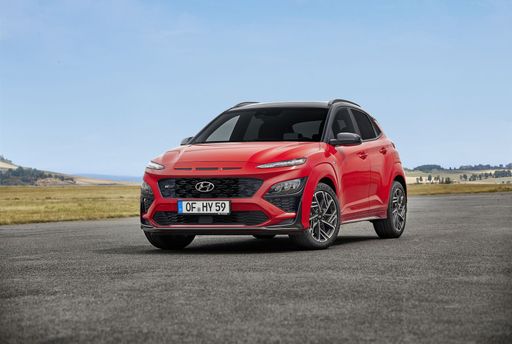
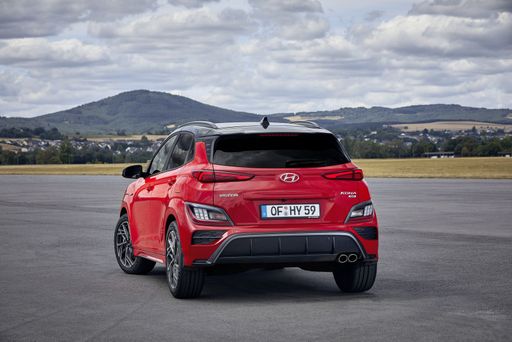
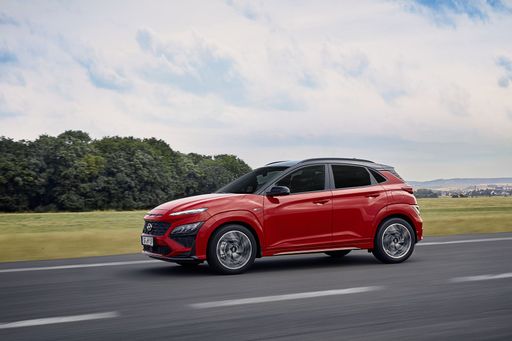
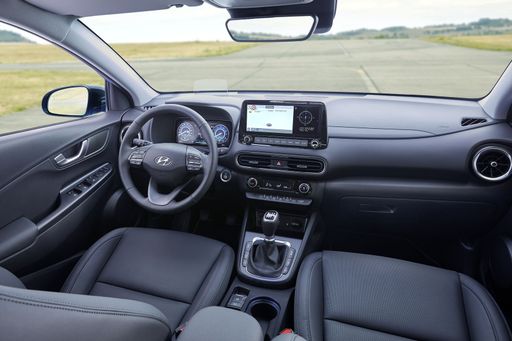
The Hyundai Kona wears its personality on the outside with bold styling and sprightly handling that turns city driving into something a little more fun than a commute. It blends practical space, modern tech and sensible running costs into a compact, stylish package — a smart pick if you want flair without paying luxury prices.
details
@ Hyundai Motor Company
 @ Hyundai Motor Company
 @ Hyundai Motor Company
 @ Hyundai Motor Company
Porsche Boxster
The Porsche Boxster epitomizes the essence of a pure, open-top driving experience with its mid-engine roadster design. Known for its agile handling and dynamic performance, the Boxster seamlessly blends luxury with thrilling precision on the road. Its unmistakable styling and superior engineering continue to captivate automotive enthusiasts who crave a visceral connection to the art of driving.
details
Hyundai Kona
Porsche Boxster
|
@ Hyundai Motor Company
|
|
|
|
|
Costs and Consumption |
|
|---|---|
|
Price
23100 - 41600 £
|
Price
136000 £
|
|
Consumption L/100km
4.6 - 7 L
|
Consumption L/100km
12.70 L
|
|
Consumption kWh/100km
14.6 - 16.8 kWh
|
Consumption kWh/100km
-
|
|
Electric Range
377 - 514 km
|
Electric Range
-
|
|
Battery Capacity
1.3 - 65.4 kWh
|
Battery Capacity
-
|
|
co2
0 - 163 g/km
|
co2
288 g/km
|
|
Fuel tank capacity
38 - 47 L
|
Fuel tank capacity
54 L
|
Dimensions and Body |
|
|---|---|
|
Body Type
SUV
|
Body Type
Roadster
|
|
Seats
5
|
Seats
2
|
|
Doors
5
|
Doors
2
|
|
Curb weight
1370 - 1773 kg
|
Curb weight
1485 kg
|
|
Trunk capacity
466 L
|
Trunk capacity
122 L
|
|
Length
4350 - 4385 mm
|
Length
4418 mm
|
|
Width
1825 mm
|
Width
1822 mm
|
|
Height
1580 - 1585 mm
|
Height
1252 mm
|
|
Max trunk capacity
1300 L
|
Max trunk capacity
-
|
|
Payload
420 - 490 kg
|
Payload
270 kg
|
Engine and Performance |
|
|---|---|
|
Engine Type
Electric, Petrol, Full Hybrid
|
Engine Type
Petrol
|
|
Transmission
Automatic, Manuel
|
Transmission
Automatic
|
|
Transmission Detail
Reduction Gearbox, Manual Gearbox, Dual-Clutch Automatic
|
Transmission Detail
Dual-Clutch Automatic
|
|
Drive Type
Front-Wheel Drive, All-Wheel Drive
|
Drive Type
Rear-Wheel Drive
|
|
Power HP
115 - 218 HP
|
Power HP
500 HP
|
|
Acceleration 0-100km/h
7.8 - 11.9 s
|
Acceleration 0-100km/h
3.40 s
|
|
Max Speed
162 - 210 km/h
|
Max Speed
308 km/h
|
|
Torque
200 - 265 Nm
|
Torque
450 Nm
|
|
Number of Cylinders
3 - 4
|
Number of Cylinders
6
|
|
Power kW
85 - 160 kW
|
Power kW
368 kW
|
|
Engine capacity
998 - 1598 cm3
|
Engine capacity
3996 cm3
|
General |
|
|---|---|
|
Model Year
2024 - 2025
|
Model Year
2023
|
|
CO2 Efficiency Class
A, D, C, E, F
|
CO2 Efficiency Class
G
|
|
Brand
Hyundai
|
Brand
Porsche
|
Is the Hyundai Kona offered with different drivetrains?
Available configurations include Front-Wheel Drive or All-Wheel Drive.
The prices and data displayed are estimates based on German list prices and may vary by country. This information is not legally binding.