VS

Hyundai Santa Fe vs Mercedes E Class comparison

Compare performance (288 HP vs 585 HP), boot space and price (51,700 £ vs 50,500 £ ) at a glance. Find out which car is the better choice for you – Hyundai Santa Fe or Mercedes E Class?

Hyundai Santa Fe vs Mercedes E Class: Key differences

Hyundai Santa Fe

4.7 (1 Reviews)
rate
  • visibly more trunk space
details

Mercedes E Class

4.7 (2 Reviews)
rate
  • marginally cheaper
  • clearly more power
  • significantly more efficient
  • significantly more electric range
  • significantly quicker 0–100 km/h
  • marginally lighter
details

All details on performance, efficiency, range and trunk space can be found in the technical comparison below – including user reviews for both models.

By Achim Sedelmaier

Santa Fe

Practical Elegance vs. Premium Prestige: Hyundai Santa Fe vs. Mercedes E-Klasse

The automotive world presents a plethora of choices but few comparisons are as fascinating as between a versatile SUV and a luxury sedan. Here we delve into the Hyundai Santa Fe, a symbol of modern practicality and the Mercedes E-Klasse, an epitome of luxury and engineering perfection.
E Class

Body Style and Design

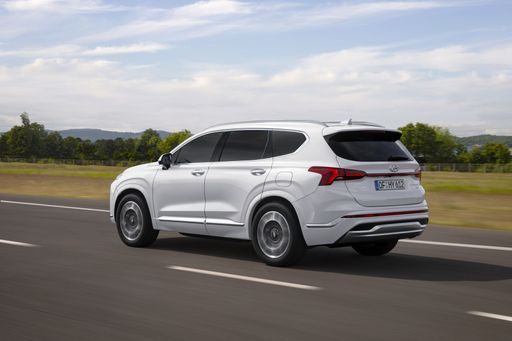
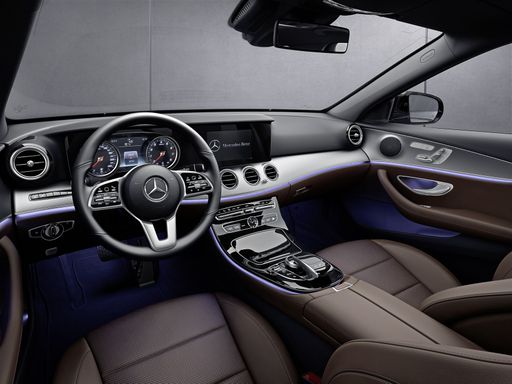
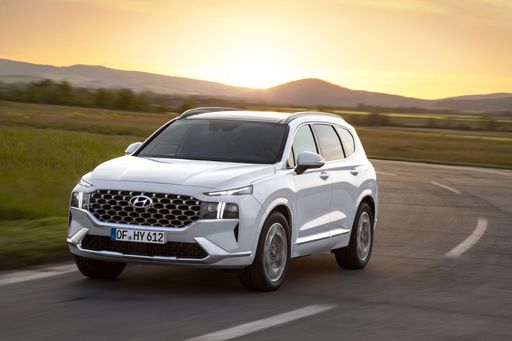
The Hyundai Santa Fe with its robust SUV body style offers versatility and presence on the road. Measuring 4830 mm in length, 1900 mm in width, and 1720 mm in height, it makes an impressive statement. The design embodies a balanced mix of modern aesthetics and functionality.

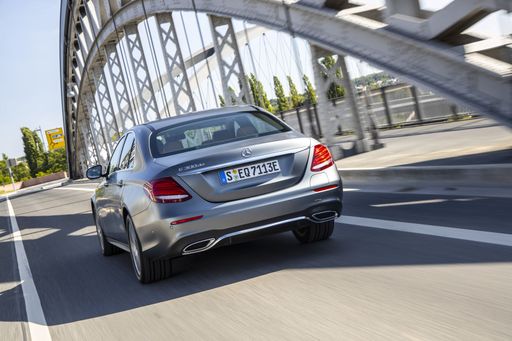
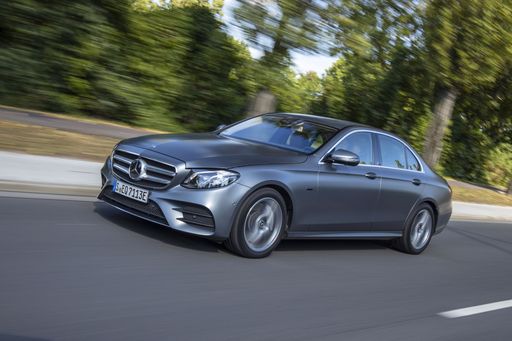
Meanwhile, the Mercedes E-Klasse showcases the elegance of a sedan body. Stretching up to 4959 mm in length and standing at 1472 mm tall, this vehicle radiates opulence. Its sleek contours and adaptive styling cater to the discerning eye, setting a high benchmark in sedan design.

Santa Fe

Performance and Dynamics

Under the hood, the Hyundai Santa Fe offers a choice between full hybrid and plug-in hybrid engines, delivering up to 253 HP. The automatic transmission ensures seamless gear changes, supported by options for both front-wheel and all-wheel drive systems. With an acceleration of 0-100 km/h ranging between 9.3 to 9.8 seconds, it offers a decent balance of power and efficiency, notable for an SUV.

In contrast, the Mercedes E-Klasse dazzles with a diverse engine lineup, including powerful plug-in hybrids that can churn out up to 585 HP. Rear-wheel and all-wheel drive configurations ensure an exhilarating drive, with the most powerful variants achieving 0-100 km/h in just 4 seconds. This power is paired with an effortless ride and sophisticated handling, echoing the brand's reputation for driving excellence.

E Class

Innovation and Technology

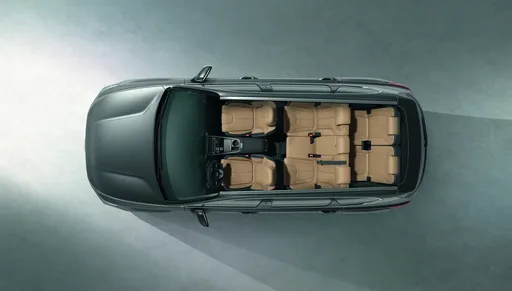
The Santa Fe is equipped with significant technological advancements in green mobility. It features a commendable electric range of 54 km for its plug-in version, with fuel consumption as low as 1.7 L/100km. The SUV also provides robust passenger configurations, with available seating for up to 7 people and trunk capacity ranging from 621 to 711 liters, ensuring ample space for family adventures.

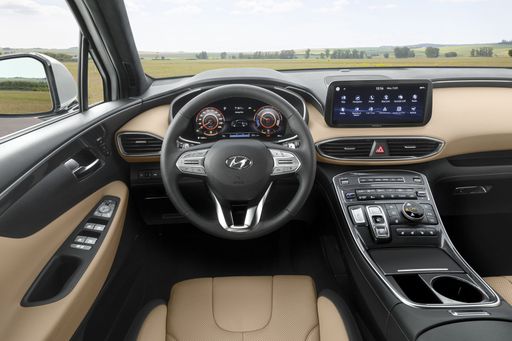
The E-Klasse takes a leap towards the future with its impressive electric ranges, reaching up to 114 km, thanks to its 21.2 kWh battery capacity. This dedication to sustainability, combined with a fuel consumption of only 0.4 L/100km in some hybrid models, positions the E-Klasse as a leading eco-friendly luxury vehicle. Its interior design, featuring cutting-edge infotainment systems and driver-assistance technologies, emphasizes luxury with a purpose.

Santa Fe

Efficiency and Emissions

In terms of emissions, the Santa Fe shows diverse ranges. Its CO2 emissions vary from 38 to 167 g/km, with a CO2 Efficiency Class that spans from B to F. It reflects a solid commitment to reducing carbon footprints in the SUV market segment.

The E-Klasse returns outstanding CO2 figures, with some models emitting as little as 11 g/km, achieving an enviable efficiency class of B. Such statistics are testament to Mercedes-Benz's advanced engineering prowess aimed at reducing the environmental impact.

E Class

Cargo and Comfort

The Santa Fe’s practicality is highlighted by its spacious interior and versatile seating arrangements, accommodating families and cargo with ease. Its high trunk capacity ensures that longer trips remain comfortable and convenient.

The E-Klasse, with its 540-liter trunk capacity, balances luxury and utility, designed to cater to both elegance and function. The superior craftsmanship inside offers an indulgent experience for drivers and passengers alike.

Santa Fe

Conclusion

Choosing between the Hyundai Santa Fe and the Mercedes E-Klasse boils down to personal preferences and lifestyle needs. The Santa Fe serves those who seek flexibility, space, and hybrid efficiency without comprising modern tech. Conversely, the E-Klasse appeals to those who value high-end features, performance, and cutting-edge hybrid technology wrapped in the unmistakable sophistication of Mercedes-Benz. Both cars deliver exceptional value in their segments, making either a compelling choice in the ever-evolving automotive landscape.

Here’s where it gets real: The technical differences in detail

Santa Fe

Costs and Efficiency:

Price and efficiency are often the first things buyers look at. Here it becomes clear which model has the long-term edge – whether at the pump, the plug, or in purchase price.

Mercedes E Class is marginally cheaper – starting at 50,500 £ , while the Hyundai Santa Fe costs 51,700 £ . That’s a price difference of around 1,238 £.

Fuel consumption also shows a difference: the Mercedes E Class uses 1.5 L/100km and is significantly more efficient than the Hyundai Santa Fe with 3.8 L/100km. The difference is about 2.3 L/100km.

As for electric range, the Mercedes E Class offers significantly more range – reaching up to 116 km, about 62 km more than the Hyundai Santa Fe.

E Class

Engine and Performance:

Power, torque and acceleration are the classic benchmarks for car enthusiasts – and here, some clear differences start to show.

When it comes to engine power, the Mercedes E Class offers clearly more power – delivering 585 HP compared to 288 HP. That’s roughly 297 HP more horsepower.

When accelerating from 0 to 100 km/h, the Mercedes E Class is significantly quicker – completing the sprint in 4 s, while the Hyundai Santa Fe takes 8 s. That’s about 4 s quicker.

There’s also a difference in torque: the Mercedes E Class delivers significantly more torque with 750 Nm compared to 380 Nm. That’s about 370 Nm more.

Santa Fe

Space and Everyday Use:

Cabin size, boot volume and payload all play a role in everyday practicality. Here, comfort and flexibility make the difference.

Seats: Hyundai Santa Fe offers more seats – 7 vs 5.

In terms of curb weight, Mercedes E Class is marginally lighter – 1,810 kg compared to 1,920 kg. The difference is around 110 kg.

Looking at boot space, the Hyundai Santa Fe offers visibly more boot space – 704 L compared to 540 L. That’s a difference of about 164 L.

When it comes to payload, the Hyundai Santa Fe carries only slightly more – 665 kg compared to 640 kg. That’s a difference of about 25 kg.

Who wins the race in the data check?

The Mercedes E Class is clearly superior overall in the objective data comparison.
This result only shows which model scores more points on paper – not which of the two cars feels right for you.

from £50,500
E Class

Mercedes E Class

  • Engine Type : Petrol MHEV, Plugin Hybrid, Diesel MHEV
  • Transmission : Automatic
  • Drive Type : Rear-Wheel Drive, All-Wheel Drive
  • Power HP : 186 - 585 HP
  • Consumption L/100km : 1.5 - 7.5 L/100km
  • Electric Range : 101 - 116 km
Hyundai Santa Fe
Mercedes E Class

Costs and Consumption

View detailed analysis

Engine and Performance

View detailed analysis

Dimensions and Body

View detailed analysis

Hyundai Santa Fe

The Hyundai Santa Fe blends practical family friendliness with a hint of premium style, offering roomy, sensible packaging wrapped in modern, confident design. Inside it serves up comfortable seats, straightforward tech and a calm, composed ride that makes daily drives feel a little more grown up — a solid all‑rounder that doesn’t try to be flashy.

details

Mercedes E Class

The Mercedes E‑Class is the executive saloon that balances calm refinement with a hint of sporting intent, wrapping luxury in tasteful understatement. It pampers occupants with a composed ride and intuitive tech while quietly reminding you that it’s still very much a Mercedes — authoritative, polished, and unwilling to shout for attention.

details
Hyundai Santa Fe
Mercedes E Class

Costs and Consumption

Price
51,700 - 58,600 £
Price
50,500 - 119,700 £
Consumption L/100km
3.8 - 7.2 L/100km
Consumption L/100km
1.5 - 7.5 L/100km
Consumption kWh/100km
-
Consumption kWh/100km
-
Electric Range
54 km
Electric Range
101 - 116 km
Battery Capacity
-
Battery Capacity
-
co2
90 - 162 g/km
co2
39 - 172 g/km
Fuel tank capacity
-
Fuel tank capacity
-

Dimensions and Body

Body Type
SUV
Body Type
Sedan
Seats
5 - 7
Seats
5
Doors
-
Doors
-
Curb weight
1,920 - 2,165 kg
Curb weight
1,810 - 2,390 kg
Trunk capacity
621 - 704 L
Trunk capacity
370 - 540 L
Length
-
Length
-
Width
1,900 mm
Width
1,880 mm
Height
-
Height
-
Max trunk capacity
-
Max trunk capacity
-
Payload
560 - 665 kg
Payload
530 - 640 kg

Engine and Performance

Engine Type
Full Hybrid, Plugin Hybrid
Engine Type
Petrol MHEV, Plugin Hybrid, Diesel MHEV
Transmission
Automatic
Transmission
Automatic
Transmission Detail
Automatic Gearbox
Transmission Detail
Automatic Gearbox
Drive Type
Front-Wheel Drive, All-Wheel Drive
Drive Type
Rear-Wheel Drive, All-Wheel Drive
Power HP
239 - 288 HP
Power HP
186 - 585 HP
Acceleration 0-100km/h
8 - 9.2 s
Acceleration 0-100km/h
4 - 8.5 s
Max Speed
-
Max Speed
-
Torque
380 Nm
Torque
320 - 750 Nm
Number of Cylinders
4
Number of Cylinders
4 - 6
Power kW
176 - 212 kW
Power kW
137 - 430 kW
Engine capacity
1,598 cm3
Engine capacity
1,993 - 2,999 cm3

General

Model Year
2025
Model Year
2,024 - 2,025
CO2 Efficiency Class
E, F, B
CO2 Efficiency Class
E, F, B, D
Brand
Hyundai
Brand
Mercedes-Benz
DriveDuel uses data analysis and artificial intelligence to evaluate vehicle data and create content. Content is regularly reviewed and improved. The displayed prices are estimates based on German list prices, adjusted to the respective country’s VAT. Country-specific registration taxes are not included. This information is not legally binding.