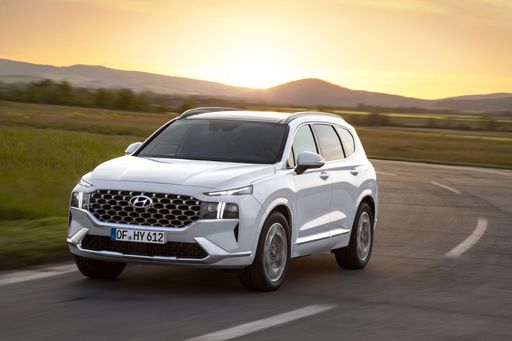
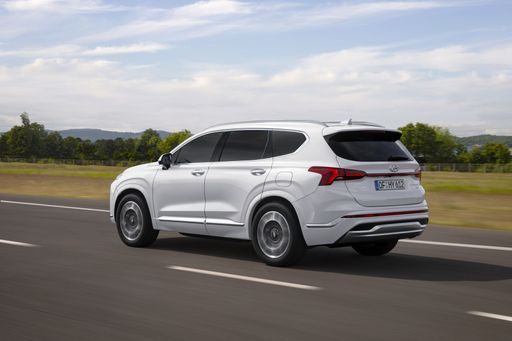
@ Hyundai Motor Company
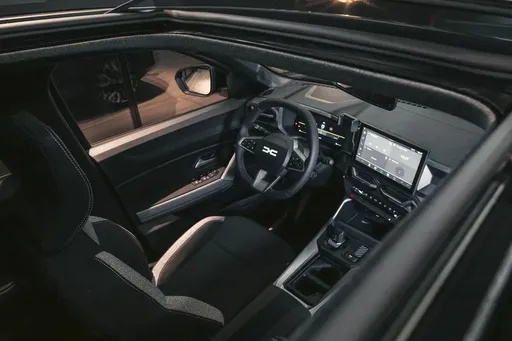
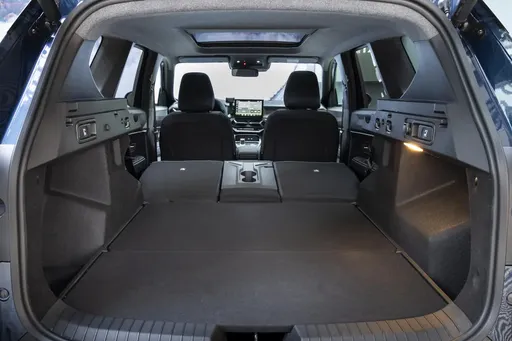
@ Dacia / Renault Group Media
VS

Hyundai Santa Fe vs Dacia Bigster – Which model is better for everyday use?

Both models have their strengths – but which one suits you more?
Compare performance, efficiency, price and space directly: Hyundai Santa Fe or Dacia Bigster?

Hyundai Santa Fe

Dacia Bigster

5 (1 Reviews)
rate
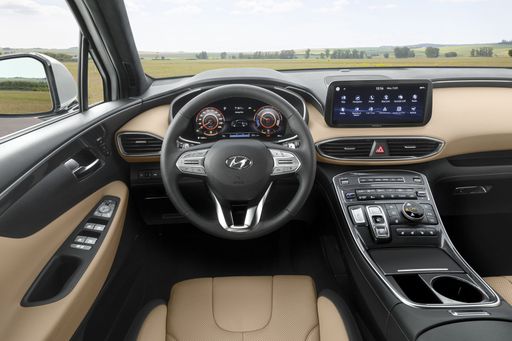
Santa Fe @ Hyundai Motor Company

Exploring the All-New SUVs: Hyundai Santa Fe vs. Dacia Bigster

In the world of SUVs, the advent of new models brings excitement and innovation to car enthusiasts and potential buyers alike. The Hyundai Santa Fe and the Dacia Bigster are two such models that have stirred the market with their unique offerings. Both vehicles cater to the lucrative SUV segment, yet they appeal to different audiences with their distinct features and innovations.
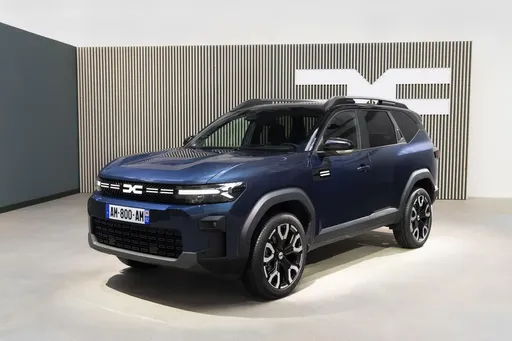
Bigster @ Dacia / Renault Group Media

Performance and Engine Specifications

The Hyundai Santa Fe offers a robust lineup of engines, including Full Hybrid and Plugin Hybrid options. With power output ranging from 215 to 253 HP and a maximum speed of 180 km/h, the Santa Fe promises a powerful drive. The torque of 367 Nm ensures smooth acceleration, taking the Santa Fe from 0-100 km/h in around 9.3 to 9.8 seconds, depending on the variant.

The Dacia Bigster, by contrast, presents a more straightforward approach with its Petrol MHEV, Full Hybrid, and LPG engine options. The power ranges from 130 to 155 HP, with a consistent maximum speed of 180 km/h. With a torque of 230 Nm, the Bigster delivers acceleration from 0-100 km/h in approximately 9.7 to 11.2 seconds, catering to efficiency-oriented drivers.

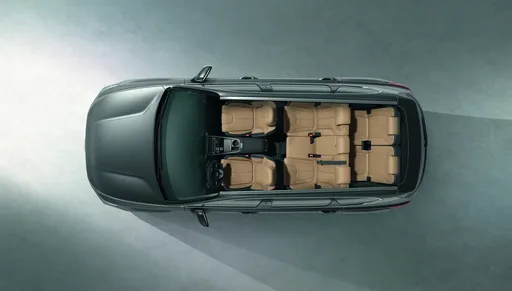
Santa Fe @ Hyundai Motor Company

Efficiency and Environmental Impact

Efficiency is crucial in today's automotive landscape, and both models strive to offer eco-friendly options. The Santa Fe's Full Hybrid and Plugin Hybrid engines deliver an admirable consumption of 6.4 to 6.9 L/100km and 1.7 L/100km, respectively. Its electric range of 54 km further enhances its appeal to environmentally conscious drivers, reflected in its CO2 emissions as low as 38 g/km.

The Dacia Bigster, with its focus on simplicity and practicality, showcases consumption rates between 4.7 and 6.1 L/100km. Its CO2 emissions range from 106 to 137 g/km, showcasing modest efficiency suitable for urban and long-distance travel.

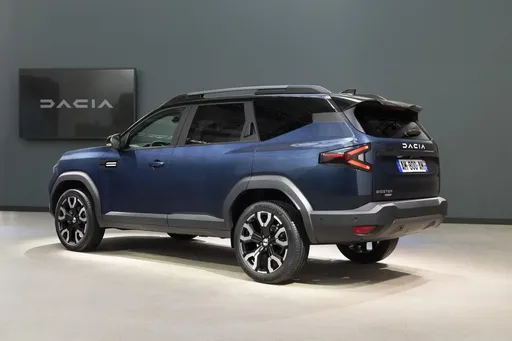
Bigster @ Dacia / Renault Group Media

Interior and Cargo Space

When it comes to interior space, the Hyundai Santa Fe stands out with seating configurations of 5, 6, or 7 seats, catering to larger families or groups. The Santa Fe offers a generous trunk capacity of 621 to 711 liters, ensuring ample space for luggage and gear.

The Dacia Bigster, while slightly more compact, comfortably seats 5 passengers and provides a trunk space ranging from 546 to 667 liters. The Bigster’s design prioritizes practicality, offering sufficient space for daily commuting needs and weekend getaways.

Santa Fe @ Hyundai Motor Company

Dimensions and Design

Reflecting on their designs, the Hyundai Santa Fe measures 4830 mm in length, 1900 mm in width, and 1720 mm in height. Its larger dimensions give it a commanding road presence, suitable for those seeking a more substantial SUV feel.

In comparison, the Dacia Bigster measures 4570 mm in length, 1813 mm in width, and 1705 mm in height, making it an ideal choice for drivers looking for maneuverability coupled with SUV capabilities. Its design approach emphasizes functionality and modern aesthetics.

Bigster @ Dacia / Renault Group Media

The Verdict

Both the Hyundai Santa Fe and Dacia Bigster bring something unique to the SUV market. The Santa Fe is best suited for those who prioritize engine options, technology, and spacious versatility. Meanwhile, the Bigster appeals to consumers looking for practicality, efficiency, and a straightforward approach to the SUV experience.

As these models hit the showrooms, both Hyundai and Dacia are set to satisfy diverse customer needs, ultimately enhancing the competitive landscape of SUVs. Whether you're a thrill-seeker or an urban adventurer, there's a model ready to match your lifestyle.

Here’s where it gets real: The technical differences in detail

Santa Fe @ Hyundai Motor Company

Costs and Efficiency:

Looking at overall running costs, both models reveal some interesting differences in everyday economy.

Dacia Bigster has a convincingly advantage in terms of price – it starts at 20600 £, while the Hyundai Santa Fe costs 51200 £. That’s a price difference of around 30652 £.

Fuel consumption also shows a difference: Hyundai Santa Fe manages with 1.70 L and is therefore convincingly more efficient than the Dacia Bigster with 4.70 L. The difference is about 3 L per 100 km.

Bigster @ Dacia / Renault Group Media

Engine and Performance:

Power, torque and acceleration are the classic benchmarks for car enthusiasts – and here, some clear differences start to show.

When it comes to engine power, the Hyundai Santa Fe has a clearly perceptible edge – offering 253 HP compared to 155 HP. That’s roughly 98 HP more horsepower.

In acceleration from 0 to 100 km/h, the Hyundai Santa Fe is minimal quicker – completing the sprint in 9 s, while the Dacia Bigster takes 9.70 s. That’s about 0.70 s faster.

In terms of top speed, the Hyundai Santa Fe performs barely noticeable better – reaching 196 km/h, while the Dacia Bigster tops out at 180 km/h. The difference is around 16 km/h.

There’s also a difference in torque: Hyundai Santa Fe pulls clearly perceptible stronger with 380 Nm compared to 230 Nm. That’s about 150 Nm difference.

Santa Fe @ Hyundai Motor Company

Space and Everyday Use:

Beyond pure performance, interior space and usability matter most in daily life. This is where you see which car is more practical and versatile.

Seats: Hyundai Santa Fe offers noticeable more seating capacity – 7 vs 5.

In curb weight, Dacia Bigster is clearly perceptible lighter – 1425 kg compared to 1920 kg. The difference is around 495 kg.

In terms of boot space, the Hyundai Santa Fe offers barely noticeable more room – 711 L compared to 667 L. That’s a difference of about 44 L.

In maximum load capacity, the Hyundai Santa Fe performs slight better – up to 2032 L, which is about 95 L more than the Dacia Bigster.

When it comes to payload, Hyundai Santa Fe noticeable takes the win – 665 kg compared to 467 kg. That’s a difference of about 198 kg.

Who comes out on top?

Overall, the Hyundai Santa Fe shows itself to be wins the duel decisively and secures the title of DriveDuel Champion.
It convinces with the more balanced overall package and proves to be the more versatile choice for everyday use.

Hyundai Santa Fe
Dacia Bigster

Costs and Consumption

View detailed analysis

Engine and Performance

View detailed analysis

Dimensions and Body

View detailed analysis
from about £51,200
Santa Fe @ Hyundai Motor Company

Hyundai Santa Fe

  • Engine Type : Plugin Hybrid, Full Hybrid
  • Transmission : Automatic
  • Drive Type : All-Wheel Drive, Front-Wheel Drive
  • Power HP : 239 - 253 HP
  • Consumption L/100km : 1.7 - 7.1 L
  • Electric Range : 54 km

Hyundai Santa Fe

The Hyundai Santa Fe blends practical family friendliness with a hint of premium style, offering roomy, sensible packaging wrapped in modern, confident design. Inside it serves up comfortable seats, straightforward tech and a calm, composed ride that makes daily drives feel a little more grown up — a solid all‑rounder that doesn’t try to be flashy.

details

Dacia Bigster

5 (1 Reviews)
rate

The Bigster is poised to redefine the SUV segment with its bold design and spacious interior, catering to the needs of both families and adventure seekers alike. Emphasizing sustainability and practicality, this model reflects a modern approach to automotive engineering, making it a compelling choice for environmentally conscious drivers. With its striking presence on the road, the Bigster not only captures attention but also embodies a new era of versatile mobility.

details
Hyundai Santa Fe
Dacia Bigster
Santa Fe @ Hyundai Motor Company
Bigster @ Dacia / Renault Group Media

Costs and Consumption

Price
51200 - 58400 £
Price
20600 - 26600 £
Consumption L/100km
1.7 - 7.1 L
Consumption L/100km
4.7 - 7.1 L
Consumption kWh/100km
-
Consumption kWh/100km
-
Electric Range
54 km
Electric Range
-
Battery Capacity
-
Battery Capacity
-
co2
38 - 160 g/km
co2
106 - 137 g/km
Fuel tank capacity
47 - 67 L
Fuel tank capacity
50 - 55 L

Dimensions and Body

Body Type
SUV
Body Type
SUV
Seats
5 - 7
Seats
5
Doors
5
Doors
5
Curb weight
1920 - 2165 kg
Curb weight
1425 - 1547 kg
Trunk capacity
621 - 711 L
Trunk capacity
510 - 667 L
Length
4830 mm
Length
4570 mm
Width
1900 mm
Width
1813 mm
Height
1720 mm
Height
1705 mm
Max trunk capacity
1942 - 2032 L
Max trunk capacity
1813 - 1937 L
Payload
560 - 665 kg
Payload
383 - 467 kg

Engine and Performance

Engine Type
Plugin Hybrid, Full Hybrid
Engine Type
Petrol MHEV, Full Hybrid, LPG
Transmission
Automatic
Transmission
Manuel, Automatic
Transmission Detail
Automatic Gearbox
Transmission Detail
Manual Gearbox, Automated Manual
Drive Type
All-Wheel Drive, Front-Wheel Drive
Drive Type
All-Wheel Drive, Front-Wheel Drive
Power HP
239 - 253 HP
Power HP
130 - 155 HP
Acceleration 0-100km/h
9 - 9.3 s
Acceleration 0-100km/h
9.7 - 11.2 s
Max Speed
180 - 196 km/h
Max Speed
180 km/h
Torque
367 - 380 Nm
Torque
230 Nm
Number of Cylinders
4
Number of Cylinders
3 - 4
Power kW
176 - 186 kW
Power kW
96 - 115 kW
Engine capacity
1598 cm3
Engine capacity
1199 - 1799 cm3

General

Model Year
2024 - 2025
Model Year
2025
CO2 Efficiency Class
B, E, F
CO2 Efficiency Class
E, D, C
Brand
Hyundai
Brand
Dacia
What drivetrain options does the Hyundai Santa Fe have?

Available configurations include All-Wheel Drive or Front-Wheel Drive.

The prices and data displayed are estimates based on German list prices and may vary by country. This information is not legally binding.