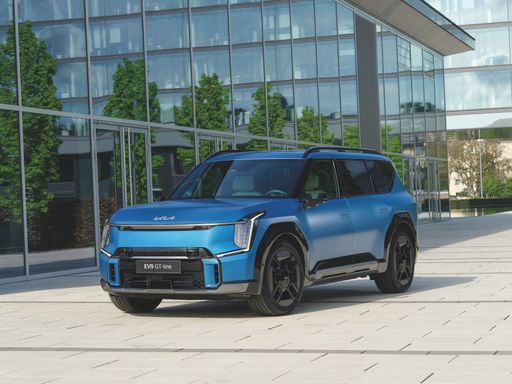
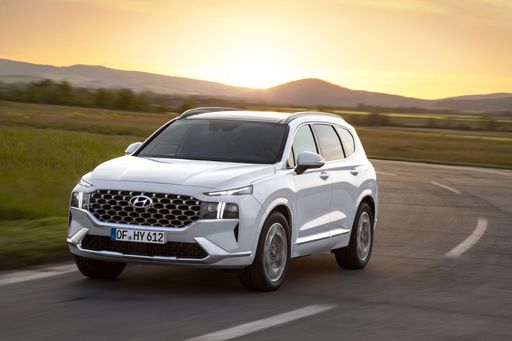
Compare performance (288 HP vs 508 HP), boot space and price (51200 £ vs 53100 £ ) at a glance. Find out which car is the better choice for you – Hyundai Santa Fe or Kia EV9?
When it comes to price and running costs, the biggest differences usually appear. This is often where you see which car fits your budget better in the long run.
Hyundai Santa Fe has a slight advantage in terms of price – it starts at 51200 £ , while the Kia EV9 costs 53100 £ . That’s a price difference of around 1920 £.
As for electric range, the Kia EV9 performs clearly better – achieving up to 563 km, about 509 km more than the Hyundai Santa Fe.
Under the bonnet, it becomes clear which model is tuned for sportiness and which one takes the lead when you hit the accelerator.
When it comes to engine power, the Kia EV9 has a significantly edge – offering 508 HP compared to 288 HP. That’s roughly 220 HP more horsepower.
In acceleration from 0 to 100 km/h, the Kia EV9 is clearly quicker – completing the sprint in 4.60 s, while the Hyundai Santa Fe takes 8 s. That’s about 3.40 s faster.
In terms of top speed, the Kia EV9 performs slight better – reaching 200 km/h, while the Hyundai Santa Fe tops out at 196 km/h. The difference is around 4 km/h.
There’s also a difference in torque: Kia EV9 pulls clearly stronger with 740 Nm compared to 380 Nm. That’s about 360 Nm difference.
Beyond pure performance, interior space and usability matter most in daily life. This is where you see which car is more practical and versatile.
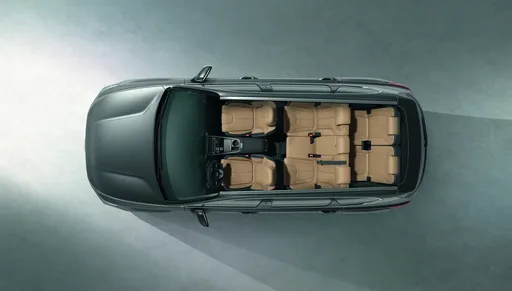
Both vehicles offer seating for 7 people.
In curb weight, Hyundai Santa Fe is clearly perceptible lighter – 1920 kg compared to 2392 kg. The difference is around 472 kg.
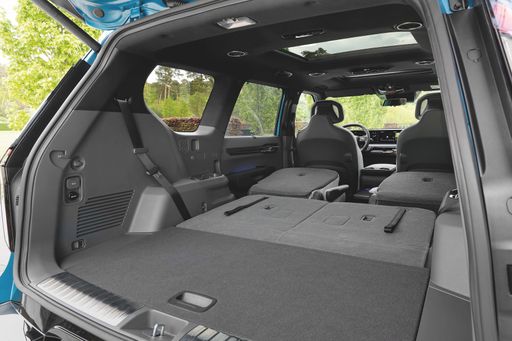
In terms of boot space, the Hyundai Santa Fe offers clearly more room – 711 L compared to 333 L. That’s a difference of about 378 L.
In maximum load capacity, the Kia EV9 performs somewhat better – up to 2393 L, which is about 361 L more than the Hyundai Santa Fe.
When it comes to payload, Hyundai Santa Fe slight takes the win – 665 kg compared to 615 kg. That’s a difference of about 50 kg.
Overall, the Kia EV9 shows itself to be is largely superior and secures the title of DriveDuel Champion.
It convinces with the more balanced overall package and proves to be the more versatile choice for everyday use.
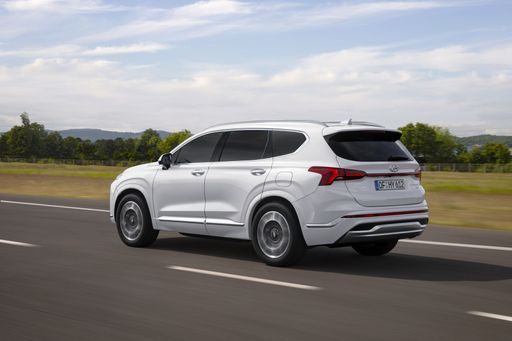
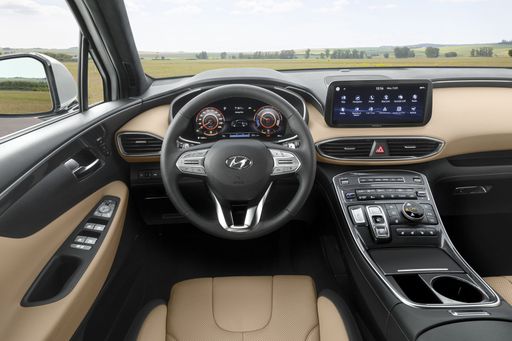
The Hyundai Santa Fe blends practical family friendliness with a hint of premium style, offering roomy, sensible packaging wrapped in modern, confident design. Inside it serves up comfortable seats, straightforward tech and a calm, composed ride that makes daily drives feel a little more grown up — a solid all‑rounder that doesn’t try to be flashy.
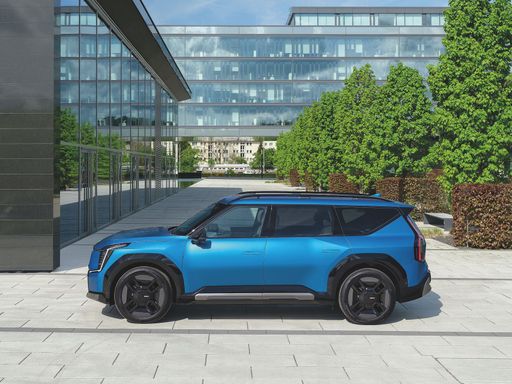
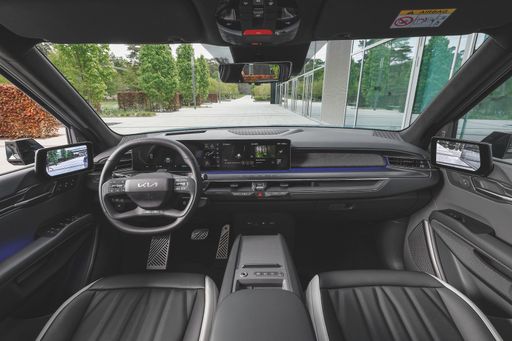
detailsThe Kia EV9 is a bold, boxy electric SUV that looks like it could swallow your luggage and the in‑laws, with an interior that feels more lounge than cockpit and a presence that makes smaller rivals suddenly feel shy. On the road it delivers calm long‑distance composure with enough shove to keep overtakes effortless, and its tech and practicality make it an easy, sensible choice for buyers who want electric without compromise.
detailsCosts and Consumption |
|
|---|---|
|
Price
51200 - 58600 £
|
Price
53100 - 78000 £
|
|
Consumption L/100km
3.8 - 7.1 L
|
Consumption L/100km
-
|
|
Consumption kWh/100km
-
|
Consumption kWh/100km
19.5 - 22.8 kWh
|
|
Electric Range
54 km
|
Electric Range
443 - 563 km
|
|
Battery Capacity
-
|
Battery Capacity
76.1 - 99.8 kWh
|
|
co2
90 - 160 g/km
|
co2
0 g/km
|
|
Fuel tank capacity
67 L
|
Fuel tank capacity
-
|
Dimensions and Body |
|
|---|---|
|
Body Type
SUV
|
Body Type
SUV
|
|
Seats
5 - 7
|
Seats
6 - 7
|
|
Doors
5
|
Doors
5
|
|
Curb weight
1920 - 2165 kg
|
Curb weight
2392 - 2664 kg
|
|
Trunk capacity
621 - 711 L
|
Trunk capacity
333 L
|
|
Length
4830 mm
|
Length
5010 - 5015 mm
|
|
Width
1900 mm
|
Width
1980 mm
|
|
Height
1720 mm
|
Height
1755 - 1780 mm
|
|
Max trunk capacity
1949 - 2032 L
|
Max trunk capacity
2318 - 2393 L
|
|
Payload
560 - 665 kg
|
Payload
542 - 615 kg
|
Engine and Performance |
|
|---|---|
|
Engine Type
Full Hybrid, Plugin Hybrid
|
Engine Type
Electric
|
|
Transmission
Automatic
|
Transmission
Automatic
|
|
Transmission Detail
Automatic Gearbox
|
Transmission Detail
Reduction Gearbox
|
|
Drive Type
Front-Wheel Drive, All-Wheel Drive
|
Drive Type
All-Wheel Drive, Rear-Wheel Drive
|
|
Power HP
239 - 288 HP
|
Power HP
204 - 508 HP
|
|
Acceleration 0-100km/h
8 - 9.2 s
|
Acceleration 0-100km/h
4.6 - 9.4 s
|
|
Max Speed
196 km/h
|
Max Speed
185 - 200 km/h
|
|
Torque
380 Nm
|
Torque
350 - 740 Nm
|
|
Number of Cylinders
4
|
Number of Cylinders
-
|
|
Power kW
176 - 212 kW
|
Power kW
150 - 374 kW
|
|
Engine capacity
1598 cm3
|
Engine capacity
-
|
General |
|
|---|---|
|
Model Year
2025
|
Model Year
2023 - 2025
|
|
CO2 Efficiency Class
E, F, B
|
CO2 Efficiency Class
A
|
|
Brand
Hyundai
|
Brand
Kia
|
Available configurations include Front-Wheel Drive or All-Wheel Drive.