VS

Hyundai Santa Fe vs Skoda Kodiaq - Differences and prices compared

Compare performance (288 HP vs 265 HP), boot space and price (51200 £ vs 36800 £ ) at a glance. Find out which car is the better choice for you – Hyundai Santa Fe or Skoda Kodiaq?

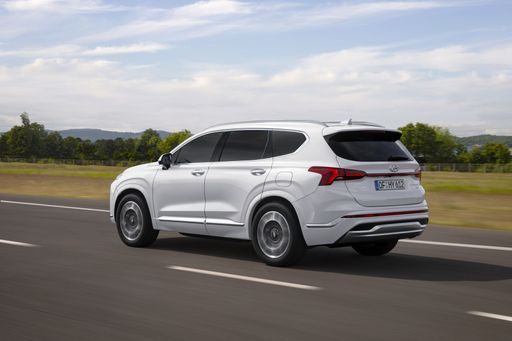
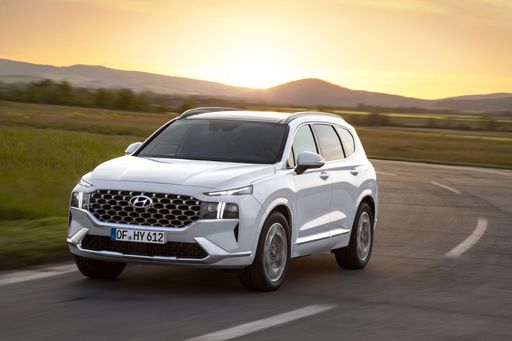
Santa Fe

Hyundai Santa Fe vs Skoda Kodiaq: A Clash of SUV Titans

The SUV market is bustling with options, but few match the charm and competence of the Hyundai Santa Fe and the Skoda Kodiaq. As both models step into 2024 with significant updates, it's time to delve deeply into which might be the right choice for you. Equipped with advanced hybrid technologies and impressive tech innovations, both SUVs promise an exhilarating driving experience and exceptional comfort.
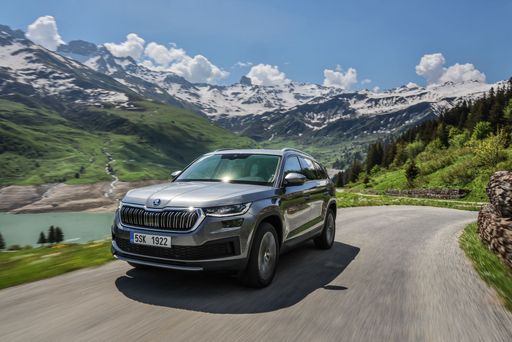
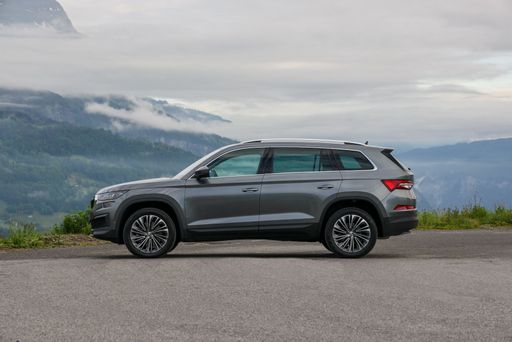
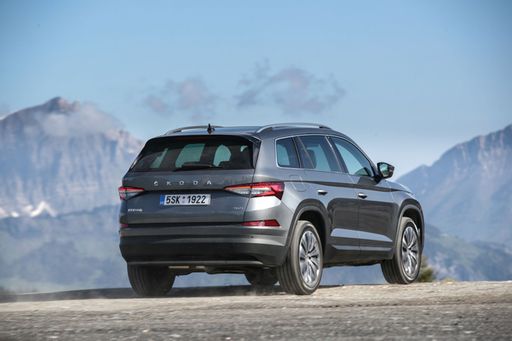
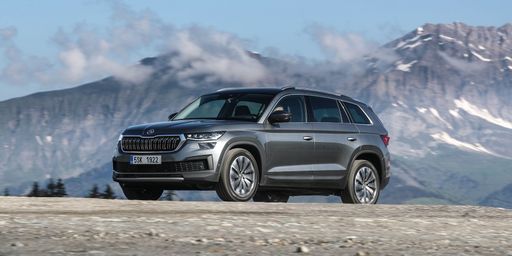
Kodiaq

Design and Dimensions: Sophistication Meets Space

In terms of size, the Hyundai Santa Fe stretches to a length of 4830 mm, a width of 1900 mm, and a height of 1720 mm, offering a robust and commanding presence. Meanwhile, the Skoda Kodiaq comes slightly shorter, with lengths ranging from 4758 to 4761 mm, widths of 1864 mm, and heights between 1663 mm and 1683 mm. Despite being somewhat smaller, the Kodiaq manages to pack in a spacious interior, making efficient use of its dimensions.

Santa Fe

Performance and Power: Hybrid Efficiency or Raw Power?

Both SUVs offer multiple engine options to cater to varied preferences. The Hyundai Santa Fe is available in full hybrid and plug-in hybrid variants, pumping out power of between 215 and 253 HP with torque reaching up to 367 Nm. The Skoda Kodiaq, on the other hand, offers a more diverse lineup, including petrol, diesel, and plug-in hybrid engines with power outputs up to 265 HP and torque up to 400 Nm.

The Kodiaq's hybrid models boast an impressive electric range of up to 123 km, significantly surpassing Santa Fe’s 54 km range, a considerable factor for eco-conscious drivers. Notably, the Santa Fe reaches a modest top speed of 180 km/h, while the Kodiaq can soar up to 231 km/h, catering to speed enthusiasts.

Kodiaq

Fuel Efficiency and Environmental Impact

The Hyundai Santa Fe offers a balanced approach to consumption, with figures ranging from 1.7 to 6.9 L/100km depending on the engine configuration and drive type. It also features a CO2 efficiency class spectrum from E to B, indicating efforts toward minimizing environmental impact. Interestingly, the Skoda Kodiaq stands out with remarkable consumption of just 0.4 to 0.5 L/100km for its most efficient models and a CO2 range as low as 9 g/km for its hybrid variant, showcasing its green credentials.

Santa Fe

Interior and Comfort: Technology and Space

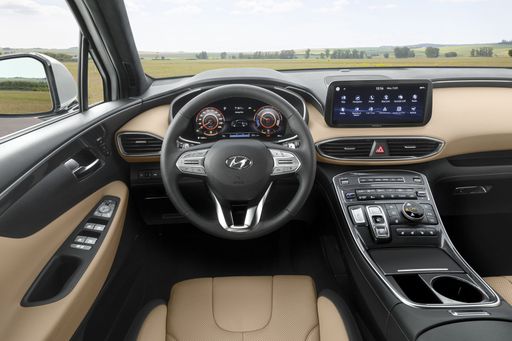
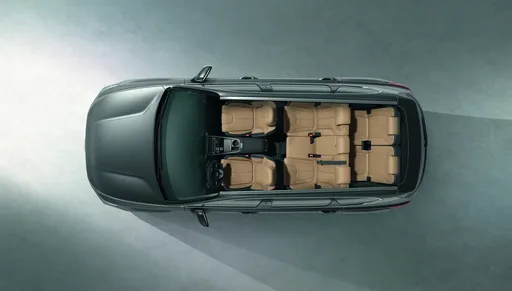
Inside, the Santa Fe can comfortably accommodate 5, 6, or 7 passengers, a versatility that appeals to families of different sizes. Particularly noteworthy is its generous trunk capacity, spanning from 621 to 711 liters. The Kodiaq offers a primary 5-seat configuration, with a considerably ample trunk space ranging up to 910 liters, ideal for long journeys carrying substantial luggage.

Kodiaq

Innovative Features: Future-Ready Technology

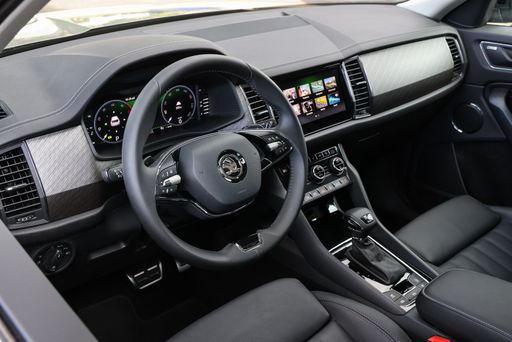
Both SUVs come equipped with state-of-the-art tech and safety features. Hyundai’s focus on innovation manifests in advanced driver assistance systems and infotainment options, ensuring a modern driving experience. Meanwhile, the Skoda Kodiaq includes a dual-clutch automatic transmission, which promises smooth transitions and an enhanced handling experience.

Santa Fe

Conclusion: Tailored Choices for Diverse Needs

Choosing between the Hyundai Santa Fe and the Skoda Kodiaq ultimately depends on your priorities. Opt for the Santa Fe if you value versatile seating and a solid hybrid performance. If cutting-edge hybrid technology and expansive trunk capacity are more your style, then the Kodiaq should be your choice. Both offer exceptional driving experiences, yet they cater to slightly different tastes and requirements, proving once again that in the world of SUVs, personalized choices reign supreme.

Hyundai Santa Fe

4.7 (1 Reviews)
rate

Skoda Kodiaq

5 (4 Reviews)
rate

You can find all user reviews further down on this page.

Here’s where it gets real: The technical differences in detail

Kodiaq

Costs and Efficiency:

Looking at overall running costs, both models reveal some interesting differences in everyday economy.

Skoda Kodiaq has a clearly perceptible advantage in terms of price – it starts at 36800 £ , while the Hyundai Santa Fe costs 51200 £ . That’s a price difference of around 14366 £.

Fuel consumption also shows a difference: Skoda Kodiaq manages with 1.50 L and is therefore significantly more efficient than the Hyundai Santa Fe with 3.80 L. The difference is about 2.30 L per 100 km.

As for electric range, the Skoda Kodiaq performs convincingly better – achieving up to 122 km, about 68 km more than the Hyundai Santa Fe.

Santa Fe

Engine and Performance:

Under the bonnet, it becomes clear which model is tuned for sportiness and which one takes the lead when you hit the accelerator.

When it comes to engine power, the Hyundai Santa Fe has a slight edge – offering 288 HP compared to 265 HP. That’s roughly 23 HP more horsepower.

In acceleration from 0 to 100 km/h, the Skoda Kodiaq is noticeable quicker – completing the sprint in 6.30 s, while the Hyundai Santa Fe takes 8 s. That’s about 1.70 s faster.

In terms of top speed, the Skoda Kodiaq performs to a small extent better – reaching 226 km/h, while the Hyundai Santa Fe tops out at 196 km/h. The difference is around 30 km/h.

There’s also a difference in torque: Skoda Kodiaq pulls barely noticeable stronger with 400 Nm compared to 380 Nm. That’s about 20 Nm difference.

Kodiaq

Space and Everyday Use:

Whether family car or daily driver – which one offers more room, flexibility and comfort?

Seats: Hyundai Santa Fe offers noticeable more seating capacity – 7 vs 5.

In curb weight, Skoda Kodiaq is to a small extent lighter – 1684 kg compared to 1920 kg. The difference is around 236 kg.

In terms of boot space, the Skoda Kodiaq offers evident more room – 910 L compared to 711 L. That’s a difference of about 199 L.

In maximum load capacity, the Skoda Kodiaq performs barely noticeable better – up to 2105 L, which is about 73 L more than the Hyundai Santa Fe.

When it comes to payload, Hyundai Santa Fe to a small extent takes the win – 665 kg compared to 563 kg. That’s a difference of about 102 kg.

Who wins the race in the data check?

The Skoda Kodiaq sits well ahead of its rival in the objective data comparison.
This result only shows which model scores more points on paper – not which of the two cars feels right for you.

Hyundai Santa Fe
Skoda Kodiaq

Costs and Consumption

View detailed analysis

Engine and Performance

View detailed analysis

Dimensions and Body

View detailed analysis
from about £36,800
Kodiaq

Skoda Kodiaq

  • Engine Type : Petrol, Petrol MHEV, Diesel, Plugin Hybrid
  • Transmission : Automatic
  • Drive Type : All-Wheel Drive, Front-Wheel Drive
  • Power HP : 150 - 265 HP
  • Consumption L/100km : 1.5 - 8.2 L
  • Electric Range : 119 - 122 km

Hyundai Santa Fe

4.7 (1 Reviews)
rate

The Hyundai Santa Fe blends practical family friendliness with a hint of premium style, offering roomy, sensible packaging wrapped in modern, confident design. Inside it serves up comfortable seats, straightforward tech and a calm, composed ride that makes daily drives feel a little more grown up — a solid all‑rounder that doesn’t try to be flashy.

details

Skoda Kodiaq

5 (4 Reviews)
rate

The Skoda Kodiaq blends sensible practicality with surprising style, so families and weekend adventurers get roomy comfort without looking like a moving van. It feels calm and composed on the road, packs clever storage and user-friendly tech, and manages to deliver a near-premium vibe without the pretension.

details
Hyundai Santa Fe
Skoda Kodiaq

Costs and Consumption

Price
51200 - 58600 £
Price
36800 - 50600 £
Consumption L/100km
3.8 - 7.1 L
Consumption L/100km
1.5 - 8.2 L
Consumption kWh/100km
-
Consumption kWh/100km
-
Electric Range
54 km
Electric Range
119 - 122 km
Battery Capacity
-
Battery Capacity
-
co2
90 - 160 g/km
co2
35 - 186 g/km
Fuel tank capacity
67 L
Fuel tank capacity
55 - 58 L

Dimensions and Body

Body Type
SUV
Body Type
SUV
Seats
5 - 7
Seats
5
Doors
5
Doors
5
Curb weight
1920 - 2165 kg
Curb weight
1684 - 1970 kg
Trunk capacity
621 - 711 L
Trunk capacity
745 - 910 L
Length
4830 mm
Length
4758 mm
Width
1900 mm
Width
1864 mm
Height
1720 mm
Height
1679 - 1683 mm
Max trunk capacity
1949 - 2032 L
Max trunk capacity
2105 L
Payload
560 - 665 kg
Payload
460 - 563 kg

Engine and Performance

Engine Type
Full Hybrid, Plugin Hybrid
Engine Type
Petrol, Petrol MHEV, Diesel, Plugin Hybrid
Transmission
Automatic
Transmission
Automatic
Transmission Detail
Automatic Gearbox
Transmission Detail
Dual-Clutch Automatic
Drive Type
Front-Wheel Drive, All-Wheel Drive
Drive Type
All-Wheel Drive, Front-Wheel Drive
Power HP
239 - 288 HP
Power HP
150 - 265 HP
Acceleration 0-100km/h
8 - 9.2 s
Acceleration 0-100km/h
6.3 - 9.7 s
Max Speed
196 km/h
Max Speed
205 - 226 km/h
Torque
380 Nm
Torque
250 - 400 Nm
Number of Cylinders
4
Number of Cylinders
4
Power kW
176 - 212 kW
Power kW
110 - 195 kW
Engine capacity
1598 cm3
Engine capacity
1498 - 1984 cm3

General

Model Year
2025
Model Year
2024 - 2025
CO2 Efficiency Class
E, F, B
CO2 Efficiency Class
F, G, E, B
Brand
Hyundai
Brand
Skoda
What drivetrain options does the Hyundai Santa Fe have?

Available configurations include Front-Wheel Drive or All-Wheel Drive.

The prices shown are estimates based on German list prices, adjusted for local VAT. Local registration taxes (e.g. NoVA, BPM or CO2 malus) are not included. This information is not legally binding.