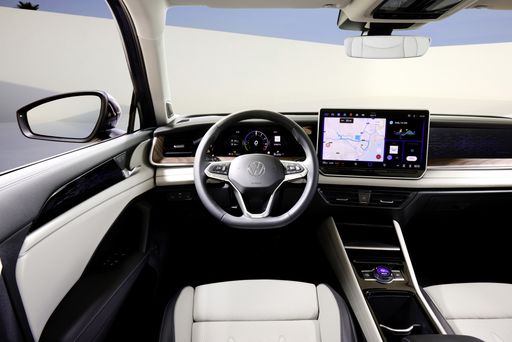
@ Hyundai Motor Company
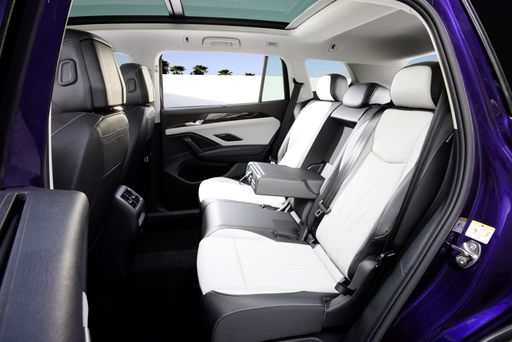
@ Volkswagen AG / VW Media
VS

Hyundai Santa Fe vs VW Tayron – Performance, range & efficiency compared

Two cars, one duel: Hyundai Santa Fe meets VW Tayron.
Which one wins in performance, efficiency and value for money? Find out now!

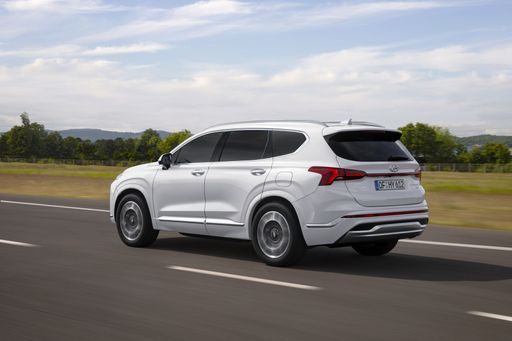
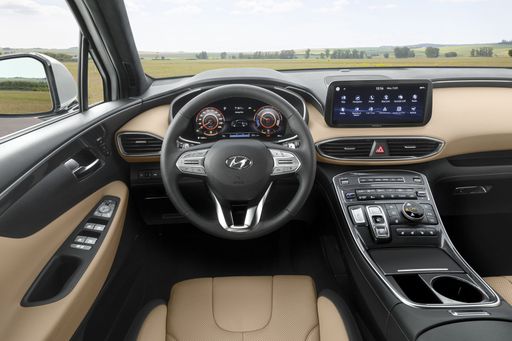
Santa Fe @ Hyundai Motor Company

Hyundai Santa Fe vs VW Tayron: Decoding the Dynamic Duo of SUVs

The SUV market is booming, and two standout contenders vying for attention are the 2024 Hyundai Santa Fe and the 2025 VW Tayron. With modern engineering, cutting-edge technology, and powerful engines, both vehicles promise an exhilarating driving experience. Let's pit them both against each other to see how they fare in key aspects.

Power and Performance

The Santa Fe offers two hybrid drivetrain options—a Full Hybrid and a Plugin Hybrid—catering to varied driving needs. With power outputs ranging from 215 to 253 horsepower, the Santa Fe boasts an acceleration from 0 to 100 km/h in around 9.3 to 9.8 seconds and a top speed of 180 km/h.

On the other hand, the Tayron features a diversified lineup, with petrol, diesel, and hybrid engines. Its top-tier variants run on a potent 272 HP motor, enabling a swift 6.1 seconds sprint from 0 to 100 km/h, and can achieve a max speed of 240 km/h.

Fuel Efficiency and Range

Fuel consumption is a critical consideration for potential buyers. The Santa Fe has a consumption range from 1.7 to 6.9 L/100km, with a noteworthy electric-only range of 54 km for the Plugin Hybrid variant. The Tayron Plugin Hybrids further impress with an electric range up to 126 km and a minimal fuel consumption of 0.4 L/100km, making it a frugal choice for both city commutes and long journeys.

Dimensions and Practicality

When it comes to size, the two SUVs are quite comparable. The Hyundai Santa Fe measures 4830 mm in length, whereas the VW Tayron is slightly shorter at 4792 mm. The spaciousness of the cabin is reflected in the trunk capacity, with the Santa Fe offering up to 711 liters and the Tayron providing a more generous 885 liters.

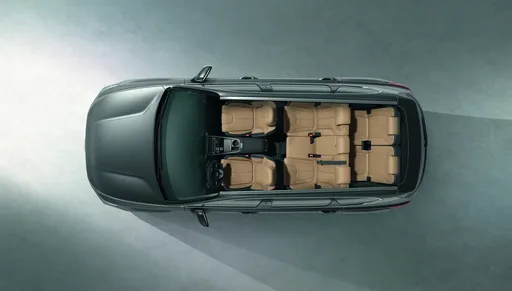
Both SUVs accommodate five passengers, but the Santa Fe goes a step further by offering 6 or 7-seat variants, making it an attractive option for larger families.

Innovations and Technology

Inside, both vehicles come laden with technological innovations aimed at maximizing comfort and convenience. The Santa Fe includes an automatic gearbox and features either front-wheel or all-wheel drive, lending versatility in varied terrains and conditions. Advanced safety features and infotainment systems are standard, reinforcing Hyundai's commitment to a premium driving experience.

The VW Tayron sports a modern dual-clutch automatic transmission for smoother gear shifts, coupled with a plethora of driving assistance systems. This includes adaptive cruise control, lane-keeping assistance, and multi-functional displays—hallmarks of VW's emphasis on technology.

Conclusion

Choosing between the Hyundai Santa Fe and VW Tayron largely depends on personal preferences and priorities. If you're looking for versatility in seating, eco-friendly options, and a family-oriented approach, the Santa Fe shines as a robust choice. Meanwhile, the Tayron excels in delivering a spirited drive complemented by impressive electric range efficiency and innovative driving tech, appealing to those keen on performance and modern conveniences.

Ultimately, both SUVs offer compelling packages that underscore the continual evolution of this competitive segment. Whether you lean towards Hyundai's balanced offerings or VW's innovative prowess, you're in for an exceptional driving experience.
Here’s where it gets real: The technical differences in detail

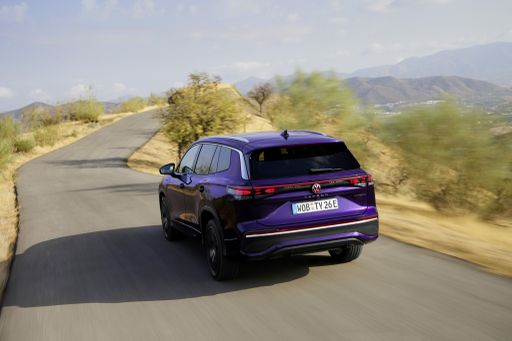
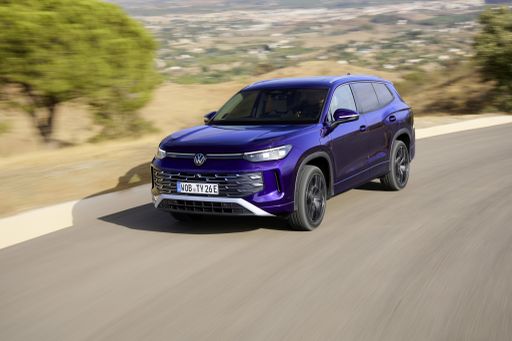
Tayron @ Volkswagen AG / VW Media

Costs and Efficiency:

Price and efficiency are key factors when choosing a car – and this is often where the real differences emerge.

VW Tayron has a noticeable advantage in terms of price – it starts at 39600 £, while the Hyundai Santa Fe costs 51200 £. That’s a price difference of around 11602 £.

Fuel consumption also shows a difference: VW Tayron manages with 1.50 L and is therefore somewhat more efficient than the Hyundai Santa Fe with 1.70 L. The difference is about 0.20 L per 100 km.

As for range, the VW Tayron performs clearly better – achieving up to 123 km, about 69 km more than the Hyundai Santa Fe.

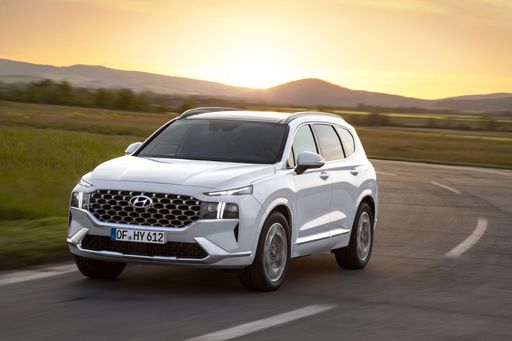
Santa Fe @ Hyundai Motor Company

Engine and Performance:

Power, torque and acceleration are the classic benchmarks for car enthusiasts – and here, some clear differences start to show.

When it comes to engine power, the VW Tayron has a slight edge – offering 272 HP compared to 253 HP. That’s roughly 19 HP more horsepower.

In acceleration from 0 to 100 km/h, the VW Tayron is decisively quicker – completing the sprint in 6.10 s, while the Hyundai Santa Fe takes 9 s. That’s about 2.90 s faster.

In terms of top speed, the VW Tayron performs slightly better – reaching 240 km/h, while the Hyundai Santa Fe tops out at 196 km/h. The difference is around 44 km/h.

There’s also a difference in torque: VW Tayron pulls barely noticeable stronger with 400 Nm compared to 380 Nm. That’s about 20 Nm difference.

Tayron @ Volkswagen AG / VW Media

Space and Everyday Use:

Beyond pure performance, interior space and usability matter most in daily life. This is where you see which car is more practical and versatile.

Seats: Hyundai Santa Fe offers clearly perceptible more seating capacity – 7 vs 5.

In curb weight, VW Tayron is a bit lighter – 1682 kg compared to 1920 kg. The difference is around 238 kg.

In terms of boot space, the VW Tayron offers slightly more room – 885 L compared to 711 L. That’s a difference of about 174 L.

In maximum load capacity, the VW Tayron performs barely noticeable better – up to 2090 L, which is about 58 L more than the Hyundai Santa Fe.

When it comes to payload, Hyundai Santa Fe somewhat takes the win – 665 kg compared to 566 kg. That’s a difference of about 99 kg.

Who comes out on top?

Overall, the VW Tayron shows itself to be leaves the rival little chance and secures the title of DriveDuel Champion.
It convinces with the more balanced overall package and proves to be the more versatile choice for everyday use.

from about £39,600
Tayron @ Volkswagen AG / VW Media

VW Tayron

  • Engine Type : Petrol MHEV, Diesel, Petrol, Plugin Hybrid
  • Transmission : Automatic
  • Drive Type : Front-Wheel Drive, All-Wheel Drive
  • Power HP : 150 - 272 HP
  • Consumption L/100km : 1.5 - 8.5 L
  • Electric Range : 116 - 123 km

Hyundai Santa Fe

The Hyundai Santa Fe offers a refined blend of style and functionality, making it a strong contender in the SUV market. Its modern interior, combined with advanced technology and comfort features, creates an inviting and practical driving environment. With its sleek design and robust performance, the Santa Fe is well-suited for both urban commutes and family adventures.

details

VW Tayron

The VW Tayron is Volkswagen's roomy, no-nonsense SUV that pairs clean, familiar styling with a practical cabin built for families and everyday use. It rides comfortably, packs sensible tech and creature comforts, and feels like the sensible sweater of SUVs for buyers who prefer steady value over headline-grabbing drama.

details
Hyundai Santa Fe
VW Tayron
Santa Fe @ Hyundai Motor Company
Tayron @ Volkswagen AG / VW Media

Costs and Consumption

Price
51200 - 58400 £
Price
39600 - 53300 £
Consumption L/100km
1.7 - 7.1 L
Consumption L/100km
1.5 - 8.5 L
Consumption kWh/100km
-
Consumption kWh/100km
-
Electric Range
54 km
Electric Range
116 - 123 km
Battery Capacity
-
Battery Capacity
19.70 kWh
co2
38 - 160 g/km
co2
33 - 192 g/km
Fuel tank capacity
47 - 67 L
Fuel tank capacity
45 - 58 L

Dimensions and Body

Body Type
SUV
Body Type
SUV
Seats
5 - 7
Seats
5
Doors
5
Doors
5
Curb weight
1920 - 2165 kg
Curb weight
1682 - 1948 kg
Trunk capacity
621 - 711 L
Trunk capacity
705 - 885 L
Length
4830 mm
Length
4792 mm
Width
1900 mm
Width
1853 - 1866 mm
Height
1720 mm
Height
1666 - 1668 mm
Max trunk capacity
1942 - 2032 L
Max trunk capacity
1915 - 2090 L
Payload
560 - 665 kg
Payload
489 - 566 kg

Engine and Performance

Engine Type
Plugin Hybrid, Full Hybrid
Engine Type
Petrol MHEV, Diesel, Petrol, Plugin Hybrid
Transmission
Automatic
Transmission
Automatic
Transmission Detail
Automatic Gearbox
Transmission Detail
Dual-Clutch Automatic
Drive Type
All-Wheel Drive, Front-Wheel Drive
Drive Type
Front-Wheel Drive, All-Wheel Drive
Power HP
239 - 253 HP
Power HP
150 - 272 HP
Acceleration 0-100km/h
9 - 9.3 s
Acceleration 0-100km/h
6.1 - 9.7 s
Max Speed
180 - 196 km/h
Max Speed
204 - 240 km/h
Torque
367 - 380 Nm
Torque
250 - 400 Nm
Number of Cylinders
4
Number of Cylinders
4
Power kW
176 - 186 kW
Power kW
110 - 200 kW
Engine capacity
1598 cm3
Engine capacity
1498 - 1984 cm3

General

Model Year
2024 - 2025
Model Year
2025
CO2 Efficiency Class
B, E, F
CO2 Efficiency Class
E, F, G, B
Brand
Hyundai
Brand
VW
What drivetrain options does the Hyundai Santa Fe have?

Available configurations include All-Wheel Drive or Front-Wheel Drive.

The prices and data displayed are estimates based on German list prices and may vary by country. This information is not legally binding.