@ Hyundai Motor Company
@ Volvo Cars
VS

Hyundai Santa Fe vs Volvo XC90 – Which one offers the better deal?

Everyday use, family trips or long-distance drives – here’s where the differences show.
Discover whether Hyundai Santa Fe or Volvo XC90 fits your lifestyle better.

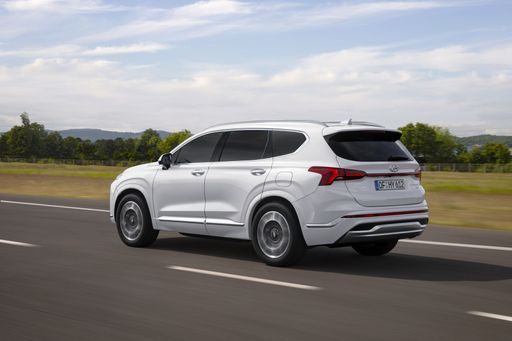
Santa Fe @ Hyundai Motor Company

Battle of the Titans: Hyundai Santa Fe vs. Volvo XC90

In the ever-evolving world of SUVs, two names stand out with their distinct offerings in the 2024 model year: the Hyundai Santa Fe and the Volvo XC90. Both are built for comfort, performance, and family-friendly features. This detailed comparison will delve into their technical aspects, innovations, and overall capabilities to help you decide which suits your needs better.
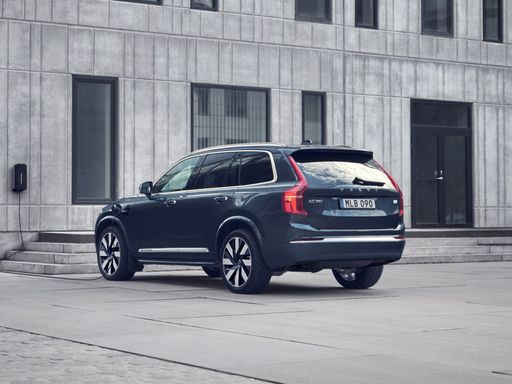
XC90 @ Volvo Cars

Performance and Powertrain

The Hyundai Santa Fe offers a blend of full hybrid and plug-in hybrid engines, available in both front-wheel and all-wheel drive configurations. Under the hood, it delivers between 215 HP and 253 HP, thanks to its 1.6-liter four-cylinder engine. It achieves a reasonable acceleration, going from 0-100 km/h in about 9.3 to 9.8 seconds, with a maximum speed of 180 km/h. Fuel efficiency is notably impressive, with consumption rated between 1.7 to 6.9 L/100 km.

On the other hand, the Volvo XC90 combines luxury with power. This SUV is equipped with petrol mild-hybrid and plug-in hybrid options, both supported by all-wheel drive. It offers a more potent power range, peaking at 455 HP, with a remarkable acceleration of 0-100 km/h in just 5.4 seconds for the plug-in hybrid variant. Its fuel consumption ranges from a more conservative 1.2 L/100 km to 8.5 L/100 km for less efficient variants.

Santa Fe @ Hyundai Motor Company

Electric Range & Efficiency

For those prioritizing electric driving, the Hyundai Santa Fe plug-in hybrid provides an electric range of up to 54 km, aligning with the needs of daily city commutes. Meanwhile, the XC90 takes the lead here, offering up to 71 km of electric travel, thanks in part to its 14.7 kWh battery capacity, which is ideal for longer commutes and reducing overall fuel consumption.

XC90 @ Volvo Cars

Interior Comfort and Space

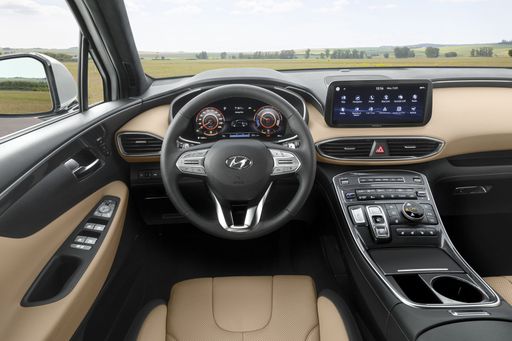
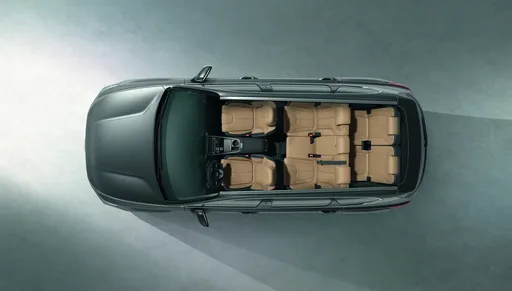
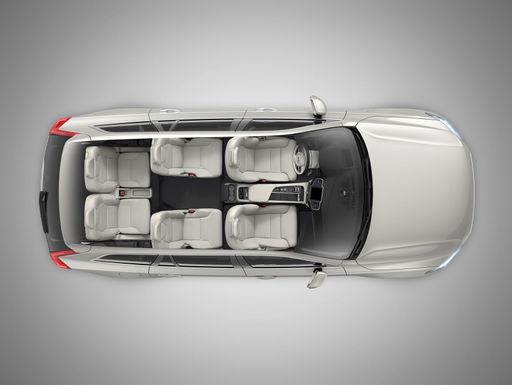
Seating configurations are a crucial selling point for both SUVs. While the Santa Fe offers flexibility with 5, 6, or 7 seats, the XC90 standardizes with a 7-seat setup, making it an excellent choice for larger families. The Hyundai shines with a max trunk capacity of 711 liters, compared to the Volvo's more compact 302 liters, which might require a trade-off between passenger and luggage space depending on your travels.

Santa Fe @ Hyundai Motor Company

Design and Dimensions

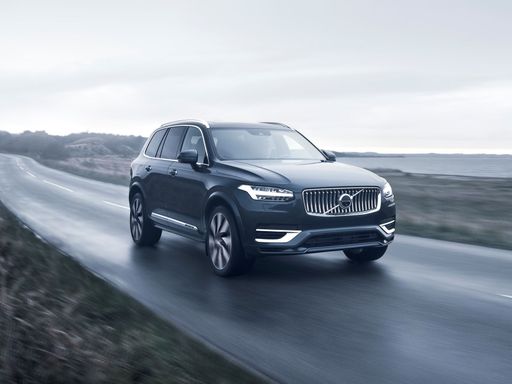
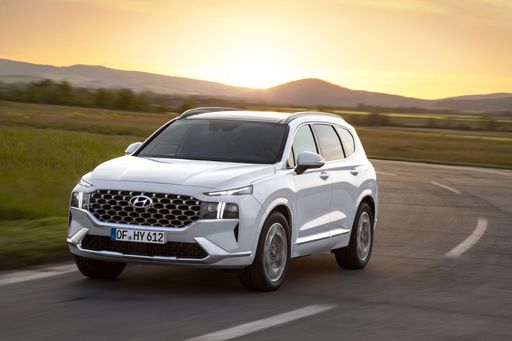
Dimensionally, the Volvo XC90 is the larger contender. It stretches to a length of 4953 mm, compared to the Santa Fe's 4830 mm, and is slightly wider and taller. This increase in size may contribute to interior spaciousness, albeit with the added challenge of maneuvering a larger vehicle in urban areas. Both models share a sleek, modern design, yet the Volvo leans more towards luxury branding, while Hyundai emphasizes a sporty, family-oriented aesthetic.

XC90 @ Volvo Cars

Environmental Impact

Both SUVs take different approaches to sustainability. The Hyundai Santa Fe’s CO2 emissions range from 38 to 167 g/km, while the Volvo XC90 offers a plug-in hybrid variant with as low as 30 g/km CO2 rating, showcasing its dedication to minimizing environmental impact.

Santa Fe @ Hyundai Motor Company

Conclusion

Choosing between the Hyundai Santa Fe and the Volvo XC90 ultimately depends on what factors you prioritize. The Santa Fe is well-suited for those seeking versatility, interior space, and affordability in fuel consumption. Conversely, the XC90 appeals to those who desire a more powerful drive, luxurious features, and a larger electric range. Both SUVs stand out in their own right and are ready to tackle any road adventure you set your heart on.

Here’s where it gets real: The technical differences in detail

XC90 @ Volvo Cars

Costs and Efficiency:

Price and efficiency are often the first things buyers look at. Here it becomes clear which model has the long-term edge – whether at the pump, the plug, or in purchase price.

Hyundai Santa Fe has a distinct advantage in terms of price – it starts at 51200 £, while the Volvo XC90 costs 69800 £. That’s a price difference of around 18548 £.

Fuel consumption also shows a difference: Hyundai Santa Fe manages with 1.70 L and is therefore convincingly more efficient than the Volvo XC90 with 3.50 L. The difference is about 1.80 L per 100 km.

As for range, the Volvo XC90 performs clearly perceptible better – achieving up to 71 km, about 17 km more than the Hyundai Santa Fe.

Santa Fe @ Hyundai Motor Company

Engine and Performance:

Under the bonnet, it becomes clear which model is tuned for sportiness and which one takes the lead when you hit the accelerator.

When it comes to engine power, the Volvo XC90 has a decisively edge – offering 455 HP compared to 253 HP. That’s roughly 202 HP more horsepower.

In acceleration from 0 to 100 km/h, the Volvo XC90 is convincingly quicker – completing the sprint in 5.40 s, while the Hyundai Santa Fe takes 9 s. That’s about 3.60 s faster.

In terms of top speed, the Hyundai Santa Fe performs hardly perceptible better – reaching 196 km/h, while the Volvo XC90 tops out at 180 km/h. The difference is around 16 km/h.

There’s also a difference in torque: Volvo XC90 pulls significantly stronger with 709 Nm compared to 380 Nm. That’s about 329 Nm difference.

XC90 @ Volvo Cars

Space and Everyday Use:

Whether family car or daily driver – which one offers more room, flexibility and comfort?

Both vehicles offer seating for 7 people.

In curb weight, Hyundai Santa Fe is hardly perceptible lighter – 1920 kg compared to 2080 kg. The difference is around 160 kg.

In terms of boot space, the Hyundai Santa Fe offers significantly more room – 711 L compared to 302 L. That’s a difference of about 409 L.

In maximum load capacity, the Hyundai Santa Fe performs slight better – up to 2032 L, which is about 176 L more than the Volvo XC90.

When it comes to payload, Volvo XC90 barely noticeable takes the win – 710 kg compared to 665 kg. That’s a difference of about 45 kg.

Who wins the race?

The Hyundai Santa Fe proves to be wins the duel decisively and therefore becomes our DriveDuel Champion!
Hyundai Santa Fe is the better all-rounder in this comparison.

from about £51,200
Santa Fe @ Hyundai Motor Company

Hyundai Santa Fe

  • Engine Type : Plugin Hybrid, Full Hybrid
  • Transmission : Automatic
  • Drive Type : All-Wheel Drive, Front-Wheel Drive
  • Power HP : 239 - 253 HP
  • Consumption L/100km : 1.7 - 7.1 L
  • Electric Range : 54 km

Hyundai Santa Fe

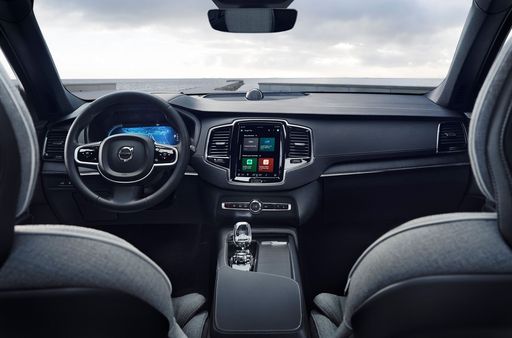
The Hyundai Santa Fe offers a refined blend of style and functionality, making it a strong contender in the SUV market. Its modern interior, combined with advanced technology and comfort features, creates an inviting and practical driving environment. With its sleek design and robust performance, the Santa Fe is well-suited for both urban commutes and family adventures.

details

Volvo XC90

5 (1)
rate

The Volvo XC90 is a serene Scandinavian SUV that mixes minimalist luxury with a composed, confidence-inspiring presence — ideal for buyers who want family practicality without sacrificing style. Inside it serves up a calm, well-crafted cabin and user-friendly tech that keeps long journeys pleasant and tantrums to a minimum, making the XC90 a smart, stylish pick for sensible drivers.

details
Hyundai Santa Fe
Volvo XC90
Santa Fe @ Hyundai Motor Company
XC90 @ Volvo Cars

Costs and Consumption

Price
51200 - 58400 £
Price
69800 - 84600 £
Consumption L/100km
1.7 - 7.1 L
Consumption L/100km
3.5 - 8.5 L
Consumption kWh/100km
-
Consumption kWh/100km
-
Electric Range
54 km
Electric Range
71 km
Battery Capacity
-
Battery Capacity
14.70 kWh
co2
38 - 160 g/km
co2
79 - 191 g/km
Fuel tank capacity
47 - 67 L
Fuel tank capacity
71 L

Dimensions and Body

Body Type
SUV
Body Type
SUV
Seats
5 - 7
Seats
7
Doors
5
Doors
5
Curb weight
1920 - 2165 kg
Curb weight
2080 - 2297 kg
Trunk capacity
621 - 711 L
Trunk capacity
262 - 302 L
Length
4830 mm
Length
4953 mm
Width
1900 mm
Width
1923 mm
Height
1720 mm
Height
1771 mm
Max trunk capacity
1942 - 2032 L
Max trunk capacity
1816 - 1856 L
Payload
560 - 665 kg
Payload
653 - 710 kg

Engine and Performance

Engine Type
Plugin Hybrid, Full Hybrid
Engine Type
Petrol MHEV, Plugin Hybrid
Transmission
Automatic
Transmission
Automatic
Transmission Detail
Automatic Gearbox
Transmission Detail
Automatic Gearbox
Drive Type
All-Wheel Drive, Front-Wheel Drive
Drive Type
All-Wheel Drive
Power HP
239 - 253 HP
Power HP
250 - 455 HP
Acceleration 0-100km/h
9 - 9.3 s
Acceleration 0-100km/h
5.4 - 7.7 s
Max Speed
180 - 196 km/h
Max Speed
180 km/h
Torque
367 - 380 Nm
Torque
360 - 709 Nm
Number of Cylinders
4
Number of Cylinders
4
Power kW
176 - 186 kW
Power kW
184 - 335 kW
Engine capacity
1598 cm3
Engine capacity
1969 cm3

General

Model Year
2024 - 2025
Model Year
2024 - 2025
CO2 Efficiency Class
B, E, F
CO2 Efficiency Class
G, B
Brand
Hyundai
Brand
Volvo
What drivetrain options does the Hyundai Santa Fe have?

Available configurations include All-Wheel Drive or Front-Wheel Drive.

The prices and data displayed are estimates based on German list prices and may vary by country. This information is not legally binding.