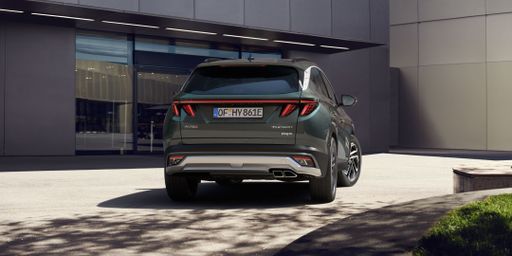
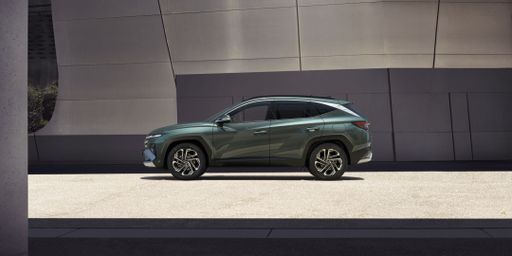
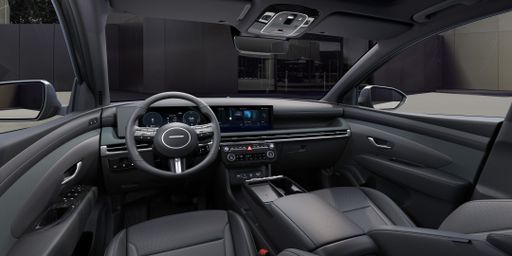
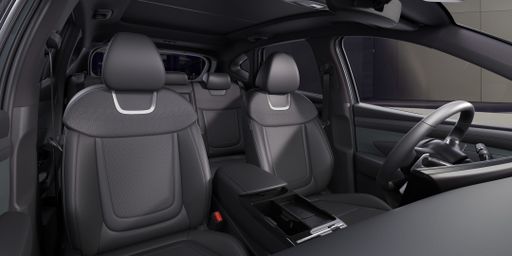
@ Hyundai Motor Company
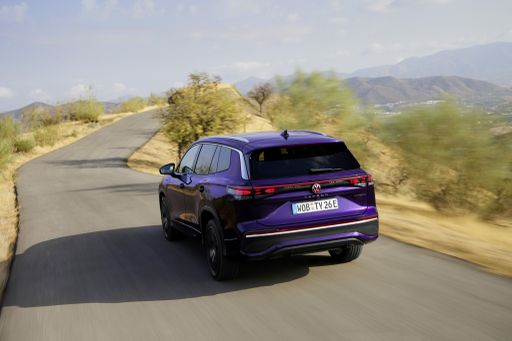
@ Volkswagen AG / VW Media
VS

Hyundai Tucson vs VW Tayron – Which car suits you better?

Two cars, one duel: Hyundai Tucson meets VW Tayron.
Which one wins in performance, efficiency and value for money? Find out now!

Tucson @ Hyundai Motor Company

A Clash of Innovations: Hyundai Tucson vs. VW Tayron

The automotive landscape is witnessing an exciting clash of titans in the compact SUV segment with the Hyundai Tucson and Volkswagen Tayron. As both brands innovate to cater to modern drivers’ needs, this comparison will delve into their technical specifications, performance, and unique features, helping you make an informed decision.
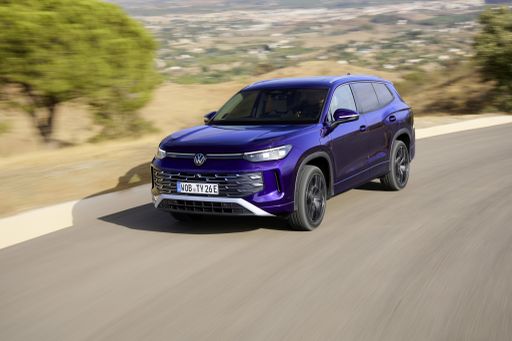
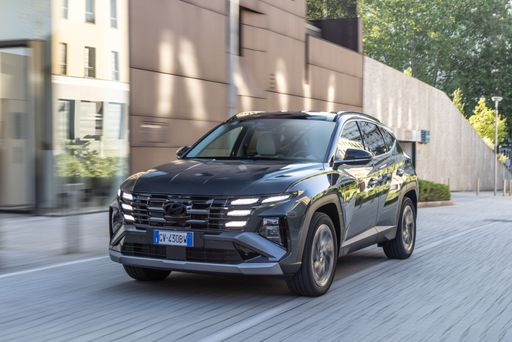
Tayron @ Volkswagen AG / VW Media

Powertrain Options and Performance

The Hyundai Tucson offers an impressive range of powertrains, including Diesel MHEV, Petrol MHEV, Full Hybrid, and Plugin Hybrid options. With power outputs ranging from 136 HP to a robust 252 HP, it appeals to a wide audience. The Tucson also boasts several transmission options, including a Dual-Clutch Automatic and a traditional Manual Gearbox, offering flexibility for driving enthusiasts.

In comparison, the VW Tayron is no slouch, with its petrol and diesel engines producing between 150 HP and an astonishing 272 HP. Also featuring an advanced Dual-Clutch Automatic transmission, the Tayron stands out with its swift acceleration times, boasting capabilities as low as 6.1 seconds for 0-100 km/h in its sportier variants. This offers a more dynamic driving experience for those seeking performance.

Tucson @ Hyundai Motor Company

Fuel Efficiency and Consumption

When it comes to fuel efficiency, both SUVs present competitive figures. The Tucson ranges from 5.1 to 6.8 L/100 km across its various models, making it quite economical for both city and highway driving. Its hybrid variants also provide an electric range of up to 70 km, highlighting its commitment to sustainability.

On the other hand, the Tayron slightly lags, consuming from 5.4 to 7.8 L/100 km, yet impresses with its Plugin Hybrid variant boasting an electric range of 126 km thanks to a 19.7 kWh battery. This allows for longer journeys on electric power alone, appealing to eco-conscious drivers.

Tayron @ Volkswagen AG / VW Media

Interior Space and Comfort

Both the Tucson and Tayron excel in providing room for passengers and luggage alike. The Tucson has ample trunk space ranging from 546 to 620 liters depending on configurations, making it practical for family outings and adventures. The cabin is designed with comfort in mind, hosting five seats with quality materials throughout.

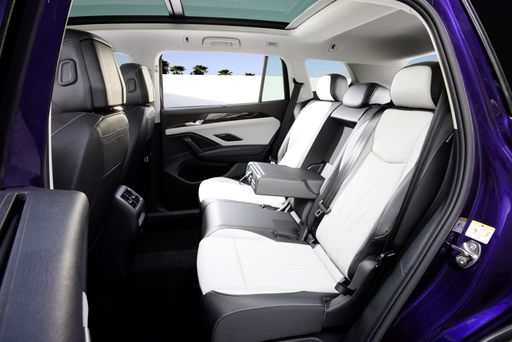
The Tayron surprises with an even more generous boot capacity of up to 885 liters, making it ideal for families or those who need extra storage for gear. Its slightly larger dimensions—length of 4792 mm, width up to 1866 mm, and height of 1668 mm—combine with a stylish interior that focuses on user-friendly tech and comfort.

Tucson @ Hyundai Motor Company

Technology and Innovations

Both vehicles are equipped with cutting-edge technology that enhances the driving experience. The Tucson comes with a host of features including adaptive cruise control, a panoramic sunroof, and wireless charging options. Additionally, its infotainment system is modern and intuitive, providing seamless integration with smartphones.

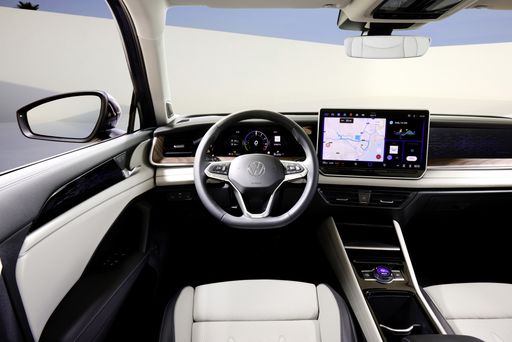
Volkswagen’s Tayron features its own set of high-tech attributes, including an advanced driver assistance system that maximizes safety and comfort. The digital cockpit, complete with a customizable display, enhances the driving experience, while Apple CarPlay and Android Auto compatibility ensure you stay connected.

Tayron @ Volkswagen AG / VW Media

Conclusion: Which SUV Reigns Supreme?

In the tug-of-war between the Hyundai Tucson and VW Tayron, both have their distinct advantages. The Tucson shines with its varied powertrains and a strong hybrid lineup, while the Tayron captivates with its superior performance and spacious trunk capacity. Ultimately, your choice may come down to priorities—whether you prefer advanced driving dynamics or a more spacious and tech-rich interior.

Ultimately, both SUVs are committed to offering innovative solutions to the modern driver. Whether you value efficiency, space, or sheer performance, you can't go wrong with either option. The key is to take them for a test drive and feel for yourself which model fits your lifestyle best.

Here’s where it gets real: The technical differences in detail

Tucson @ Hyundai Motor Company

Costs and Efficiency:

Looking at overall running costs, both models reveal some interesting differences in everyday economy.

Hyundai Tucson has a clearly perceptible advantage in terms of price – it starts at 30600 £, while the VW Tayron costs 39600 £. That’s a price difference of around 8978 £.

Fuel consumption also shows a difference: Hyundai Tucson manages with 1 L and is therefore significantly more efficient than the VW Tayron with 1.50 L. The difference is about 0.50 L per 100 km.

As for range, the VW Tayron performs decisively better – achieving up to 123 km, about 53 km more than the Hyundai Tucson.

Tayron @ Volkswagen AG / VW Media

Engine and Performance:

Power, torque and acceleration are the classic benchmarks for car enthusiasts – and here, some clear differences start to show.

When it comes to engine power, the VW Tayron has a minimal edge – offering 272 HP compared to 252 HP. That’s roughly 20 HP more horsepower.

In acceleration from 0 to 100 km/h, the VW Tayron is noticeable quicker – completing the sprint in 6.10 s, while the Hyundai Tucson takes 7.90 s. That’s about 1.80 s faster.

In terms of top speed, the VW Tayron performs somewhat better – reaching 240 km/h, while the Hyundai Tucson tops out at 204 km/h. The difference is around 36 km/h.

There’s also a difference in torque: VW Tayron pulls barely noticeable stronger with 400 Nm compared to 379 Nm. That’s about 21 Nm difference.

Tucson @ Hyundai Motor Company

Space and Everyday Use:

Whether family car or daily driver – which one offers more room, flexibility and comfort?

Both vehicles offer seating for 5 people.

In curb weight, Hyundai Tucson is barely noticeable lighter – 1542 kg compared to 1682 kg. The difference is around 140 kg.

In terms of boot space, the VW Tayron offers distinct more room – 885 L compared to 620 L. That’s a difference of about 265 L.

In maximum load capacity, the VW Tayron performs slightly better – up to 2090 L, which is about 291 L more than the Hyundai Tucson.

When it comes to payload, VW Tayron hardly perceptible takes the win – 566 kg compared to 545 kg. That’s a difference of about 21 kg.

Who comes out on top?

Overall, the VW Tayron shows itself to be leads convincingly overall and secures the title of DriveDuel Champion.
It convinces with the more balanced overall package and proves to be the more versatile choice for everyday use.

from about £39,600
Tayron @ Volkswagen AG / VW Media

VW Tayron

  • Engine Type : Petrol MHEV, Diesel, Petrol, Plugin Hybrid
  • Transmission : Automatic
  • Drive Type : Front-Wheel Drive, All-Wheel Drive
  • Power HP : 150 - 272 HP
  • Consumption L/100km : 1.5 - 8.5 L
  • Electric Range : 116 - 123 km

Hyundai Tucson

5 (2)
rate

Hyundai Tucson marries bold, sculpted looks with a clever, roomy cabin that feels smarter than its price tag suggests. It's composed on the road, easy to live with day-to-day, and a sensible choice for buyers who want SUV style without the showroom theatrics.

details

VW Tayron

The VW Tayron is Volkswagen's roomy, no-nonsense SUV that pairs clean, familiar styling with a practical cabin built for families and everyday use. It rides comfortably, packs sensible tech and creature comforts, and feels like the sensible sweater of SUVs for buyers who prefer steady value over headline-grabbing drama.

details
Hyundai Tucson
VW Tayron
Tucson @ Hyundai Motor Company
Tayron @ Volkswagen AG / VW Media

Costs and Consumption

Price
30600 - 46300 £
Price
39600 - 53300 £
Consumption L/100km
1 - 7.6 L
Consumption L/100km
1.5 - 8.5 L
Consumption kWh/100km
-
Consumption kWh/100km
-
Electric Range
64 - 70 km
Electric Range
116 - 123 km
Battery Capacity
-
Battery Capacity
19.70 kWh
co2
22 - 172 g/km
co2
33 - 192 g/km
Fuel tank capacity
42 - 54 L
Fuel tank capacity
45 - 58 L

Dimensions and Body

Body Type
SUV
Body Type
SUV
Seats
5
Seats
5
Doors
5
Doors
5
Curb weight
1542 - 1889 kg
Curb weight
1682 - 1948 kg
Trunk capacity
546 - 620 L
Trunk capacity
705 - 885 L
Length
4510 - 4535 mm
Length
4792 mm
Width
1865 mm
Width
1853 - 1866 mm
Height
1650 mm
Height
1666 - 1668 mm
Max trunk capacity
1721 - 1799 L
Max trunk capacity
1915 - 2090 L
Payload
523 - 545 kg
Payload
489 - 566 kg

Engine and Performance

Engine Type
Diesel MHEV, Plugin Hybrid, Petrol, Full Hybrid
Engine Type
Petrol MHEV, Diesel, Petrol, Plugin Hybrid
Transmission
Automatic, Manuel
Transmission
Automatic
Transmission Detail
Dual-Clutch Automatic, Automatic Gearbox, Manual Gearbox
Transmission Detail
Dual-Clutch Automatic
Drive Type
Front-Wheel Drive, All-Wheel Drive
Drive Type
Front-Wheel Drive, All-Wheel Drive
Power HP
136 - 252 HP
Power HP
150 - 272 HP
Acceleration 0-100km/h
7.9 - 11.6 s
Acceleration 0-100km/h
6.1 - 9.7 s
Max Speed
180 - 204 km/h
Max Speed
204 - 240 km/h
Torque
250 - 379 Nm
Torque
250 - 400 Nm
Number of Cylinders
4
Number of Cylinders
4
Power kW
100 - 185 kW
Power kW
110 - 200 kW
Engine capacity
1598 cm3
Engine capacity
1498 - 1984 cm3

General

Model Year
2024 - 2025
Model Year
2025
CO2 Efficiency Class
E, B, F, D
CO2 Efficiency Class
E, F, G, B
Brand
Hyundai
Brand
VW
What drive types are available for the Hyundai Tucson?

Available configurations include Front-Wheel Drive or All-Wheel Drive.

The prices and data displayed are estimates based on German list prices and may vary by country. This information is not legally binding.