VS

Jeep Compass vs Mercedes GLA comparison

Compare performance (225 HP vs 421 HP), boot space and price (34,200 £ vs 38,800 £ ) at a glance. Find out which car is the better choice for you – Jeep Compass or Mercedes GLA?

Jeep Compass vs Mercedes GLA: Key differences

Jeep Compass

2.4 (4 Reviews)
rate
  • somewhat cheaper
  • substantially more electric range
  • clearly more trunk space

Mercedes GLA

4.6 (3 Reviews)
rate
  • substantially more power
  • very slightly more efficient
  • considerably quicker 0–100 km/h
  • marginally lighter

All details on performance, efficiency, range and trunk space can be found in the technical comparison below – including user reviews for both models.

Compass

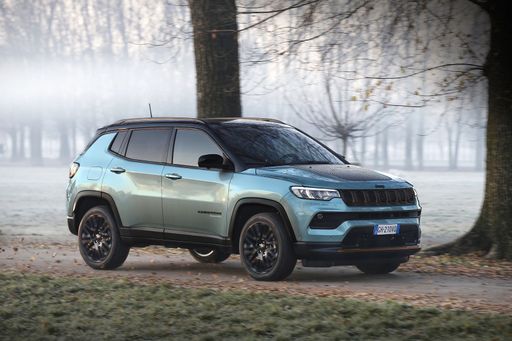
The compact SUV segment has seen a significant evolution in recent years, drawing in drivers with varying preferences. Two standout contenders in this class are the Jeep Compass and the Mercedes GLA. Both vehicles cater to a similar customer base but offer a distinctive flavor in style, performance, and technology. In this article, we'll delve into a comprehensive comparison to help you determine which model best meets your needs.
GLA

Performance and Powertrains

The Jeep Compass is available with a range of engines, including a Petrol MHEV and a Plugin Hybrid. It delivers power outputs between 130 HP and an impressive 240 HP, paired with both front-wheel drive and all-wheel drive configurations. The 2024 Compass boasts acceleration times ranging from 7.3 to 10.3 seconds for 0-100 km/h, alongside a top speed of up to 193 km/h, reflecting its dynamic driving capabilities.

In contrast, the Mercedes GLA offers a wider variety of powertrains, including petrol, diesel, and hybrid options, with power outputs ranging from 116 HP to a staggering 421 HP in the AMG models. Its acceleration capabilities also impress, with timings as low as 4.3 seconds depending on the variant, and a top speed peaking at 270 km/h. This makes the GLA a viable option for those longing for both efficiency and performance.

Compass

Fuel Efficiency and Emissions

When it comes to fuel efficiency, the Compass presents a commendable consumption rate, with figures as low as 2 L/100 km for its hybrid variant. The hybrid option also boasts an electric-only range of up to 36 km, making it efficient for urban commuting.

The GLA, however, shows even greater potential in this area, with the hybrid versions achieving consumption as low as 1 L/100 km and an electric range of up to 74 km. It also comes with varied CO2 emissions, making some models more environmentally friendly than others, especially the hybrid variants that can emit as low as 23 g/km.

GLA

Interior Comfort and Technology

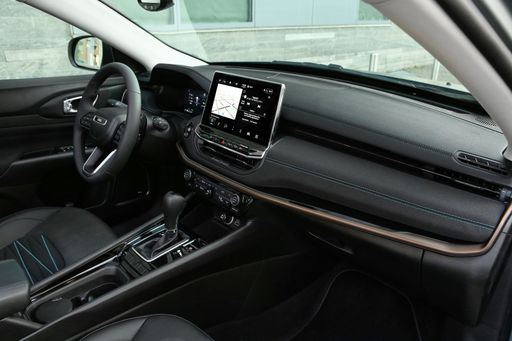
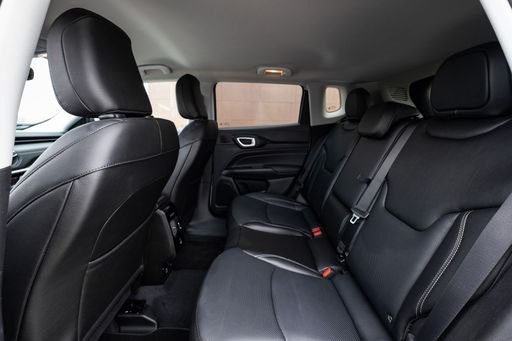
Inside, the Jeep Compass provides a spacious cabin with a trunk capacity of 438 L. It offers a modern infotainment system, but the overall aesthetic leans towards practicality rather than luxury.

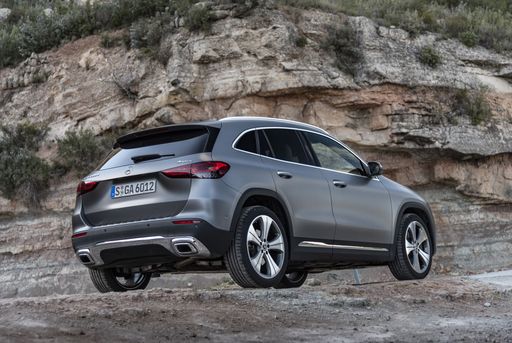
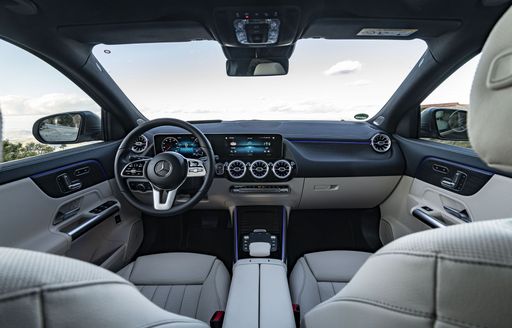
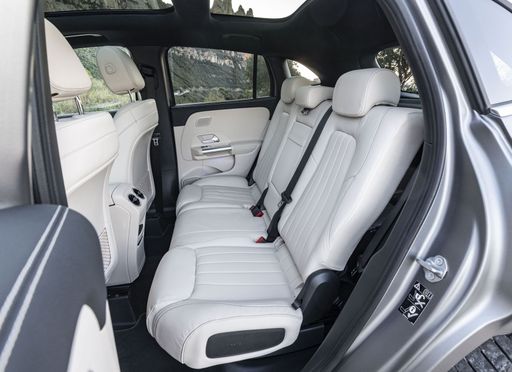
The Mercedes GLA, on the other hand, amplifies luxury with a more refined interior and advanced technology. With trunk capacities ranging from 385 to 435 L depending on the variant, it might be slightly less spacious than the Compass, but it compensates with premium materials and cutting-edge connectivity features, including the latest MBUX infotainment system.

Compass

Safety and Driver Assistance Features

Both models incorporate a suite of safety features, but the GLA tends to push the envelope further, offering advanced driver assistance systems that enhance safety on the road. Features such as adaptive cruise control, lane keeping assist, and automated emergency braking are standard in the GLA line-up, providing added peace of mind for drivers.

In comparison, the Compass offers a solid safety package but may lack some high-end features found in the Mercedes. Nonetheless, it remains a reliable choice for those prioritizing sturdy build quality and practical safety systems.

GLA

Conclusion: Which SUV is Right for You?

Choosing between the Jeep Compass and the Mercedes GLA ultimately boils down to personal preferences and priorities. If you seek robust off-road capabilities, practicality, and a hybrid option that fits city life, the Compass stands out as a solid choice. However, if luxury, performance, and sophisticated technology are at the top of your list, the Mercedes GLA would not disappoint.

Each model brings unique strengths to the table; your decision should reflect your lifestyle, driving habits, and desired features. Whether you prioritize ruggedness or refinement, both vehicles underscore the evolving landscape of modern SUVs.

Here’s where it gets real: The technical differences in detail

Compass

Costs and Efficiency:

Looking at overall running costs, both models reveal some interesting differences in everyday economy.

Jeep Compass is somewhat cheaper – starting at 34,200 £ , while the Mercedes GLA costs 38,800 £ . That’s a price difference of around 4,636 £.

Fuel consumption also shows a difference: the Mercedes GLA uses 2.9 L/100km and is very slightly more efficient than the Jeep Compass with 3 L/100km. The difference is about 0.1 L/100km.

As for electric range, the Jeep Compass offers substantially more range – reaching up to 500 km, about 426 km more than the Mercedes GLA.

GLA

Engine and Performance:

Power, torque and acceleration say a lot about how a car feels on the road. This is where you see which model delivers more driving dynamics.

When it comes to engine power, the Mercedes GLA offers substantially more power – delivering 421 HP compared to 225 HP. That’s roughly 196 HP more horsepower.

When accelerating from 0 to 100 km/h, the Mercedes GLA is considerably quicker – completing the sprint in 4.3 s, while the Jeep Compass takes 8 s. That’s about 3.7 s quicker.

Looking at top speed, the Mercedes GLA is somewhat faster – reaching 210 km/h, while the Jeep Compass tops out at 188 km/h. The difference is around 22 km/h.

There’s also a difference in torque: the Mercedes GLA delivers noticeably more torque with 500 Nm compared to 345 Nm. That’s about 155 Nm more.

Compass

Space and Everyday Use:

Cabin size, boot volume and payload all play a role in everyday practicality. Here, comfort and flexibility make the difference.

Both vehicles offer seating for 5 people.

In terms of curb weight, Mercedes GLA is marginally lighter – 1,570 kg compared to 1,667 kg. The difference is around 97 kg.

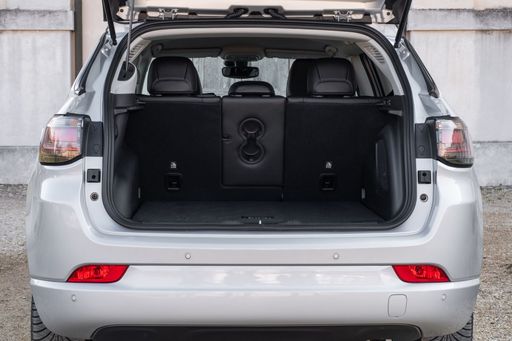
Looking at boot space, the Jeep Compass offers clearly more boot space – 550 L compared to 435 L. That’s a difference of about 115 L.

For maximum load capacity, the Jeep Compass offers a bit more capacity – up to 1,561 L, about 176 L more than the Mercedes GLA.

Who wins the race in the data check?

The Jeep Compass stands well ahead of its rival in the objective data comparison.
This result only shows which model scores more points on paper – not which of the two cars feels right for you.

from £34,200
Compass

Jeep Compass

  • Engine Type : Petrol MHEV, Electric, Plugin Hybrid
  • Transmission : Automatic
  • Drive Type : Front-Wheel Drive
  • Power HP : 145 - 225 HP
  • Consumption L/100km : 3 - 5.8 L/100km
  • Consumption kWh/100km : 17.5 kWh/100km
  • Electric Range : 95 - 500 km
Jeep Compass
Mercedes GLA

Costs and Consumption

View detailed analysis

Engine and Performance

View detailed analysis

Dimensions and Body

View detailed analysis

Jeep Compass

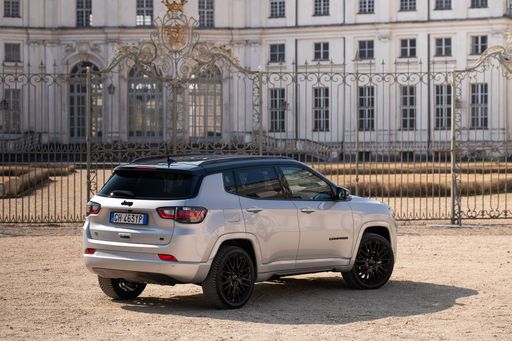
The Jeep Compass packs classic Jeep styling with a surprisingly composed demeanor, equally at home turning heads in the city or tackling a weekend dirt track. Inside it's a pragmatic, user-friendly compact SUV that prioritizes comfort and versatility — a smart pick if you want a dose of adventure without giving up everyday sense.

details

Mercedes GLA

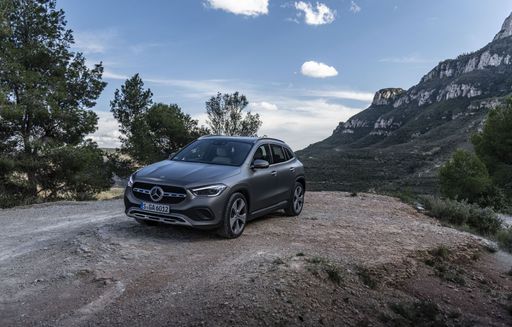
The Mercedes GLA blends Mercedes style with compact crossover practicality, looking sharper than its size suggests while still feeling purposeful around town. Inside it serves up premium materials and tech-forward ergonomics, and the composed ride makes it an appealing pick for buyers who want luxury wrapped in a city-friendly package with a wink of adventurous spirit.

details
Jeep Compass
Mercedes GLA

Costs and Consumption

Price
34,200 - 43,200 £
Price
38,800 - 75,300 £
Consumption L/100km
3 - 5.8 L/100km
Consumption L/100km
2.9 - 9.5 L/100km
Consumption kWh/100km
17.5 kWh/100km
Consumption kWh/100km
-
Electric Range
95 - 500 km
Electric Range
74 km
Battery Capacity
74 kWh
Battery Capacity
12.9 kWh
co2
0 - 130 g/km
co2
66 - 216 g/km
Fuel tank capacity
55 L
Fuel tank capacity
35 L

Dimensions and Body

Body Type
SUV
Body Type
SUV
Seats
5
Seats
5
Doors
5
Doors
5
Curb weight
1,667 - 2,198 kg
Curb weight
1,570 - 1,810 kg
Trunk capacity
550 L
Trunk capacity
385 - 435 L
Length
4,552 mm
Length
4,412 mm
Width
1,928 mm
Width
1,834 - 1,849 mm
Height
1,675 mm
Height
1,616 mm
Max trunk capacity
1,561 L
Max trunk capacity
1,385 L
Payload
-
Payload
480 - 500 kg

Engine and Performance

Engine Type
Petrol MHEV, Electric, Plugin Hybrid
Engine Type
Plugin Hybrid, Petrol MHEV, Diesel, Petrol
Transmission
Automatic
Transmission
Automatic
Transmission Detail
Dual-Clutch Automatic, Reduction Gearbox
Transmission Detail
Dual-Clutch Automatic
Drive Type
Front-Wheel Drive
Drive Type
Front-Wheel Drive, All-Wheel Drive
Power HP
145 - 225 HP
Power HP
116 - 421 HP
Acceleration 0-100km/h
8 - 10.3 s
Acceleration 0-100km/h
4.3 - 11 s
Max Speed
180 - 188 km/h
Max Speed
210 km/h
Torque
230 - 345 Nm
Torque
230 - 500 Nm
Number of Cylinders
3 - 4
Number of Cylinders
4
Power kW
107 - 165 kW
Power kW
85 - 310 kW
Engine capacity
1,199 - 1,596 cm3
Engine capacity
1,332 - 1,991 cm3

General

Model Year
2,025 - 2,026
Model Year
2,024 - 2,025
CO2 Efficiency Class
D, A, B
CO2 Efficiency Class
B, E, F, G
Brand
Jeep
Brand
Mercedes-Benz
DriveDuel uses data analysis and artificial intelligence to evaluate vehicle data and create content. Content is regularly reviewed and improved. The displayed prices are estimates based on German list prices, adjusted to the respective country’s VAT. Country-specific registration taxes are not included. This information is not legally binding.