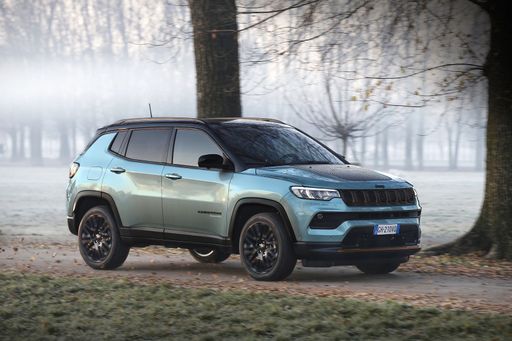
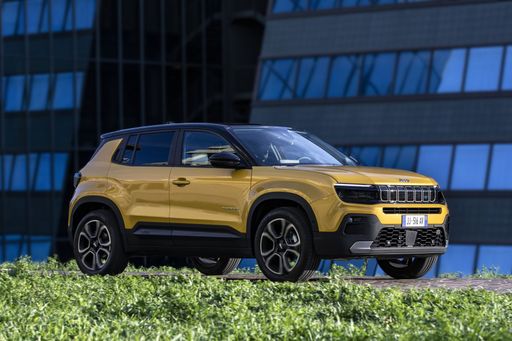
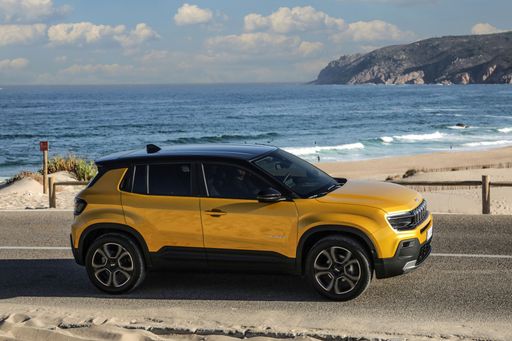
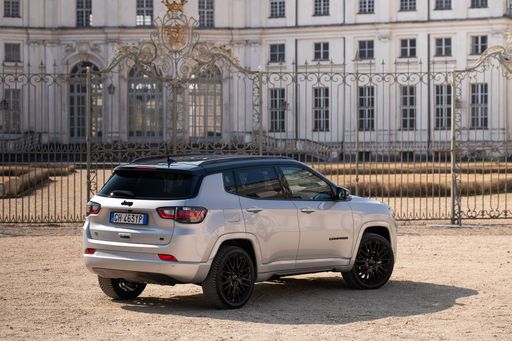
VS

Jeep Avenger vs Jeep Compass comparison

Compare performance (156 HP vs 225 HP), boot space and price (22,500 £ vs 34,200 £ ) at a glance. Find out which car is the better choice for you – Jeep Avenger or Jeep Compass?

Jeep Avenger vs Jeep Compass: Key differences

Jeep Avenger

4.2 (4 Reviews)
rate
  • considerably cheaper
  • a bit more efficient
  • considerably lighter

Jeep Compass

2.4 (4 Reviews)
rate
  • clearly more power
  • substantially more efficient
  • somewhat more electric range
  • slightly quicker 0–100 km/h
  • noticeably more trunk space

All details on performance, efficiency, range and trunk space can be found in the technical comparison below – including user reviews for both models.

Avenger

As the automotive market continues to evolve, Jeep has introduced two distinct models that cater to different preferences and driving needs: the Jeep Avenger and the Jeep Compass. Each SUV brings its unique strengths to the table, making them worthy contenders in the compact SUV segment. This article will explore the technical specifications and innovations of both vehicles, allowing potential buyers to make informed choices.

Compass

Powertrain and Performance

The Jeep Avenger offers a diversified engine lineup, featuring electric and petrol options. With an electric variant producing up to 156 HP and a torque of 260 Nm, the Avenger showcases impressive acceleration capabilities—achieving 0 to 100 km/h in just 9 seconds. Additionally, it offers a driving range of approximately 400 km on a full charge, thanks to its 51 kWh battery capacity. This model is designed for the eco-conscious driver while also delivering spirited performance.

On the other hand, the Jeep Compass is equipped with traditional petrol MHEV and plug-in hybrid engines, offering power outputs ranging from 130 HP to a robust 240 HP. With the highest performing variant reaching 0 to 100 km/h in just 7.3 seconds, the Compass exudes confidence on the road. It caters to a broader range of performance preferences while also offering an electric-only range of up to 36 km for local commuting.

Avenger

Fuel Efficiency and Emissions

When it comes to fuel efficiency, the Jeep Avenger’s electric motor provides a remarkable energy consumption rate of 15.4 kWh/100 km, contributing to its zero CO2 emissions in electric mode. The petrol options range from 5.4 to 5.7 L/100 km, placing it in a competitive position among small SUVs.

The Compass, however, is also efficient, particularly with its hybrid variants. Consumption figures average around 2 L/100 km for its PHEV model, making it an appealing choice for those looking to minimize their carbon footprint. Nonetheless, it does emit CO2, with figures reaching up to 124 g/km for petrol models.

Compass

Dimensions and Trunk Space

In terms of physical dimensions, the Avenger is slightly smaller, measuring 4084 mm in length and 1776 mm in width. It offers a trunk capacity of 355 liters, which is sufficient for everyday use, though not class-leading.

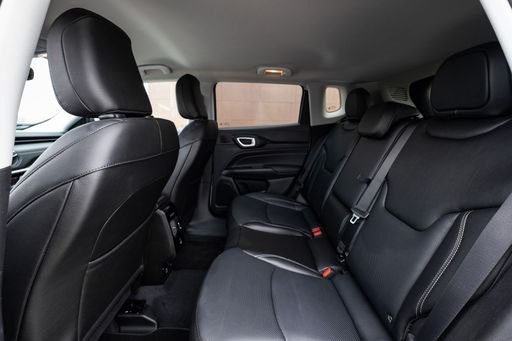
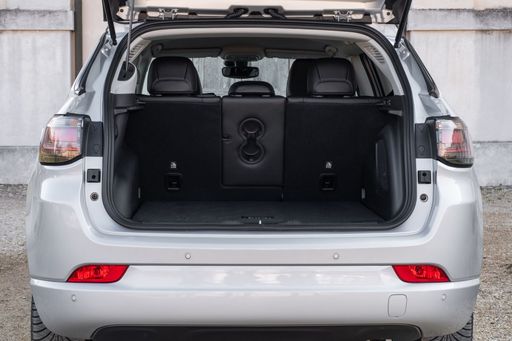
In contrast, the Compass embodies a more substantial presence with a length of 4404 mm and a width of 1819 mm. It boasts a larger trunk capacity of 438 liters, providing additional space for gear and family outings. Clearly, for buyers needing more cargo room, the Compass could be the preferable option.

Avenger

Interior Features and Technology

Both SUVs are equipped with contemporary technology and comfort features aimed at enhancing the driving experience. The Avenger leans towards modernity with its digital cockpit and advanced connectivity options, reflecting the latest industry trends aimed at younger, tech-savvy drivers.

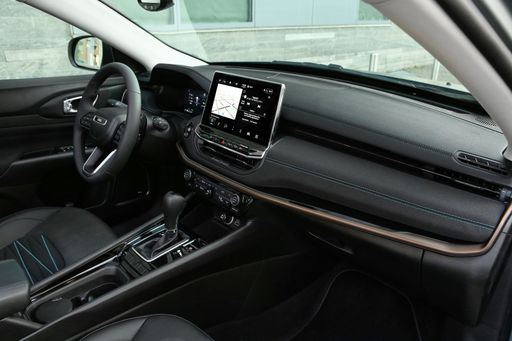
The Compass, on the other hand, combines sophistication with practicality. Its interior is crafted with high-quality materials and features Jeep's renowned infotainment system, providing seamless navigation and entertainment. The availability of safety features and advanced driver-assistance systems in both models ensures that passengers are secure, enhancing overall confidence while driving.

Compass

Driving Dynamics and Comfort

As far as driving dynamics are concerned, the Jeep Avenger offers a nimble driving experience, aided by its lower curb weight of 1520 kg. This makes it particularly agile in urban environments, allowing for quick maneuvers when navigating tight spaces.

The Compass emphasizes passenger comfort and off-road capability. Although slightly heavier at 1575 kg, it is equipped with features that enhance its stability on various terrains, making it a versatile option for drivers who frequently venture off the beaten path.

Avenger

Conclusion: Choosing the Right Jeep for You

Ultimately, choosing between the Jeep Avenger and the Jeep Compass boils down to individual preferences and requirements. The Avenger shines with its eco-friendly approach and electric options, appealing to environmentally conscious drivers. Conversely, the Compass boasts a broader range of powerful engines, a more spacious interior, and enhanced off-road performance, making it a solid choice for traditional SUV enthusiasts.

Both models carry the Jeep legacy forward while incorporating modern innovations, ensuring that buyers enjoy reliability, performance, and comfort. Deciding between these two options will surely be a rewarding experience for any Jeep enthusiast.

Here’s where it gets real: The technical differences in detail

Avenger

Costs and Efficiency:

Price and efficiency are key factors when choosing a car – and this is often where the real differences emerge.

Jeep Avenger is considerably cheaper – starting at 22,500 £ , while the Jeep Compass costs 34,200 £ . That’s a price difference of around 11,658 £.

Fuel consumption also shows a difference: the Jeep Compass uses 3 L/100km and is substantially more efficient than the Jeep Avenger with 4.9 L/100km. The difference is about 1.9 L/100km.

In terms of energy consumption, the Jeep Avenger is a bit more efficient: consuming 15.5 kWh/100km compared to 17.5 kWh/100km for the Jeep Compass. That’s a difference of about 2 kWh/100km.

As for electric range, the Jeep Compass offers somewhat more range – reaching up to 500 km, about 100 km more than the Jeep Avenger.

Compass

Engine and Performance:

Under the bonnet, it becomes clear which model is tuned for sportiness and which one takes the lead when you hit the accelerator.

When it comes to engine power, the Jeep Compass offers clearly more power – delivering 225 HP compared to 156 HP. That’s roughly 69 HP more horsepower.

When accelerating from 0 to 100 km/h, the Jeep Compass is slightly quicker – completing the sprint in 8 s, while the Jeep Avenger takes 9 s. That’s about 1 s quicker.

Looking at top speed, the Jeep Avenger is barely faster – reaching 194 km/h, while the Jeep Compass tops out at 188 km/h. The difference is around 6 km/h.

There’s also a difference in torque: the Jeep Compass delivers visibly more torque with 345 Nm compared to 260 Nm. That’s about 85 Nm more.

Avenger

Space and Everyday Use:

Beyond pure performance, interior space and usability matter most in daily life. This is where you see which car is more practical and versatile.

Both vehicles offer seating for 5 people.

In terms of curb weight, Jeep Avenger is considerably lighter – 1,180 kg compared to 1,667 kg. The difference is around 487 kg.

Looking at boot space, the Jeep Compass offers noticeably more boot space – 550 L compared to 380 L. That’s a difference of about 170 L.

For maximum load capacity, the Jeep Compass offers slightly more capacity – up to 1,561 L, about 284 L more than the Jeep Avenger.

Who wins the race in the data check?

The Jeep Compass is far ahead overall in the objective data comparison.
This result only shows which model scores more points on paper – not which of the two cars feels right for you.

from £34,200
Compass

Jeep Compass

  • Engine Type : Petrol MHEV, Electric, Plugin Hybrid
  • Transmission : Automatic
  • Drive Type : Front-Wheel Drive
  • Power HP : 145 - 225 HP
  • Consumption L/100km : 3 - 5.8 L/100km
  • Consumption kWh/100km : 17.5 kWh/100km
  • Electric Range : 95 - 500 km
Jeep Avenger
Jeep Compass

Costs and Consumption

View detailed analysis

Engine and Performance

View detailed analysis

Dimensions and Body

View detailed analysis

Jeep Avenger

The Jeep Avenger shrinks Jeep's boxy, adventurous styling into a city-friendly electric crossover that looks just as at home on tight streets as it does on muddy weekend lanes. It's a savvy pick for drivers who want go-anywhere attitude without the truck-size ego — practical inside, lively around town and ready to tackle a bit of rough stuff when the mood strikes.

details

Jeep Compass

The Jeep Compass packs classic Jeep styling with a surprisingly composed demeanor, equally at home turning heads in the city or tackling a weekend dirt track. Inside it's a pragmatic, user-friendly compact SUV that prioritizes comfort and versatility — a smart pick if you want a dose of adventure without giving up everyday sense.

details
Jeep Avenger
Jeep Compass

Costs and Consumption

Price
22,500 - 36,900 £
Price
34,200 - 43,200 £
Consumption L/100km
4.9 - 5.7 L/100km
Consumption L/100km
3 - 5.8 L/100km
Consumption kWh/100km
15.5 kWh/100km
Consumption kWh/100km
17.5 kWh/100km
Electric Range
400 km
Electric Range
95 - 500 km
Battery Capacity
51 kWh
Battery Capacity
74 kWh
co2
0 - 129 g/km
co2
0 - 130 g/km
Fuel tank capacity
44 L
Fuel tank capacity
55 L

Dimensions and Body

Body Type
SUV
Body Type
SUV
Seats
5
Seats
5
Doors
5
Doors
5
Curb weight
1,180 - 1,520 kg
Curb weight
1,667 - 2,198 kg
Trunk capacity
325 - 380 L
Trunk capacity
550 L
Length
4,084 - 4,088 mm
Length
4,552 mm
Width
1,776 mm
Width
1,928 mm
Height
1,527 - 1,541 mm
Height
1,675 mm
Max trunk capacity
1,218 - 1,277 L
Max trunk capacity
1,561 L
Payload
494 - 502 kg
Payload
-

Engine and Performance

Engine Type
Electric, Petrol MHEV, Petrol
Engine Type
Petrol MHEV, Electric, Plugin Hybrid
Transmission
Automatic, Manuel
Transmission
Automatic
Transmission Detail
Reduction Gearbox, Dual-Clutch Automatic, Manual Gearbox
Transmission Detail
Dual-Clutch Automatic, Reduction Gearbox
Drive Type
Front-Wheel Drive, All-Wheel Drive
Drive Type
Front-Wheel Drive
Power HP
100 - 156 HP
Power HP
145 - 225 HP
Acceleration 0-100km/h
9 - 10.6 s
Acceleration 0-100km/h
8 - 10.3 s
Max Speed
150 - 194 km/h
Max Speed
180 - 188 km/h
Torque
205 - 260 Nm
Torque
230 - 345 Nm
Number of Cylinders
3
Number of Cylinders
3 - 4
Power kW
74 - 115 kW
Power kW
107 - 165 kW
Engine capacity
1,199 cm3
Engine capacity
1,199 - 1,596 cm3

General

Model Year
2,023 - 2,026
Model Year
2,025 - 2,026
CO2 Efficiency Class
A, C, D
CO2 Efficiency Class
D, A, B
Brand
Jeep
Brand
Jeep
DriveDuel uses data analysis and artificial intelligence to evaluate vehicle data and create content. Content is regularly reviewed and improved. The displayed prices are estimates based on German list prices, adjusted to the respective country’s VAT. Country-specific registration taxes are not included. This information is not legally binding.