VS

Jeep Avenger vs Nissan Juke - Differences and prices compared

Compare performance (156 HP vs 143 HP), boot space and price (21900 £ vs 21400 £ ) at a glance. Find out which car is the better choice for you – Jeep Avenger or Nissan Juke?

Jeep Avenger

5 (2 Reviews)
rate

Nissan Juke

5 (1 Reviews)
rate

You can find all user reviews further down on this page.

Here’s where it gets real: The technical differences in detail

Avenger

Costs and Efficiency:

When it comes to price and running costs, the biggest differences usually appear. This is often where you see which car fits your budget better in the long run.

Nissan Juke has a slight advantage in terms of price – it starts at 21400 £ , while the Jeep Avenger costs 21900 £ . That’s a price difference of around 557 £.

Fuel consumption also shows a difference: Nissan Juke manages with 4.70 L and is therefore barely noticeable more efficient than the Jeep Avenger with 4.90 L. The difference is about 0.20 L per 100 km.

Juke

Engine and Performance:

Under the bonnet, it becomes clear which model is tuned for sportiness and which one takes the lead when you hit the accelerator.

When it comes to engine power, the Jeep Avenger has a minimal edge – offering 156 HP compared to 143 HP. That’s roughly 13 HP more horsepower.

In acceleration from 0 to 100 km/h, the Jeep Avenger is to a small extent quicker – completing the sprint in 9 s, while the Nissan Juke takes 10.10 s. That’s about 1.10 s faster.

In terms of top speed, the Jeep Avenger performs hardly perceptible better – reaching 194 km/h, while the Nissan Juke tops out at 180 km/h. The difference is around 14 km/h.

There’s also a difference in torque: Jeep Avenger pulls clearly perceptible stronger with 260 Nm compared to 200 Nm. That’s about 60 Nm difference.

Avenger

Space and Everyday Use:

Cabin size, boot volume and payload all play a role in everyday practicality. Here, comfort and flexibility make the difference.

Both vehicles offer seating for 5 people.

In curb weight, Jeep Avenger is slight lighter – 1180 kg compared to 1274 kg. The difference is around 94 kg.

In terms of boot space, the Nissan Juke offers slight more room – 422 L compared to 380 L. That’s a difference of about 42 L.

In maximum load capacity, the Nissan Juke performs hardly perceptible better – up to 1305 L, which is about 28 L more than the Jeep Avenger.

When it comes to payload, Jeep Avenger to a small extent takes the win – 502 kg compared to 427 kg. That’s a difference of about 75 kg.

Who wins the race in the data check?

The Jeep Avenger holds a decisive overall lead in the objective data comparison.
This result only shows which model scores more points on paper – not which of the two cars feels right for you.

Jeep Avenger
Nissan Juke

Costs and Consumption

View detailed analysis

Engine and Performance

View detailed analysis

Dimensions and Body

View detailed analysis
from about £21,900
Avenger

Jeep Avenger

  • Engine Type : Electric, Petrol, Petrol MHEV
  • Transmission : Automatic, Manuel
  • Drive Type : Front-Wheel Drive, All-Wheel Drive
  • Power HP : 100 - 156 HP
  • Consumption L/100km : 4.9 - 5.7 L
  • Consumption kWh/100km : 15.50 kWh
  • Electric Range : 400 km

Jeep Avenger

5 (2 Reviews)
rate

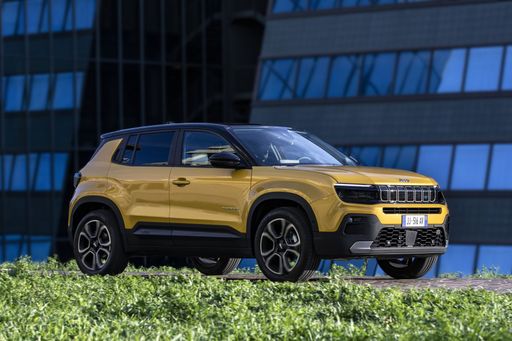
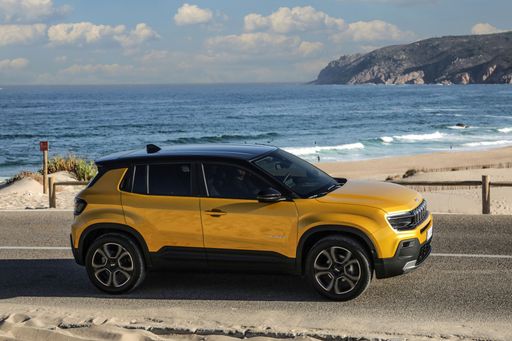
The Jeep Avenger shrinks Jeep's boxy, adventurous styling into a city-friendly electric crossover that looks just as at home on tight streets as it does on muddy weekend lanes. It's a savvy pick for drivers who want go-anywhere attitude without the truck-size ego — practical inside, lively around town and ready to tackle a bit of rough stuff when the mood strikes.

details

Nissan Juke

5 (1 Reviews)
rate

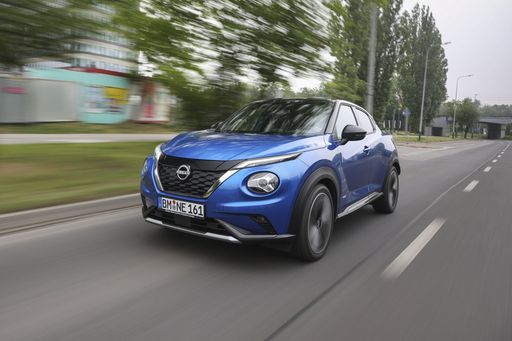
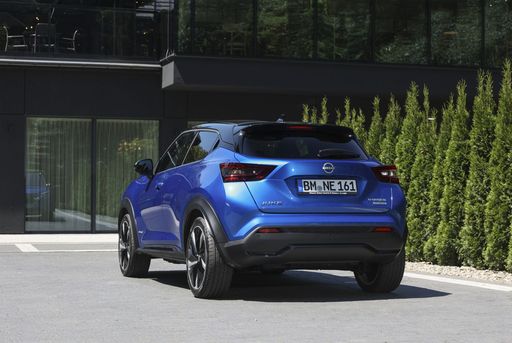
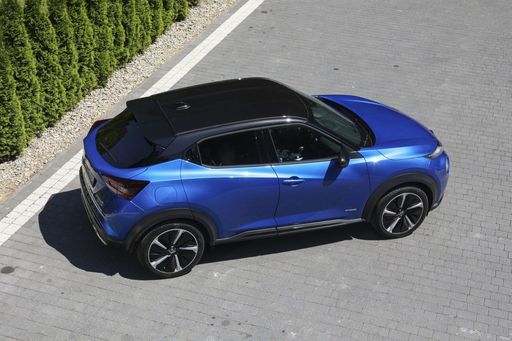
The Nissan Juke is a pocket-sized crossover that refuses to blend in, with quirky styling and a cheeky stance that turns heads at every traffic light. It’s ideal for shoppers who value personality and nimble urban driving over maximum practicality, delivering surprising pep and a well-equipped feel for everyday fun.

details
Jeep Avenger
Nissan Juke

Costs and Consumption

Price
21900 - 36900 £
Price
21400 - 30100 £
Consumption L/100km
4.9 - 5.7 L
Consumption L/100km
4.7 - 6 L
Consumption kWh/100km
15.50 kWh
Consumption kWh/100km
-
Electric Range
400 km
Electric Range
-
Battery Capacity
51 kWh
Battery Capacity
0.60 kWh
co2
0 - 129 g/km
co2
107 - 136 g/km
Fuel tank capacity
44 L
Fuel tank capacity
46 L

Dimensions and Body

Body Type
SUV
Body Type
SUV
Seats
5
Seats
5
Doors
5
Doors
5
Curb weight
1180 - 1520 kg
Curb weight
1274 - 1405 kg
Trunk capacity
325 - 380 L
Trunk capacity
354 - 422 L
Length
4084 - 4088 mm
Length
4210 mm
Width
1776 mm
Width
1800 mm
Height
1527 - 1541 mm
Height
1593 mm
Max trunk capacity
1218 - 1277 L
Max trunk capacity
1237 - 1305 L
Payload
494 - 502 kg
Payload
405 - 427 kg

Engine and Performance

Engine Type
Electric, Petrol, Petrol MHEV
Engine Type
Petrol, Full Hybrid
Transmission
Automatic, Manuel
Transmission
Manuel, Automatic
Transmission Detail
Reduction Gearbox, Manual Gearbox, Dual-Clutch Automatic
Transmission Detail
Manual Gearbox, Dual-Clutch Automatic, Automatic Gearbox
Drive Type
Front-Wheel Drive, All-Wheel Drive
Drive Type
Front-Wheel Drive
Power HP
100 - 156 HP
Power HP
114 - 143 HP
Acceleration 0-100km/h
9 - 10.6 s
Acceleration 0-100km/h
10.1 - 11.8 s
Max Speed
150 - 194 km/h
Max Speed
166 - 180 km/h
Torque
205 - 260 Nm
Torque
200 Nm
Number of Cylinders
3
Number of Cylinders
3 - 4
Power kW
74 - 115 kW
Power kW
84 - 105 kW
Engine capacity
1199 cm3
Engine capacity
999 - 1598 cm3

General

Model Year
2023 - 2025
Model Year
2024
CO2 Efficiency Class
A, D, C
CO2 Efficiency Class
D, E, C
Brand
Jeep
Brand
Nissan
What drivetrain options does the Jeep Avenger have?

Available configurations include Front-Wheel Drive or All-Wheel Drive.

The prices shown are estimates based on German list prices, adjusted for local VAT. Local registration taxes (e.g. NoVA, BPM or CO2 malus) are not included. This information is not legally binding.