VS

Dacia Sandero vs Nissan Juke comparison

Compare performance (122 HP vs 143 HP), boot space and price (11,000 £ vs 21,400 £ ) at a glance. Find out which car is the better choice for you – Dacia Sandero or Nissan Juke?

Dacia Sandero vs Nissan Juke: Key differences

Dacia Sandero

3.9 (11 Reviews)
rate
  • significantly cheaper
  • only slightly quicker 0–100 km/h
  • a bit lighter
details

Nissan Juke

5 (1 Reviews)
rate
  • a bit more power
  • moderately more efficient
  • a bit more trunk space
details

All details on performance, efficiency, range and trunk space can be found in the technical comparison below – including user reviews for both models.

By Achim Sedelmaier

Sandero

Direct comparison: Dacia Sandero VS Nissan Juke — value or personality?

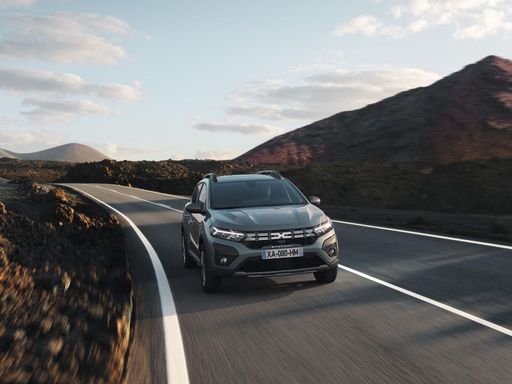
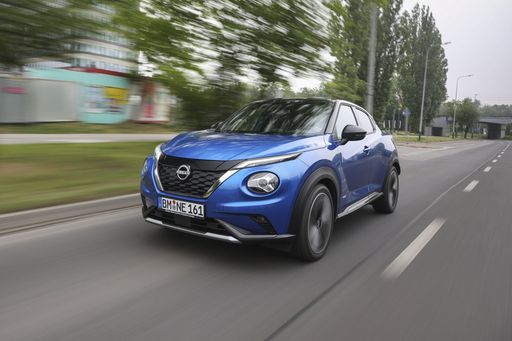
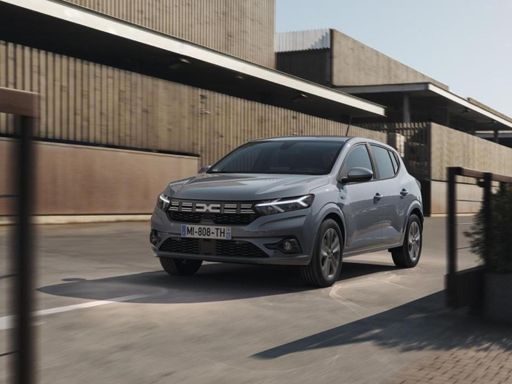
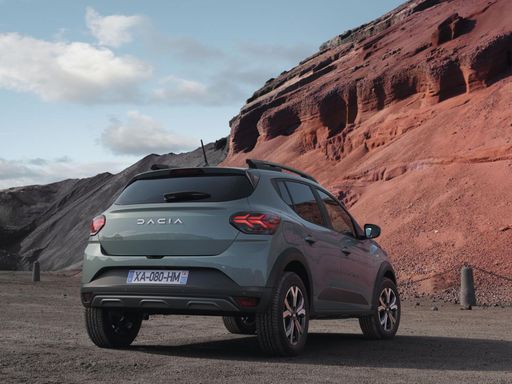
Dacia Sandero and Nissan Juke start from very different philosophies: the Sandero is a take-it-or-leave-it bargain that gives you maximum utility per pound, while the Juke trades some of that cold practicality for a sharper look and a modern, cockpit-first experience. The Sandero’s strength is obvious the moment you sit in it — simple controls, upright seating and usable space without fuss — whereas the Juke signals intention with its styling and upgraded infotainment. Buyers who count every running cost and prefer straightforward usability will find the Sandero compelling; those who want a car that feels fresher on the driveway and behind the wheel will be drawn to the Juke. Read on to see how those two approaches play out in daily driving, comfort, practicality and cabin feel before we dive into the numbers.
Juke

Driving character and city friendliness

The Dacia Sandero drives like a light, predictable city companion: easy to park, forgiving steering and no surprises — it’s built for low-stress urban duty. By contrast the Nissan Juke is more of a mini crossover with sharper responses and a firmer setup that feels brisk in town, especially in its hybrid guise, but can be fussy at very low speeds if equipped with the dual-clutch gearbox. Sandero’s simplicity makes everyday manoeuvres effortless and low-cost, while Juke rewards drivers who value immediacy and a bit of character when threading through traffic. If your commute is stop-and-go and you want calm, the Sandero’s predictability wins; if you want a car that feels engaging and modern when you drive it around town, the Juke is the better match.

Sandero

Comfort and long-distance behavior

On long trips the contrast becomes tangible: the Dacia Sandero is competent but honest — it isolates rougher road imperfections modestly and gets tiring when motorway noise grows, so it works best for shorter runs or when you prioritise cost over refinement. The Nissan Juke leans toward a firmer ride, which keeps the car composed but translates into a choppier feel on coarse surfaces and can make long motorway hours more wearing, particularly on larger wheels. Neither car is a sanctuary for hush-and-lounge cruising; the Sandero sacrifices acoustic refinement for value, while the Juke trades some comfort for sharper control and style. If motorway serenity is a priority, buyers should expect compromises from both: choose Sandero for softer everyday cushioning and Juke for tauter, more controlled behaviour that pays off in corners.

Juke

Practicality, boot access and family usability

Practical everyday needs reveal nuanced trade-offs: the Dacia Sandero gives you straightforward front-seat space and a sensible boot that feels generous for the price, but a high, unloved loading lip and limited rear-seat comfort can make family chores fiddlier. The Nissan Juke often offers a healthy boot in petrol versions and a well-thought-out cockpit, but the hybrid variants eat into cargo space and the Juke also suffers from a tall boot lip and cramped rear seats. For parents the Sandero’s usable layout and lower running costs tend to be more forgiving for busy routines, whereas the Juke suits small households and buyers who accept tighter rear space in exchange for flair and tech. If you regularly carry tall prams or long loads, neither car is class-leading, but the Sandero will usually stretch further for families on a budget.

Sandero

Cabin feel, infotainment and perceived quality

The Dacia Sandero wears its frugality on its sleeve: hard plastics, simple switchgear and an interface that keeps features basic but clear — you won’t be dazzled, but you’ll rarely be confused. The Nissan Juke, after its refresh, presents a more modern cabin with a larger, faster screen and nicer materials in many places, which creates a stronger impression of quality from the driver’s seat. That difference matters every day: Sandero’s tactile simplicity is pleasantly practical, while Juke’s tech and finish give a more premium feeling that still leaves a few cost-cut corners. If perceived quality and a slick infotainment experience are priorities, Juke clearly leads; if you prefer a fuss-free, easily serviceable interior, the Sandero’s honesty is an advantage.

Juke

Buyer fit: who should pick which car?

Choosing between the Dacia Sandero and the Nissan Juke comes down to priorities more than objective superiority: pick the Sandero if you want the lowest total cost of ownership, easy-to-understand controls, and the most car you can buy for your money. Opt for the Juke if you value a distinctive look, sharper on-road manners and a noticeably better infotainment and assistance package, accepting tighter rear space and a firmer ride. Families and long-distance commuters who prize quiet and rear-seat comfort should scrutinise both choices carefully, while singles or couples who want city flair and tech will lean toward the Juke. Below this editorial comparison you’ll find the technical breakdown that maps these everyday impressions to the concrete hardware and numbers that make the trade-offs real.

Here’s where it gets real: The technical differences in detail

Sandero

Costs and Efficiency:

Price and efficiency are key factors when choosing a car – and this is often where the real differences emerge.

Dacia Sandero is significantly cheaper – starting at 11,000 £ , while the Nissan Juke costs 21,400 £ . That’s a price difference of around 10,423 £.

Fuel consumption also shows a difference: the Nissan Juke uses 4.7 L/100km and is moderately more efficient than the Dacia Sandero with 5.3 L/100km. The difference is about 0.6 L/100km.

Juke

Engine and Performance:

Under the bonnet, it becomes clear which model is tuned for sportiness and which one takes the lead when you hit the accelerator.

When it comes to engine power, the Nissan Juke offers a bit more power – delivering 143 HP compared to 122 HP. That’s roughly 21 HP more horsepower.

When accelerating from 0 to 100 km/h, the Dacia Sandero is only slightly quicker – completing the sprint in 9.7 s, while the Nissan Juke takes 10.1 s. That’s about 0.4 s quicker.

Both models offer the same torque – 200 Nm.

Sandero

Space and Everyday Use:

Whether family car or daily driver – which one offers more room, flexibility and comfort?

Both vehicles offer seating for 5 people.

In terms of curb weight, Dacia Sandero is a bit lighter – 1,100 kg compared to 1,274 kg. The difference is around 174 kg.

Looking at boot space, the Nissan Juke offers a bit more boot space – 422 L compared to 372 L. That’s a difference of about 50 L.

When it comes to payload, the Dacia Sandero carries barely more – 436 kg compared to 427 kg. That’s a difference of about 9 kg.

Who wins the race in the data check?

The Dacia Sandero sits just ahead overall in the objective data comparison.
This result only shows which model scores more points on paper – not which of the two cars feels right for you.

from £11,000
Sandero

Dacia Sandero

  • Engine Type Petrol, LPG
  • Transmission Manuel, Automatic
  • Drive Type Front-Wheel Drive
  • Power HP 67 - 122 HP
  • Consumption L/100km 5.3 - 7.2 L/100km
Dacia Sandero
Nissan Juke

Costs and Consumption

View detailed analysis

Engine and Performance

View detailed analysis

Dimensions and Body

View detailed analysis

Dacia Sandero

The Sandero is a no-nonsense hatchback that prioritises practicality and low running costs, making it a smart choice for budget-minded buyers. It delivers a surprisingly roomy interior and straightforward, useful equipment so you get everyday usability without paying for unnecessary frills.

details

Nissan Juke

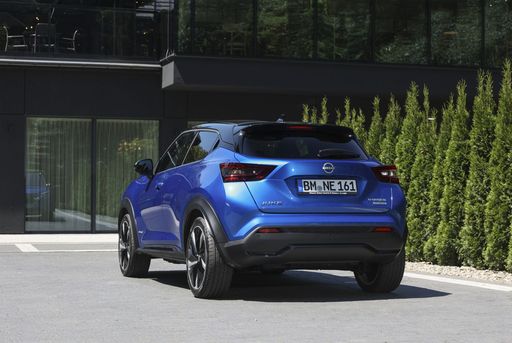
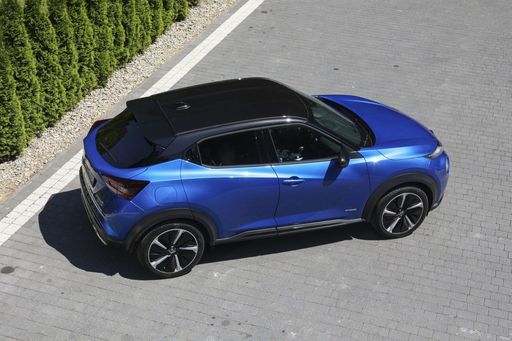
The Nissan Juke is a pocket-sized crossover that refuses to blend in, with quirky styling and a cheeky stance that turns heads at every traffic light. It’s ideal for shoppers who value personality and nimble urban driving over maximum practicality, delivering surprising pep and a well-equipped feel for everyday fun.

details
Dacia Sandero
Nissan Juke

Costs and Consumption

Price
11,000 - 16,300 £
Price
21,400 - 30,100 £
Consumption L/100km
5.3 - 7.2 L/100km
Consumption L/100km
4.7 - 6 L/100km
Consumption kWh/100km
-
Consumption kWh/100km
-
Electric Range
-
Electric Range
-
Battery Capacity
-
Battery Capacity
-
co2
111 - 131 g/km
co2
105 - 136 g/km
Fuel tank capacity
-
Fuel tank capacity
-

Dimensions and Body

Body Type
Hatchback
Body Type
SUV
Seats
5
Seats
5
Doors
-
Doors
-
Curb weight
1,100 - 1,297 kg
Curb weight
1,274 - 1,405 kg
Trunk capacity
328 - 372 L
Trunk capacity
354 - 422 L
Length
-
Length
-
Width
1,853 mm
Width
1,800 mm
Height
-
Height
-
Max trunk capacity
-
Max trunk capacity
-
Payload
385 - 436 kg
Payload
405 - 427 kg

Engine and Performance

Engine Type
Petrol, LPG
Engine Type
Petrol, Full Hybrid
Transmission
Manuel, Automatic
Transmission
Manuel, Automatic
Transmission Detail
Manual Gearbox, Dual-Clutch Automatic
Transmission Detail
Manual Gearbox, Dual-Clutch Automatic, Automatic Gearbox
Drive Type
Front-Wheel Drive
Drive Type
Front-Wheel Drive
Power HP
67 - 122 HP
Power HP
114 - 143 HP
Acceleration 0-100km/h
9.7 - 16.7 s
Acceleration 0-100km/h
10.1 - 11.8 s
Max Speed
-
Max Speed
-
Torque
95 - 200 Nm
Torque
200 Nm
Number of Cylinders
3
Number of Cylinders
3 - 4
Power kW
49 - 90 kW
Power kW
84 - 105 kW
Engine capacity
999 - 1,199 cm3
Engine capacity
999 - 1,598 cm3

General

Model Year
2025
Model Year
2025
CO2 Efficiency Class
D, C
CO2 Efficiency Class
D, E, C
Brand
Dacia
Brand
Nissan
DriveDuel uses data analysis and artificial intelligence to evaluate vehicle data and create content. Content is regularly reviewed and improved. The displayed prices are estimates based on German list prices, adjusted to the respective country’s VAT. Country-specific registration taxes are not included. This information is not legally binding.