VS

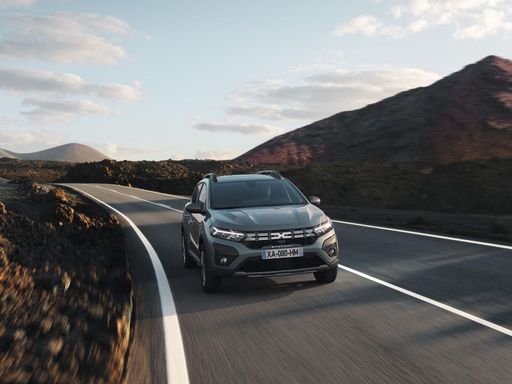
Dacia Duster vs Dacia Sandero comparison

Compare performance (158 HP vs 122 HP), boot space and price (16,300 £ vs 11,000 £ ) at a glance. Find out which car is the better choice for you – Dacia Duster or Dacia Sandero?

Dacia Duster vs Dacia Sandero: Key differences

Dacia Duster

4.8 (3 Reviews)
rate
  • visibly more power
  • a bit more efficient
  • barely quicker 0–100 km/h
  • markedly more trunk space
details

Dacia Sandero

3.1 (5 Reviews)
rate
  • substantially cheaper
  • noticeably lighter
details

All details on performance, efficiency, range and trunk space can be found in the technical comparison below – including user reviews for both models.

By Achim Sedelmaier

Duster

Dacia Duster VS Dacia Sandero: the smart-value showdown

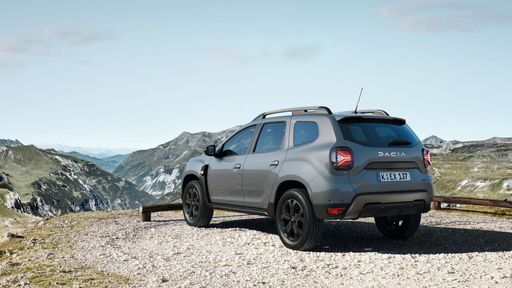
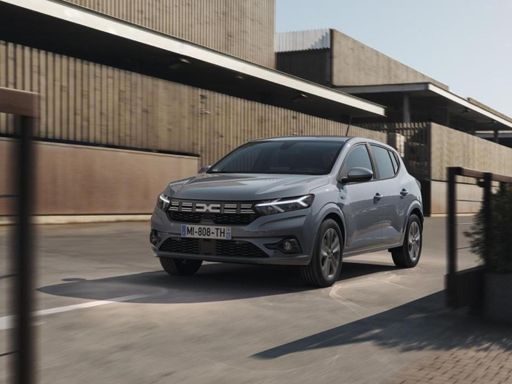
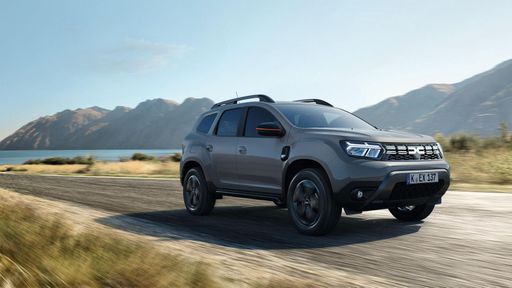
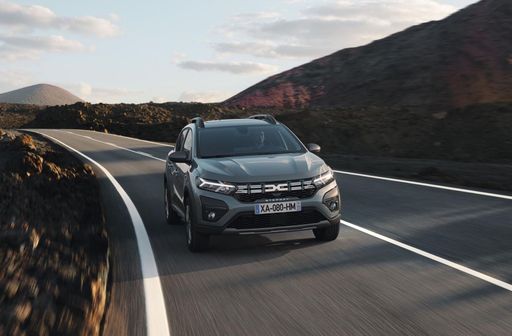
Dacia Duster and Dacia Sandero chase affordable motoring with very different personalities. In the Dacia Duster VS Dacia Sandero matchup, you’re choosing between a tough, high‑riding compact SUV and a no‑nonsense city‑friendly hatchback. The Duster leans into versatility and weekend‑adventure credibility, with a taller seating position and the option to go further off the beaten path. The Sandero keeps costs wafer‑thin and life simple, feeling immediately easy to park, easy to live with, and easy on monthly payments. Both are honest and unfussy, but they steer you toward different kinds of everyday life.
Sandero

Driving character: calm muscle vs light simplicity

The Dacia Duster feels more relaxed when loaded with people or luggage, thanks to a meatier power delivery and a calmer stride at suburban speeds. Its higher seating position and cushioned suspension encourage unhurried progress, and it copes well with gnarlier roads. The Dacia Sandero is lighter on its feet, nips through traffic neatly, and feels happiest in town where its compact size and eager response shine. Push harder and the Sandero’s three‑cylinder gets vocal, while the Duster’s extra shove takes hills and overtakes in its stride. If you value nimbleness for short hops, the Sandero suits; if you want unstressed pull and an easygoing gait, the Duster fits better.

Duster

Comfort and motorway manners

The Dacia Duster’s suspension takes the edge off broken tarmac, giving it a laid‑back, almost lounge‑chair vibe in daily use. At motorway pace, wind and road noise do make themselves known, yet the Duster’s additional composure means it feels less fidgety over big undulations. The Dacia Sandero rides agreeably around town but can feel lighter and a touch busier over expansion joints at speed. Seats in both are straightforward; the Duster’s feel broader and more supportive on longer hauls, while the Sandero’s are fine for an hour or two but basic in shape. Regular long‑distance drivers will manage in either, but neither majors on hushed, high‑speed serenity.

Sandero

Space and practicality that fit real lives

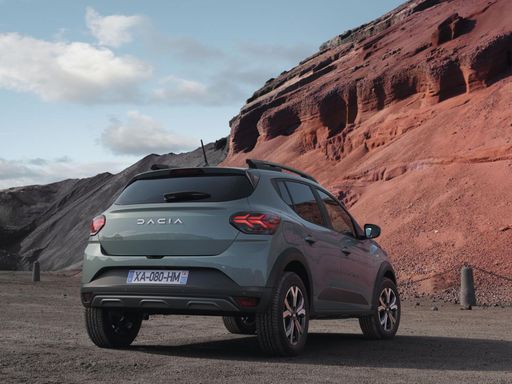
If you move people, pets, or kit often, the Dacia Duster’s extra cabin height and bigger, boxier luggage area pay off daily. It swallows pushchairs and camping gear with less Tetris, and rear headroom is friendlier for taller teens. The Dacia Sandero is surprisingly useful for its footprint and will handle a weekly shop or a buggy, but its high painted load lip is easy to scuff and makes heavier items a bit more awkward. Both cars are best for four, with the middle rear perch being occasional‑use only. Visibility is not perfect in either due to thick rear pillars, yet the Sandero’s shorter body is inherently easier to slot into tight spaces.

Duster

Cabin feel, tech and usability

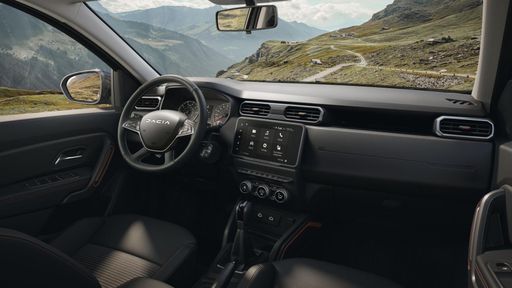
Neither car chases soft‑touch glamour; they aim for durable and wipe‑clean, and they largely succeed. The Dacia Duster’s cabin feels purposefully rugged, with practical mounting solutions and clear, physical controls that suit gloved or hurried hands. The Dacia Sandero doubles down on simplicity: straightforward knobs and a familiar screen layout keep the learning curve short, especially for new drivers. Infotainment performance in both is serviceable rather than slick, with smartphone mirroring doing the heavy lifting when specified. Overall, the Duster gives a sturdier, outdoorsy impression, while the Sandero feels minimalist but refreshingly honest.

Sandero

Costs, efficiency and buyer fit

The Dacia Sandero is the budget hero, trimming purchase price, insurance and tyres to keep total ownership costs admirably low. The Dacia Duster asks more upfront, but answers with extra space, a more relaxed powertrain feel, and the option to add genuine rough‑road confidence; choose its hybrid and city driving becomes notably smoother and more frugal. In everyday economy the gap isn’t night and day, yet the Sandero’s lightness helps in town while the Duster’s capability can offset its size if you often carry loads. City dwellers and first‑time buyers will love the Sandero’s ease and thrift, while rural drivers, dog owners and weekend adventurers will get more from the Duster’s versatility. If that sounds like you, the next step is to weigh the key technical details below against how you actually drive, park and pack each week.

Here’s where it gets real: The technical differences in detail

Duster

Costs and Efficiency:

Price and efficiency are key factors when choosing a car – and this is often where the real differences emerge.

Dacia Sandero is substantially cheaper – starting at 11,000 £ , while the Dacia Duster costs 16,300 £ . That’s a price difference of around 5,315 £.

Fuel consumption also shows a difference: the Dacia Duster uses 4.7 L/100km and is a bit more efficient than the Dacia Sandero with 5.3 L/100km. The difference is about 0.6 L/100km.

Sandero

Engine and Performance:

Under the bonnet, it becomes clear which model is tuned for sportiness and which one takes the lead when you hit the accelerator.

When it comes to engine power, the Dacia Duster offers visibly more power – delivering 158 HP compared to 122 HP. That’s roughly 36 HP more horsepower.

When accelerating from 0 to 100 km/h, the Dacia Duster is barely quicker – completing the sprint in 9.4 s, while the Dacia Sandero takes 9.7 s. That’s about 0.3 s quicker.

There’s also a difference in torque: the Dacia Duster delivers moderately more torque with 230 Nm compared to 200 Nm. That’s about 30 Nm more.

Duster

Space and Everyday Use:

Whether family car or daily driver – which one offers more room, flexibility and comfort?

Both vehicles offer seating for 5 people.

In terms of curb weight, Dacia Sandero is noticeably lighter – 1,100 kg compared to 1,377 kg. The difference is around 277 kg.

Looking at boot space, the Dacia Duster offers markedly more boot space – 517 L compared to 372 L. That’s a difference of about 145 L.

When it comes to payload, the Dacia Duster carries barely more – 453 kg compared to 436 kg. That’s a difference of about 17 kg.

Who wins the race in the data check?

The Dacia Duster holds a decisive overall lead in the objective data comparison.
This result only shows which model scores more points on paper – not which of the two cars feels right for you.

from £16,300
Duster

Dacia Duster

  • Engine Type : Petrol MHEV, Full Hybrid, LPG
  • Transmission : Manuel, Automatic
  • Drive Type : Front-Wheel Drive, All-Wheel Drive
  • Power HP : 115 - 158 HP
  • Consumption L/100km : 4.7 - 7.6 L/100km
Dacia Duster
Dacia Sandero

Costs and Consumption

View detailed analysis

Engine and Performance

View detailed analysis

Dimensions and Body

View detailed analysis

Dacia Duster

The Dacia Duster is a straightforward, budget-friendly SUV that prioritizes practicality and value over flashy features. Its rugged styling and simple, roomy interior make it a sensible choice for buyers who want capable everyday transport without paying for extras they won’t use.

details

Dacia Sandero

The Sandero is a no-nonsense hatchback that prioritises practicality and low running costs, making it a smart choice for budget-minded buyers. It delivers a surprisingly roomy interior and straightforward, useful equipment so you get everyday usability without paying for unnecessary frills.

details
Dacia Duster
Dacia Sandero

Costs and Consumption

Price
16,300 - 24,900 £
Price
11,000 - 16,300 £
Consumption L/100km
4.7 - 7.6 L/100km
Consumption L/100km
5.3 - 7.2 L/100km
Consumption kWh/100km
-
Consumption kWh/100km
-
Electric Range
-
Electric Range
-
Battery Capacity
-
Battery Capacity
-
co2
107 - 140 g/km
co2
111 - 131 g/km
Fuel tank capacity
-
Fuel tank capacity
-

Dimensions and Body

Body Type
SUV
Body Type
Hatchback
Seats
5
Seats
5
Doors
-
Doors
-
Curb weight
1,377 - 1,559 kg
Curb weight
1,100 - 1,297 kg
Trunk capacity
348 - 517 L
Trunk capacity
372 L
Length
-
Length
-
Width
1,813 mm
Width
1,853 mm
Height
-
Height
-
Max trunk capacity
-
Max trunk capacity
-
Payload
402 - 453 kg
Payload
385 - 436 kg

Engine and Performance

Engine Type
Petrol MHEV, Full Hybrid, LPG
Engine Type
Petrol, LPG
Transmission
Manuel, Automatic
Transmission
Manuel, Automatic
Transmission Detail
Manual Gearbox, Automated Manual, Dual-Clutch Automatic
Transmission Detail
Manual Gearbox, Dual-Clutch Automatic
Drive Type
Front-Wheel Drive, All-Wheel Drive
Drive Type
Front-Wheel Drive
Power HP
115 - 158 HP
Power HP
67 - 122 HP
Acceleration 0-100km/h
9.4 - 11.7 s
Acceleration 0-100km/h
9.7 - 16.7 s
Max Speed
-
Max Speed
-
Torque
190 - 230 Nm
Torque
95 - 200 Nm
Number of Cylinders
3 - 4
Number of Cylinders
3
Power kW
84 - 116 kW
Power kW
49 - 90 kW
Engine capacity
1,199 - 1,789 cm3
Engine capacity
999 - 1,199 cm3

General

Model Year
2,025 - 2,026
Model Year
2025
CO2 Efficiency Class
D, C
CO2 Efficiency Class
D, C
Brand
Dacia
Brand
Dacia
DriveDuel uses data analysis and artificial intelligence to evaluate vehicle data and create content. Content is regularly reviewed and improved. The displayed prices are estimates based on German list prices, adjusted to the respective country’s VAT. Country-specific registration taxes are not included. This information is not legally binding.