VS

Dacia Duster vs Omoda 5 comparison

Compare performance (158 HP vs 204 HP), boot space and price (16,300 £ vs 23,100 £ ) at a glance. Find out which car is the better choice for you – Dacia Duster or Omoda 5?

Dacia Duster vs Omoda 5: Key differences

Dacia Duster

5 (2 Reviews)
rate
  • substantially cheaper
  • substantially more efficient
  • considerably more trunk space

Omoda 5

5 (4 Reviews)
rate
  • visibly more power
  • clearly quicker 0–100 km/h

All details on performance, efficiency, range and trunk space can be found in the technical comparison below – including user reviews for both models.

Duster

The automotive landscape is ever-evolving, and with it comes the introduction of exciting new models designed to cater to diverse needs and preferences. Recently, the Dacia Duster and Omoda 5 have emerged as contenders in the compact SUV market. Both vehicles promise unique attributes, but which one reigns supreme? Let’s delve deeper into a comparison of these two impressive models.

5

Design and Dimensions

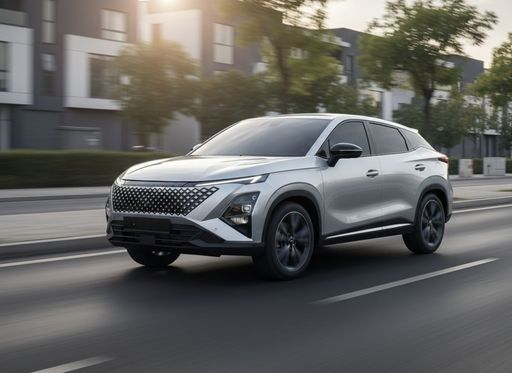
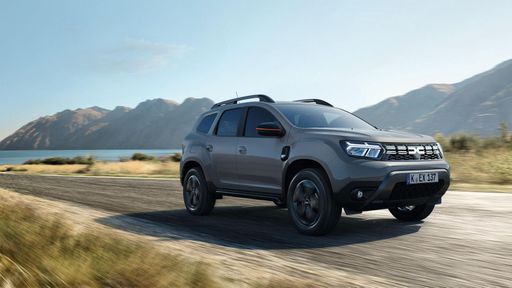
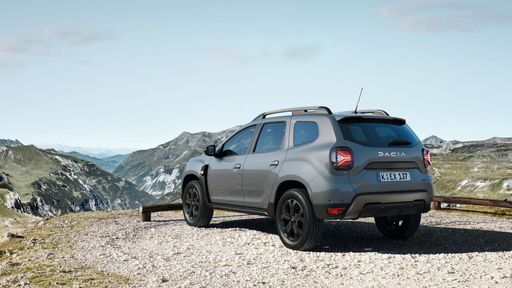
The Dacia Duster exudes a robust and rugged charm typical of its brand, featuring a solid and muscular stance. With dimensions of 4343 mm in length, 1813 mm in width, and a height of 1656 mm, it offers a commanding presence on the road. Conversely, the Omoda 5 exhibits a sleeker and more contemporary design. It measures 4424 mm in length, 1830 mm in width, and stands at 1588 mm tall, providing a blend of style and practicality.

Duster

Powertrain and Performance

When considering powertrain options, the Dacia Duster presents versatility with several offerings, including LPG, full hybrid, and petrol MHEV engines. Power outputs range from 91 HP to 140 HP, with torque varying between 160 Nm and 230 Nm. Its acceleration from 0-100 km/h varies from a respectable 9.9 seconds to a slower 14 seconds, depending on the variant chosen.

In contrast, the Omoda 5 is powered solely by a petrol engine that produces an impressive 204 HP and 290 Nm of torque. It showcases exhilarating performance with an acceleration time of just 7.8 seconds from 0-100 km/h, allowing it to easily outpace its rival in sheer speed. The top speed of the Omoda stands at 220 km/h, significantly higher than the Duster's maximum of 180 km/h.

Fuel Efficiency

Fuel efficiency is an essential consideration for any SUV. The Dacia Duster boasts a range of consumption figures, from a commendable 5 L/100 km to 8.1 L/100 km, ensuring that drivers can select a model that best fits their fuel economy requirements. Its fuel tank capacity ranges from 50 to 55 liters, allowing for extended journeys without frequent stops for refueling.

On the other hand, the Omoda 5 maintains a competitive consumption figure of 7.5 L/100 km with its petrol engine and has a fuel tank capacity of 51 liters. While slightly thirstier than some Duster variants, it makes up for this with its superior power and performance.

Interior and Comfort

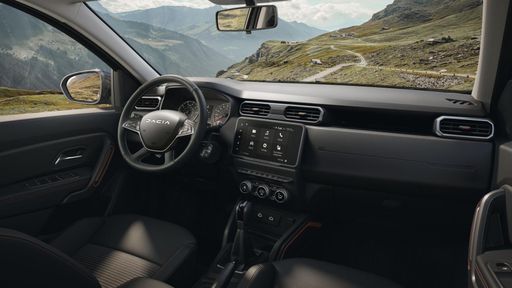
Both models are designed to accommodate five passengers comfortably. The Duster, with trunk capacities ranging from 430 to 517 liters, offers ample space for storage, making it a practical choice for families or road-trippers. Its interior is straightforward but functional, emphasizing utility over luxury.

In contrast, the Omoda 5 may come with a more upscale interior design, providing a touch of elegance to the driving experience. However, specific trunk capacity details for the Omoda remain unclear, focusing instead on overall passenger comfort and digital features that enhance convenience.

Innovations and Technological Features

The Dacia Duster comes equipped with a variety of technical innovations, including advanced safety features and an intuitive infotainment system that keeps occupants connected on the road. Depending on the trim level, additional driver-assist technologies may also be available, enhancing both safety and comfort.

On the technological front, the Omoda 5 likely embraces a modern infotainment setup with advanced connectivity options, aiming to compete with the best in class. While specific tech offerings remain to be detailed, the emphasis on user-friendly interfaces and smart technology integration is expected to be a focal point for the brand.

Conclusion

The decision between the Dacia Duster and Omoda 5 ultimately hinges on personal preferences and requirements. The Duster shines with its versatility, efficient engine choices, and practicality, making it a solid option for budget-conscious buyers. Meanwhile, the Omoda 5 stands out in performance and modern design, appealing to those seeking a dynamic driving experience and cutting-edge technology. Whether you prioritize rugged reliability or stylish performance, both models offer compelling choices in the increasingly competitive SUV market.

Here’s where it gets real: The technical differences in detail

Duster

Costs and Efficiency:

When it comes to price and running costs, the biggest differences usually appear. This is often where you see which car fits your budget better in the long run.

Dacia Duster is substantially cheaper – starting at 16,300 £ , while the Omoda 5 costs 23,100 £ . That’s a price difference of around 6,865 £.

Fuel consumption also shows a difference: the Dacia Duster uses 4.7 L/100km and is substantially more efficient than the Omoda 5 with 7.5 L/100km. The difference is about 2.8 L/100km.

5

Engine and Performance:

Power, torque and acceleration are the classic benchmarks for car enthusiasts – and here, some clear differences start to show.

When it comes to engine power, the Omoda 5 offers visibly more power – delivering 204 HP compared to 158 HP. That’s roughly 46 HP more horsepower.

When accelerating from 0 to 100 km/h, the Omoda 5 is clearly quicker – completing the sprint in 7.8 s, while the Dacia Duster takes 9.4 s. That’s about 1.6 s quicker.

Looking at top speed, the Omoda 5 is moderately faster – reaching 220 km/h, while the Dacia Duster tops out at 180 km/h. The difference is around 40 km/h.

There’s also a difference in torque: the Omoda 5 delivers noticeably more torque with 290 Nm compared to 230 Nm. That’s about 60 Nm more.

Duster

Space and Everyday Use:

Cabin size, boot volume and payload all play a role in everyday practicality. Here, comfort and flexibility make the difference.

Both vehicles offer seating for 5 people.

Looking at boot space, the Dacia Duster offers considerably more boot space – 517 L compared to 0 L. That’s a difference of about 517 L.

For maximum load capacity, the Dacia Duster offers markedly more capacity – up to 1,609 L, about 534 L more than the Omoda 5.

Who wins the race in the data check?

The Dacia Duster is far ahead overall in the objective data comparison.
This result only shows which model scores more points on paper – not which of the two cars feels right for you.

from £16,300
Duster

Dacia Duster

  • Engine Type : Petrol MHEV, Full Hybrid, LPG
  • Transmission : Manuel, Automatic
  • Drive Type : Front-Wheel Drive, All-Wheel Drive
  • Power HP : 115 - 158 HP
  • Consumption L/100km : 4.7 - 7.6 L/100km
Dacia Duster
Omoda 5

Costs and Consumption

View detailed analysis

Engine and Performance

View detailed analysis

Dimensions and Body

View detailed analysis

Dacia Duster

The Dacia Duster is a no-nonsense compact SUV that delivers rugged practicality and surprisingly comfortable everyday driving without fuss. It might not win any beauty contests, but its honest design, easy-to-live-with cabin and tough attitude make it a smart pick for buyers who want reliable transport without luxury frills.

details

Omoda 5

The Omoda 5 arrives as a stylish, tech-forward compact crossover that punches above its class with bold design and a surprisingly premium cabin. It’s an attractive choice for buyers who want modern gadgets, confident road manners and value without the usual showroom drama.

details
Dacia Duster
Omoda 5

Costs and Consumption

Price
16,300 - 24,900 £
Price
23,100 £
Consumption L/100km
4.7 - 7.6 L/100km
Consumption L/100km
7.5 L/100km
Consumption kWh/100km
-
Consumption kWh/100km
-
Electric Range
-
Electric Range
-
Battery Capacity
0.6 kWh
Battery Capacity
-
co2
107 - 140 g/km
co2
-
Fuel tank capacity
50 L
Fuel tank capacity
51 L

Dimensions and Body

Body Type
SUV
Body Type
SUV
Seats
5
Seats
5
Doors
5
Doors
5
Curb weight
1,377 - 1,455 kg
Curb weight
-
Trunk capacity
348 - 517 L
Trunk capacity
0 L
Length
4,343 mm
Length
4,424 mm
Width
1,813 mm
Width
1,830 mm
Height
1,656 - 1,659 mm
Height
1,588 mm
Max trunk capacity
1,414 - 1,609 L
Max trunk capacity
1,075 L
Payload
402 - 453 kg
Payload
-

Engine and Performance

Engine Type
Petrol MHEV, Full Hybrid, LPG
Engine Type
Petrol
Transmission
Manuel, Automatic
Transmission
Automatic
Transmission Detail
Manual Gearbox, Automated Manual, Dual-Clutch Automatic
Transmission Detail
Dual-Clutch Automatic
Drive Type
Front-Wheel Drive, All-Wheel Drive
Drive Type
Front-Wheel Drive
Power HP
115 - 158 HP
Power HP
204 HP
Acceleration 0-100km/h
9.4 - 11.7 s
Acceleration 0-100km/h
7.8 s
Max Speed
180 km/h
Max Speed
220 km/h
Torque
190 - 230 Nm
Torque
290 Nm
Number of Cylinders
3 - 4
Number of Cylinders
4
Power kW
84 - 116 kW
Power kW
145 kW
Engine capacity
1,199 - 1,789 cm3
Engine capacity
1,598 cm3

General

Model Year
2,025 - 2,026
Model Year
2,024
CO2 Efficiency Class
D, C
CO2 Efficiency Class
-
Brand
Dacia
Brand
Omoda
DriveDuel uses data analysis and artificial intelligence to evaluate vehicle data and create content. Content is regularly reviewed and improved. The displayed prices are estimates based on German list prices, adjusted to the respective country’s VAT. Country-specific registration taxes are not included. This information is not legally binding.