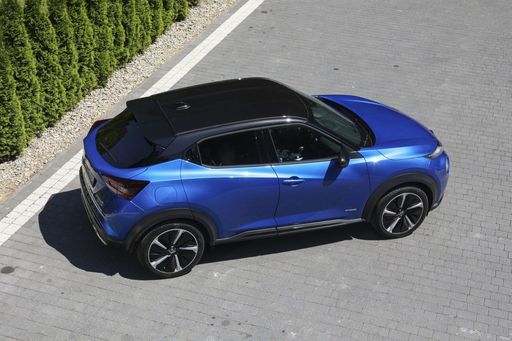
VS

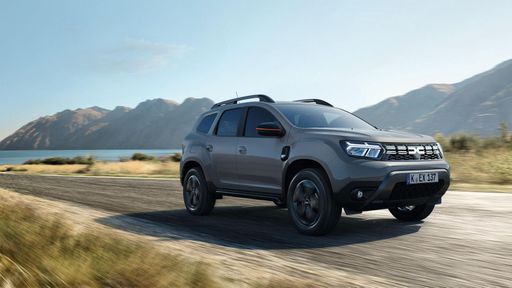
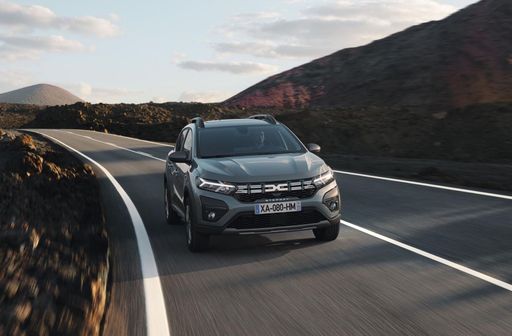
Dacia Duster vs Nissan Juke comparison

Compare performance (158 HP vs 143 HP), boot space and price (16,300 £ vs 21,400 £ ) at a glance. Find out which car is the better choice for you – Dacia Duster or Nissan Juke?

Dacia Duster vs Nissan Juke: Key differences

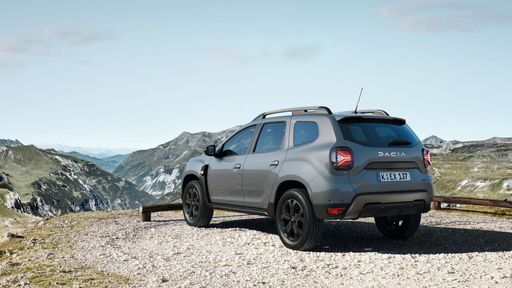
Dacia Duster

4.6 (5 Reviews)
rate
  • clearly cheaper
  • marginally more power
  • very slightly quicker 0–100 km/h
  • moderately more trunk space
details

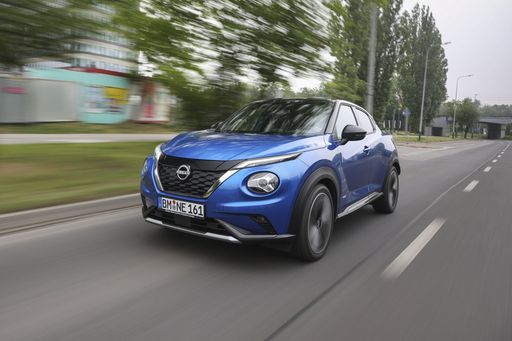
Nissan Juke

5 (1 Reviews)
rate
  • only slightly lighter
details

All details on performance, efficiency, range and trunk space can be found in the technical comparison below – including user reviews for both models.

By Achim Sedelmaier

Duster

Instant comparison: Dacia Duster and Nissan Juke

Dacia Duster and Nissan Juke sit in the compact-SUV space but address buyers with very different priorities, so this comparison focuses on real-world character, comfort and practicality rather than headline specs. The Dacia Duster presents itself as a no-nonsense, value-first SUV that favours utility and toughness. The Nissan Juke leans into urban agility, a sharper cabin design and a more modern infotainment experience. That split informs everything from how each car rides to who will feel at home in its seats.
Juke

Driving character: relaxed utility versus city agility

Behind the wheel the Dacia Duster feels calm and robust, with a comfort-oriented setup that soaks up rough surfaces and gives confidence on poor rural roads. The Nissan Juke is noticeably nimbler in town, with quicker steering and a chassis that rewards brisk urban manoeuvres. Those strengths cost the Juke some compliance—the ride can seem firmer, especially on larger wheels—and its automatic/hybrid drivetrains can be fidgety at low speeds. The Duster trades that sharper feel for a more forgiving, workmanlike demeanor and optional four‑wheel capability that the Juke doesn't match.

Duster

Comfort and long-distance behaviour

On long trips the differences become practical: the Dacia Duster tends to prioritise cushioned seats and a forgiving ride over immaculate refinement, which makes it comfortable on broken B‑roads but more audible at motorway speeds. The Nissan Juke rewards smoother surfaces with a more controlled, composed feel, yet it can feel unsettled on coarse tarmac and larger wheels transmit more harshness. Both cars are not class leaders in supreme cabin silence, so expectations on motorway serenity should be tempered. In short, the Duster suits countryside miles and mixed surfaces, while the Juke is better suited to shorter, brisk runs between urban points.

Juke

Cabin feel and perceived quality

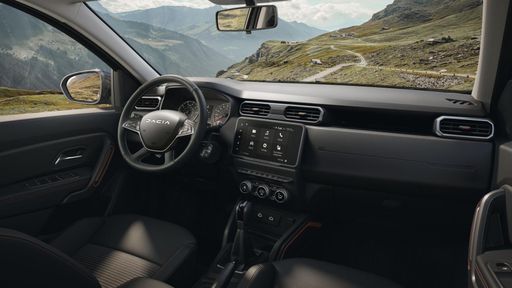
Open the doors and the intent is obvious: the Dacia Duster uses pragmatic, hard-wearing materials and a simple, tactile switch layout built for durability and easy cleaning. The Nissan Juke offers a far more modern-feeling cockpit, with a larger, responsive screen and controls that give a slightly more upmarket impression. That makes the Juke feel more immediately satisfying for buyers who care about infotainment speed and perceived tech quality, whereas the Duster wins on sense of robustness and easy-to-live-with practicality. Each interior has its fans — Duster for function and low maintenance, Juke for polish and a contemporary touch.

Duster

Practicality and everyday usability

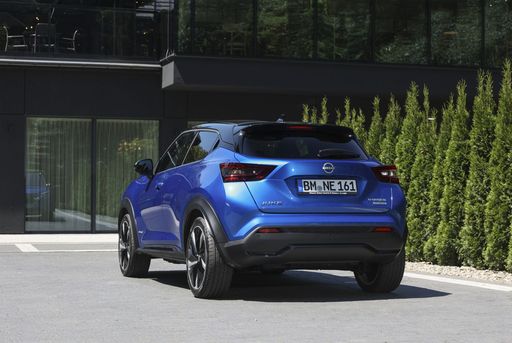
Practical differences are where the Dacia Duster often pulls ahead: it provides noticeably more usable luggage space and a roomier rear environment that changes how family runs and packing feel in daily life. The Nissan Juke’s stylish packaging compromises boot volume and rear-seat space, and its high loading lip makes heavy lifting more awkward. For families or anyone carrying bikes, dog crates or bulky shopping, the Duster’s layout and optional utility features are more convenient. Conversely, the Juke prioritises compactness and style over maximum cargo flexibility, favouring buyers who rarely need to haul large loads.

Juke

Who should pick which car — buyer fit and trade-offs

Put simply: the Dacia Duster is the pragmatic pick for buyers who want the most usable car for the money — more space, a tougher feel and optional off‑road capability that suits families, outdoor users and budget‑aware owners. The Nissan Juke targets style-conscious urban drivers who prize a polished cockpit, nimble city behaviour and modern infotainment over rear-seat generosity and maximum boot space. These are trade-offs, not absolutes: one prioritises utility and low running fuss, the other prioritises design, tech and a compact footprint. Below this editorial you'll find the technical comparison that maps these everyday differences into numbers and equipment choices to help you decide which compromise fits your life.

Here’s where it gets real: The technical differences in detail

Duster

Costs and Efficiency:

Looking at overall running costs, both models reveal some interesting differences in everyday economy.

Dacia Duster is clearly cheaper – starting at 16,300 £ , while the Nissan Juke costs 21,400 £ . That’s a price difference of around 5,108 £.

Both cars consume an average of 4.7 L/100km – no difference here.

Juke

Engine and Performance:

Under the bonnet, it becomes clear which model is tuned for sportiness and which one takes the lead when you hit the accelerator.

When it comes to engine power, the Dacia Duster offers marginally more power – delivering 158 HP compared to 143 HP. That’s roughly 15 HP more horsepower.

When accelerating from 0 to 100 km/h, the Dacia Duster is very slightly quicker – completing the sprint in 9.4 s, while the Nissan Juke takes 10.1 s. That’s about 0.7 s quicker.

There’s also a difference in torque: the Dacia Duster delivers a bit more torque with 230 Nm compared to 200 Nm. That’s about 30 Nm more.

Duster

Space and Everyday Use:

Beyond pure performance, interior space and usability matter most in daily life. This is where you see which car is more practical and versatile.

Both vehicles offer seating for 5 people.

In terms of curb weight, Nissan Juke is only slightly lighter – 1,274 kg compared to 1,377 kg. The difference is around 103 kg.

Looking at boot space, the Dacia Duster offers moderately more boot space – 517 L compared to 422 L. That’s a difference of about 95 L.

When it comes to payload, the Dacia Duster carries only slightly more – 453 kg compared to 427 kg. That’s a difference of about 26 kg.

Who wins the race in the data check?

The Dacia Duster holds a decisive overall lead in the objective data comparison.
This result only shows which model scores more points on paper – not which of the two cars feels right for you.

from £16,300
Duster

Dacia Duster

  • Engine Type Petrol MHEV, Full Hybrid, LPG
  • Transmission Manuel, Automatic
  • Drive Type Front-Wheel Drive, All-Wheel Drive
  • Power HP 115 - 158 HP
  • Consumption L/100km 4.7 - 7.6 L/100km
Dacia Duster
Nissan Juke

Costs and Consumption

View detailed analysis

Engine and Performance

View detailed analysis

Dimensions and Body

View detailed analysis

Dacia Duster

The Dacia Duster is a straightforward, budget-friendly SUV that prioritizes practicality and value over flashy features. Its rugged styling and simple, roomy interior make it a sensible choice for buyers who want capable everyday transport without paying for extras they won’t use.

details

Nissan Juke

The Nissan Juke is a pocket-sized crossover that refuses to blend in, with quirky styling and a cheeky stance that turns heads at every traffic light. It’s ideal for shoppers who value personality and nimble urban driving over maximum practicality, delivering surprising pep and a well-equipped feel for everyday fun.

details
Dacia Duster
Nissan Juke

Costs and Consumption

Price
16,300 - 24,900 £
Price
21,400 - 30,100 £
Consumption L/100km
4.7 - 7.6 L/100km
Consumption L/100km
4.7 - 6 L/100km
Consumption kWh/100km
-
Consumption kWh/100km
-
Electric Range
-
Electric Range
-
Battery Capacity
-
Battery Capacity
-
co2
107 - 140 g/km
co2
105 - 136 g/km
Fuel tank capacity
-
Fuel tank capacity
-

Dimensions and Body

Body Type
SUV
Body Type
SUV
Seats
5
Seats
5
Doors
-
Doors
-
Curb weight
1,377 - 1,559 kg
Curb weight
1,274 - 1,405 kg
Trunk capacity
348 - 517 L
Trunk capacity
354 - 422 L
Length
-
Length
-
Width
1,813 mm
Width
1,800 mm
Height
-
Height
-
Max trunk capacity
-
Max trunk capacity
-
Payload
402 - 453 kg
Payload
405 - 427 kg

Engine and Performance

Engine Type
Petrol MHEV, Full Hybrid, LPG
Engine Type
Petrol, Full Hybrid
Transmission
Manuel, Automatic
Transmission
Manuel, Automatic
Transmission Detail
Manual Gearbox, Automated Manual, Dual-Clutch Automatic
Transmission Detail
Manual Gearbox, Dual-Clutch Automatic, Automatic Gearbox
Drive Type
Front-Wheel Drive, All-Wheel Drive
Drive Type
Front-Wheel Drive
Power HP
115 - 158 HP
Power HP
114 - 143 HP
Acceleration 0-100km/h
9.4 - 11.7 s
Acceleration 0-100km/h
10.1 - 11.8 s
Max Speed
-
Max Speed
-
Torque
190 - 230 Nm
Torque
200 Nm
Number of Cylinders
3 - 4
Number of Cylinders
3 - 4
Power kW
84 - 116 kW
Power kW
84 - 105 kW
Engine capacity
1,199 - 1,789 cm3
Engine capacity
999 - 1,598 cm3

General

Model Year
2,025 - 2,026
Model Year
2025
CO2 Efficiency Class
D, C
CO2 Efficiency Class
D, E, C
Brand
Dacia
Brand
Nissan
DriveDuel uses data analysis and artificial intelligence to evaluate vehicle data and create content. Content is regularly reviewed and improved. The displayed prices are estimates based on German list prices, adjusted to the respective country’s VAT. Country-specific registration taxes are not included. This information is not legally binding.