VS

Dacia Sandero vs Skoda Kamiq comparison

Compare performance (122 HP vs 150 HP), boot space and price (11,000 £ vs 22,300 £ ) at a glance. Find out which car is the better choice for you – Dacia Sandero or Skoda Kamiq?

Dacia Sandero vs Skoda Kamiq: Key differences

Dacia Sandero

3.9 (11 Reviews)
rate
  • substantially cheaper
  • moderately lighter
details

Skoda Kamiq

4.8 (8 Reviews)
rate
  • somewhat more power
  • slightly quicker 0–100 km/h
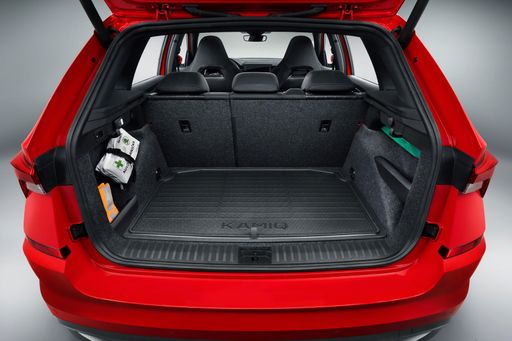
  • very slightly more trunk space
details

All details on performance, efficiency, range and trunk space can be found in the technical comparison below – including user reviews for both models.

Sandero

Overview: Dacia Sandero VS Skoda Kamiq — value versus refinement

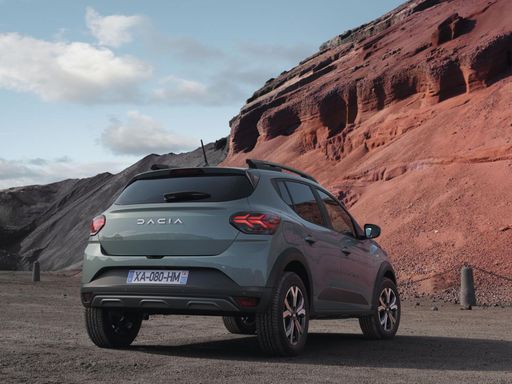
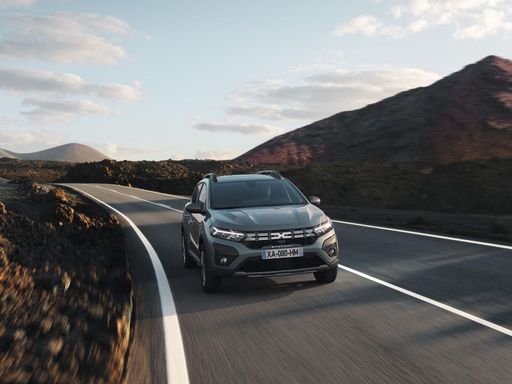
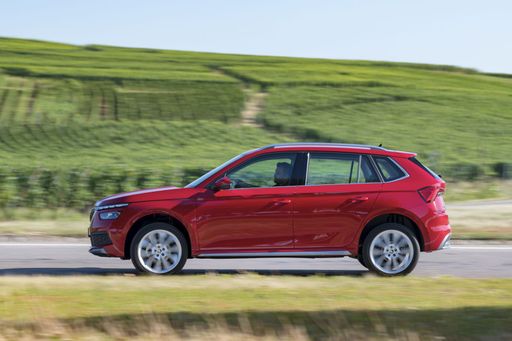
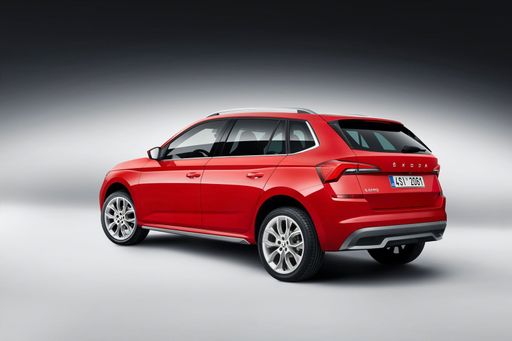
Dacia Sandero and Skoda Kamiq sit on opposite ends of the same compact-car spectrum: the Sandero is a no-nonsense bargain with strong practical sense, while the Kamiq leans toward room, refinement and everyday polish. The Sandero’s argument is pure economics and uncluttered usefulness — you get more car for less money, with predictable running costs. The Kamiq asks you to pay more for quieter long-distance behavior, extra rear-seat space and clever, family-friendly details. Deciding between them comes down to whether you prioritise the lowest total cost of ownership or a quieter, more convenient daily life for passengers and luggage. This page compares character, comfort, usability and cabin feel so you can match either car to your real needs before diving into numbers.
Kamiq

Driving character and real-world performance

The Dacia Sandero feels light and straightforward on the road, emphasising simplicity over punch — it’s nimble around town but becomes vocal and a touch strained at sustained motorway speeds. The Skoda Kamiq drives with noticeably more composure and stronger mid-range urge, so it feels less hurried when you want to overtake or cruise on fast roads. Sandero buyers will notice a direct, forgiving low-speed feel that makes city driving easy, whereas Kamiq owners get a calmer, more stable footprint at higher speeds that soothes long runs. The trade-off is clear: Sandero rewards thrift and ease of use; Kamiq rewards confidence and composure when the road gets faster.

Sandero

Comfort and long-distance behaviour

On short hops the Sandero is perfectly acceptable — upright seats, simple suspension and easy entry make daily trips effortless — but on long journeys the cabin grows wearying thanks to wind and tyre noise and less supportive rear seats. The Kamiq is the better long-distance companion: quieter inside, more generous rear legroom and seats that cope with hours on the road without complaint. That doesn’t mean the Kamiq is sporty; its suspension prefers composure over cornering sharpness and can lean at speed, but passengers will appreciate the reduced noise and fatigue. If motorway miles are a regular part of your life, the Kamiq’s refinement will change how you think about commuting and family trips.

Kamiq

City friendliness and everyday practicality

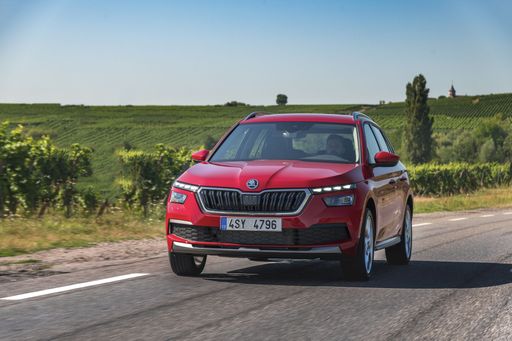
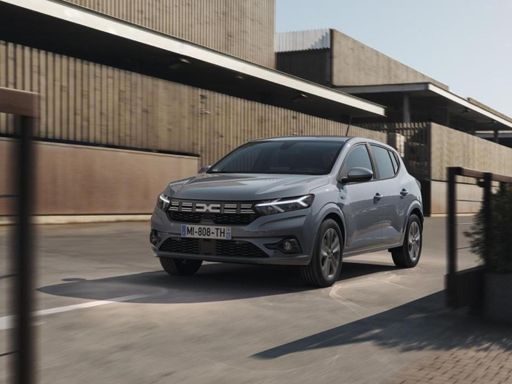
For tight streets and frequent parking the Sandero’s compact footprint and light steering are a clear advantage — it’s cheap to run, easy to manoeuvre and minimal to maintain, which suits urban drivers and first-time buyers. The Kamiq keeps surprising for an SUV-shaped car: it still feels compact, offers better visibility from a higher seating position and packs numerous small practical touches that make daily life simpler. Sandero’s frugal set-up wins on purchase price and uncomplicated ownership, while Kamiq adds versatility with a larger, more usable rear seat and smarter storage solutions. Families who need space and convenience will prefer the Kamiq; city-centric buyers on a tight budget will find the Sandero hard to beat.

Sandero

Cabin feel, usability and perceived quality

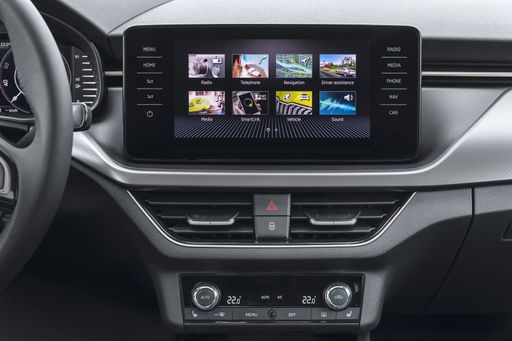
The Sandero’s interior is honest and austere — many hard plastics and visible cost-saving choices, but with a straightforward layout that is easy to use and repair. The Kamiq presents a more finished cabin with better materials, thoughtful ergonomics and those small “Simply Clever” conveniences that add up in everyday use, though its infotainment can occasionally feel laggy. Perceived quality is a real divider: the Sandero signals practicality and thrift, while the Kamiq signals solidity and a touch of refinement without aiming for luxury. If tactile polish and well-appointed space matter to you, the Kamiq will feel more grown-up; if you prize simplicity and low running costs, the Sandero’s pared-back cabin is a pragmatic choice.

Kamiq

Buyer fit: who should choose which and why

Choose the Dacia Sandero if your priority is the lowest purchase price, minimal complexity and straightforward city driving — it suits first-time buyers, tight budgets and those who treat a car as a utility rather than a status symbol. Pick the Skoda Kamiq if you want more space for passengers, quieter long-distance trips, and a cabin with better everyday usability even if it costs more upfront. Both cars serve practical needs, but the Sandero is the rational bargain and the Kamiq is the versatile family commuter; your lifestyle — short urban hops versus mixed long-distance/family use — should decide which trade-off you accept. With those choices clear, the next section drills into engines, safety, boot and running costs so you can match features to your priorities.

Here’s where it gets real: The technical differences in detail

Sandero

Costs and Efficiency:

When it comes to price and running costs, the biggest differences usually appear. This is often where you see which car fits your budget better in the long run.

Dacia Sandero is substantially cheaper – starting at 11,000 £ , while the Skoda Kamiq costs 22,300 £ . That’s a price difference of around 11,306 £.

Both cars consume an average of 5.3 L/100km – no difference here.

Kamiq

Engine and Performance:

Power, torque and acceleration are the classic benchmarks for car enthusiasts – and here, some clear differences start to show.

When it comes to engine power, the Skoda Kamiq offers somewhat more power – delivering 150 HP compared to 122 HP. That’s roughly 28 HP more horsepower.

When accelerating from 0 to 100 km/h, the Skoda Kamiq is slightly quicker – completing the sprint in 8.1 s, while the Dacia Sandero takes 9.7 s. That’s about 1.6 s quicker.

There’s also a difference in torque: the Skoda Kamiq delivers a bit more torque with 250 Nm compared to 200 Nm. That’s about 50 Nm more.

Sandero

Space and Everyday Use:

Beyond pure performance, interior space and usability matter most in daily life. This is where you see which car is more practical and versatile.

Both vehicles offer seating for 5 people.

In terms of curb weight, Dacia Sandero is moderately lighter – 1,100 kg compared to 1,231 kg. The difference is around 131 kg.

Looking at boot space, the Skoda Kamiq offers very slightly more boot space – 400 L compared to 372 L. That’s a difference of about 28 L.

When it comes to payload, the Skoda Kamiq carries somewhat more – 539 kg compared to 436 kg. That’s a difference of about 103 kg.

Who wins the race in the data check?

The Skoda Kamiq shows a few small advantages in the objective data comparison.
This result only shows which model scores more points on paper – not which of the two cars feels right for you.

from £22,300
Kamiq

Skoda Kamiq

  • Engine Type Petrol
  • Transmission Manual, Automatic
  • Drive Type Front-Wheel Drive
  • Power HP 95 - 150 HP
  • Consumption L/100km 5.3 - 5.7 L/100km
Dacia Sandero
Skoda Kamiq

Costs and Consumption

View detailed analysis

Engine and Performance

View detailed analysis

Dimensions and Body

View detailed analysis

Dacia Sandero

The Sandero is a no-nonsense hatchback that prioritises practicality and low running costs, making it a smart choice for budget-minded buyers. It delivers a surprisingly roomy interior and straightforward, useful equipment so you get everyday usability without paying for unnecessary frills.

details

Skoda Kamiq

The Skoda Kamiq is a practical, well-built small crossover that mixes city-friendly manners with surprisingly versatile interior space and clever storage solutions. It offers a comfortable ride, user-friendly technology and solid value, making it a sensible choice for everyday driving.

details
Dacia Sandero
Skoda Kamiq

Costs and Consumption

Price
11,000 - 16,300 £
Price
22,300 - 32,700 £
Consumption L/100km
5.3 - 7.2 L/100km
Consumption L/100km
5.3 - 5.7 L/100km
Consumption kWh/100km
-
Consumption kWh/100km
-
Electric Range
-
Electric Range
-
Battery Capacity
-
Battery Capacity
-
co2
111 - 131 g/km
co2
121 - 128 g/km
Fuel tank capacity
-
Fuel tank capacity
-

Dimensions and Body

Body Type
Hatchback
Body Type
SUV
Seats
5
Seats
5
Doors
-
Doors
-
Curb weight
1,100 - 1,297 kg
Curb weight
1,231 - 1,340 kg
Trunk capacity
328 - 372 L
Trunk capacity
400 L
Length
-
Length
-
Width
1,853 mm
Width
1,793 mm
Height
-
Height
-
Max trunk capacity
-
Max trunk capacity
-
Payload
385 - 436 kg
Payload
439 - 539 kg

Engine and Performance

Engine Type
Petrol, LPG
Engine Type
Petrol
Transmission
Manual, Automatic
Transmission
Manual, Automatic
Transmission Detail
Manual Gearbox, Dual-Clutch Automatic
Transmission Detail
Manual Gearbox, Dual-Clutch Automatic
Drive Type
Front-Wheel Drive
Drive Type
Front-Wheel Drive
Power HP
67 - 122 HP
Power HP
95 - 150 HP
Acceleration 0-100km/h
9.7 - 16.7 s
Acceleration 0-100km/h
8.1 - 11 s
Max Speed
-
Max Speed
-
Torque
95 - 200 Nm
Torque
175 - 250 Nm
Number of Cylinders
3
Number of Cylinders
3 - 4
Power kW
49 - 90 kW
Power kW
70 - 110 kW
Engine capacity
999 - 1,199 cm3
Engine capacity
999 - 1,498 cm3

General

Model Year
2025
Model Year
2025
CO2 Efficiency Class
D, C
CO2 Efficiency Class
D
Brand
Dacia
Brand
Skoda
DriveDuel uses data analysis and artificial intelligence to evaluate vehicle data and create content. Content is regularly reviewed and improved. The displayed prices are estimates based on German list prices, adjusted to the respective country’s VAT. Country-specific registration taxes are not included. This information is not legally binding.