VS

Jeep Avenger vs Jeep Renegade comparison

Compare performance (156 HP vs 240 HP), boot space and price (22,500 £ vs 26,700 £ ) at a glance. Find out which car is the better choice for you – Jeep Avenger or Jeep Renegade?

Jeep Avenger vs Jeep Renegade: Key differences

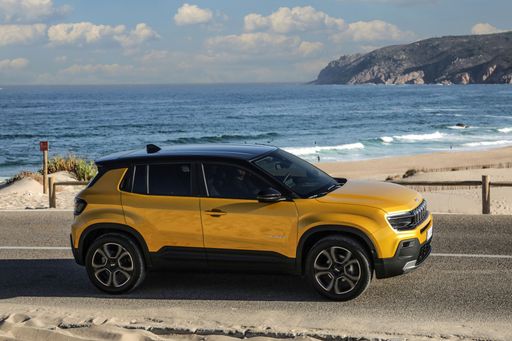
Jeep Avenger

4.1 (9 Reviews)
rate
  • a bit cheaper
  • significantly more electric range
  • markedly lighter
  • only slightly more trunk space
details

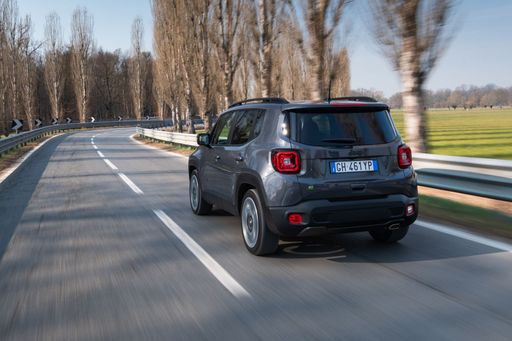
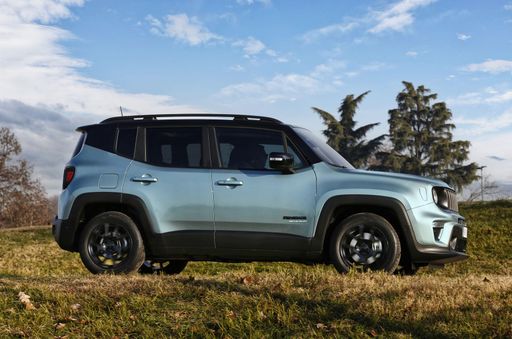
Jeep Renegade

  • noticeably more power
  • substantially more efficient
  • noticeably quicker 0–100 km/h
details

All details on performance, efficiency, range and trunk space can be found in the technical comparison below – including user reviews for both models.

By Achim Sedelmaier

Avenger

Jeep Avenger vs Jeep Renegade: the small‑Jeep showdown

The Jeep Avenger and Jeep Renegade share the square‑jawed Jeep look, but they aim at different kinds of everyday driving. The Avenger feels like the urban specialist of the pair, with a calmer ride and the option of going fully electric with real‑world range that suits city and regional use. The Renegade leans into “mini‑Wrangler” character, sitting you higher and feeling chunkier, with the 4xe bringing bona fide traction benefits when winter bites or surfaces get loose. In simple terms, Jeep Avenger VS Jeep Renegade is comfort‑first city ease versus rugged charm with extra muscle in reserve. Here’s how that plays out for character, comfort, usability, practicality, cabin feel, long‑distance behaviour, city friendliness and, most importantly, buyer fit.
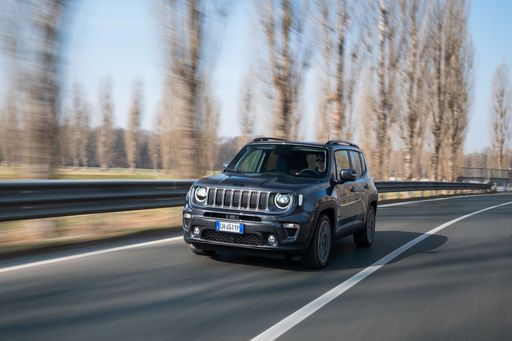
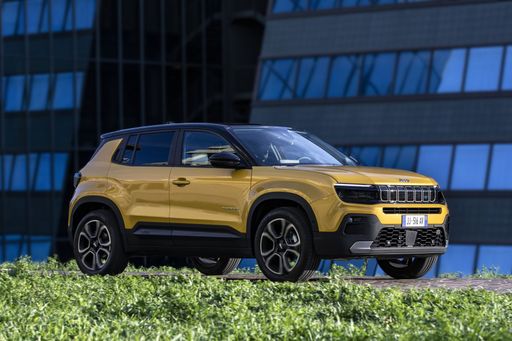
Renegade

Driving character: urban calm vs rugged punch

The Avenger’s steering is light and easy, and its suspension takes the edge off speed bumps and patchy tarmac, which makes it feel relaxing right away. The Renegade answers with more shove and a weightier, taller stance, so it feels stronger when you need a burst of pace or when conditions get slippery, especially in 4xe guise. That extra punch comes with more noise and a slightly less polished ride over sharp edges, while the Avenger stays more serene in town. On the motorway the Renegade’s wider speed bandwidth is an advantage, but the Avenger’s smooth power delivery suits unhurried cruising once you settle to a steady pace.

Avenger

Cabin feel and controls

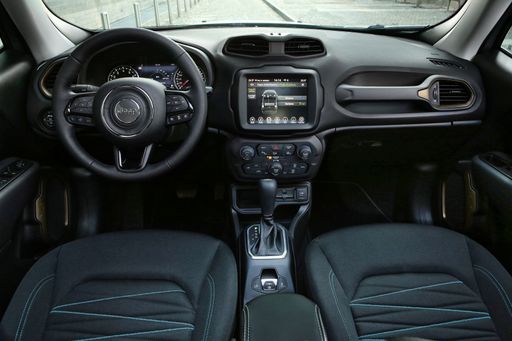
Both cabins are straightforward rather than plush, but they express it differently. The Avenger looks fresher up front, with clear climate buttons and thoughtful storage that make daily life simple, even if some plastics remind you of its price point. The Renegade feels older in design yet reassuringly familiar, with plenty of physical controls and a high, commanding seating position that many drivers love. Infotainment on both supports modern phone mirroring; the Avenger can hesitate at times, while the Renegade’s menus are a touch nested, but neither is a deal‑breaker for everyday use.

Renegade

Space and practicality in daily life

Front‑row space is generous in both, but the back seats are where compromises show. The Avenger makes the most of its footprint with a square boot opening and handy cubbies, edging the Renegade for pure luggage usefulness on a typical weekend shop. The Renegade counters with wide‑opening rear doors and heaps of headroom, making child‑seat fitting and hopping in and out straightforward, even if legroom isn’t cavernous. If you routinely carry tall teens or pack for long family trips, neither feels like a class leader, but the Avenger is a touch easier to load while the Renegade feels airier inside.

Avenger

City manners and long‑distance behaviour

In town, the Avenger is simply easier: it’s shorter to park, has great forward visibility and shrugs off speed humps with a cushy gait. The Renegade is still city‑friendly thanks to its high perch and an e‑Hybrid creep that makes queues and parking gentle, though its chunky pillars mean you rely more on cameras and sensors. Stretch the day into a longer trip and the trade‑offs flip: the Renegade keeps pace and pulls strongly, but wind and powertrain noise creep in, while the Avenger feels settled yet is happier at a steady, moderate cruise. If most of your mileage is urban or regional, the Avenger’s efficiency and calm pay off; if you mix in rough weather, hills or occasional trails, the Renegade’s traction and power are reassuring.

Renegade

Value, tech and who should buy which

The Avenger typically undercuts the Renegade on price and, as a full EV option, brings far longer electric running than the Renegade’s short plug‑in hops, which matters if you plan to charge at home. The Renegade asks more but gives you authentic Jeep feel and, with 4xe, real all‑weather competence that few small SUVs match. Assistance tech and cabin materials won’t wow in either, and the Avenger’s recent safety rating has drawn criticism, so test the driver aids and cabin fit for yourself. In the end, the Jeep Avenger suits urban drivers who value comfort, easy parking and genuine EV use, while the Jeep Renegade fits buyers who want a taller, tougher vibe with extra traction for winter and weekend trails—now check the technical comparison to see which powertrain and spec aligns best with your routine.

Here’s where it gets real: The technical differences in detail

Avenger

Costs and Efficiency:

Price and efficiency are key factors when choosing a car – and this is often where the real differences emerge.

Jeep Avenger is a bit cheaper – starting at 22,500 £ , while the Jeep Renegade costs 26,700 £ . That’s a price difference of around 4,115 £.

Fuel consumption also shows a difference: the Jeep Renegade uses 2.1 L/100km and is substantially more efficient than the Jeep Avenger with 4.9 L/100km. The difference is about 2.8 L/100km.

As for electric range, the Jeep Avenger offers significantly more range – reaching up to 400 km, about 364 km more than the Jeep Renegade.

Renegade

Engine and Performance:

Power, torque and acceleration are the classic benchmarks for car enthusiasts – and here, some clear differences start to show.

When it comes to engine power, the Jeep Renegade offers noticeably more power – delivering 240 HP compared to 156 HP. That’s roughly 84 HP more horsepower.

When accelerating from 0 to 100 km/h, the Jeep Renegade is noticeably quicker – completing the sprint in 7.1 s, while the Jeep Avenger takes 9 s. That’s about 1.9 s quicker.

There’s also a difference in torque: the Jeep Avenger delivers very slightly more torque with 260 Nm compared to 240 Nm. That’s about 20 Nm more.

Avenger

Space and Everyday Use:

Beyond pure performance, interior space and usability matter most in daily life. This is where you see which car is more practical and versatile.

Both vehicles offer seating for 5 people.

In terms of curb weight, Jeep Avenger is markedly lighter – 1,180 kg compared to 1,420 kg. The difference is around 240 kg.

Looking at boot space, the Jeep Avenger offers only slightly more boot space – 380 L compared to 351 L. That’s a difference of about 29 L.

When it comes to payload, the Jeep Renegade carries moderately more – 570 kg compared to 502 kg. That’s a difference of about 68 kg.

Who wins the race in the data check?

The Jeep Renegade is clearly ahead overall in the objective data comparison.
This result only shows which model scores more points on paper – not which of the two cars feels right for you.

from £26,700
Renegade

Jeep Renegade

  • Engine Type Petrol MHEV, Plugin Hybrid
  • Transmission Automatic
  • Drive Type Front-Wheel Drive, All-Wheel Drive
  • Power HP 130 - 240 HP
  • Consumption L/100km 2.1 - 5.5 L/100km
  • Electric Range 36 km
Jeep Avenger
Jeep Renegade

Costs and Consumption

View detailed analysis

Engine and Performance

View detailed analysis

Dimensions and Body

View detailed analysis

Jeep Avenger

The Jeep Avenger mixes rugged styling with a compact, city‑friendly footprint that makes it easy to maneuver while keeping Jeep’s adventurous character. Inside it offers a practical, modern cabin with sensible tech and comfort aimed at everyday driving and light weekend getaways.

details

Jeep Renegade

The Jeep Renegade wears its chunky, boxy looks like a badge of character, blending genuine off-road swagger with city-friendly manners so it feels at home on a muddy trail or a tight urban lane. Inside you'll find a surprisingly practical cabin with rugged touches and clever storage, making it a sensible choice for buyers who want a compact SUV with personality rather than just another anonymous crossover.

details
Jeep Avenger
Jeep Renegade

Costs and Consumption

Price
22,500 - 36,800 £
Price
26,700 - 39,200 £
Consumption L/100km
4.9 - 5.7 L/100km
Consumption L/100km
2.1 - 5.5 L/100km
Consumption kWh/100km
15.5 kWh/100km
Consumption kWh/100km
-
Electric Range
400 km
Electric Range
36 km
Battery Capacity
-
Battery Capacity
-
co2
0 - 129 g/km
co2
48 - 125 g/km
Fuel tank capacity
-
Fuel tank capacity
36 - 48 L

Dimensions and Body

Body Type
SUV
Body Type
SUV
Seats
5
Seats
5
Doors
-
Doors
5
Curb weight
1,180 - 1,520 kg
Curb weight
1,420 - 1,770 kg
Trunk capacity
325 - 380 L
Trunk capacity
330 - 351 L
Length
-
Length
4,236 mm
Width
1,776 mm
Width
1,805 mm
Height
-
Height
1,684 - 1,718 mm
Max trunk capacity
-
Max trunk capacity
1,277 - 1,297 L
Payload
490 - 502 kg
Payload
545 - 570 kg

Engine and Performance

Engine Type
Petrol MHEV, Electric, Petrol
Engine Type
Petrol MHEV, Plugin Hybrid
Transmission
Automatic, Manuel
Transmission
Automatic
Transmission Detail
Dual-Clutch Automatic, Reduction Gearbox, Manual Gearbox
Transmission Detail
Dual-Clutch Automatic, Automatic Gearbox
Drive Type
Front-Wheel Drive, All-Wheel Drive
Drive Type
Front-Wheel Drive, All-Wheel Drive
Power HP
100 - 156 HP
Power HP
130 - 240 HP
Acceleration 0-100km/h
9 - 10.6 s
Acceleration 0-100km/h
7.1 - 9.7 s
Max Speed
-
Max Speed
191 - 199 km/h
Torque
205 - 260 Nm
Torque
240 Nm
Number of Cylinders
3
Number of Cylinders
4
Power kW
74 - 115 kW
Power kW
96 - 177 kW
Engine capacity
1,199 cm3
Engine capacity
1,332 - 1,469 cm3

General

Model Year
2026
Model Year
2024
CO2 Efficiency Class
C, A, D
CO2 Efficiency Class
D, B
Brand
Jeep
Brand
Jeep
DriveDuel uses data analysis and artificial intelligence to evaluate vehicle data and create content. Content is regularly reviewed and improved. The displayed prices are estimates based on German list prices, adjusted to the respective country’s VAT. Country-specific registration taxes are not included. This information is not legally binding.