
 Deutschland
 France
 Nederland
 Great Britain
 Sverige
 Danmark
 Suomi
Suomi Italia
 Polska
 Česko
Česko España
VS
Jeep Renegade vs Ferrari Purosangue comparison
Compare performance (240 HP vs 725 HP), boot space and price (26,700 £ vs 324,700 £ ) at a glance. Find out which car is the better choice for you – Jeep Renegade or Ferrari Purosangue?
Jeep Renegade vs Ferrari Purosangue: Key differences
Renegade
Costs and Efficiency:
Price and efficiency are often the first things buyers look at. Here it becomes clear which model has the long-term edge – whether at the pump, the plug, or in purchase price.
Jeep Renegade is significantly cheaper – starting at 26,700 £ , while the Ferrari Purosangue costs 324,700 £ . That’s a price difference of around 298,091 £.
Fuel consumption also shows a difference: the Jeep Renegade uses 2.1 L/100km and is significantly more efficient than the Ferrari Purosangue with 17.1 L/100km. The difference is about 15 L/100km.
Purosangue
Engine and Performance:
Under the bonnet, it becomes clear which model is tuned for sportiness and which one takes the lead when you hit the accelerator.
When it comes to engine power, the Ferrari Purosangue offers significantly more power – delivering 725 HP compared to 240 HP. That’s roughly 485 HP more horsepower.
When accelerating from 0 to 100 km/h, the Ferrari Purosangue is significantly quicker – completing the sprint in 3.3 s, while the Jeep Renegade takes 7.1 s. That’s about 3.8 s quicker.
Looking at top speed, the Ferrari Purosangue is visibly faster – reaching 312 km/h, while the Jeep Renegade tops out at 199 km/h. The difference is around 113 km/h.
There’s also a difference in torque: the Ferrari Purosangue delivers substantially more torque with 692 Nm compared to 240 Nm. That’s about 452 Nm more.
Renegade
Space and Everyday Use:
Cabin size, boot volume and payload all play a role in everyday practicality. Here, comfort and flexibility make the difference.
Seats: Jeep Renegade offers more seats – 5 vs 4.
In terms of curb weight, Jeep Renegade is considerably lighter – 1,420 kg compared to 2,033 kg. The difference is around 613 kg.
Looking at boot space, the Ferrari Purosangue offers clearly more boot space – 473 L compared to 351 L. That’s a difference of about 122 L.
Who wins the race in the data check?
The Jeep Renegade stands well ahead of its rival in the objective data comparison.
This result only shows which model scores more points on paper – not which of the two cars feels right for you.
from £26,700
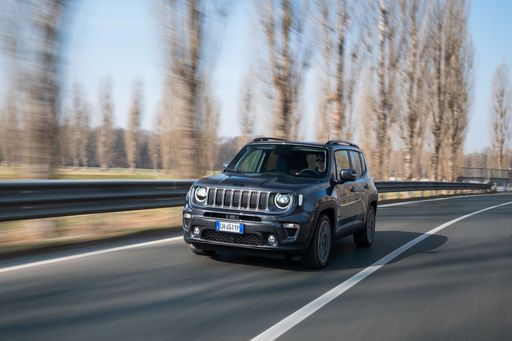
Jeep Renegade
Jeep Renegade
Ferrari Purosangue
Costs and Consumption
View detailed analysis
View detailed analysis
Engine and Performance
View detailed analysis
View detailed analysis
Dimensions and Body
View detailed analysis
View detailed analysis
Jeep Renegade
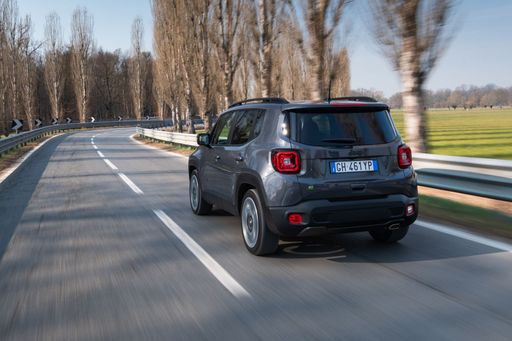
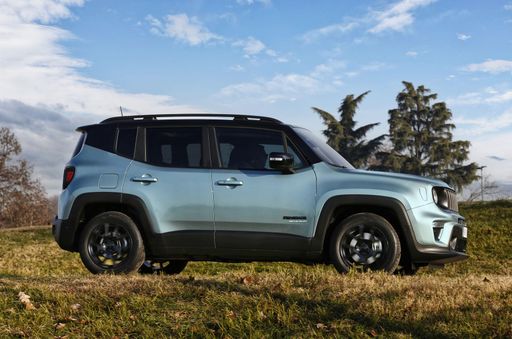
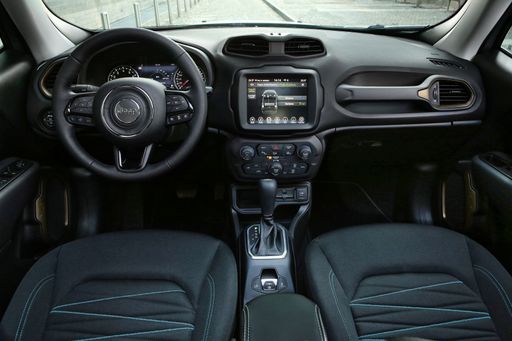
The Jeep Renegade wears its chunky, boxy looks like a badge of character, blending genuine off-road swagger with city-friendly manners so it feels at home on a muddy trail or a tight urban lane. Inside you'll find a surprisingly practical cabin with rugged touches and clever storage, making it a sensible choice for buyers who want a compact SUV with personality rather than just another anonymous crossover.
details

Ferrari Purosangue
Ferrari Purosangue flips the script on what a Ferrari can be, marrying the brand's savage performance and intoxicating exhaust note with the space and practicality of a usable grand tourer. For buyers who crave supercar drama without sacrificing everyday comfort, the Purosangue offers theatrical driving thrills and enough presence to stop traffic at the valet.
details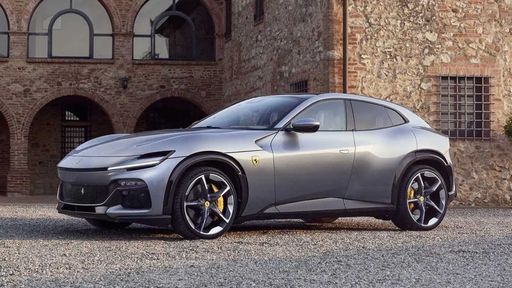
Jeep Renegade
Ferrari Purosangue
Costs and Consumption |
|
|---|---|
|
Price
26,700 - 39,200 £
|
Price
324,700 £
|
|
Consumption L/100km
2.1 - 5.5 L/100km
|
Consumption L/100km
17.1 L/100km
|
|
Consumption kWh/100km
-
|
Consumption kWh/100km
-
|
|
Electric Range
36 km
|
Electric Range
-
|
|
Battery Capacity
-
|
Battery Capacity
-
|
|
co2
48 - 125 g/km
|
co2
389 g/km
|
|
Fuel tank capacity
36 - 48 L
|
Fuel tank capacity
100 L
|
Dimensions and Body |
|
|---|---|
|
Body Type
SUV
|
Body Type
SUV
|
|
Seats
5
|
Seats
4
|
|
Doors
5
|
Doors
5
|
|
Curb weight
1,420 - 1,770 kg
|
Curb weight
2,033 kg
|
|
Trunk capacity
330 - 351 L
|
Trunk capacity
473 L
|
|
Length
4,236 mm
|
Length
4,973 mm
|
|
Width
1,805 mm
|
Width
2,028 mm
|
|
Height
1,684 - 1,718 mm
|
Height
1,589 mm
|
|
Max trunk capacity
1,277 - 1,297 L
|
Max trunk capacity
-
|
|
Payload
545 - 570 kg
|
Payload
-
|
Engine and Performance |
|
|---|---|
|
Engine Type
Petrol MHEV, Plugin Hybrid
|
Engine Type
Petrol
|
|
Transmission
Automatic
|
Transmission
Automatic
|
|
Transmission Detail
Dual-Clutch Automatic, Automatic Gearbox
|
Transmission Detail
Dual-Clutch Automatic
|
|
Drive Type
Front-Wheel Drive, All-Wheel Drive
|
Drive Type
All-Wheel Drive
|
|
Power HP
130 - 240 HP
|
Power HP
725 HP
|
|
Acceleration 0-100km/h
7.1 - 9.7 s
|
Acceleration 0-100km/h
3.3 s
|
|
Max Speed
191 - 199 km/h
|
Max Speed
312 km/h
|
|
Torque
240 Nm
|
Torque
692 Nm
|
|
Number of Cylinders
4
|
Number of Cylinders
12
|
|
Power kW
96 - 177 kW
|
Power kW
533 kW
|
|
Engine capacity
1,332 - 1,469 cm3
|
Engine capacity
6,496 cm3
|
General |
|
|---|---|
|
Model Year
2024
|
Model Year
2023
|
|
CO2 Efficiency Class
D, B
|
CO2 Efficiency Class
G
|
|
Brand
Jeep
|
Brand
Ferrari
|
DriveDuel uses data analysis and artificial intelligence to evaluate vehicle data and create content. Content is regularly reviewed and improved.
The displayed prices are estimates based on German list prices, adjusted to the respective country’s VAT. Country-specific registration taxes are not included. This information is not legally binding.