@ Jeep / Stellantis Media
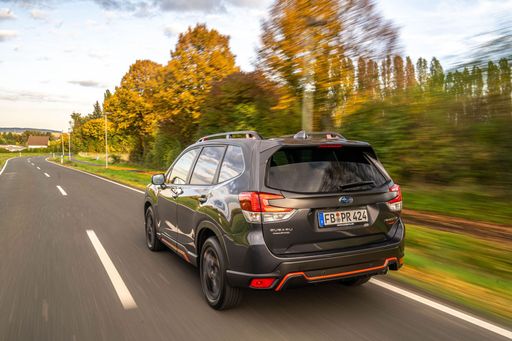
@ Subaru Corporation
VS

Jeep Wrangler vs Subaru Forester – Which one offers the better deal?

Both models have their strengths – but which one suits you more?
Compare performance, efficiency, price and space directly: Jeep Wrangler or Subaru Forester?

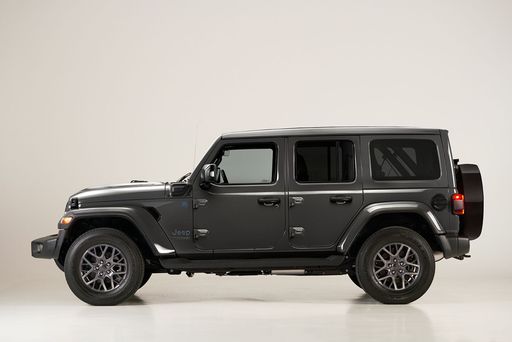
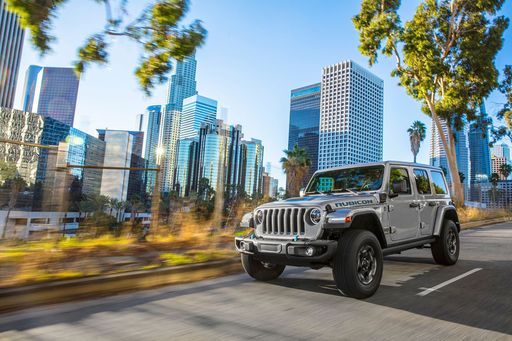
Wrangler @ Jeep / Stellantis Media

Jeep Wrangler vs. Subaru Forester: A Comparative Analysis

The age-old debate between off-road capability and urban SUV practicality continues as we pit two iconic vehicles against each other. The rugged Jeep Wrangler faces off against the versatile Subaru Forester in a comparison that dives into their technical specifications and innovative features.
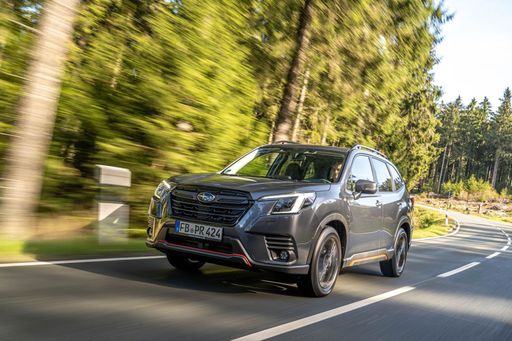
Forester @ Subaru Corporation

Design and Build: Off-Road Beast vs. Urban Adventurer

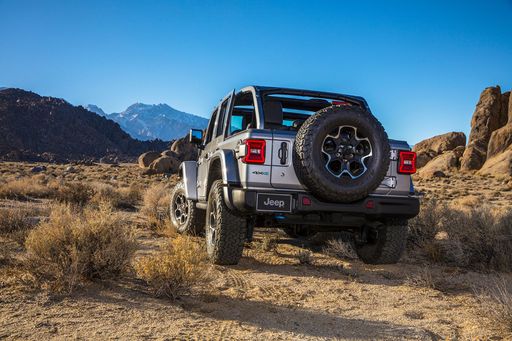
The 2024 Jeep Wrangler continues to embody the spirit of adventure with its classic off-roader design. Its dimensions stand at 4882mm in length, 1894mm in width, and a height variation of 1838 to 1848mm, highlighting its commanding presence on any terrain. Built for challenging landscapes, the Wrangler's body is muscular and supportive, with a trunk capacity of 533 liters to accommodate necessary travel gear.

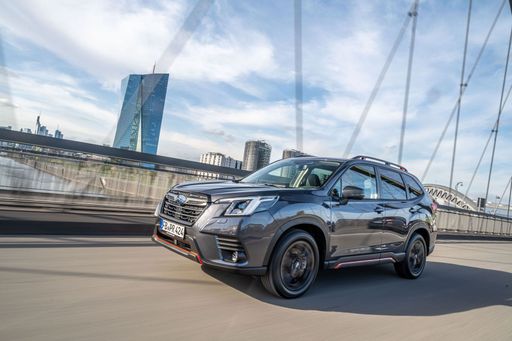
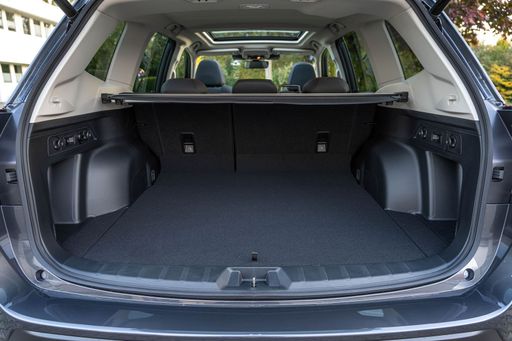
On the other hand, the Subaru Forester, an acclaimed SUV well-suited to both off-road trails and city streets, measures slightly smaller with lengths ranging from 4640 to 4670mm, and a constant height of 1730mm. Its urban-friendly design offers practicality without compromising on the adventurous spirit, featuring a trunk capacity of around 509 liters. The Forester’s comparatively compact structure enhances its maneuverability in urban settings while maintaining enough space for outdoor excursions.

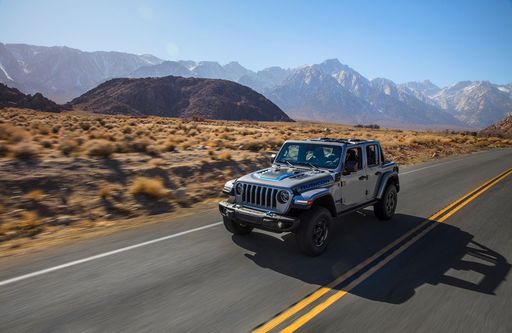
Wrangler @ Jeep / Stellantis Media

Performance: Power vs. Efficiency

Under the hood, the Jeep Wrangler boasts a plug-in hybrid engine that generates an impressive 380 HP and 280 kW of power, with torque reaching up to 637 Nm. This robust performance allows for a swift 0-100 km/h acceleration in 6.5 seconds. Despite its power, it efficiently achieves a combined fuel consumption of 3.3 to 4 liters per 100 km and offers an electric range of 38 to 42 km, placing it in CO2 efficiency class B with emissions of 74 to 91 g/km.

Contrastingly, the Subaru Forester powers forward with a mild hybrid petrol engine, producing between 136 and 150 HP and torque in the range of 182 to 194 Nm. While it accelerates from 0-100 km/h in a more leisurely 11.8 to 12.2 seconds, it achieves a respectable maximum speed of 188 km/h. Its fuel consumption is slightly higher at 8.1 liters per 100 km, placing it in the CO2 efficiency class G with emissions of 183 to 185 g/km.

Forester @ Subaru Corporation

Transmission and Drive

The Wrangler features an automatic gearbox perfectly suited for its all-wheel drive system, enhancing its off-roading capabilities. It tackles diverse landscapes effortlessly, making it a favorite for those who love outdoor challenges.

The Forester employs a Continuously Variable Transmission (CVT) to optimize fuel efficiency and performance. This, combined with its all-wheel drive, offers stability and control, ideal for varied terrains without the rough and tumble of extreme off-road conditions seen with the Wrangler.

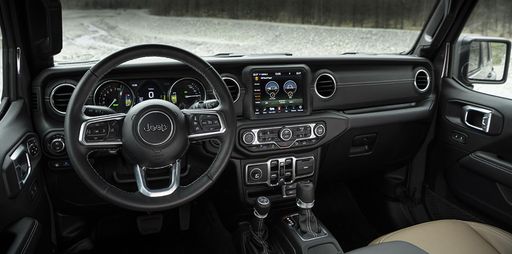
Wrangler @ Jeep / Stellantis Media

Comfort and Utility: Practicality Meets Ruggedness

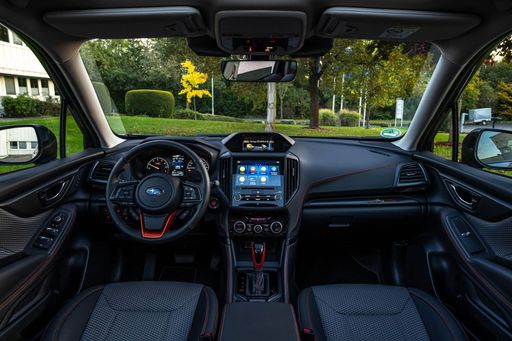
Both vehicles offer seating for five passengers. Where the Wrangler takes the lead in trunk capacity, the Forester provides comfort with a slightly more spacious interior, arguably making long rides more enjoyable in its plush cabin.

The Forester’s innovative mild hybrid system, with a 0.6 kWh battery, supports fuel efficiency, reducing environmental impact in a subtle yet effective manner.

Forester @ Subaru Corporation

Conclusion: Choosing Your Path

Your choice between the Jeep Wrangler and the Subaru Forester ultimately boils down to your lifestyle needs. If bold trails and rugged vistas call out to you, the Jeep Wrangler’s raw power and off-road skills make it a top contender. However, if you seek a balance of urban agility and countryside exploration, the Subaru Forester stands as a practical, versatile SUV.

Both vehicles carry significant merit in their respective domains, making either a commendable choice for drivers seeking adventure with varied emphases on performance and practicality.

Here’s where it gets real: The technical differences in detail

Wrangler @ Jeep / Stellantis Media

Costs and Efficiency:

Price and efficiency are often the first things buyers look at. Here it becomes clear which model has the long-term edge – whether at the pump, the plug, or in purchase price.

Subaru Forester has a clearly advantage in terms of price – it starts at 34700 £, while the Jeep Wrangler costs 69900 £. That’s a price difference of around 35152 £.

Fuel consumption also shows a difference: Jeep Wrangler manages with 3.30 L and is therefore significantly more efficient than the Subaru Forester with 8.10 L. The difference is about 4.80 L per 100 km.

Forester @ Subaru Corporation

Engine and Performance:

Under the bonnet, it becomes clear which model is tuned for sportiness and which one takes the lead when you hit the accelerator.

When it comes to engine power, the Jeep Wrangler has a clearly edge – offering 380 HP compared to 136 HP. That’s roughly 244 HP more horsepower.

In acceleration from 0 to 100 km/h, the Jeep Wrangler is decisively quicker – completing the sprint in 6.50 s, while the Subaru Forester takes 12.20 s. That’s about 5.70 s faster.

In terms of top speed, the Subaru Forester performs minimal better – reaching 188 km/h, while the Jeep Wrangler tops out at 177 km/h. The difference is around 11 km/h.

There’s also a difference in torque: Jeep Wrangler pulls convincingly stronger with 637 Nm compared to 182 Nm. That’s about 455 Nm difference.

Wrangler @ Jeep / Stellantis Media

Space and Everyday Use:

Cabin size, boot volume and payload all play a role in everyday practicality. Here, comfort and flexibility make the difference.

Both vehicles offer seating for 5 people.

In curb weight, Subaru Forester is clearly perceptible lighter – 1693 kg compared to 2276 kg. The difference is around 583 kg.

In terms of boot space, the Jeep Wrangler offers minimal more room – 533 L compared to 508 L. That’s a difference of about 25 L.

In maximum load capacity, the Jeep Wrangler performs slightly better – up to 2050 L, which is about 319 L more than the Subaru Forester.

When it comes to payload, Jeep Wrangler minimal takes the win – 536 kg compared to 492 kg. That’s a difference of about 44 kg.

Who comes out on top?

Overall, the Jeep Wrangler shows itself to be leaves the rival little chance and secures the title of DriveDuel Champion.
It convinces with the more balanced overall package and proves to be the more versatile choice for everyday use.

from about £69,900
Wrangler @ Jeep / Stellantis Media

Jeep Wrangler

  • Engine Type : Plugin Hybrid
  • Transmission : Automatic
  • Drive Type : All-Wheel Drive
  • Power HP : 380 HP
  • Consumption L/100km : 3.3 - 4 L
  • Electric Range : 38 - 42 km

Jeep Wrangler

The Jeep Wrangler is a symbol of rugged adventure and off-road capability, renowned for its distinctive boxy design and iconic seven-slot grille. Its interior blends practicality with modern technology, providing a comfortable environment whether you're navigating city streets or challenging terrains. With a loyal fan base, the Wrangler continues to capture the spirit of freedom and exploration, making it a favourite among outdoor enthusiasts.

details

Subaru Forester

The Subaru Forester is a practical all-rounder that quietly does everything right, with roomy comfort, excellent visibility and a real fondness for weekend adventures off the beaten path. It won't set your pulse racing like a sports car, but for buyers who prize reliability, safety and sensible charm, it's a brilliantly steady companion with a cheeky streak.

details
Jeep Wrangler
Subaru Forester
Wrangler @ Jeep / Stellantis Media
Forester @ Subaru Corporation

Costs and Consumption

Price
69900 - 71600 £
Price
34700 - 42200 £
Consumption L/100km
3.3 - 4 L
Consumption L/100km
8.10 L
Consumption kWh/100km
-
Consumption kWh/100km
-
Electric Range
38 - 42 km
Electric Range
-
Battery Capacity
-
Battery Capacity
-
co2
74 - 91 g/km
co2
183 g/km
Fuel tank capacity
65 L
Fuel tank capacity
48 L

Dimensions and Body

Body Type
Off-Roader
Body Type
SUV
Seats
5
Seats
5
Doors
5
Doors
5
Curb weight
2276 - 2383 kg
Curb weight
1693 - 1739 kg
Trunk capacity
533 L
Trunk capacity
508 L
Length
4882 mm
Length
4670 mm
Width
1894 mm
Width
1830 mm
Height
1838 - 1848 mm
Height
1730 mm
Max trunk capacity
2050 L
Max trunk capacity
1679 - 1731 L
Payload
520 - 536 kg
Payload
446 - 492 kg

Engine and Performance

Engine Type
Plugin Hybrid
Engine Type
Petrol MHEV
Transmission
Automatic
Transmission
Automatic
Transmission Detail
Automatic Gearbox
Transmission Detail
CVT
Drive Type
All-Wheel Drive
Drive Type
All-Wheel Drive
Power HP
380 HP
Power HP
136 HP
Acceleration 0-100km/h
6.50 s
Acceleration 0-100km/h
12.20 s
Max Speed
156 - 177 km/h
Max Speed
188 km/h
Torque
637 Nm
Torque
182 Nm
Number of Cylinders
4
Number of Cylinders
4
Power kW
280 kW
Power kW
100 kW
Engine capacity
1995 cm3
Engine capacity
1995 cm3

General

Model Year
2024
Model Year
2025
CO2 Efficiency Class
B
CO2 Efficiency Class
G
Brand
Jeep
Brand
Subaru
What drive types are available for the Jeep Wrangler?

The Jeep Wrangler is offered with All-Wheel Drive.

The prices and data displayed are estimates based on German list prices and may vary by country. This information is not legally binding.