@ Kia Corporation
@ Škoda Auto a.s. / Škoda Storyboard
VS

Kia Ceed vs Skoda Octavia Combi – Which model is better for everyday use?

Compare performance, boot capacity, efficiency and price at a glance.
Find out which car is the better choice for you – Kia Ceed or Skoda Octavia Combi?

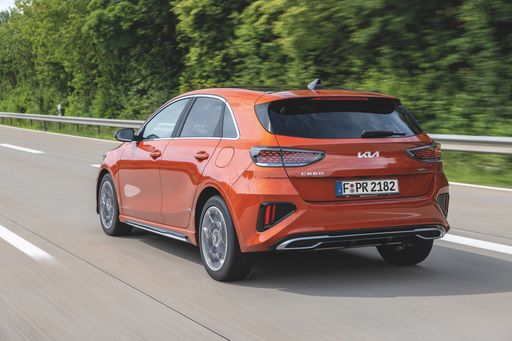
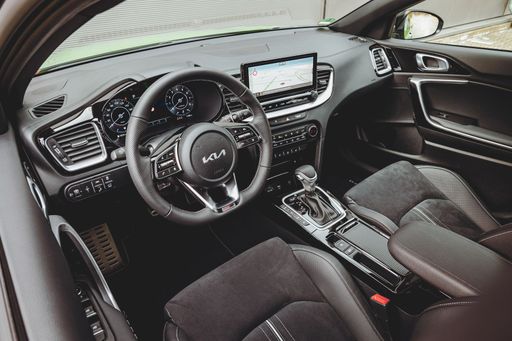
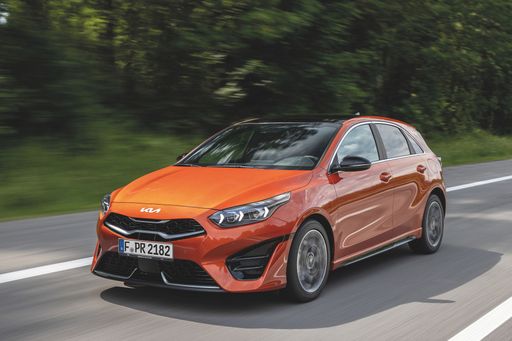
Ceed @ Kia Corporation

The Ultimate Showdown: Kia Ceed vs. Skoda Octavia Combi

As the automotive world evolves, two models stand out in the segment of practical, everyday cars - the Kia Ceed and the Skoda Octavia Combi. Both vehicles offer unique features tailored to meet the diverse needs of drivers. However, how do they stack up against each other in terms of performance, innovation, and practicality? Let's dive in and compare these two popular models.
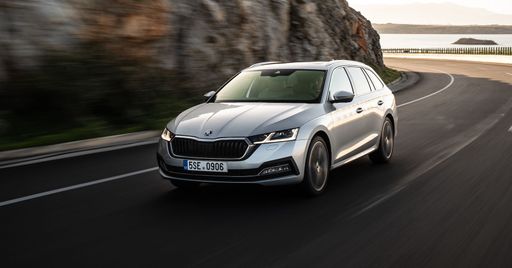
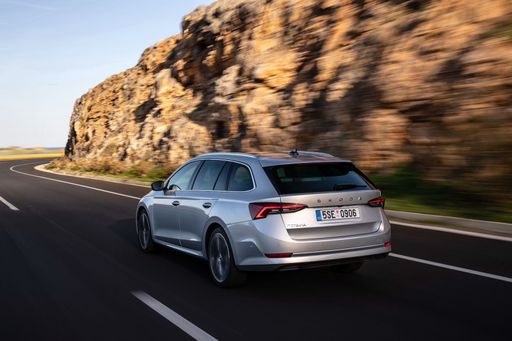
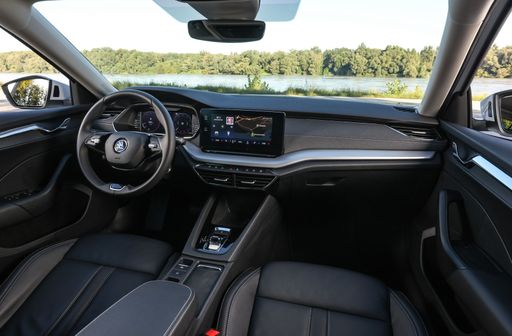
Octavia Combi @ Škoda Auto a.s. / Škoda Storyboard

Performance and Powertrain

The Kia Ceed boasts a range of petrol and mild-hybrid (MHEV) engine options, offering power outputs of 100 HP and 140 HP with respective kW figures of 74 and 103. These engines promise a balance between efficiency and performance with a consumption range of 6 to 6.4 L/100km. The Ceed accelerates from 0-100km/h between 9.5 to 13.2 seconds, and the max speed ranges from 178 to 197 km/h. This makes the Ceed an impressive contender in its class.

On the other hand, the Skoda Octavia Combi provides a broader selection with petrol, mild-hybrid, and diesel options. Power ranges from 116 HP to an impressive 265 HP with power measurements between 85 and 195 kW. The Octavia Combi also shines with various acceleration capabilities - the quickest reaching 0-100km/h in an exhilarating 6.5 seconds. Fuel consumption varies from a frugal 4.4 L/100km for diesel variants to 6.9 L/100km for the more powerful petrol engines. The model can achieve max speeds between 203 and 250 km/h, catering to a wide range of preferences.

Ceed @ Kia Corporation

Design and Practicality

As a hatchback, the Kia Ceed offers practicality with compact dimensions. A length of 4315-4325 mm, width of 1800 mm, and height around 1447 mm make it ideal for urban maneuverability. Despite its compact size, it provides adequate trunk space ranging from 357 to 395 liters.

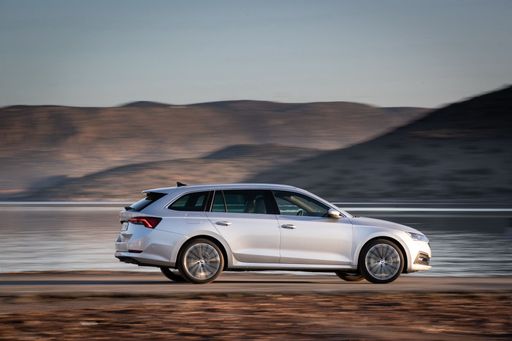
The Skoda Octavia Combi, a wagon, caters to those needing more space. It measures in at a length of around 4698 mm and a slightly wider width of 1829 mm. The additional cargo space of 640 liters is a massive boon for families or those who frequently travel with loads of luggage.

Octavia Combi @ Škoda Auto a.s. / Škoda Storyboard

Technological Innovations

The Kia Ceed integrates modern driving technologies with its offering of a dual-clutch automatic transmission, providing smooth gear shifts for both petrol and MHEV engines. It emphasizes driver convenience and mechanical reliability, typical of Kia's modern fleet.

In comparison, the Skoda Octavia Combi impresses with its range of transmission options – a refined dual-clutch automatic transmission and a conventional manual, appealing to both traditionalists and those favoring technological advancement. Notably, the Octavia Combi also offers an all-wheel-drive configuration, adding traction and versatility for varied driving conditions.

Ceed @ Kia Corporation

Environmental Impact

Both models take different approaches to CO2 emissions with Kia's Ceed recording figures between 137 and 146 g/km, placing it in the E efficiency class. The Octavia Combi records slightly lower CO2 emissions, between 114 and 157 g/km, distributed across D, C, E, and F efficiency classes. These figures reflect the emphasis each brand places on reducing environmental impact.

Octavia Combi @ Škoda Auto a.s. / Škoda Storyboard

Conclusion

Choosing between the Kia Ceed and the Skoda Octavia Combi depends on individual priorities. The Ceed excels with its nimbleness, efficient powertrains, and urban practicality, while the Octavia Combi offers superior power options, versatility, and generous space. Both models exemplify innovation and reliability, ensuring that buyers can't go wrong, whichever they choose.

Here’s where it gets real: The technical differences in detail

Costs and Efficiency:

Price and efficiency are often the first things buyers look at. Here it becomes clear which model has the long-term edge – whether at the pump, the plug, or in purchase price.

Kia Ceed has a hardly perceptible advantage in terms of price – it starts at 23500 £, while the Skoda Octavia Combi costs 24400 £. That’s a price difference of around 943 £.

Fuel consumption also shows a difference: Skoda Octavia Combi manages with 4.40 L and is therefore distinct more efficient than the Kia Ceed with 6 L. The difference is about 1.60 L per 100 km.

Engine and Performance:

Power, torque and acceleration are the classic benchmarks for car enthusiasts – and here, some clear differences start to show.

When it comes to engine power, the Skoda Octavia Combi has a decisively edge – offering 265 HP compared to 140 HP. That’s roughly 125 HP more horsepower.

In acceleration from 0 to 100 km/h, the Skoda Octavia Combi is decisively quicker – completing the sprint in 6.50 s, while the Kia Ceed takes 9.50 s. That’s about 3 s faster.

In terms of top speed, the Skoda Octavia Combi performs clearly perceptible better – reaching 250 km/h, while the Kia Ceed tops out at 197 km/h. The difference is around 53 km/h.

There’s also a difference in torque: Skoda Octavia Combi pulls clearly perceptible stronger with 370 Nm compared to 253 Nm. That’s about 117 Nm difference.

Space and Everyday Use:

Whether family car or daily driver – which one offers more room, flexibility and comfort?

Both vehicles offer seating for 5 people.

In curb weight, Kia Ceed is minimal lighter – 1298 kg compared to 1366 kg. The difference is around 68 kg.

In terms of boot space, the Skoda Octavia Combi offers noticeable more room – 640 L compared to 395 L. That’s a difference of about 245 L.

In maximum load capacity, the Skoda Octavia Combi performs clearly perceptible better – up to 1700 L, which is about 409 L more than the Kia Ceed.

When it comes to payload, Skoda Octavia Combi hardly perceptible takes the win – 534 kg compared to 490 kg. That’s a difference of about 44 kg.

Who wins the race?

The Skoda Octavia Combi proves to be dominates this comparison and therefore becomes our DriveDuel Champion!
Skoda Octavia Combi is the better all-rounder in this comparison.

from about £24,400
Octavia Combi @ Škoda Auto a.s. / Škoda Storyboard

Skoda Octavia Combi

  • Engine Type : Petrol, Petrol MHEV, Diesel
  • Transmission : Automatic, Manuel
  • Drive Type : Front-Wheel Drive, All-Wheel Drive
  • Power HP : 116 - 265 HP
  • Consumption L/100km : 4.4 - 6.9 L

Kia Ceed

The Kia Ceed is a sensible, stylish hatchback that gives buyers more than they'd expect for the money, blending practical space with crisp, modern looks. It drives with measured confidence and comes loaded with user-friendly kit, so you can enjoy daily life behind the wheel without breaking into a sweat.

details

Skoda Octavia Combi

The Skoda Octavia Combi is the sensible family wagon that somehow turns grocery runs and long trips into a pleasant, unshowy experience — spacious, practical and built like it prefers reliability over flash. With smart touches, clever storage and a cabin that feels grown-up rather than frugal, it’s an easy recommendation for buyers who want maximum utility without sacrificing comfort or style.

details
Kia Ceed
Skoda Octavia Combi
Ceed @ Kia Corporation
Octavia Combi @ Škoda Auto a.s. / Škoda Storyboard

Costs and Consumption

Price
23500 - 26300 £
Price
24400 - 42300 £
Consumption L/100km
6 - 6.4 L
Consumption L/100km
4.4 - 6.9 L
Consumption kWh/100km
-
Consumption kWh/100km
-
Electric Range
-
Electric Range
-
Battery Capacity
-
Battery Capacity
-
co2
137 - 146 g/km
co2
113 - 157 g/km
Fuel tank capacity
50 L
Fuel tank capacity
45 - 55 L

Dimensions and Body

Body Type
Hatchback
Body Type
Estate
Seats
5
Seats
5
Doors
5
Doors
5
Curb weight
1298 - 1372 kg
Curb weight
1366 - 1553 kg
Trunk capacity
357 - 395 L
Trunk capacity
640 L
Length
4315 mm
Length
4698 - 4709 mm
Width
1800 mm
Width
1829 mm
Height
1447 mm
Height
1455 - 1468 mm
Max trunk capacity
1253 - 1291 L
Max trunk capacity
1700 L
Payload
478 - 490 kg
Payload
471 - 534 kg

Engine and Performance

Engine Type
Petrol, Petrol MHEV
Engine Type
Petrol, Petrol MHEV, Diesel
Transmission
Manuel, Automatic
Transmission
Automatic, Manuel
Transmission Detail
Manual Gearbox, Dual-Clutch Automatic
Transmission Detail
Dual-Clutch Automatic, Manual Gearbox
Drive Type
Front-Wheel Drive
Drive Type
Front-Wheel Drive, All-Wheel Drive
Power HP
100 - 140 HP
Power HP
116 - 265 HP
Acceleration 0-100km/h
9.5 - 13.2 s
Acceleration 0-100km/h
6.5 - 10.7 s
Max Speed
178 - 197 km/h
Max Speed
203 - 250 km/h
Torque
172 - 253 Nm
Torque
220 - 370 Nm
Number of Cylinders
3 - 4
Number of Cylinders
4
Power kW
74 - 103 kW
Power kW
85 - 195 kW
Engine capacity
998 - 1482 cm3
Engine capacity
1498 - 1984 cm3

General

Model Year
2024
Model Year
2024 - 2025
CO2 Efficiency Class
E
CO2 Efficiency Class
E, F, D, C
Brand
Kia
Brand
Skoda
What drivetrain options does the Kia Ceed have?

The Kia Ceed is available as Front-Wheel Drive.

The prices and data displayed are estimates based on German list prices and may vary by country. This information is not legally binding.