VS

Kia Picanto vs Fiat Panda comparison

Compare performance (68 HP vs 70 HP), boot space and price (15,300 £ vs 14,100 £ ) at a glance. Find out which car is the better choice for you – Kia Picanto or Fiat Panda?

Kia Picanto vs Fiat Panda: Key differences

Kia Picanto

4.7 (2 Reviews)
rate

Fiat Panda

4.5 (2 Reviews)
rate
  • barely cheaper
  • very slightly more power
  • marginally more efficient
  • marginally quicker 0–100 km/h
  • very slightly lighter
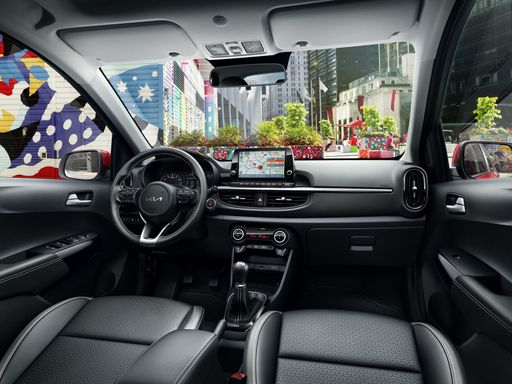
Picanto

Fiat Panda vs Kia Picanto: A Comprehensive Comparison

In the highly competitive compact hatchback segment, the Fiat Panda and the Kia Picanto stand out as two top contenders for urban drivers looking for style, efficiency, and practicality. Both models have been updated for 2024 and offer a range of technical features and innovations that cater to the needs of modern drivers. Let's delve into how these two vehicles compare in terms of specifications, comfort, and technological advancements.

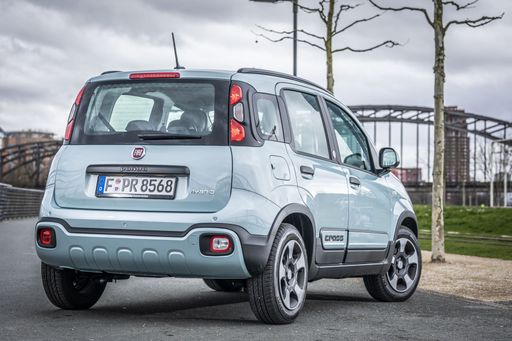
Panda

Engine and Performance

The Fiat Panda is equipped with a petrol MHEV engine, producing a commendable 70 HP (51 kW) with a torque of 92 Nm. With its 999 cm³ engine capacity, it has an impressive acceleration from 0-100 km/h in 13.9 seconds. The drive type is front-wheel drive, contributing to its overall handling and driveability, especially in urban environments.

On the other hand, the Kia Picanto's engine options are slightly more varied, ranging from a base model with 63 HP (46 kW) to a more powerful option with 79 HP (58 kW) and 115 Nm of torque. The Picanto’s engine capacity varies between 998 cm³ and 1197 cm³. While its acceleration is longer, taking up to 15.6 seconds for the lower-powered variant, the top variants can achieve 0-100 km/h in just 13.1 seconds. Both cars feature a front-wheel drive configuration, but the Picanto slightly tops the Panda’s max speed with a peak speed of 159 km/h compared to the Panda’s 164 km/h.

Picanto

Fuel Efficiency and Environmental Impact

When it comes to fuel efficiency, the Fiat Panda boasts an impressive consumption rate of 5-5.1 L/100 km. It emerges as environmentally friendly with CO2 emissions ranging from 113 to 116 g/km, landing it in efficiency classes C and D.

The Kia Picanto has a slightly higher fuel consumption, recorded between 5.2 to 5.7 L/100 km, with CO2 emissions ranging from 118 to 130 g/km. This places it in CO2 efficiency class D, positioning it as a solid option within its category, though not quite as efficient as the Panda.

Panda

Comfort and Interior Space

Both vehicles seat up to five passengers, making them practical choices for urban commuting. The Fiat Panda provides a trunk capacity of 225 L, while the Kia Picanto boasts a slightly larger trunk space of 255 L, offering additional room for groceries and luggage. Despite their compact nature, both models excel in maximizing interior space.

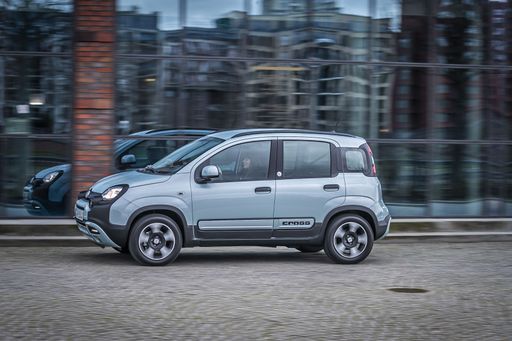
Dimensionally, the Panda is a bit larger overall, measuring 3653 mm in length and 1643 mm in width, compared to the Picanto’s 3605 mm length. However, the Picanto offers a lower height of 1485 mm, which may provide a sportier stance and improved aerodynamics. The difference in curb weight is also notable; the Fiat Panda weighs 1055 kg, while the Picanto’s weight ranges from 981 kg to 991 kg, potentially influencing handling and fuel efficiency.

Picanto

Technological Features

In terms of innovations, both vehicles include essential features aimed at enhancing the driving experience. The Fiat Panda comes equipped with various driver assistance features, while the Kia Picanto edges ahead with more advanced tech options, including an available automated manual transmission. This flexibility in transmission types can cater to a wider range of preferences among drivers.

Furthermore, the Picanto tends to offer more advanced infotainment options and smartphone connectivity features than the Panda, appealing to tech-savvy consumers looking for seamless integration with their devices during their commutes.

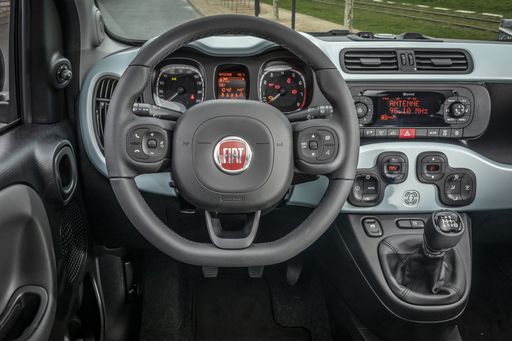
Panda

Conclusion: Which One Should You Choose?

Choosing between the Fiat Panda and Kia Picanto ultimately depends on what you prioritize in a compact hatchback. If fuel efficiency and a larger trunk are key considerations, the Fiat Panda might just edge out as the more practical option. However, for drivers looking for more engine variety, advanced technology options, and slightly better performance in a city environment, the Kia Picanto is a formidable contender.

Both cars embody the essence of efficient urban transport, so making a decision will likely come down to individual tastes and driving preferences. As the automotive world constantly evolves, both the Panda and the Picanto remain excellent choices for those navigating urban life.

Here’s where it gets real: The technical differences in detail

Picanto

Costs and Efficiency:

Looking at overall running costs, both models reveal some interesting differences in everyday economy.

Fiat Panda is barely cheaper – starting at 14,100 £ , while the Kia Picanto costs 15,300 £ . That’s a price difference of around 1,166 £.

Fuel consumption also shows a difference: the Fiat Panda uses 5 L/100km and is marginally more efficient than the Kia Picanto with 5.5 L/100km. The difference is about 0.5 L/100km.

Panda

Engine and Performance:

Power, torque and acceleration are the classic benchmarks for car enthusiasts – and here, some clear differences start to show.

When it comes to engine power, the Fiat Panda offers very slightly more power – delivering 70 HP compared to 68 HP. That’s roughly 2 HP more horsepower.

When accelerating from 0 to 100 km/h, the Fiat Panda is marginally quicker – completing the sprint in 13.9 s, while the Kia Picanto takes 14.6 s. That’s about 0.7 s quicker.

There’s also a difference in torque: the Kia Picanto delivers very slightly more torque with 96 Nm compared to 92 Nm. That’s about 4 Nm more.

Picanto

Space and Everyday Use:

Cabin size, boot volume and payload all play a role in everyday practicality. Here, comfort and flexibility make the difference.

Seats: Kia Picanto offers more seats – 5 vs 4.

In terms of curb weight, Fiat Panda is very slightly lighter – 1,055 kg compared to 1,124 kg. The difference is around 69 kg.

When it comes to payload, the Fiat Panda carries barely more – 365 kg compared to 332 kg. That’s a difference of about 33 kg.

Who wins the race in the data check?

The Fiat Panda holds a narrow overall lead in the objective data comparison.
This result only shows which model scores more points on paper – not which of the two cars feels right for you.

£14,134
Panda

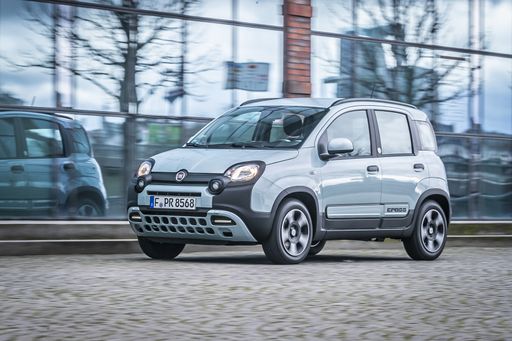
Fiat Panda

  • Engine Type : Petrol MHEV
  • Transmission : Manuel
  • Drive Type : Front-Wheel Drive
  • Power HP : 70 HP
  • Consumption L/100km : 5 L/100km
Kia Picanto
Fiat Panda

Costs and Consumption

View detailed analysis

Engine and Performance

View detailed analysis

Dimensions and Body

View detailed analysis

Kia Picanto

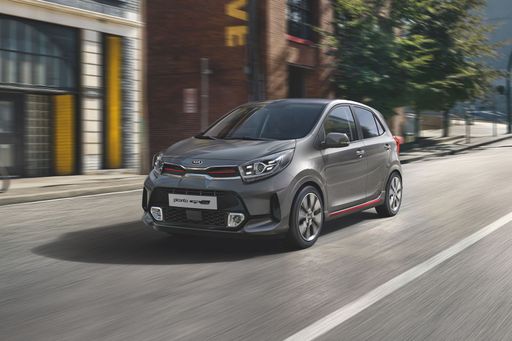
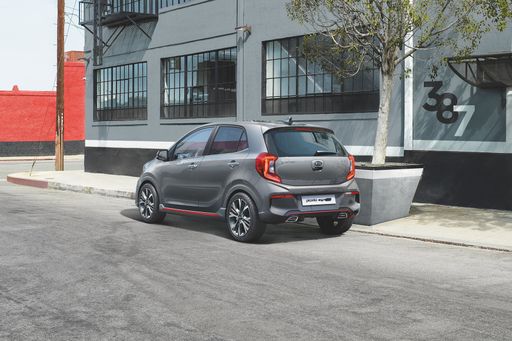
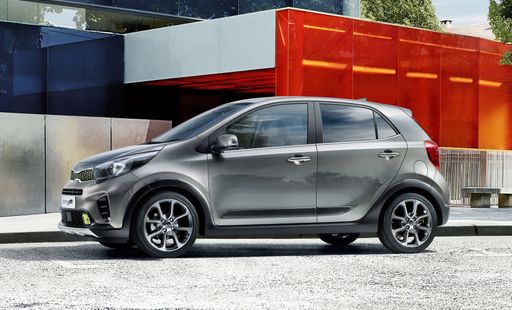
Kia Picanto is a cheeky city hatch that squeezes surprising style, practicality and a smile-inducing drive into a pocket-friendly package. It’s ideal for urban buyers who want fuss-free running, effortless parking and a car that punches above its class without pretending to be anything it’s not.

details

Fiat Panda

The Panda is a charming, no-nonsense city companion that mixes cheerful Italian flair with genuinely useful practicality, making tight streets and daily errands feel less of a chore. Its honest simplicity, clever packaging and a dash of cheeky character make it a smart, low-stress buy for people who prefer sensible perks over showroom flash.

details
Kia Picanto
Fiat Panda

Costs and Consumption

Price
15,300 - 19,300 £
Price
14,100 £
Consumption L/100km
5.5 - 5.9 L/100km
Consumption L/100km
5 L/100km
Consumption kWh/100km
-
Consumption kWh/100km
-
Electric Range
-
Electric Range
-
Battery Capacity
-
Battery Capacity
-
co2
126 - 134 g/km
co2
113 g/km
Fuel tank capacity
-
Fuel tank capacity
38 L

Dimensions and Body

Body Type
Hatchback
Body Type
Hatchback
Seats
4 - 5
Seats
4
Doors
-
Doors
5
Curb weight
1,124 - 1,131 kg
Curb weight
1,055 kg
Trunk capacity
-
Trunk capacity
225 L
Length
-
Length
3,635 mm
Width
1,595 mm
Width
1,643 mm
Height
-
Height
1,551 mm
Max trunk capacity
-
Max trunk capacity
870 L
Payload
253 - 332 kg
Payload
365 kg

Engine and Performance

Engine Type
Petrol
Engine Type
Petrol MHEV
Transmission
Manuel, Automatic
Transmission
Manuel
Transmission Detail
Manual Gearbox, Automated Manual
Transmission Detail
Manual Gearbox
Drive Type
Front-Wheel Drive
Drive Type
Front-Wheel Drive
Power HP
68 HP
Power HP
70 HP
Acceleration 0-100km/h
14.6 - 17.2 s
Acceleration 0-100km/h
13.9 s
Max Speed
-
Max Speed
164 km/h
Torque
96 Nm
Torque
92 Nm
Number of Cylinders
3
Number of Cylinders
3
Power kW
50 kW
Power kW
51 kW
Engine capacity
998 cm3
Engine capacity
999 cm3

General

Model Year
2,025
Model Year
2,024
CO2 Efficiency Class
D
CO2 Efficiency Class
C
Brand
Kia
Brand
Fiat
DriveDuel uses data analysis and artificial intelligence to evaluate vehicle data and create content. Content is regularly reviewed and improved. The displayed prices are estimates based on German list prices, adjusted to the respective country’s VAT. Country-specific registration taxes are not included. This information is not legally binding.