VS

Kia Sorento vs Nissan X-Trail - Differences and prices compared

Compare performance (252 HP vs 213 HP), boot space and price (46900 £ vs 34200 £ ) at a glance. Find out which car is the better choice for you – Kia Sorento or Nissan X-Trail?

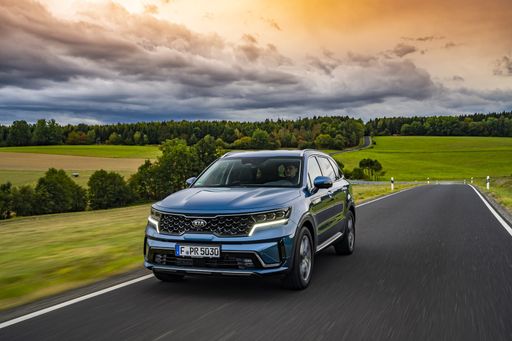
Sorento

The SUV segment continues to flourish, offering consumers a wide variety of choices for families and adventure seekers alike. Among the standout options in this competitive market are the Kia Sorento and the Nissan X-Trail. Both vehicles offer unique features that cater to diverse driving needs. In this comparison, we'll delve into their technical aspects, innovations, and performance metrics to help you make an informed choice.
X-Trail

Design and Dimensions

The Kia Sorento boasts a commanding presence with its robust dimensions. At 4815mm in length and 1900mm in width, it offers a spacious interior, accommodating either 5, 6, or 7 seats depending on the configuration. The vehicle stands 1695mm tall, providing ample headroom for passengers.

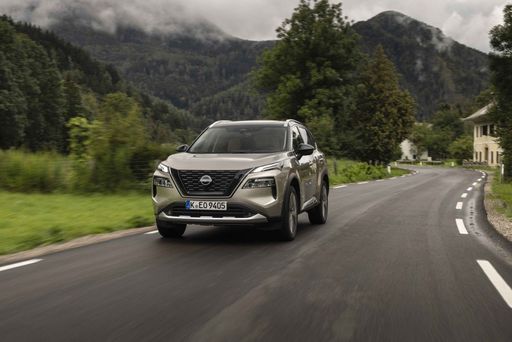
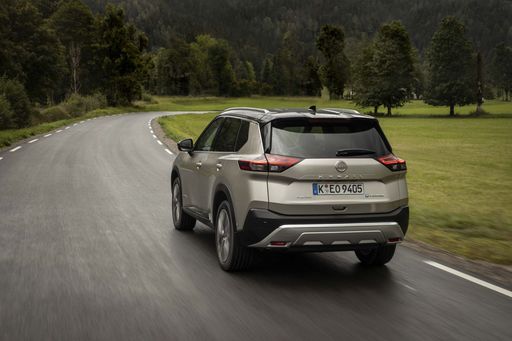
In contrast, the Nissan X-Trail is slightly more compact, measuring 4680mm in length and 1840mm in width, with a taller height of 1720mm. While it also offers seating for 5 or 7, the X-Trail’s design leans more towards an urban SUV, making it a nimble option in congested city settings.

Sorento

Engine Options: A Power Comparison

The Kia Sorento presents a diverse range of engine choices, including Plugin Hybrid, Full Hybrid, and Diesel variations, generating power ranging from 194 HP to an impressive 252 HP. The hybrid models offer an attractive electric range of up to 55 km, making them suitable for eco-conscious drivers. With a torque output peaking at 440 Nm and acceleration from 0 to 100 km/h taking as little as 8.8 seconds, the Sorento does not compromise on performance.

On the other hand, the Nissan X-Trail features petrol MHEV and Full Hybrid options, delivering power outputs from 163 HP to 213 HP. The X-Trail offers efficient performance as well, with a torque that can reach up to 525 Nm, facilitating quicker accelerations. The fastest variant can achieve 0 to 100 km/h in just 7 seconds, providing an exhilarating driving experience.

X-Trail

Transmission and Driving Experience

When it comes to driving dynamics, the Kia Sorento offers an automatic gearbox, with options for all-wheel or front-wheel drive. This versatility ensures that you can adapt to various terrains and driving preferences with ease.

The Nissan X-Trail features a Continuous Variable Transmission (CVT), known for providing a smooth ride by automatically adjusting the gear ratios. With the option of front-wheel or all-wheel drive, it competently transitions between urban roads and off-road challenges.

Sorento

Fuel Efficiency: A Closer Look

Fuel efficiency is a critical consideration for many buyers. The Kia Sorento's consumption ranges from 1.6 L/100km for its hybrid variants up to 7.2 L/100km for the diesel models. This versatility enables it to cater to various drivers' needs, whether they prioritize power or efficiency.

The Nissan X-Trail showcases impressive fuel economy as well, with consumption figures ranging from 5.7 L/100km for its hybrid models to 6.9 L/100km for traditional petrol engines. This places the X-Trail as a compelling rival for those concerned with daily operational costs.

X-Trail

Interior and Cargo Space

Inside the Kia Sorento, you can expect a spacious cabin that prioritizes comfort and technology. Trunk capacities vary from 175L to 697L, ensuring ample storage for groceries, luggage, or gear. The layout is modern and user-friendly, incorporating the latest infotainment technologies.

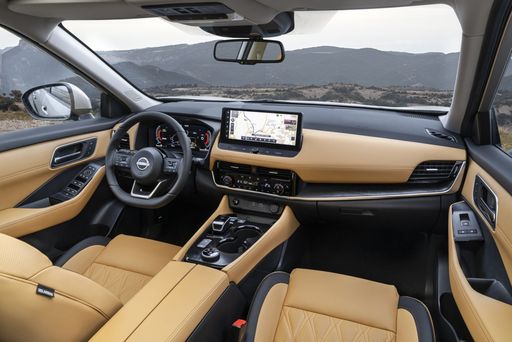
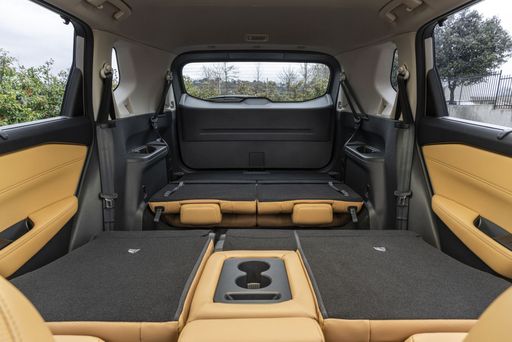
Meanwhile, the Nissan X-Trail provides a comfortable interior experience, although its trunk capacity ranges from 585L to 177L, which may be slightly less accommodating than its Kia counterpart. However, the X-Trail’s advanced safety features and technology integrations assure a fulfilling driving experience.

Conclusion: Making Your Choice

Deciding between the Kia Sorento and the Nissan X-Trail ultimately depends on your lifestyle and preferences. If you're looking for a powerful engine with a variety of configurations and spacious interiors, the Sorento may be your best bet. However, if you seek a more compact SUV with exceptional agility and efficiency, the X-Trail could be more suitable.

Both vehicles stand as superb offerings in the SUV marketplace, equipped with innovations aimed at enhancing comfort, performance, and efficiency. Test driving both models will provide the most clarity on which vehicle fits your needs best.

Kia Sorento

Nissan X-Trail

4.6 (5 Reviews)
rate

You can find all user reviews further down on this page.

Here’s where it gets real: The technical differences in detail

Costs and Efficiency:

Price and efficiency are often the first things buyers look at. Here it becomes clear which model has the long-term edge – whether at the pump, the plug, or in purchase price.

Nissan X-Trail has a distinct advantage in terms of price – it starts at 34200 £ , while the Kia Sorento costs 46900 £ . That’s a price difference of around 12720 £.

Fuel consumption also shows a difference: Kia Sorento manages with 3.90 L and is therefore decisively more efficient than the Nissan X-Trail with 5.70 L. The difference is about 1.80 L per 100 km.

Engine and Performance:

Power, torque and acceleration say a lot about how a car feels on the road. This is where you see which model delivers more driving dynamics.

When it comes to engine power, the Kia Sorento has a somewhat edge – offering 252 HP compared to 213 HP. That’s roughly 39 HP more horsepower.

In acceleration from 0 to 100 km/h, the Nissan X-Trail is slightly quicker – completing the sprint in 7 s, while the Kia Sorento takes 8 s. That’s about 1 s faster.

There’s also a difference in torque: Nissan X-Trail pulls to a small extent stronger with 525 Nm compared to 440 Nm. That’s about 85 Nm difference.

Space and Everyday Use:

Cabin size, boot volume and payload all play a role in everyday practicality. Here, comfort and flexibility make the difference.

Both vehicles offer seating for 7 people.

In curb weight, Nissan X-Trail is slightly lighter – 1668 kg compared to 1855 kg. The difference is around 187 kg.

In terms of boot space, the Kia Sorento offers to a small extent more room – 705 L compared to 585 L. That’s a difference of about 120 L.

When it comes to payload, Kia Sorento somewhat takes the win – 685 kg compared to 574 kg. That’s a difference of about 111 kg.

Who wins the race in the data check?

The Kia Sorento is clearly superior overall in the objective data comparison.
This result only shows which model scores more points on paper – not which of the two cars feels right for you.

Kia Sorento
Nissan X-Trail

Costs and Consumption

View detailed analysis

Engine and Performance

View detailed analysis

Dimensions and Body

View detailed analysis
from about £46,900
Sorento

Kia Sorento

  • Engine Type : Full Hybrid, Diesel, Plugin Hybrid
  • Transmission : Automatic
  • Drive Type : Front-Wheel Drive, All-Wheel Drive
  • Power HP : 194 - 252 HP
  • Consumption L/100km : 3.9 - 7 L
  • Electric Range : 55 km

Kia Sorento

The Kia Sorento blends roomy practicality with smart tech and an unexpectedly composed highway manner, making it an easy choice for families who want comfort without fuss. It presents classy interior touches and sensible packaging at a realistic price, proving you don't need to shout to be noticed in the SUV crowd.

details

Nissan X-Trail

4.6 (5 Reviews)
rate

The Nissan X-Trail is a roomy, no-nonsense family SUV that mixes sensible practicality with a quietly modern look, making it an easy choice for busy lives and weekend escapes. It drives with calm confidence, delivers a comfortable ride and sensible tech, and won’t demand drama while doing the everyday heavy lifting.

details
Kia Sorento
Nissan X-Trail

Costs and Consumption

Price
46900 - 60100 £
Price
34200 - 50500 £
Consumption L/100km
3.9 - 7 L
Consumption L/100km
5.7 - 6.9 L
Consumption kWh/100km
-
Consumption kWh/100km
-
Electric Range
55 km
Electric Range
-
Battery Capacity
-
Battery Capacity
-
co2
87 - 174 g/km
co2
131 - 161 g/km
Fuel tank capacity
-
Fuel tank capacity
-

Dimensions and Body

Body Type
SUV
Body Type
SUV
Seats
5 - 7
Seats
5 - 7
Doors
-
Doors
-
Curb weight
1855 - 2110 kg
Curb weight
1668 - 1961 kg
Trunk capacity
175 - 705 L
Trunk capacity
177 - 585 L
Length
-
Length
-
Width
1900 mm
Width
1840 mm
Height
-
Height
-
Max trunk capacity
-
Max trunk capacity
-
Payload
162 - 685 kg
Payload
432 - 574 kg

Engine and Performance

Engine Type
Full Hybrid, Diesel, Plugin Hybrid
Engine Type
Petrol MHEV, Full Hybrid
Transmission
Automatic
Transmission
Automatic
Transmission Detail
Automatic Gearbox, Dual-Clutch Automatic
Transmission Detail
CVT, Reduction Gearbox
Drive Type
Front-Wheel Drive, All-Wheel Drive
Drive Type
Front-Wheel Drive, All-Wheel Drive
Power HP
194 - 252 HP
Power HP
163 - 213 HP
Acceleration 0-100km/h
8 - 9.7 s
Acceleration 0-100km/h
7 - 9.6 s
Max Speed
-
Max Speed
-
Torque
380 - 440 Nm
Torque
300 - 525 Nm
Number of Cylinders
4
Number of Cylinders
3
Power kW
142 - 212 kW
Power kW
120 - 157 kW
Engine capacity
1598 - 2151 cm3
Engine capacity
1497 cm3

General

Model Year
2025 - 2026
Model Year
2025
CO2 Efficiency Class
E, F, B
CO2 Efficiency Class
F, D, E
Brand
Kia
Brand
Nissan
What drivetrain options does the Kia Sorento have?

The Kia Sorento is available as Front-Wheel Drive or All-Wheel Drive.

The prices shown are estimates based on German list prices, adjusted for local VAT. Local registration taxes (e.g. NoVA, BPM or CO2 malus) are not included. This information is not legally binding.