VS

Ford Kuga vs Nissan X-Trail comparison

Compare performance (243 HP vs 213 HP), boot space and price (34,200 £ vs 34,200 £ ) at a glance. Find out which car is the better choice for you – Ford Kuga or Nissan X-Trail?

Ford Kuga vs Nissan X-Trail: Key differences

Ford Kuga

4.2 (6 Reviews)
rate
  • moderately more power
  • significantly more efficient
  • marginally lighter
details

Nissan X-Trail

4.6 (5 Reviews)
rate
  • barely cheaper
  • marginally quicker 0–100 km/h
details

All details on performance, efficiency, range and trunk space can be found in the technical comparison below – including user reviews for both models.

By Achim Sedelmaier

Kuga

Ford Kuga VS Nissan X-Trail — a practical comparison for buyers

Ford Kuga VS Nissan X-Trail sit on opposite ends of the compact-SUV spectrum when you compare driver focus to family comfort in this guide. The Kuga leans toward a taut, driver‑oriented feel with modern connectivity, while the X‑Trail prioritises roomy rear seats, simple ergonomics and an almost EV‑like city experience. This comparison looks beyond badges and figures to show how each car behaves in traffic, on long runs, and with children or luggage aboard. Expect concrete trade‑offs: the Kuga rewards those who enjoy steering and efficiency, the X‑Trail rewards those who value second‑row space and effortless daily comfort.
X-Trail

Character and driving dynamics

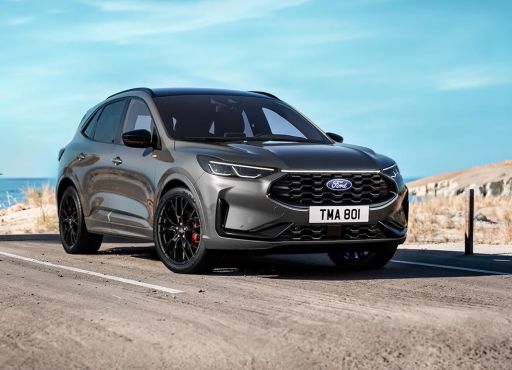
Driving character is the clearest split: the Ford Kuga feels agile and engaging, with direct steering and a chassis that encourages brisk cornering. By contrast the Nissan X‑Trail relaxes the driver with a compliant setup and more body roll, which makes it reassuring rather than brisk on winding roads. The X‑Trail’s traction systems give confidence in slippery or steep conditions, but they don’t change the car’s comfort‑first tuning. The Kuga rewards a more active driving style but can reveal a firmer ride and hybrid drivetrain vocality when you push it.

Kuga

Comfort and perceived cabin quality

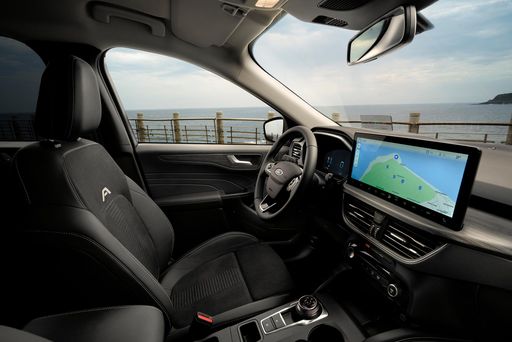
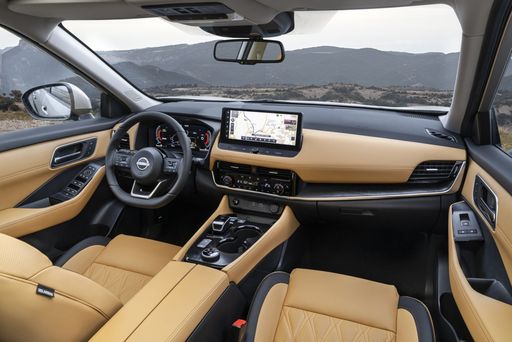
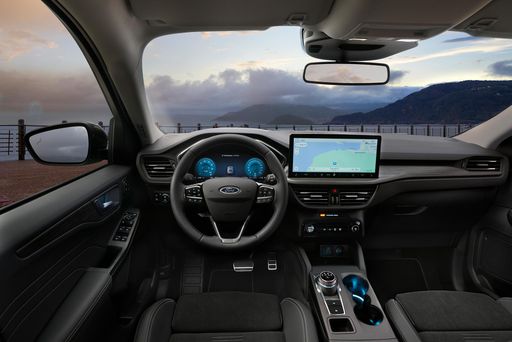
Cabin ambience is another clear contrast: the Nissan X‑Trail dresses its interior in softer materials and an ergonomic layout, while the Ford Kuga takes a more functional, tech‑forward approach. Nissan keeps physical climate controls and roomy seats that make long miles feel easier, whereas the Kuga’s large touchscreen and touch‑centric controls look modern but demand attention on the move. On long-distance runs the X‑Trail tends to feel like a calmer lounge, while the Kuga is quieter at steady speed yet can betray harsher responses over poor surfaces. Both cabins are practical, but the X‑Trail trades a bit of sportiness for greater perceived refinement and everyday ergonomics.

X-Trail

Practicality and family usability

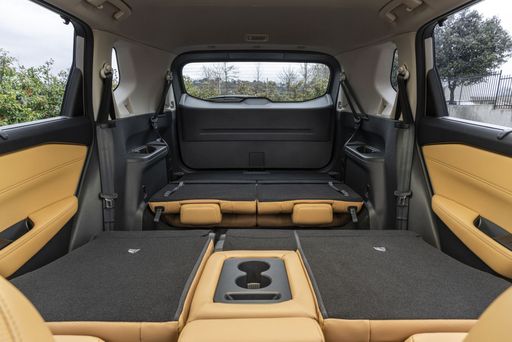
If family practicality is decisive, the Nissan X‑Trail widens the lead with a spacious second row, wide‑opening doors and the option of two extra seats for occasional use. The Ford Kuga still impresses with a sliding rear bench and clever loadspace details, but its boot is generally tighter and PHEV packaging can further eat into cargo room. Fitting child seats and moving youngsters around will feel easier in the X‑Trail, while the Kuga’s more compact footprint suits owners who need flexibility without maximum bulk. The trade is simple: pick the X‑Trail for people‑first access and occasional seven‑seat practicality, pick the Kuga if you prioritise cargo shaping and a sportier driving envelope.

Kuga

City friendliness versus long‑distance behavior

In cities both cars shine for different reasons: the Ford Kuga’s hybrid variants deliver real energy benefits in stop‑start traffic and the Kuga’s nimble steering makes urban manoeuvres feel confident. The Nissan X‑Trail’s e‑Power system gives an EV‑like smoothness without plugging in, and its easy controls and wide doors make daily drops and school runs less stressful. On the motorway the X‑Trail is a relaxed cruiser that soaks up distance, though it can consume more when pushed, whereas the Kuga settles into a composed, quieter cruise but will reveal drivetrain fuss under hard acceleration. Wheel and tyre choices accentuate these differences: the X‑Trail favours comfort with smaller rims, the Kuga’s sportier trims can feel firmer over uneven surfaces.

X-Trail

Who should choose which car — clear buyer fit and trade‑offs

Choosing between the Ford Kuga and Nissan X‑Trail comes down to how you prioritise driving feel, cabin comfort and practical space. Buyers who want a sharper steering, lower running costs in town and a tech‑rich cockpit will find the Kuga more satisfying on daily commutes. Families who need generous rear room, easy child‑seat access and a relaxed, refined cabin will lean toward the X‑Trail’s pragmatic usability. Those trade‑offs explain the headlines you’ll see in the technical sheet: the next section drills into powertrains, efficiency and cargo numbers so you can match the spec to the real‑world priorities described here.

Here’s where it gets real: The technical differences in detail

Kuga

Costs and Efficiency:

Looking at overall running costs, both models reveal some interesting differences in everyday economy.

Nissan X-Trail is barely cheaper – starting at 34,200 £ , while the Ford Kuga costs 34,200 £ . That’s a price difference of around 85 £.

Fuel consumption also shows a difference: the Ford Kuga uses 2.8 L/100km and is significantly more efficient than the Nissan X-Trail with 5.7 L/100km. The difference is about 2.9 L/100km.

X-Trail

Engine and Performance:

Power, torque and acceleration are the classic benchmarks for car enthusiasts – and here, some clear differences start to show.

When it comes to engine power, the Ford Kuga offers moderately more power – delivering 243 HP compared to 213 HP. That’s roughly 30 HP more horsepower.

When accelerating from 0 to 100 km/h, the Nissan X-Trail is marginally quicker – completing the sprint in 7 s, while the Ford Kuga takes 7.3 s. That’s about 0.3 s quicker.

There’s also a difference in torque: the Nissan X-Trail delivers clearly more torque with 525 Nm compared to 240 Nm. That’s about 285 Nm more.

Kuga

Space and Everyday Use:

Cabin size, boot volume and payload all play a role in everyday practicality. Here, comfort and flexibility make the difference.

Seats: Nissan X-Trail offers more seats – 7 vs 5.

In terms of curb weight, Ford Kuga is marginally lighter – 1,526 kg compared to 1,668 kg. The difference is around 142 kg.

When it comes to payload, the Nissan X-Trail carries marginally more – 574 kg compared to 550 kg. That’s a difference of about 24 kg.

Who wins the race in the data check?

The Ford Kuga is far ahead overall in the objective data comparison.
This result only shows which model scores more points on paper – not which of the two cars feels right for you.

from £34,200
Kuga

Ford Kuga

  • Engine Type Petrol, Full Hybrid, Plugin Hybrid
  • Transmission Manuel, Automatic
  • Drive Type Front-Wheel Drive, All-Wheel Drive
  • Power HP 150 - 243 HP
  • Consumption L/100km 2.8 - 6.8 L/100km
  • Electric Range 68 km
Ford Kuga
Nissan X-Trail

Costs and Consumption

View detailed analysis

Engine and Performance

View detailed analysis

Dimensions and Body

View detailed analysis

Ford Kuga

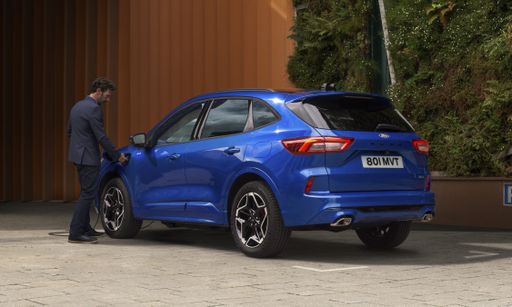
The Ford Kuga is a practical and comfortable compact SUV that balances everyday usability with a composed ride and adaptable interior. It offers sensible tech and safety features, making it a solid choice for families or anyone seeking a versatile, easy-to-live-with crossover.

details

Nissan X-Trail

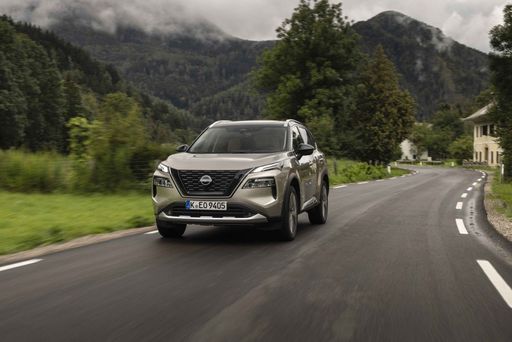
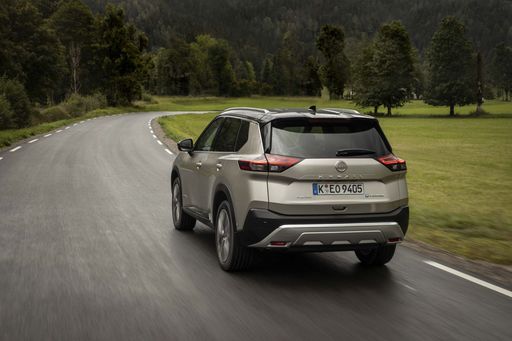
The Nissan X-Trail is a roomy, no-nonsense family SUV that mixes sensible practicality with a quietly modern look, making it an easy choice for busy lives and weekend escapes. It drives with calm confidence, delivers a comfortable ride and sensible tech, and won’t demand drama while doing the everyday heavy lifting.

details
Ford Kuga
Nissan X-Trail

Costs and Consumption

Price
34,200 - 46,300 £
Price
34,200 - 50,500 £
Consumption L/100km
2.8 - 6.8 L/100km
Consumption L/100km
5.7 - 6.9 L/100km
Consumption kWh/100km
-
Consumption kWh/100km
-
Electric Range
68 km
Electric Range
-
Battery Capacity
-
Battery Capacity
-
co2
55 - 154 g/km
co2
131 - 161 g/km
Fuel tank capacity
-
Fuel tank capacity
-

Dimensions and Body

Body Type
SUV
Body Type
SUV
Seats
5
Seats
5 - 7
Doors
-
Doors
-
Curb weight
1,526 - 1,859 kg
Curb weight
1,668 - 1,961 kg
Trunk capacity
-
Trunk capacity
177 - 585 L
Length
-
Length
-
Width
1,882 mm
Width
1,840 mm
Height
-
Height
-
Max trunk capacity
-
Max trunk capacity
-
Payload
541 - 550 kg
Payload
432 - 574 kg

Engine and Performance

Engine Type
Petrol, Full Hybrid, Plugin Hybrid
Engine Type
Petrol MHEV, Full Hybrid
Transmission
Manuel, Automatic
Transmission
Automatic
Transmission Detail
Manual Gearbox, CVT, Automatic Gearbox
Transmission Detail
CVT, Reduction Gearbox
Drive Type
Front-Wheel Drive, All-Wheel Drive
Drive Type
Front-Wheel Drive, All-Wheel Drive
Power HP
150 - 243 HP
Power HP
163 - 213 HP
Acceleration 0-100km/h
7.3 - 9.9 s
Acceleration 0-100km/h
7 - 9.6 s
Max Speed
-
Max Speed
-
Torque
240 Nm
Torque
300 - 525 Nm
Number of Cylinders
3 - 4
Number of Cylinders
3
Power kW
111 - 178 kW
Power kW
120 - 157 kW
Engine capacity
1,496 - 2,488 cm3
Engine capacity
1,497 cm3

General

Model Year
2025
Model Year
2025
CO2 Efficiency Class
E, D, B
CO2 Efficiency Class
F, D, E
Brand
Ford
Brand
Nissan
DriveDuel uses data analysis and artificial intelligence to evaluate vehicle data and create content. Content is regularly reviewed and improved. The displayed prices are estimates based on German list prices, adjusted to the respective country’s VAT. Country-specific registration taxes are not included. This information is not legally binding.