
 Deutschland
 France
 Nederland
 Great Britain
 Sverige
 Danmark
 Suomi
Suomi Italia
 Polska
 Česko
Česko España
VS
Lamborghini Urus vs Alpine A390 comparison
Compare performance (800 HP vs 470 HP), boot space and price (199,400 £ vs 57,900 £ ) at a glance. Find out which car is the better choice for you – Lamborghini Urus or Alpine A390?
Lamborghini Urus vs Alpine A390: Key differences
All details on performance, efficiency, range and trunk space can be found in the technical comparison below – including user reviews for both models.
Urus
Costs and Efficiency:
When it comes to price and running costs, the biggest differences usually appear. This is often where you see which car fits your budget better in the long run.
Alpine A390 is clearly cheaper – starting at 57,900 £ , while the Lamborghini Urus costs 199,400 £ . That’s a price difference of around 141,591 £.
As for electric range, the Alpine A390 offers considerably more range – reaching up to 551 km, about 491 km more than the Lamborghini Urus.
A390
Engine and Performance:
Under the bonnet, it becomes clear which model is tuned for sportiness and which one takes the lead when you hit the accelerator.
When it comes to engine power, the Lamborghini Urus offers considerably more power – delivering 800 HP compared to 470 HP. That’s roughly 330 HP more horsepower.
When accelerating from 0 to 100 km/h, the Lamborghini Urus is moderately quicker – completing the sprint in 3.3 s, while the Alpine A390 takes 3.9 s. That’s about 0.6 s quicker.
There’s also a difference in torque: the Lamborghini Urus delivers slightly more torque with 950 Nm compared to 824 Nm. That’s about 126 Nm more.
Urus
Space and Everyday Use:
Cabin size, boot volume and payload all play a role in everyday practicality. Here, comfort and flexibility make the difference.
Both vehicles offer seating for 5 people.
In terms of curb weight, Alpine A390 is barely lighter – 2,121 kg compared to 2,150 kg. The difference is around 29 kg.
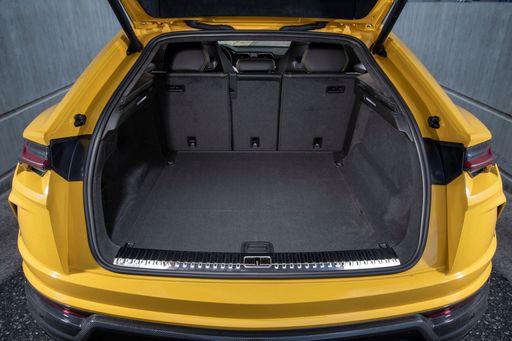
Looking at boot space, the Lamborghini Urus offers moderately more boot space – 616 L compared to 532 L. That’s a difference of about 84 L.
When it comes to payload, the Alpine A390 carries clearly more – 484 kg compared to 350 kg. That’s a difference of about 134 kg.
Who wins the race in the data check?
The Alpine A390 is decisively ahead in the objective data comparison.
This result only shows which model scores more points on paper – not which of the two cars feels right for you.
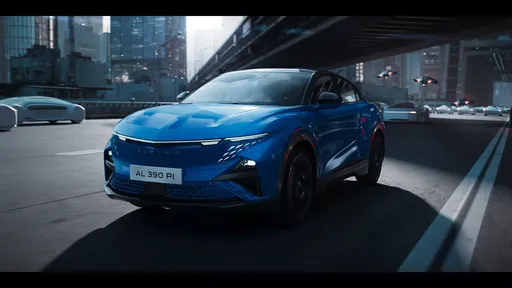
from £57,900
Alpine A390
Lamborghini Urus
Alpine A390
Costs and Consumption
View detailed analysis
View detailed analysis
Engine and Performance
View detailed analysis
View detailed analysis
Dimensions and Body
View detailed analysis
View detailed analysis
Lamborghini Urus
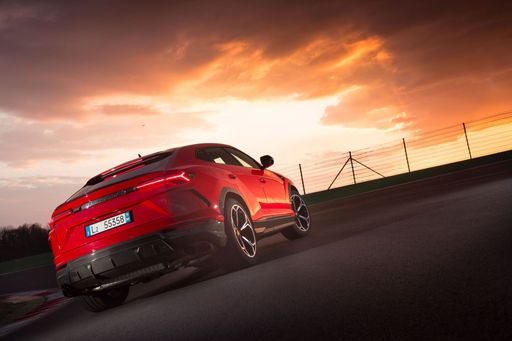
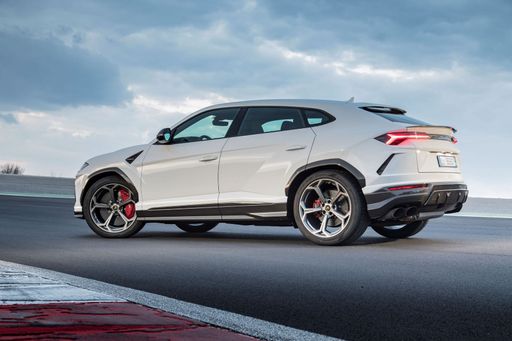
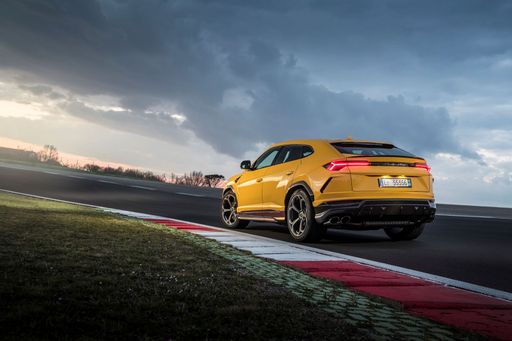
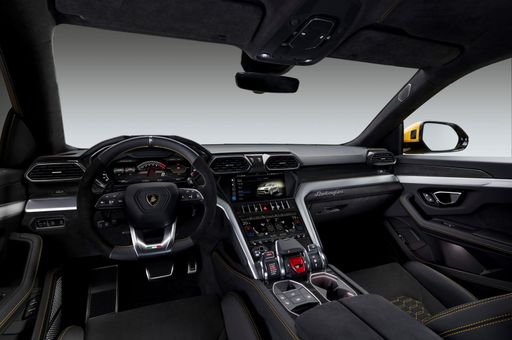
The Lamborghini Urus wears its raging bull badge with SUV practicality, serving supercar drama in a package you can live with every day. It hustles through corners like a sports car while hauling weekend gear with unapologetic style, perfect for buyers who crave attention and usable performance.
details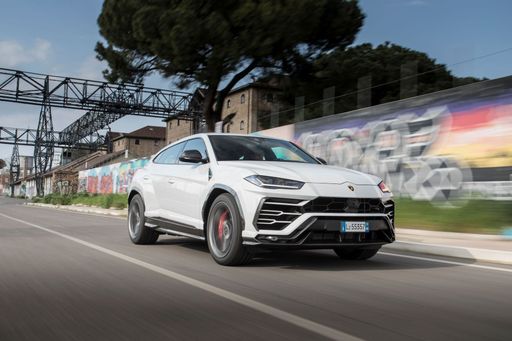
Alpine A390
The Alpine A390 is the brand’s leap into the fast electric crossover arena, wrapping Dieppe’s lightweight ethos in a sleek, coupe-ish body with real everyday usability. If the steering and chassis feel echo the A110, this could be the enthusiast’s family EV—subtle, sharp, and très chic, with enough theatre to make the school run feel like a pit lane exit.
details
Lamborghini Urus
Alpine A390
Costs and Consumption |
|
|---|---|
|
Price
199,400 - 257,100 £
|
Price
57,900 - 66,900 £
|
|
Consumption L/100km
2.1 - 14.1 L/100km
|
Consumption L/100km
-
|
|
Consumption kWh/100km
-
|
Consumption kWh/100km
18.7 - 20.4 kWh/100km
|
|
Electric Range
60 km
|
Electric Range
497 - 551 km
|
|
Battery Capacity
-
|
Battery Capacity
-
|
|
co2
51 - 320 g/km
|
co2
0 g/km
|
|
Fuel tank capacity
85 L
|
Fuel tank capacity
-
|
Dimensions and Body |
|
|---|---|
|
Body Type
SUV
|
Body Type
SUV
|
|
Seats
5
|
Seats
5
|
|
Doors
5
|
Doors
-
|
|
Curb weight
2,150 - 2,405 kg
|
Curb weight
2,121 - 2,124 kg
|
|
Trunk capacity
454 - 616 L
|
Trunk capacity
532 L
|
|
Length
5,112 - 5,137 mm
|
Length
-
|
|
Width
2,018 - 2,026 mm
|
Width
1,885 mm
|
|
Height
1,618 - 1,638 mm
|
Height
-
|
|
Max trunk capacity
1,596 L
|
Max trunk capacity
-
|
|
Payload
100 - 350 kg
|
Payload
481 - 484 kg
|
Engine and Performance |
|
|---|---|
|
Engine Type
Petrol, Plugin Hybrid
|
Engine Type
Electric
|
|
Transmission
Automatic
|
Transmission
Automatic
|
|
Transmission Detail
Automatic Gearbox
|
Transmission Detail
Reduction Gearbox
|
|
Drive Type
All-Wheel Drive
|
Drive Type
All-Wheel Drive
|
|
Power HP
666 - 800 HP
|
Power HP
400 - 470 HP
|
|
Acceleration 0-100km/h
3.3 - 3.5 s
|
Acceleration 0-100km/h
3.9 - 4.8 s
|
|
Max Speed
305 - 312 km/h
|
Max Speed
-
|
|
Torque
850 - 950 Nm
|
Torque
661 - 824 Nm
|
|
Number of Cylinders
8
|
Number of Cylinders
-
|
|
Power kW
490 - 588 kW
|
Power kW
295 - 345 kW
|
|
Engine capacity
3,996 cm3
|
Engine capacity
-
|
General |
|
|---|---|
|
Model Year
2,022 - 2,024
|
Model Year
2026
|
|
CO2 Efficiency Class
G, B
|
CO2 Efficiency Class
A
|
|
Brand
Lamborghini
|
Brand
Alpine
|
DriveDuel uses data analysis and artificial intelligence to evaluate vehicle data and create content. Content is regularly reviewed and improved.
The displayed prices are estimates based on German list prices, adjusted to the respective country’s VAT. Country-specific registration taxes are not included. This information is not legally binding.