VS

Renault Rafale vs Alpine A390 comparison

Compare performance (300 HP vs 470 HP), boot space and price (37,700 £ vs 57,900 £ ) at a glance. Find out which car is the better choice for you – Renault Rafale or Alpine A390?

Renault Rafale vs Alpine A390: Key differences

Renault Rafale

4.9 (9 Reviews)
rate
  • clearly cheaper
  • visibly lighter
  • slightly more trunk space
details

Alpine A390

  • markedly more power
  • substantially more electric range
  • considerably quicker 0–100 km/h
details

All details on performance, efficiency, range and trunk space can be found in the technical comparison below – including user reviews for both models.

By Achim Sedelmaier

Rafale

Renault Rafale VS Alpine A390 — quick comparative overview

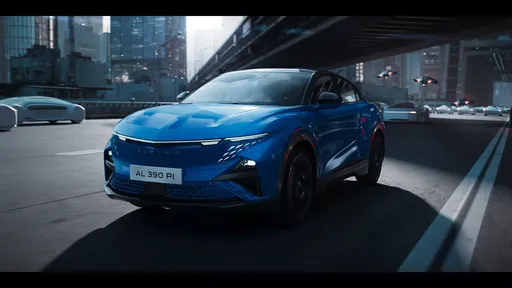
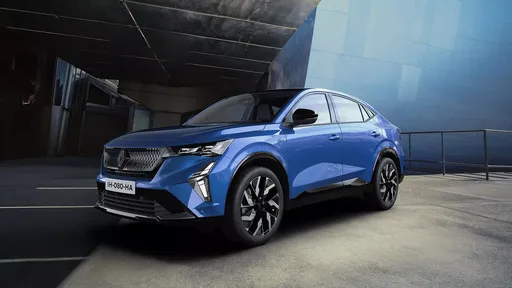
Renault Rafale VS Alpine A390 pits a roomy, tech‑forward French coupe‑SUV against a punchy, driver‑centric electric fastback. The Renault Rafale leans into hybrid efficiency, generous rear space and city agility, while the Alpine A390 prioritises sharp handling, theatrical acceleration and driver‑focused features. That creates a simple trade‑off: the Rafale makes everyday life easier and cheaper; the A390 makes driving more exciting and intense. Price and operating expectations diverge too, so the right choice depends on whether you value usable comfort or sporting character more.

A390

Driving character and dynamics

The Renault Rafale feels composed and confidence‑oriented: four‑wheel steering makes it remarkably easy to place in town, but the steering and chassis prioritise safety over tactile feedback. The Alpine A390, by contrast, feels alive — instant turn‑in, torque‑vectoring aggression and a punchy powertrain deliver a much more engaging experience. That engagement comes with trade‑offs: the A390 demands commitment and costs efficiency, while the Rafale masks its size and weight at the cost of driver involvement. If you want a relaxing commute with occasional spirited bursts, the Rafale leans toward comfort; if you want a car that rewards active driving, the A390 is the clearer match.

Rafale

Comfort and long‑distance behaviour

On long runs the Renault Rafale generally settles into a steady, stable cruiser mode, though its suspension can feel firm over short, sharp imperfections and its engine becomes obvious under hard load. The Alpine A390 can also be surprisingly composed at motorway speeds, offering GT‑like calm, but it penalises you with heavier energy use and more frequent charging or refuelling stops on long trips. Rear‑seat comfort swings the other way: the Rafale’s back seats suit adults better for long distances, while the A390’s lower, sportier bench feels more cramped. In short: Rafale favours predictable long‑distance usability, A390 favours dynamic refinement but costs you range and rear‑seat ease.

Interior, tech and perceived quality

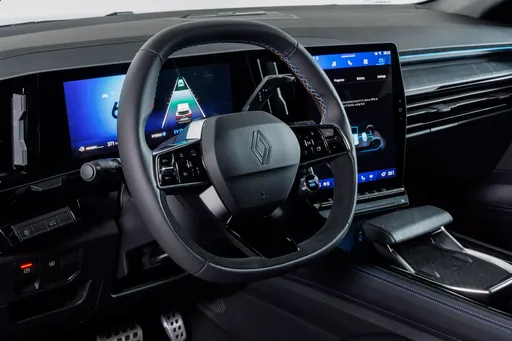
Both cars offer modern, Google‑centric infotainment, but the Renault Rafale tends to present a more polished, cohesive cabin with upscale material options and a clearer luxury nod. The Alpine A390 counters with a sporty cockpit mentality — tactile controls, driver telemetry and features aimed at engagement — yet some surfaces and design choices can feel closer to mainstream siblings than to a textbook premium halo. Ergonomics differ too: Rafale’s layout prioritises family usability and straightforward controls, whereas A390’s driver‑first setup sometimes forces small compromises in day‑to‑day practicality. Buyers who prize perceived refinement and logical tech will tilt to the Rafale; those chasing driver‑oriented touches and digital toys will be drawn to the A390.

Practicality and everyday usability

The Renault Rafale wins clear rounds for everyday practicality: a spacious rear seat with a versatile split and a larger, more usable boot make it easier to live with for families and regular luggage hauls. The Alpine A390 offers a wide, neatly packaged load floor and clever driving modes, but its lower rear bench, tighter footwell and smaller rear glass limit everyday convenience for taller passengers. Visibility is a shared frustration — both cars rely on cameras and aids — yet the Rafale’s tendency toward easier ingress and more cargo room makes errands and school runs simpler. If routine usability and flexible cabin space matter, the Rafale clearly fits better; if you accept compromises for sportier packaging, the A390 still serves weekend‑focused owners well.

Who should choose which car — buyer fit and final framing

Choose the Renault Rafale if you want a stylish, tech‑rich family coupe‑SUV that makes city driving and long‑distance practicality straightforward, with lower everyday running costs and a more forgiving rear cabin. Opt for the Alpine A390 if you prioritise driving thrills, instant power delivery and driver‑centric features and are prepared to trade some rear‑seat comfort, efficiency and higher acquisition cost for that excitement. Both cars speak to different priorities: the Rafale is the pragmatic statement car, the A390 the enthusiast’s statement — the technical comparison that follows will unpack power, range, charging and cost so you can match those practical differences to your needs.

Here’s where it gets real: The technical differences in detail

Rafale

Costs and Efficiency:

When it comes to price and running costs, the biggest differences usually appear. This is often where you see which car fits your budget better in the long run.

Renault Rafale is clearly cheaper – starting at 37,700 £ , while the Alpine A390 costs 57,900 £ . That’s a price difference of around 20,143 £.

As for electric range, the Alpine A390 offers substantially more range – reaching up to 551 km, about 454 km more than the Renault Rafale.

A390

Engine and Performance:

Power, torque and acceleration say a lot about how a car feels on the road. This is where you see which model delivers more driving dynamics.

When it comes to engine power, the Alpine A390 offers markedly more power – delivering 470 HP compared to 300 HP. That’s roughly 170 HP more horsepower.

When accelerating from 0 to 100 km/h, the Alpine A390 is considerably quicker – completing the sprint in 3.9 s, while the Renault Rafale takes 6.4 s. That’s about 2.5 s quicker.

Rafale

Space and Everyday Use:

Whether family car or daily driver – which one offers more room, flexibility and comfort?

Both vehicles offer seating for 5 people.

In terms of curb weight, Renault Rafale is visibly lighter – 1,734 kg compared to 2,121 kg. The difference is around 387 kg.

Looking at boot space, the Renault Rafale offers slightly more boot space – 627 L compared to 532 L. That’s a difference of about 95 L.

When it comes to payload, the Alpine A390 carries very slightly more – 484 kg compared to 444 kg. That’s a difference of about 40 kg.

Who wins the race in the data check?

The Alpine A390 is far ahead overall in the objective data comparison.
This result only shows which model scores more points on paper – not which of the two cars feels right for you.

from £57,900
A390

Alpine A390

  • Engine Type : Electric
  • Transmission : Automatic
  • Drive Type : All-Wheel Drive
  • Power HP : 400 - 470 HP
  • Consumption kWh/100km : 18.7 - 20.4 kWh/100km
  • Electric Range : 497 - 551 km
Renault Rafale
Alpine A390

Costs and Consumption

View detailed analysis

Engine and Performance

View detailed analysis

Dimensions and Body

View detailed analysis

Renault Rafale

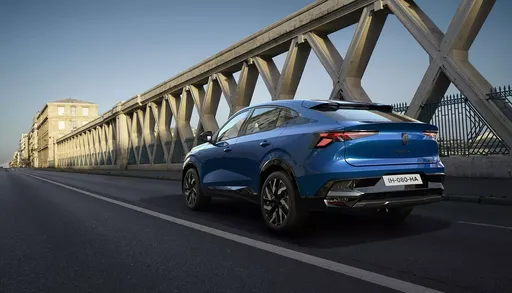
The Renault Rafale dresses bold coupé-inspired lines around a practical crossover body, turning heads without trying too hard. Inside it serves up a comfortable, well-equipped cabin and engaging driving manners, making it a clever choice for buyers who want a bit of panache with their daily commute.

details

Alpine A390

The Alpine A390 is the brand’s leap into the fast electric crossover arena, wrapping Dieppe’s lightweight ethos in a sleek, coupe-ish body with real everyday usability. If the steering and chassis feel echo the A110, this could be the enthusiast’s family EV—subtle, sharp, and très chic, with enough theatre to make the school run feel like a pit lane exit.

details
Renault Rafale
Alpine A390

Costs and Consumption

Price
37,700 - 49,700 £
Price
57,900 - 66,900 £
Consumption L/100km
2 - 5 L/100km
Consumption L/100km
-
Consumption kWh/100km
-
Consumption kWh/100km
18.7 - 20.4 kWh/100km
Electric Range
97 km
Electric Range
497 - 551 km
Battery Capacity
-
Battery Capacity
-
co2
43 - 109 g/km
co2
0 g/km
Fuel tank capacity
-
Fuel tank capacity
-

Dimensions and Body

Body Type
SUV
Body Type
SUV
Seats
5
Seats
5
Doors
-
Doors
-
Curb weight
1,734 - 2,025 kg
Curb weight
2,121 - 2,124 kg
Trunk capacity
539 - 627 L
Trunk capacity
532 L
Length
-
Length
-
Width
1,886 mm
Width
1,885 mm
Height
-
Height
-
Max trunk capacity
-
Max trunk capacity
-
Payload
415 - 444 kg
Payload
481 - 484 kg

Engine and Performance

Engine Type
Full Hybrid, Plugin Hybrid
Engine Type
Electric
Transmission
Automatic
Transmission
Automatic
Transmission Detail
Automatic Gearbox
Transmission Detail
Reduction Gearbox
Drive Type
Front-Wheel Drive, All-Wheel Drive
Drive Type
All-Wheel Drive
Power HP
200 - 300 HP
Power HP
400 - 470 HP
Acceleration 0-100km/h
6.4 - 8.9 s
Acceleration 0-100km/h
3.9 - 4.8 s
Max Speed
-
Max Speed
-
Torque
-
Torque
661 - 824 Nm
Number of Cylinders
3
Number of Cylinders
-
Power kW
147 - 221 kW
Power kW
295 - 345 kW
Engine capacity
1,199 cm3
Engine capacity
-

General

Model Year
2025
Model Year
2026
CO2 Efficiency Class
C, B
CO2 Efficiency Class
A
Brand
Renault
Brand
Alpine
DriveDuel uses data analysis and artificial intelligence to evaluate vehicle data and create content. Content is regularly reviewed and improved. The displayed prices are estimates based on German list prices, adjusted to the respective country’s VAT. Country-specific registration taxes are not included. This information is not legally binding.