VS

Polestar 4 vs Alpine A390 comparison

Compare performance (544 HP vs 470 HP), boot space and price (53,100 £ vs 57,900 £ ) at a glance. Find out which car is the better choice for you – Polestar 4 or Alpine A390?

Polestar 4 vs Alpine A390: Key differences

Polestar 4

4.8 (9 Reviews)
rate
  • marginally cheaper
  • a bit more power
  • marginally more efficient
  • a bit more electric range
  • very slightly quicker 0–100 km/h
details

Alpine A390

  • very slightly lighter
  • marginally more trunk space
details

All details on performance, efficiency, range and trunk space can be found in the technical comparison below – including user reviews for both models.

By Achim Sedelmaier

4

Polestar 4 VS Alpine A390: two very different electric crossovers for different priorities

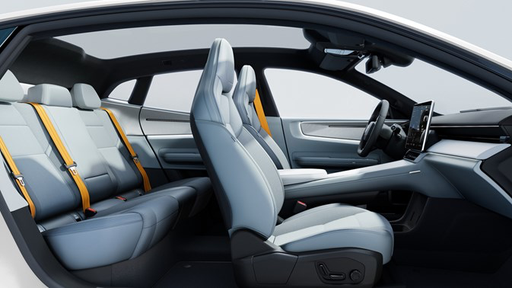
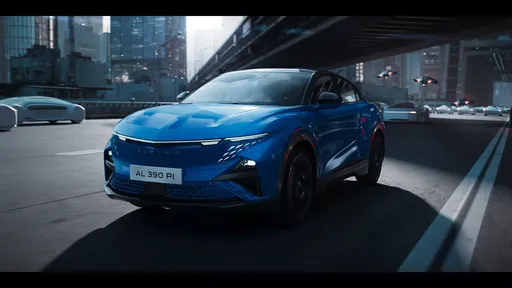
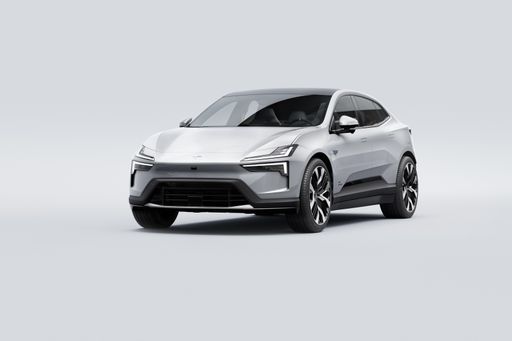
Polestar 4 VS Alpine A390 pits a calm, design‑forward electric coupé‑SUV against a taut, driver‑focused sport fastback. Polestar 4 presents itself as a quietly accomplished long‑distance cruiser with a strong emphasis on rear‑seat comfort and tech polish, while Alpine A390 trades some practicality for sharp handling, punchy throttle response and a more playful character. Polestar 4 will appeal to buyers who prize cabin serenity, safety credentials and everyday usability for passengers, whereas Alpine A390 will attract drivers who want engagement, instant shove and a chassis that invites cornering. Both cars are modern EVs with sophisticated infotainment, but they take opposite approaches to how that technology serves the driver and occupants.
A390

Character and on‑road behavior: serenity versus engagement

Polestar 4 feels like a composed cruiser: the steering is secure and the ride is tuned toward stability and quiet progress, making long motorway miles effortless. Alpine A390 feels purpose‑built for the driver, with a direct steering feel, torque biasing and systems that reward precise inputs and enthusiastic driving. Polestar 4’s personality soothes and insulates, which is excellent when you want low fatigue on long trips; Alpine A390’s personality excites and connects, which shortens longer journeys mentally but can be physically more demanding. Choosing between Polestar 4 and Alpine A390 here is a clear trade‑off between refined insulation and driver engagement.

4

Comfort and long‑distance usability: space and refinement versus sporty containment

Polestar 4 puts the emphasis on passenger comfort: the rear seats are generous, the cabin is quiet at high speed and ergonomics skew toward long‑haul ease. Alpine A390 delivers firm, supportive seats and impresses with damping that keeps body motions controlled, yet the rear seating is noticeably more cramped and lower, which is less forgiving on long family runs. Polestar 4 hides speed and road noise more effectively, so highway cruising is less tiring, while Alpine A390 keeps you planted and aware—better for drivers who enjoy active routes but worse for those who prefer cocooning. For buyers who expect many motorway miles with passengers, Polestar 4 leans closer to the ideal; for those who prioritize a tactile bond with the car over rear legroom, Alpine A390 is the more satisfying companion.

Practicality and everyday usability: sensible space with caveats versus clever packaging

Polestar 4 offers a convincing sense of interior quality and usable rear space, but its sloping rear profile and hatch design limit carrying very tall items and there’s no simple through‑load for skis or long cargo. Alpine A390 gives a broad, well‑shaped boot floor that handles wide items conveniently, though vertical space and underfloor storage are less generous and the rear seat geometry reduces passenger comfort on longer trips. Polestar 4 feels more like a family transport in day‑to‑day use despite some awkward loading quirks, while Alpine A390 rewards owners who prioritize luggage shape and easy packing over maximum headroom. In short: Polestar 4 is better at moving people comfortably, Alpine A390 is slightly better at packing the right kind of luggage efficiently.

City friendliness, visibility and controls: tech polish versus tactile clarity

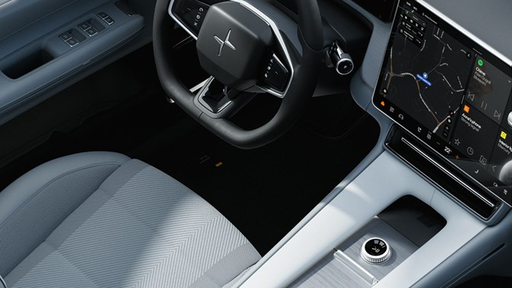
Polestar 4 brings a modern, software‑centric cabin with strong camera suites and advanced driver aids that mask urban stress, but its width and turning circle make tight parking and narrow streets a recurring nuisance. Alpine A390’s light steering and compact feel make it more nimble in town, yet its small rear glass and thick pillars demand frequent camera help when reversing or changing lanes. Polestar 4’s infotainment is powerful but menu‑driven and occasionally requires acclimation, whereas Alpine A390’s physical controls and clearer layout give faster, less distracting access to climate and quick functions. For urban buyers who value ease of maneuver and quick tactile controls, Alpine A390 has the edge; for those who prize passive safety nets and a hushed cabin, Polestar 4 remains more attractive despite bulk.

Buyer fit and the trade‑offs that matter before you dive into specs

If you picture long stretches of motorway with comfortable rear passengers, infrequent charging stops and a premium cabin feeling, Polestar 4 maps neatly to that lifestyle and puts range and refinement ahead of razor‑sharp handling. If you crave a car that turns ordinary commutes into enjoyable drives, bites into corners with confidence and rewards playful inputs even at the cost of some range and rear‑seat space, Alpine A390 is the clearer fit. Polestar 4 trades some engagement for peace, space and perceived quality; Alpine A390 trades some practicality and efficiency for exhilaration and chassis precision. The next section drills into the technical differences so you can translate those real‑world trade‑offs into concrete numbers for charging, power delivery and usable cargo—choose the set of compromises that matches how you actually drive.

Here’s where it gets real: The technical differences in detail

4

Costs and Efficiency:

Looking at overall running costs, both models reveal some interesting differences in everyday economy.

Polestar 4 is marginally cheaper – starting at 53,100 £ , while the Alpine A390 costs 57,900 £ . That’s a price difference of around 4,800 £.

In terms of energy consumption, the Polestar 4 is marginally more efficient: consuming 17.8 kWh/100km compared to 18.7 kWh/100km for the Alpine A390. That’s a difference of about 0.9 kWh/100km.

As for electric range, the Polestar 4 offers a bit more range – reaching up to 620 km, about 69 km more than the Alpine A390.

A390

Engine and Performance:

Under the bonnet, it becomes clear which model is tuned for sportiness and which one takes the lead when you hit the accelerator.

When it comes to engine power, the Polestar 4 offers a bit more power – delivering 544 HP compared to 470 HP. That’s roughly 74 HP more horsepower.

When accelerating from 0 to 100 km/h, the Polestar 4 is very slightly quicker – completing the sprint in 3.8 s, while the Alpine A390 takes 3.9 s. That’s about 0.1 s quicker.

There’s also a difference in torque: the Alpine A390 delivers somewhat more torque with 824 Nm compared to 686 Nm. That’s about 138 Nm more.

4

Space and Everyday Use:

Beyond pure performance, interior space and usability matter most in daily life. This is where you see which car is more practical and versatile.

Both vehicles offer seating for 5 people.

In terms of curb weight, Alpine A390 is very slightly lighter – 2,121 kg compared to 2,230 kg. The difference is around 109 kg.

Looking at boot space, the Alpine A390 offers marginally more boot space – 532 L compared to 526 L. That’s a difference of about 6 L.

When it comes to payload, the Alpine A390 carries only slightly more – 484 kg compared to 455 kg. That’s a difference of about 29 kg.

Who wins the race in the data check?

The Polestar 4 comes out modestly ahead in the objective data comparison.
This result only shows which model scores more points on paper – not which of the two cars feels right for you.

from £53,100
4

Polestar 4

  • Engine Type : Electric
  • Transmission : Automatic
  • Drive Type : All-Wheel Drive, Rear-Wheel Drive
  • Power HP : 272 - 544 HP
  • Consumption kWh/100km : 17.8 - 18.7 kWh/100km
  • Electric Range : 590 - 620 km
Polestar 4
Alpine A390

Costs and Consumption

View detailed analysis

Engine and Performance

View detailed analysis

Dimensions and Body

View detailed analysis

Polestar 4

The Polestar 4 wears a coupe-like profile and a Scandinavian-minimal interior that feels premium and unexpectedly roomy, with composed handling that makes urban driving and country roads a pleasure. For buyers who want an electric car that turns heads without shouting, the Polestar 4 is a stylish, clever choice that balances practicality with personality.

details

Alpine A390

The Alpine A390 is the brand’s leap into the fast electric crossover arena, wrapping Dieppe’s lightweight ethos in a sleek, coupe-ish body with real everyday usability. If the steering and chassis feel echo the A110, this could be the enthusiast’s family EV—subtle, sharp, and très chic, with enough theatre to make the school run feel like a pit lane exit.

details
Polestar 4
Alpine A390

Costs and Consumption

Price
53,100 - 59,900 £
Price
57,900 - 66,900 £
Consumption L/100km
-
Consumption L/100km
-
Consumption kWh/100km
17.8 - 18.7 kWh/100km
Consumption kWh/100km
18.7 - 20.4 kWh/100km
Electric Range
590 - 620 km
Electric Range
497 - 551 km
Battery Capacity
94 kWh
Battery Capacity
-
co2
0 g/km
co2
0 g/km
Fuel tank capacity
-
Fuel tank capacity
-

Dimensions and Body

Body Type
SUV
Body Type
SUV
Seats
5
Seats
5
Doors
5
Doors
-
Curb weight
2,230 - 2,355 kg
Curb weight
2,121 - 2,124 kg
Trunk capacity
526 L
Trunk capacity
532 L
Length
4,840 mm
Length
-
Width
2,008 mm
Width
1,885 mm
Height
1,534 mm
Height
-
Max trunk capacity
1,536 L
Max trunk capacity
-
Payload
455 kg
Payload
481 - 484 kg

Engine and Performance

Engine Type
Electric
Engine Type
Electric
Transmission
Automatic
Transmission
Automatic
Transmission Detail
Reduction Gearbox
Transmission Detail
Reduction Gearbox
Drive Type
All-Wheel Drive, Rear-Wheel Drive
Drive Type
All-Wheel Drive
Power HP
272 - 544 HP
Power HP
400 - 470 HP
Acceleration 0-100km/h
3.8 - 7.1 s
Acceleration 0-100km/h
3.9 - 4.8 s
Max Speed
200 km/h
Max Speed
-
Torque
343 - 686 Nm
Torque
661 - 824 Nm
Number of Cylinders
-
Number of Cylinders
-
Power kW
200 - 400 kW
Power kW
295 - 345 kW
Engine capacity
-
Engine capacity
-

General

Model Year
2024
Model Year
2026
CO2 Efficiency Class
A
CO2 Efficiency Class
A
Brand
Polestar
Brand
Alpine
DriveDuel uses data analysis and artificial intelligence to evaluate vehicle data and create content. Content is regularly reviewed and improved. The displayed prices are estimates based on German list prices, adjusted to the respective country’s VAT. Country-specific registration taxes are not included. This information is not legally binding.