VS

Land Rover Range Rover Sport vs BMW X5 comparison

Compare performance (550 HP vs 625 HP), boot space and price (78,600 £ vs 77,100 £ ) at a glance. Find out which car is the better choice for you – Land Rover Range Rover Sport or BMW X5?

Land Rover Range Rover Sport vs BMW X5: Key differences

Land Rover Range Rover Sport

  • somewhat more efficient
  • somewhat more electric range
details

BMW X5

3.6 (1 Reviews)
rate
  • marginally cheaper
  • somewhat more power
  • a bit quicker 0–100 km/h
  • very slightly lighter
  • marginally more trunk space
details

All details on performance, efficiency, range and trunk space can be found in the technical comparison below – including user reviews for both models.

By Achim Sedelmaier

Range Rover Sport

Battle of the Titans: BMW X5 vs. Land Rover Range Rover Sport

In the realm of luxury SUVs, few match the prowess and prestige of the BMW X5 and the Land Rover Range Rover Sport. Both vehicles showcase the pinnacle of automotive craftsmanship, blending cutting-edge technology with unsurpassed comfort. Let's delve into an in-depth comparison of these two behemoths to see how they stack up against each other in terms of design, performance, and innovation.
X5

Design and Dimensions

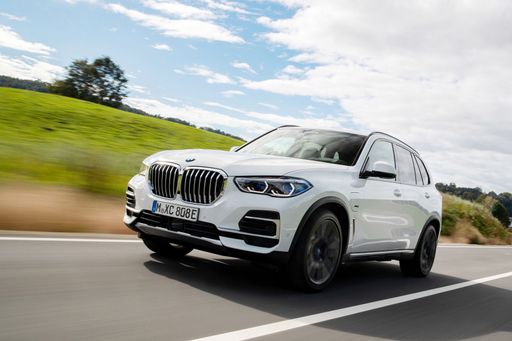
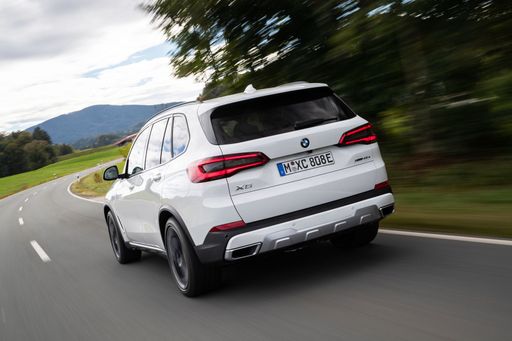
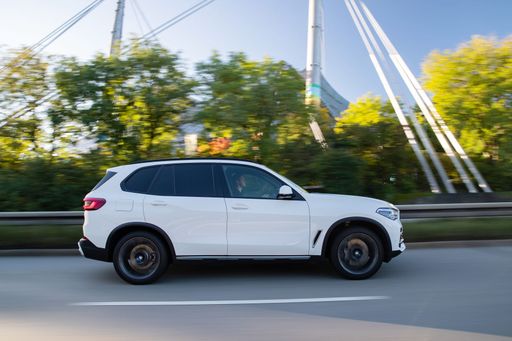
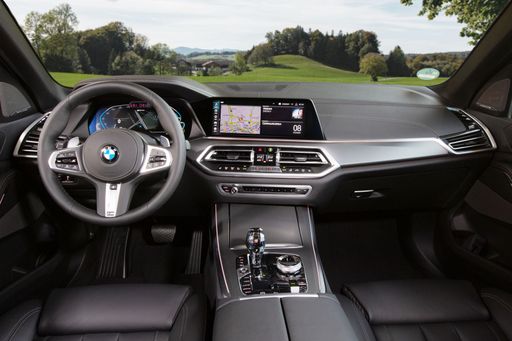
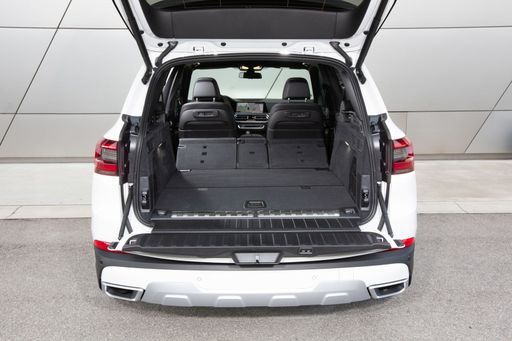
The BMW X5 exudes a sleek yet muscular presence, with dimensions defining its robust stature. The X5 stretches between 4935 mm and 4948 mm in length, with a width up to 2015 mm, and a height variance between 1755 mm and 1765 mm. Its trunk is generous, offering between 500 and 650 liters of storage, catering to practical needs without compromising luxury or comfort.

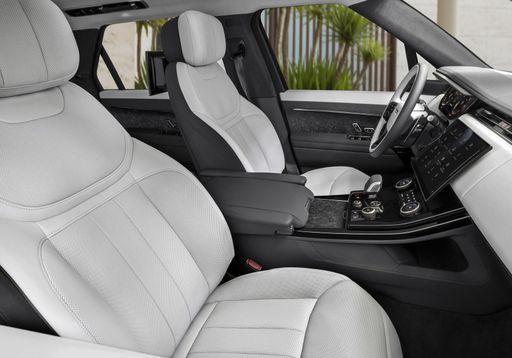
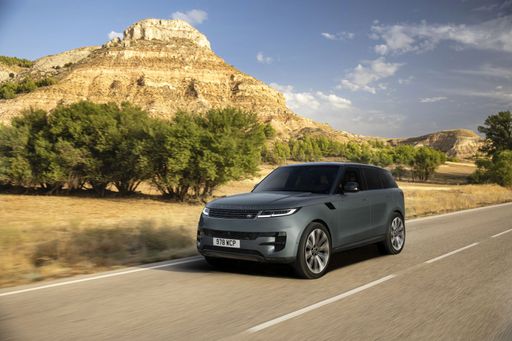
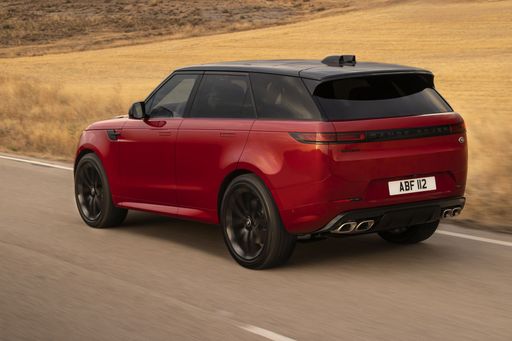
The Land Rover Range Rover Sport, on the other hand, spells elegance with its slightly more extended length ranging from 4946 mm to 4970 mm and a wider stance at 2043 mm. Its height is distinguished at around 1814 mm to 1820 mm, creating a more imposing presence. With a trunk capacity of 647 liters, it adeptly balances functionality with style.

Range Rover Sport

Power and Performance

The BMW X5 is no slouch in the power department, available with a variety of powertrains ranging from 298 HP to an impressive 625 HP. It provides a flexible choice between diesel, petrol, and plug-in hybrid engines, each paired with an automatic gearbox for that trademark smooth drive. The top-of-the-line variant achieves 0-100 km/h in a blazing 3.9 seconds and a maximum speed of 250 km/h, showcasing its sporty DNA.

The Range Rover Sport is equally competitive, offering a range of outputs from 249 HP to a formidable 635 HP. Like its competitor, it also offers diverse engine types, including diesel MHEV, plug-in hybrids, and potent petrol engines. The Range Rover Sport can accelerate from 0-100 km/h in a swift 3.9 seconds and matches the X5's top speed of 250 km/h, underscoring its sporting pedigree.

X5

Innovative Technology

Technology and innovation are cornerstones for both SUVs. The BMW X5 boasts a sophisticated suite of technologies, including advanced driver assistance systems and a user-friendly infotainment system. The plug-in hybrid model shines with a 97 km electric range and a sizable 25.7 kWh battery, enhancing its eco-friendly credentials.

The Range Rover Sport excels with an even more extensive electric-only range of up to 122 km from its larger 31.8 kWh battery. Its state-of-the-art infotainment and safety technologies ensure a blend of luxury with peace of mind, making every journey a pleasure rather than a chore.

Range Rover Sport

Efficiency and Sustainability

In terms of fuel consumption, both SUVs offer competitive numbers. The BMW X5 displays impressive efficiency, with fuel consumption as low as 0.9 L/100km for the plug-in hybrid model and CO2 emissions beginning at just 21 g/km. This aligns with discerning buyers who are conscious of their carbon footprint.

The Range Rover Sport offers similar efficiency, with plug-in hybrid models consuming only 0.7 L/100 km and emitting just 16 g/km of CO2, reflecting Land Rover's commitment to sustainability and reducing environmental impact.

X5

Conclusion

Choosing between the BMW X5 and the Land Rover Range Rover Sport is no easy task. Each offers a unique blend of power, luxury, and innovation that appeals to different facets of the modern driver. The BMW X5 stands out with its agile performance and cutting-edge tech features, while the Range Rover Sport blends unrivaled sophistication with advanced sustainability credentials. Ultimately, the choice depends on the specific needs and desires of the luxury SUV connoisseur.

Here’s where it gets real: The technical differences in detail

Range Rover Sport

Costs and Efficiency:

Looking at overall running costs, both models reveal some interesting differences in everyday economy.

BMW X5 is marginally cheaper – starting at 77,100 £ , while the Land Rover Range Rover Sport costs 78,600 £ . That’s a price difference of around 1,543 £.

Fuel consumption also shows a difference: the Land Rover Range Rover Sport uses 2.7 L/100km and is somewhat more efficient than the BMW X5 with 3 L/100km. The difference is about 0.3 L/100km.

As for electric range, the Land Rover Range Rover Sport offers somewhat more range – reaching up to 118 km, about 13 km more than the BMW X5.

X5

Engine and Performance:

Under the bonnet, it becomes clear which model is tuned for sportiness and which one takes the lead when you hit the accelerator.

When it comes to engine power, the BMW X5 offers somewhat more power – delivering 625 HP compared to 550 HP. That’s roughly 75 HP more horsepower.

When accelerating from 0 to 100 km/h, the BMW X5 is a bit quicker – completing the sprint in 3.9 s, while the Land Rover Range Rover Sport takes 4.5 s. That’s about 0.6 s quicker.

There’s also a difference in torque: the Land Rover Range Rover Sport delivers marginally more torque with 800 Nm compared to 750 Nm. That’s about 50 Nm more.

Range Rover Sport

Space and Everyday Use:

Whether family car or daily driver – which one offers more room, flexibility and comfort?

Both vehicles offer seating for 5 people.

In terms of curb weight, BMW X5 is very slightly lighter – 2,240 kg compared to 2,390 kg. The difference is around 150 kg.

Looking at boot space, the BMW X5 offers marginally more boot space – 650 L compared to 647 L. That’s a difference of about 3 L.

When it comes to payload, the Land Rover Range Rover Sport carries a bit more – 830 kg compared to 705 kg. That’s a difference of about 125 kg.

Who wins the race in the data check?

The Land Rover Range Rover Sport has only a minor advantage in the objective data comparison.
This result only shows which model scores more points on paper – not which of the two cars feels right for you.

from £78,600
Range Rover Sport

Land Rover Range Rover Sport

  • Engine Type : Diesel MHEV, Petrol MHEV, Plugin Hybrid
  • Transmission : Automatic
  • Drive Type : All-Wheel Drive
  • Power HP : 249 - 550 HP
  • Consumption L/100km : 2.7 - 11.4 L/100km
  • Electric Range : 116 - 118 km
Land Rover Range Rover Sport
BMW X5

Costs and Consumption

View detailed analysis

Engine and Performance

View detailed analysis

Dimensions and Body

View detailed analysis

Land Rover Range Rover Sport

The Range Rover Sport pairs unapologetic presence with genuine capability, looking like it belongs on a red carpet while quietly promising to tackle rough tracks when called upon. Inside, the cabin pampers with plush materials and thoughtful tech, making it an irresistible choice for buyers who want luxury, confidence and a touch of adventure.

details

BMW X5

The BMW X5 blends athletic handling with a roomy, premium interior, feeling equally at home on twisty country roads and the school-run car park. Its executive-lounge cabin and confident road presence make it a tempting choice for buyers who want comfort, capability and just a little bit of bragging rights.

details
Land Rover Range Rover Sport
BMW X5

Costs and Consumption

Price
78,600 - 129,900 £
Price
77,100 - 143,500 £
Consumption L/100km
2.7 - 11.4 L/100km
Consumption L/100km
3 - 12.8 L/100km
Consumption kWh/100km
-
Consumption kWh/100km
-
Electric Range
116 - 118 km
Electric Range
105 km
Battery Capacity
-
Battery Capacity
-
co2
60 - 259 g/km
co2
68 - 289 g/km
Fuel tank capacity
-
Fuel tank capacity
-

Dimensions and Body

Body Type
SUV
Body Type
SUV
Seats
5
Seats
5
Doors
-
Doors
-
Curb weight
2,390 - 2,809 kg
Curb weight
2,240 - 2,495 kg
Trunk capacity
647 L
Trunk capacity
500 - 650 L
Length
-
Length
-
Width
2,043 mm
Width
2,004 - 2,015 mm
Height
-
Height
-
Max trunk capacity
-
Max trunk capacity
-
Payload
641 - 830 kg
Payload
565 - 705 kg

Engine and Performance

Engine Type
Diesel MHEV, Petrol MHEV, Plugin Hybrid
Engine Type
Petrol MHEV, Diesel MHEV, Plugin Hybrid
Transmission
Automatic
Transmission
Automatic
Transmission Detail
Automatic Gearbox
Transmission Detail
Automatic Gearbox
Drive Type
All-Wheel Drive
Drive Type
All-Wheel Drive
Power HP
249 - 550 HP
Power HP
298 - 625 HP
Acceleration 0-100km/h
4.5 - 7.7 s
Acceleration 0-100km/h
3.9 - 6.1 s
Max Speed
-
Max Speed
-
Torque
550 - 800 Nm
Torque
540 - 750 Nm
Number of Cylinders
6 - 8
Number of Cylinders
6 - 8
Power kW
183 - 405 kW
Power kW
219 - 460 kW
Engine capacity
2,997 - 4,395 cm3
Engine capacity
2,993 - 4,395 cm3

General

Model Year
2,025 - 2,026
Model Year
2025
CO2 Efficiency Class
G, B
CO2 Efficiency Class
G, B
Brand
Land Rover
Brand
BMW
DriveDuel uses data analysis and artificial intelligence to evaluate vehicle data and create content. Content is regularly reviewed and improved. The displayed prices are estimates based on German list prices, adjusted to the respective country’s VAT. Country-specific registration taxes are not included. This information is not legally binding.