VS

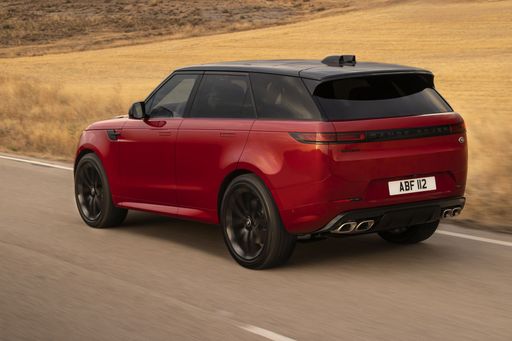
Land Rover Defender vs Land Rover Range Rover Sport comparison

Compare performance (635 HP vs 635 HP), boot space and price (57,900 £ vs 78,600 £ ) at a glance. Find out which car is the better choice for you – Land Rover Defender or Land Rover Range Rover Sport?

Land Rover Defender vs Land Rover Range Rover Sport: Key differences

Land Rover Defender

4 (1 Reviews)
rate
  • clearly cheaper
  • barely lighter
  • a bit more trunk space

Land Rover Range Rover Sport

  • considerably more efficient
  • substantially more electric range
  • barely quicker 0–100 km/h
Defender

Land Rover Defender vs. Range Rover Sport: A Clash of Titans

When it comes to luxury off-road vehicles, the Land Rover lineup rarely disappoints. Two of its most talked-about models, the Land Rover Defender and the Range Rover Sport, offer a blend of rugged capability and sophisticated luxury. But which one holds the edge? Let's delve into the specifics of each to help prospective buyers make an informed decision.
Range Rover Sport

Engine Variability and Performance

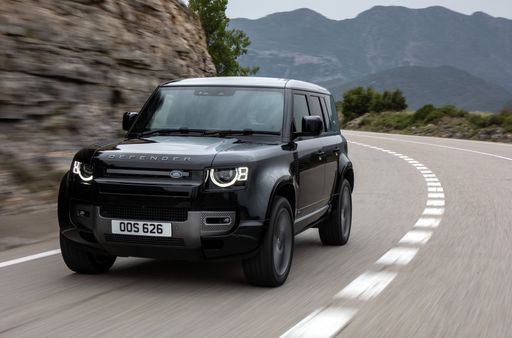
The Defender boasts a range of engine types, including Diesel MHEV, Plug-in Hybrid, Petrol MHEV, and Petrol with horsepower varying between 200 HP and an impressive 525 HP. The acceleration from 0 to 100 km/h begins at 10.2 seconds in the base models down to a nimble 5.2 seconds for higher trims. With a top speed ranging from 175 km/h to 191 km/h, the Defender is no slouch when it comes to performance.

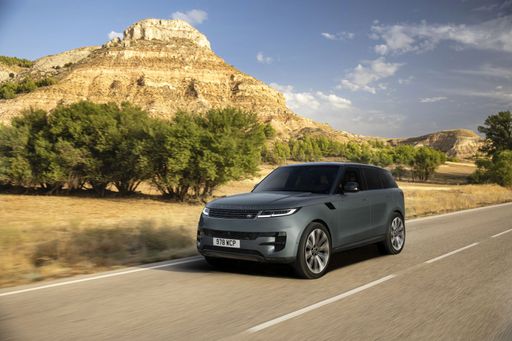
In contrast, the Range Rover Sport's engine lineup consists of Diesel MHEV, Plug-in Hybrid, and Petrol MHEV engines, with outputs that range from 249 HP to a staggering 635 HP. The Range Rover Sport beats the Defender in acceleration, sprinting from 0 to 100 km/h in as little as 3.9 seconds, and achieving maximum speeds of up to 290 km/h.

Defender

Fuel Efficiency and Environmental Considerations

When it comes to fuel consumption, the Defender consumes between 2.6 L/100km for its Plug-in Hybrid variant up to 14.2 L/100km for petrol options. This variety offers options for both environmentally conscious buyers and those who prioritize performance.

The Range Rover Sport shows an edge in efficiency, particularly in its Plug-in Hybrid models, with consumption as low as 0.7 L/100km and an electric range of up to 122 km. The battery capacity for the Range Rover Sport is a robust 31.8 kWh, almost double that of the Defender's 15.4 kWh.

Range Rover Sport

Dimensions and Design

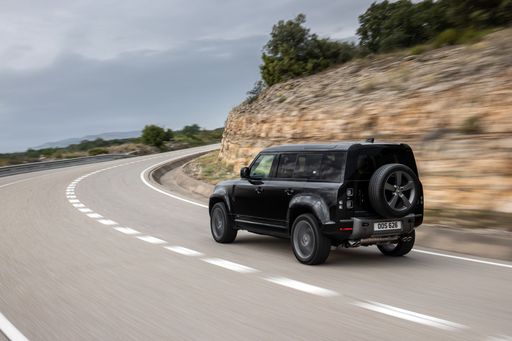
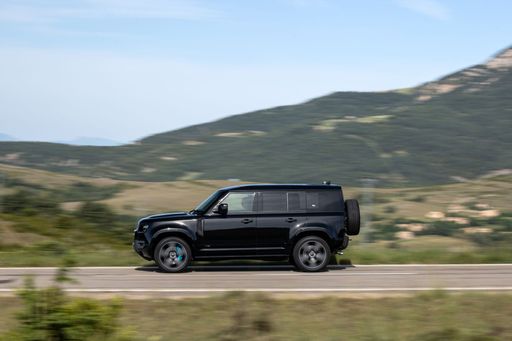
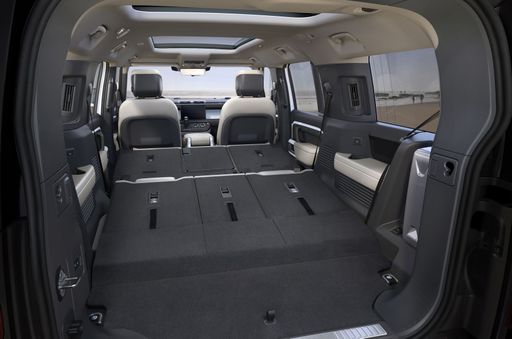
The Defender is an eye-catcher with its larger-than-life off-road persona. With lengths extending to 5018 mm, a width of 2008 mm, and a height of up to 1974 mm, it offers ample space and a commanding road presence. Trunk capacity spans from 290 to 786 liters, accommodating an impressive payload of up to 819 kg. The seating capacity varies from 5, 2, to even 8 seats, providing flexibility for various needs.

The Range Rover Sport, with a slightly more streamlined aesthetic, measures up to 4970 mm in length, with a width of 2043 mm and a height of 1820 mm. The trunk offers 647 liters of space and a payload of up to 830 kg. It exclusively provides seating for 5, making it less versatile in terms of passenger capacity but focusing on luxury and VIP comfort.

Defender

Innovations and Modern Touches

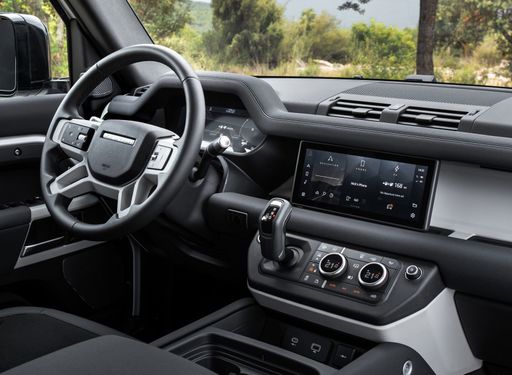
Both models come equipped with sophisticated automatic gearboxes, all-wheel-drive systems, and are fitted with advanced safety and entertainment tech expected of Land Rover vehicles. The Defender prides itself on durability and off-road capability with robust suspension systems ready for any terrain.

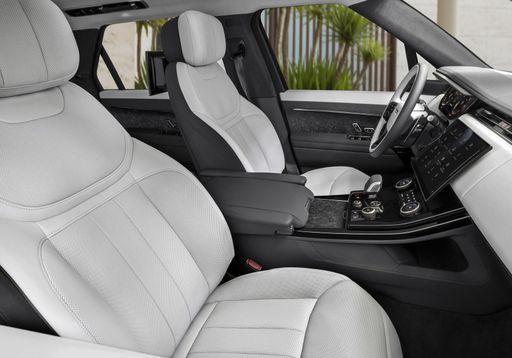
The Range Rover Sport, on the other hand, integrates a more extensive focus on technology and luxury, from its exquisite interior materials to its enhanced on-road dynamics, making it a strong contender for those who desire a more lavish off-road experience.

Range Rover Sport

Conclusion

The choice between the Land Rover Defender and Range Rover Sport ultimately boils down to personal needs. If rugged terrain mastery backed by flexible powertrains appeals to you, the Defender is a formidable option. However, for those prioritizing cutting-edge technology, superior comfort, and unparalleled road performance, the Range Rover Sport stands tall. Either way, Land Rover has something exceptional for everyone.

Here’s where it gets real: The technical differences in detail

Defender

Costs and Efficiency:

Price and efficiency are often the first things buyers look at. Here it becomes clear which model has the long-term edge – whether at the pump, the plug, or in purchase price.

Land Rover Defender is clearly cheaper – starting at 57,900 £ , while the Land Rover Range Rover Sport costs 78,600 £ . That’s a price difference of around 20,743 £.

Fuel consumption also shows a difference: the Land Rover Range Rover Sport uses 2.7 L/100km and is considerably more efficient than the Land Rover Defender with 6 L/100km. The difference is about 3.3 L/100km.

As for electric range, the Land Rover Range Rover Sport offers substantially more range – reaching up to 118 km, about 70 km more than the Land Rover Defender.

Range Rover Sport

Engine and Performance:

Under the bonnet, it becomes clear which model is tuned for sportiness and which one takes the lead when you hit the accelerator.

Both models deliver identical power – 635 HP each.

When accelerating from 0 to 100 km/h, the Land Rover Range Rover Sport is barely quicker – completing the sprint in 3.8 s, while the Land Rover Defender takes 4 s. That’s about 0.2 s quicker.

There’s also a difference in torque: the Land Rover Range Rover Sport delivers marginally more torque with 800 Nm compared to 750 Nm. That’s about 50 Nm more.

Defender

Space and Everyday Use:

Whether family car or daily driver – which one offers more room, flexibility and comfort?

Seats: Land Rover Defender offers more seats – 8 vs 5.

In terms of curb weight, Land Rover Defender is barely lighter – 2,300 kg compared to 2,390 kg. The difference is around 90 kg.

Looking at boot space, the Land Rover Defender offers a bit more boot space – 786 L compared to 647 L. That’s a difference of about 139 L.

When it comes to payload, the Land Rover Range Rover Sport carries marginally more – 830 kg compared to 819 kg. That’s a difference of about 11 kg.

Who wins the race in the data check?

The Land Rover Range Rover Sport is decisively ahead in the objective data comparison.
This result only shows which model scores more points on paper – not which of the two cars feels right for you.

from £78,600
Range Rover Sport

Land Rover Range Rover Sport

  • Engine Type : Plugin Hybrid, Petrol MHEV, Diesel MHEV
  • Transmission : Automatic
  • Drive Type : All-Wheel Drive
  • Power HP : 249 - 635 HP
  • Consumption L/100km : 2.7 - 11.7 L/100km
  • Electric Range : 116 - 118 km
Land Rover Defender
Land Rover Range Rover Sport

Costs and Consumption

View detailed analysis

Engine and Performance

View detailed analysis

Dimensions and Body

View detailed analysis

Land Rover Defender

The Land Rover Defender looks like it could shrug off a weekend of serious off-road abuse while still turning heads on the high street. Inside it balances practical, no-nonsense utility with enough creature comforts to make daily driving feel less like an expedition and more like a stylish commute—rugged charm with civilized manners.

details

Land Rover Range Rover Sport

The Range Rover Sport pairs unapologetic presence with genuine capability, looking like it belongs on a red carpet while quietly promising to tackle rough tracks when called upon. Inside, the cabin pampers with plush materials and thoughtful tech, making it an irresistible choice for buyers who want luxury, confidence and a touch of adventure.

details
Land Rover Defender
Land Rover Range Rover Sport

Costs and Consumption

Price
57,900 - 172,000 £
Price
78,600 - 175,700 £
Consumption L/100km
6 - 14.4 L/100km
Consumption L/100km
2.7 - 11.7 L/100km
Consumption kWh/100km
-
Consumption kWh/100km
-
Electric Range
48 km
Electric Range
116 - 118 km
Battery Capacity
-
Battery Capacity
-
co2
135 - 324 g/km
co2
61 - 266 g/km
Fuel tank capacity
-
Fuel tank capacity
-

Dimensions and Body

Body Type
Off-Roader
Body Type
SUV
Seats
2 - 8
Seats
5
Doors
-
Doors
-
Curb weight
2,300 - 2,745 kg
Curb weight
2,390 - 2,810 kg
Trunk capacity
293 - 786 L
Trunk capacity
647 L
Length
-
Length
-
Width
2,008 mm
Width
2,043 mm
Height
-
Height
-
Max trunk capacity
-
Max trunk capacity
-
Payload
494 - 819 kg
Payload
640 - 830 kg

Engine and Performance

Engine Type
Petrol, Diesel MHEV, Plugin Hybrid, Petrol MHEV
Engine Type
Plugin Hybrid, Petrol MHEV, Diesel MHEV
Transmission
Automatic
Transmission
Automatic
Transmission Detail
Automatic Gearbox
Transmission Detail
Automatic Gearbox
Drive Type
All-Wheel Drive
Drive Type
All-Wheel Drive
Power HP
200 - 635 HP
Power HP
249 - 635 HP
Acceleration 0-100km/h
4 - 10.2 s
Acceleration 0-100km/h
3.8 - 7.7 s
Max Speed
-
Max Speed
-
Torque
500 - 750 Nm
Torque
570 - 800 Nm
Number of Cylinders
4 - 8
Number of Cylinders
6 - 8
Power kW
147 - 467 kW
Power kW
183 - 467 kW
Engine capacity
1,997 - 5,000 cm3
Engine capacity
2,997 - 4,395 cm3

General

Model Year
2,025
Model Year
2,025
CO2 Efficiency Class
G, D
CO2 Efficiency Class
B, G
Brand
Land Rover
Brand
Land Rover
DriveDuel uses data analysis and artificial intelligence to evaluate vehicle data and create content. Content is regularly reviewed and improved. The displayed prices are estimates based on German list prices, adjusted to the respective country’s VAT. Country-specific registration taxes are not included. This information is not legally binding.