VS

Land Rover Range Rover Sport vs Land Rover Discovery comparison

Compare performance (550 HP vs 350 HP), boot space and price (80,100 £ vs 67,400 £ ) at a glance. Find out which car is the better choice for you – Land Rover Range Rover Sport or Land Rover Discovery?

Land Rover Range Rover Sport vs Land Rover Discovery: Key differences

Land Rover Range Rover Sport

  • visibly more power
  • significantly more efficient
  • markedly quicker 0–100 km/h
  • marginally lighter
details

Land Rover Discovery

  • moderately cheaper
  • noticeably more trunk space
details

By Achim Sedelmaier

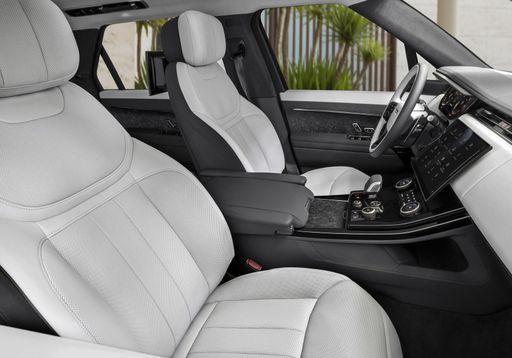
Range Rover Sport

Head-to-head: Land Rover Discovery and Land Rover Range Rover Sport

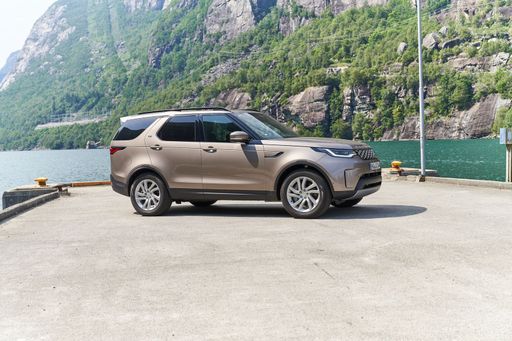
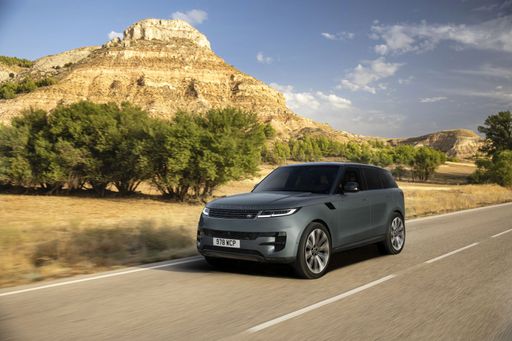
Land Rover Discovery and Land Rover Range Rover Sport sit next to each other in the showroom but aim at different needs: Discovery as the roomy, go-anywhere family workhorse and Range Rover Sport as the more refined, status-conscious SUV with stronger on-road manners. In this Land Rover Discovery VS Land Rover Range Rover Sport comparison we focus on how those opposing priorities play out day to day — not just on paper. Expect the Discovery to win on usable space, third-row practicality and trailer duty, while the Range Rover Sport trades some of that utility for quieter cabins, finer materials and stronger powertrains. Read on to see which trade-offs matter most for your life rather than relying on headline specs alone.
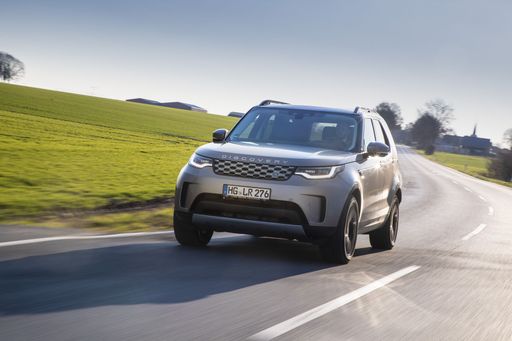
Discovery

Character and driving feel

The Land Rover Discovery feels deliberate and composed: it prefers confident, comfortable progress over razor-sharp responses, which translates to calm, predictable handling on long trips and serious off-road composure when you need it. The Land Rover Range Rover Sport, by contrast, leans toward planted refinement and stronger performance — it accelerates and settles into corners with more authority, especially in its punchier engines, but it still favours a composed ride rather than sports-car nastiness. If you want a vehicle that feels like a capable family SUV that will not surprise you off the beaten track, the Discovery is the clearer fit; if you want something that feels closer to a luxury performance SUV with a softer sporting edge, the Range Rover Sport is more aligned. Both are heavy, assured machines, but their steering, suspension tuning and power delivery reveal which compromises the engineers prioritised.

Range Rover Sport

Comfort and long-distance behavior

On motorways the Land Rover Discovery delivers a relaxed, wafting ride with excellent wind and road noise suppression that makes long days behind the wheel easy to tolerate. The Land Rover Range Rover Sport raises the bar for acoustic comfort and refinement: its cabin materials and insulation create an even more hushed, limousine-like environment, and plug‑in options can make commute miles whisper-quiet when you can charge regularly. Discovery’s strength is endurance and practicality over hours — it soaks up distance and stores luggage well when you remove the rear seats — while Range Rover Sport turns long drives into a near-lounge experience if you prioritise silence and tactile luxury. Choose Discovery for fatigue-free hauling and family trips; pick Range Rover Sport if the serenity and finish of the cabin is your daily priority.

Discovery

Practicality, space and usability

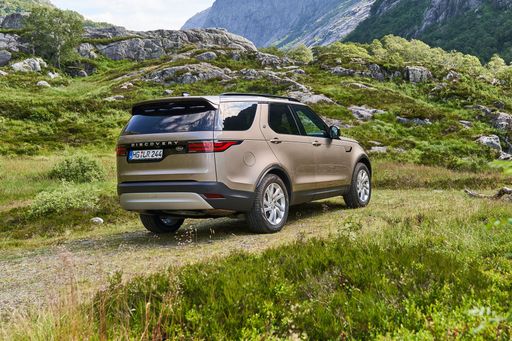
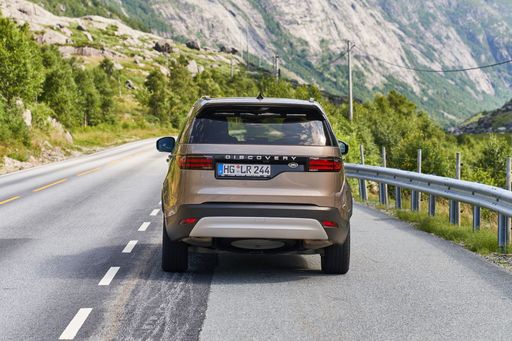
Practicality is where the Land Rover Discovery makes its case unmistakably: it offers a genuine third row and a larger, more flexible cargo area with family-friendly touches and multiple ISOFIX points that simplify real-world use. The Land Rover Range Rover Sport is aimed at buyers who rarely need a third row — it rewards you with a wider, more premium rear bench and clever split-folding but cannot match the Discovery’s cargo volume when all seven seats are in play. If your life requires strollers, sports kit, holiday luggage and the occasional extra passengers, Discovery’s architecture and loading convenience are persuasive; if you want generous five-seat practicality combined with top-tier materials and a tidier footprint, Range Rover Sport closes the gap. Both cabins are well thought out, but the Discovery privileges utility while the Range Rover Sport privileges finish and tailored flexibility.

Range Rover Sport

City friendliness and everyday usability

Neither the Land Rover Discovery nor the Land Rover Range Rover Sport is a compact city car, yet they cope with urban life differently: Discovery’s height and length make narrow streets and tight garages more demanding, but the seating position, visibility aids and practical door openings help families get children and cargo in and out. The Range Rover Sport can feel easier to live with in town if you optionally fit rear‑axle steering and rely on its sophisticated camera suite — it’s still wide and expensive to spec correctly, though, so tight parking can become a costly exercise in options or patience. For daily urban duty, Discovery asks you to accept bulk in exchange for accessibility and loadability, while Range Rover Sport asks you to budget for technology that tames its size in tight spots. Ultimately the city winner depends on whether you value raw access and family ergonomics (Discovery) or prefer assistance tech and a slightly more composed urban ride (Range Rover Sport).

Discovery

Cabin feel, perceived quality and buyer fit

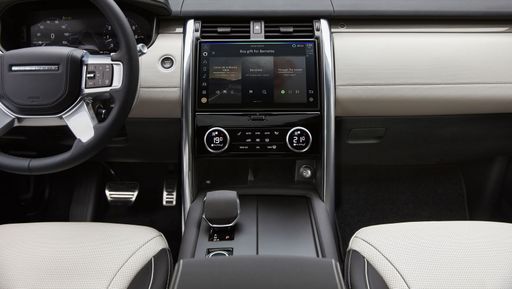
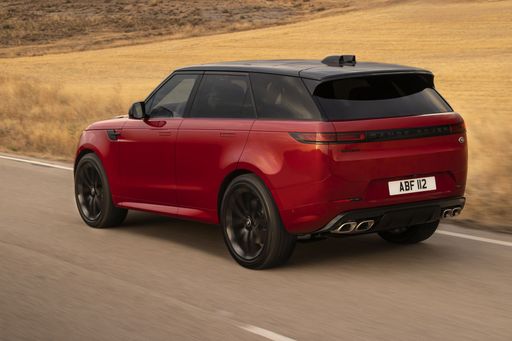
The Land Rover Range Rover Sport feels like the more premium object: materials, finishes and the overall attention to detail give it an aura closer to flagship luxury SUVs, which will matter to buyers who want to be seen and soothed in equal measure. The Land Rover Discovery, while solid and well-built, projects a tougher, more purposeful cabin character — durable where the Range Rover Sport is indulgent — and that practical robustness appeals to buyers who prioritise function over flash. If your checklist starts with prestige, tactile refinement and quieter plug‑in capability, the Range Rover Sport maps to that brief; if your priorities are seven seats, towing, flexible luggage space and no-nonsense usability, the Discovery will fit your life better. Below we turn to the technical comparison to quantify engines, range, boot volumes and the size compromises that underpin these real-world differences.

Here’s where it gets real: The technical differences in detail

Range Rover Sport

Costs and Efficiency:

Price and efficiency are key factors when choosing a car – and this is often where the real differences emerge.

Land Rover Discovery is moderately cheaper – starting at 67,400 £ , while the Land Rover Range Rover Sport costs 80,100 £ . That’s a price difference of around 12,771 £.

Fuel consumption also shows a difference: the Land Rover Range Rover Sport uses 2.7 L/100km and is significantly more efficient than the Land Rover Discovery with 8.4 L/100km. The difference is about 5.7 L/100km.

Discovery

Engine and Performance:

Under the bonnet, it becomes clear which model is tuned for sportiness and which one takes the lead when you hit the accelerator.

When it comes to engine power, the Land Rover Range Rover Sport offers visibly more power – delivering 550 HP compared to 350 HP. That’s roughly 200 HP more horsepower.

When accelerating from 0 to 100 km/h, the Land Rover Range Rover Sport is markedly quicker – completing the sprint in 4.5 s, while the Land Rover Discovery takes 6.3 s. That’s about 1.8 s quicker.

There’s also a difference in torque: the Land Rover Range Rover Sport delivers a bit more torque with 800 Nm compared to 700 Nm. That’s about 100 Nm more.

Range Rover Sport

Space and Everyday Use:

Beyond pure performance, interior space and usability matter most in daily life. This is where you see which car is more practical and versatile.

Seats: Land Rover Discovery offers more seats – 7 vs 5.

In terms of curb weight, Land Rover Range Rover Sport is marginally lighter – 2,390 kg compared to 2,391 kg. The difference is around 1 kg.

Looking at boot space, the Land Rover Discovery offers noticeably more boot space – 986 L compared to 647 L. That’s a difference of about 339 L.

When it comes to payload, the Land Rover Range Rover Sport carries very slightly more – 830 kg compared to 803 kg. That’s a difference of about 27 kg.

Who wins the race in the data check?

The Land Rover Range Rover Sport is decisively ahead in the objective data comparison.
This result only shows which model scores more points on paper – not which of the two cars feels right for you.

from £80,100
Range Rover Sport

Land Rover Range Rover Sport

  • Engine Type Diesel MHEV, Petrol MHEV, Plugin Hybrid
  • Transmission Automatic
  • Drive Type All-Wheel Drive
  • Power HP 249 - 550 HP
  • Consumption L/100km 2.7 - 11.4 L/100km
  • Electric Range 116 - 118 km
Land Rover Range Rover Sport
Land Rover Discovery

Costs and Consumption

View detailed analysis

Engine and Performance

View detailed analysis

Dimensions and Body

View detailed analysis

Land Rover Range Rover Sport

The Range Rover Sport pairs unapologetic presence with genuine capability, looking like it belongs on a red carpet while quietly promising to tackle rough tracks when called upon. Inside, the cabin pampers with plush materials and thoughtful tech, making it an irresistible choice for buyers who want luxury, confidence and a touch of adventure.

details

Land Rover Discovery

The Land Rover Discovery blends genuine off-road prowess with grown-up luxury, making it a smart choice for buyers who want weekend adventure and weekday refinement in one package. It feels suitably rugged when the road ends and wonderfully civilized when the tarmac begins — a practical family hauler that also enjoys getting a little dirty.

details
Land Rover Range Rover Sport
Land Rover Discovery

Costs and Consumption

Price
80,100 - 129,900 £
Price
67,400 - 97,600 £
Consumption L/100km
2.7 - 11.4 L/100km
Consumption L/100km
8.4 - 8.5 L/100km
Consumption kWh/100km
-
Consumption kWh/100km
-
Electric Range
116 - 118 km
Electric Range
-
Battery Capacity
-
Battery Capacity
-
co2
60 - 259 g/km
co2
221 - 223 g/km
Fuel tank capacity
-
Fuel tank capacity
-

Dimensions and Body

Body Type
SUV
Body Type
Off-Roader
Seats
5
Seats
5 - 7
Doors
-
Doors
-
Curb weight
2,390 - 2,809 kg
Curb weight
2,391 - 2,442 kg
Trunk capacity
647 L
Trunk capacity
172 - 986 L
Length
-
Length
-
Width
2,043 mm
Width
2,073 mm
Height
-
Height
-
Max trunk capacity
-
Max trunk capacity
-
Payload
641 - 830 kg
Payload
689 - 803 kg

Engine and Performance

Engine Type
Diesel MHEV, Petrol MHEV, Plugin Hybrid
Engine Type
Diesel MHEV
Transmission
Automatic
Transmission
Automatic
Transmission Detail
Automatic Gearbox
Transmission Detail
Automatic Gearbox
Drive Type
All-Wheel Drive
Drive Type
All-Wheel Drive
Power HP
249 - 550 HP
Power HP
249 - 350 HP
Acceleration 0-100km/h
4.5 - 7.7 s
Acceleration 0-100km/h
6.3 - 8.1 s
Max Speed
-
Max Speed
-
Torque
550 - 800 Nm
Torque
570 - 700 Nm
Number of Cylinders
6 - 8
Number of Cylinders
6
Power kW
183 - 405 kW
Power kW
183 - 257 kW
Engine capacity
2,997 - 4,395 cm3
Engine capacity
2,997 cm3

General

Model Year
2,025 - 2,026
Model Year
2026
CO2 Efficiency Class
G, B
CO2 Efficiency Class
G
Brand
Land Rover
Brand
Land Rover
DriveDuel uses data analysis and artificial intelligence to evaluate vehicle data and create content. Content is regularly reviewed and improved. The displayed prices are estimates based on German list prices, adjusted to the respective country’s VAT. Country-specific registration taxes are not included. This information is not legally binding.