VS

Mercedes GLE vs Land Rover Range Rover Sport comparison

Compare performance (634 HP vs 635 HP), boot space and price (76,300 £ vs 78,600 £ ) at a glance. Find out which car is the better choice for you – Mercedes GLE or Land Rover Range Rover Sport?

Mercedes GLE vs Land Rover Range Rover Sport: Key differences

Mercedes GLE

4.1 (1 Reviews)
rate
  • marginally cheaper
  • visibly more efficient
  • barely lighter
  • marginally more trunk space

Land Rover Range Rover Sport

  • very slightly more power
  • marginally more electric range
  • barely quicker 0–100 km/h

All details on performance, efficiency, range and trunk space can be found in the technical comparison below – including user reviews for both models.

By Achim Sedelmaier

GLE

Introduction: Luxury SUVs in the Spotlight

The luxury SUV segment has been heating up, with perennial contenders like the Mercedes GLE and Land Rover Range Rover Sport consistently pushing the envelope in terms of performance, comfort, and technology. Both models offer a blend of luxury and capability, but how do they stack up against one another? This comparison will delve into various technical aspects and innovations that set these two heavyweights apart.
Range Rover Sport

Engine and Performance Comparison

Under the hood, both the Mercedes GLE and Land Rover Range Rover Sport provide a selection of engines tailored to different driving preferences. The GLE boasts multiple options including diesel MHEV, plug-in hybrid, and petrol MHEV engines with power outputs ranging from 289 HP to a robust 634 HP. The most powerful configuration accelerates from 0 to 100 km/h in just 3.9 seconds, showcasing its performance capabilities. In contrast, the Range Rover Sport also offers a varied lineup, with power ratings from 249 HP to a staggering 635 HP. Its best-in-class performance clocks in as quick as 3.9 seconds as well, emphasizing the fierce competition between these two giants.

GLE

Fuel Efficiency and Environmental Considerations

When it comes to fuel efficiency, the Mercedes GLE presents a commendable range of options, with consumption figures between 0.5 and 12.5 L/100km across its engine variants, making it appealing for those conscious of their carbon footprint. The electric range for its plug-in variants reaches up to 114 km, supported by a battery capacity of up to 27 kWh. The Range Rover Sport, while slightly less efficient with consumption figures between 0.7 and 12.5 L/100km, offers an impressive electric range of 122 km and features a larger battery capacity of 31.8 kWh. Both models exhibit a commitment to reducing emissions, competing closely in the efficiency landscape.

Range Rover Sport

Interior Comfort and Technology

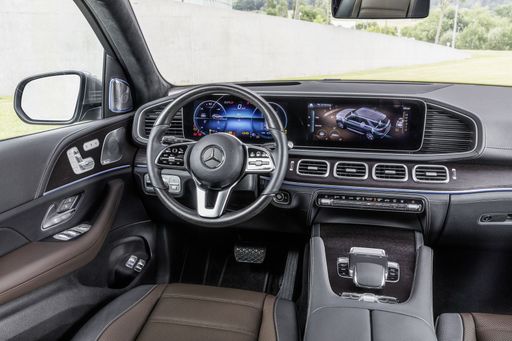
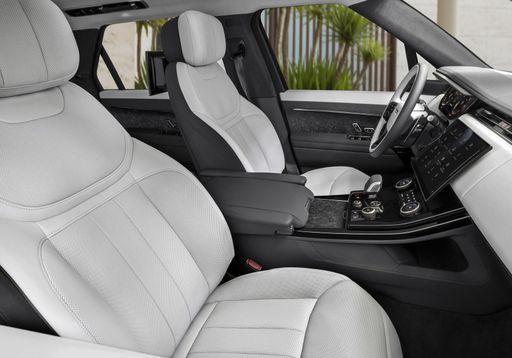
Stepping inside, luxury is the name of the game for both vehicles. The Mercedes GLE offers a spacious and elegantly designed interior with advanced technology integrations like the MBUX infotainment system, providing intuitive controls and voice recognition. GLE's trunk capacity ranges from 490 to 655 liters, accommodating ample luggage for long trips.

The Range Rover Sport, known for its blend of opulence and ruggedness, features high-quality materials and an easy-to-navigate infotainment system. The trunk capacity of 647 liters provides versatile storage options. The Sport also shines with its off-road technology suite, including Terrain Response systems that adapt to different driving conditions, making it a favorite for adventure seekers.

GLE

Safety Features and Innovations

In terms of safety, both models come equipped with a suite of advanced features. The Mercedes GLE is packed with an array of driver assistance technologies, including active brake assistance and lane-keeping assist, ensuring a safer driving experience. The Range Rover Sport also features state-of-the-art safety systems, including adaptive cruise control and autonomous emergency braking. Both brands maintain high safety ratings and incorporate the latest innovations to protect passengers.

Range Rover Sport

Conclusion: The Final Verdict

Ultimately, choosing between the Mercedes GLE and the Land Rover Range Rover Sport comes down to personal preference and intended use. The GLE leans slightly toward luxury on-road performance and innovative tech, while the Range Rover Sport excels in its off-road capabilities and adventurous spirit. Both vehicles embody the ultimate in luxury SUV engineering, making it a difficult choice for discerning buyers.

Whether you prioritize performance, comfort, or off-road prowess, each SUV offers distinct advantages. As the automotive landscape evolves, both the GLE and Range Rover Sport will continue to redefine what drivers expect from a luxury SUV.

Here’s where it gets real: The technical differences in detail

GLE

Costs and Efficiency:

Looking at overall running costs, both models reveal some interesting differences in everyday economy.

Mercedes GLE is marginally cheaper – starting at 76,300 £ , while the Land Rover Range Rover Sport costs 78,600 £ . That’s a price difference of around 2,330 £.

Fuel consumption also shows a difference: the Mercedes GLE uses 2 L/100km and is visibly more efficient than the Land Rover Range Rover Sport with 2.7 L/100km. The difference is about 0.7 L/100km.

As for electric range, the Land Rover Range Rover Sport offers marginally more range – reaching up to 118 km, about 4 km more than the Mercedes GLE.

Range Rover Sport

Engine and Performance:

Power, torque and acceleration are the classic benchmarks for car enthusiasts – and here, some clear differences start to show.

When it comes to engine power, the Land Rover Range Rover Sport offers very slightly more power – delivering 635 HP compared to 634 HP. That’s roughly 1 HP more horsepower.

When accelerating from 0 to 100 km/h, the Land Rover Range Rover Sport is barely quicker – completing the sprint in 3.8 s, while the Mercedes GLE takes 3.9 s. That’s about 0.1 s quicker.

There’s also a difference in torque: the Mercedes GLE delivers barely more torque with 850 Nm compared to 800 Nm. That’s about 50 Nm more.

GLE

Space and Everyday Use:

Cabin size, boot volume and payload all play a role in everyday practicality. Here, comfort and flexibility make the difference.

Both vehicles offer seating for 5 people.

In terms of curb weight, Mercedes GLE is barely lighter – 2,310 kg compared to 2,390 kg. The difference is around 80 kg.

Looking at boot space, the Mercedes GLE offers marginally more boot space – 655 L compared to 647 L. That’s a difference of about 8 L.

When it comes to payload, the Land Rover Range Rover Sport carries somewhat more – 830 kg compared to 705 kg. That’s a difference of about 125 kg.

Who wins the race in the data check?

The Mercedes GLE shows a few small advantages in the objective data comparison.
This result only shows which model scores more points on paper – not which of the two cars feels right for you.

from £76,300
GLE

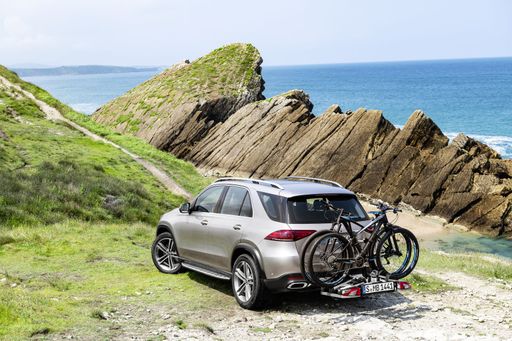
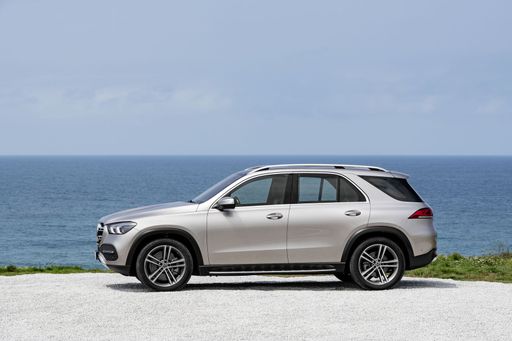
Mercedes GLE

  • Engine Type : Petrol MHEV, Plugin Hybrid, Diesel MHEV
  • Transmission : Automatic
  • Drive Type : All-Wheel Drive
  • Power HP : 289 - 634 HP
  • Consumption L/100km : 2 - 12.5 L/100km
  • Electric Range : 89 - 114 km
Mercedes GLE
Land Rover Range Rover Sport

Costs and Consumption

View detailed analysis

Engine and Performance

View detailed analysis

Dimensions and Body

View detailed analysis

Mercedes GLE

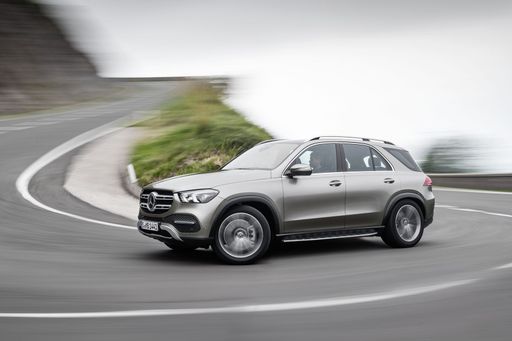
The Mercedes GLE blends luxurious comfort with a confident road presence, wrapping tech and refinement in an SUV shape that still knows how to behave on a twisty back road. Inside it's plush and quiet, with clever storage and driver aids that make long trips effortless — plus the badge gives it that easy-to-respect curb appeal.

details

Land Rover Range Rover Sport

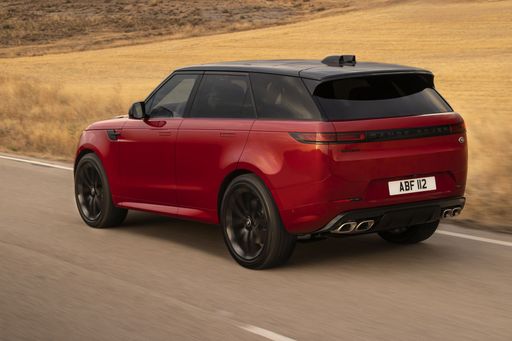
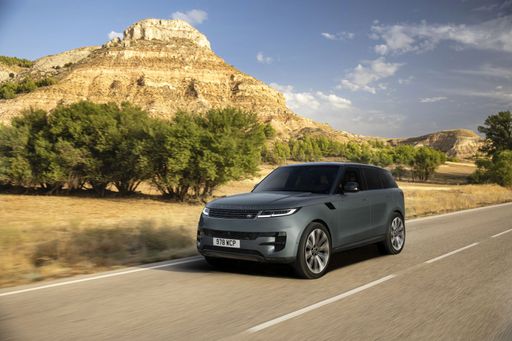
The Range Rover Sport pairs unapologetic presence with genuine capability, looking like it belongs on a red carpet while quietly promising to tackle rough tracks when called upon. Inside, the cabin pampers with plush materials and thoughtful tech, making it an irresistible choice for buyers who want luxury, confidence and a touch of adventure.

details
Mercedes GLE
Land Rover Range Rover Sport

Costs and Consumption

Price
76,300 - 175,800 £
Price
78,600 - 175,700 £
Consumption L/100km
2 - 12.5 L/100km
Consumption L/100km
2.7 - 11.7 L/100km
Consumption kWh/100km
-
Consumption kWh/100km
-
Electric Range
89 - 114 km
Electric Range
116 - 118 km
Battery Capacity
24.8 - 25 kWh
Battery Capacity
-
co2
53 - 284 g/km
co2
61 - 266 g/km
Fuel tank capacity
65 - 85 L
Fuel tank capacity
-

Dimensions and Body

Body Type
SUV
Body Type
SUV
Seats
5
Seats
5
Doors
5
Doors
-
Curb weight
2,310 - 2,800 kg
Curb weight
2,390 - 2,810 kg
Trunk capacity
490 - 655 L
Trunk capacity
647 L
Length
4,924 - 4,961 mm
Length
-
Width
1,947 mm
Width
2,043 mm
Height
1,716 - 1,797 mm
Height
-
Max trunk capacity
1,645 - 2,055 L
Max trunk capacity
-
Payload
460 - 705 kg
Payload
640 - 830 kg

Engine and Performance

Engine Type
Petrol MHEV, Plugin Hybrid, Diesel MHEV
Engine Type
Plugin Hybrid, Petrol MHEV, Diesel MHEV
Transmission
Automatic
Transmission
Automatic
Transmission Detail
Automatic Gearbox
Transmission Detail
Automatic Gearbox
Drive Type
All-Wheel Drive
Drive Type
All-Wheel Drive
Power HP
289 - 634 HP
Power HP
249 - 635 HP
Acceleration 0-100km/h
3.9 - 6.9 s
Acceleration 0-100km/h
3.8 - 7.7 s
Max Speed
210 - 280 km/h
Max Speed
-
Torque
500 - 850 Nm
Torque
570 - 800 Nm
Number of Cylinders
4 - 8
Number of Cylinders
6 - 8
Power kW
213 - 466 kW
Power kW
183 - 467 kW
Engine capacity
1,993 - 3,982 cm3
Engine capacity
2,997 - 4,395 cm3

General

Model Year
2,024 - 2,025
Model Year
2,025
CO2 Efficiency Class
G, B, F
CO2 Efficiency Class
B, G
Brand
Mercedes-Benz
Brand
Land Rover
DriveDuel uses data analysis and artificial intelligence to evaluate vehicle data and create content. Content is regularly reviewed and improved. The displayed prices are estimates based on German list prices, adjusted to the respective country’s VAT. Country-specific registration taxes are not included. This information is not legally binding.