
VS

Leapmotor T03 vs Renault Twingo comparison

Compare performance (95 HP vs 82 HP), boot space and price (16,200 £ vs 17,100 £ ) at a glance. Find out which car is the better choice for you – Leapmotor T03 or Renault Twingo?

Leapmotor T03 vs Renault Twingo: Key differences

Leapmotor T03

  • only slightly cheaper
  • a bit more power
  • barely more electric range
  • marginally lighter
details

Renault Twingo

4.3 (2 Reviews)
rate
  • clearly more efficient
  • marginally quicker 0–100 km/h
  • clearly more trunk space
details

All details on performance, efficiency, range and trunk space can be found in the technical comparison below – including user reviews for both models.

By Achim Sedelmaier

T03

Renault Twingo VS Leapmotor T03 — which city car fits you?

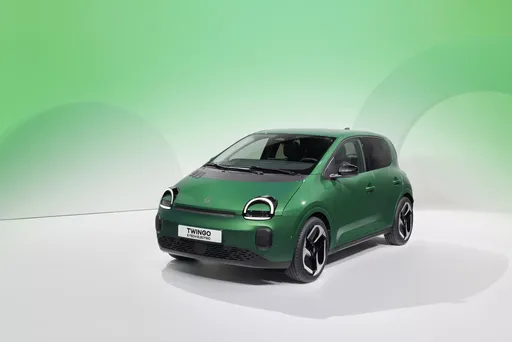
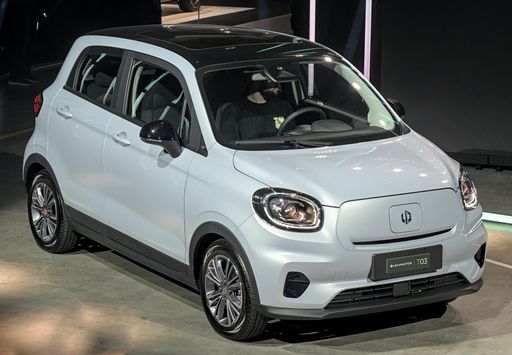
The Renault Twingo and the Leapmotor T03 sit in the same compact slot but offer very different answers to urban driving needs. The Twingo brings a quirky, rear‑engine character and clever small‑car tricks, while the Leapmotor T03 presents a surprisingly complete, budget‑friendly electric package with modern kit. For shoppers deciding between charm and pragmatism, the Twingo feels like a specialist tool for tight streets and easy parking, whereas the Leapmotor T03 feels like a sensible, well‑equipped daily driver. Read on to see how those personalities play out in comfort, cabin usability and real‑world practicality.
Twingo

Character and driving feel

Renault Twingo drives with a distinct, playful personality born from its rear‑mounted layout — that makes it nimble at low speeds, but also more vocal and twitchy when speeds rise. The Leapmotor T03 counters with a calm, electric smoothness that soothes stop‑start city work, but its steering and chassis are tuned for convenience rather than excitement. If you want something that makes city maneuvers fun and immediate, the Twingo’s oddball packaging rewards you; if you prefer a relaxed, composed city commute, the Leapmotor T03 will feel more grown‑up. Both cars sacrifice dynamic refinement compared with larger segments, but they do it in different styles: character versus composed blandness.

Comfort and cabin feel

Inside, the Leapmotor T03 punches above its price with a tidy, well‑assembled cabin that feels quietly modern, although the touch‑centric interface and persistent warning chimes can grate over time. The Renault Twingo offers simpler materials and a more playful interior layout, with better outward visibility and practical quirks like a foldable front passenger that extend utility. On longer runs the Twingo’s noise and firmer ride become obvious, while the Leapmotor T03 generally keeps the cabin quieter and less tiring in town. Both interiors are honest rather than luxurious, but the T03 leans toward perceived value while the Twingo leans toward useful, characterful design.

Practicality and everyday usability

When it comes to day‑to‑day usefulness, the Renault Twingo makes clever choices for carrying awkward loads thanks to its five‑door layout and foldable front seat, which can be a real advantage for DIY bits or long items. The Leapmotor T03 gives surprisingly roomy seating for four on a small footprint, making short family runs and school runs straightforward, but its luggage area and single‑piece rear seat limit flexibility. If you routinely need to move odd‑shaped cargo, the Twingo’s configurability pays off; if you mostly ferry people around town and want straightforward cabin space, the T03 is the more practical baseline. Both struggle with generous family luggage and heavy payloads, so neither is an ideal primary car for long vacations with a full load.

City friendliness versus long‑distance behavior

Both cars are tailored to urban life but with different compromises: the Renault Twingo is exceptional in tight parking, lane changes and short errands, yet it tires on highways with wind and road noise and more urgent charging needs. The Leapmotor T03 is composed at city speeds and offers a quieter package overall, making it easier to cover daily errands without fatigue, but longer motorway stints expose a nervous straight‑line behavior and require careful planning for charging. Choose the Twingo if your life is packed with tight turns and short hops; choose the Leapmotor T03 if your routine is predominantly urban with occasional stretches that can be planned. Neither is optimized for heavy long‑distance use, but they fail for different reasons — personality and noise versus range and composure.

Buyer fit and trade‑offs before the specs

If you prize charm, tiny turning circles and oddball practicality, the Renault Twingo will likely make you smile on narrow streets and frustrate you less when fitting into tiny spots, but accept louder cabin noise and less luggage flexibility. If you want the best value‑for‑money electric experience with modern features, quieter city cruising and sensible space for four, the Leapmotor T03 is the practical pick while asking you to live with touch‑heavy menus and limited long‑distance calm. Consider whether you value character and clever packaging (Twingo) or low price, equipment and composed city manners (Leapmotor T03), then dive into the technical comparison to match those preferences with charging, range and cargo details. The technical section that follows will help you translate these buyer choices into concrete numbers and charging behavior without declaring a single winner for everyone.

Here’s where it gets real: The technical differences in detail

T03

Costs and Efficiency:

Looking at overall running costs, both models reveal some interesting differences in everyday economy.

Leapmotor T03 is only slightly cheaper – starting at 16,200 £ , while the Renault Twingo costs 17,100 £ . That’s a price difference of around 857 £.

In terms of energy consumption, the Renault Twingo is clearly more efficient: consuming 13.1 kWh/100km compared to 16.3 kWh/100km for the Leapmotor T03. That’s a difference of about 3.2 kWh/100km.

As for electric range, the Leapmotor T03 offers barely more range – reaching up to 265 km, about 3 km more than the Renault Twingo.

Twingo

Engine and Performance:

Power, torque and acceleration are the classic benchmarks for car enthusiasts – and here, some clear differences start to show.

When it comes to engine power, the Leapmotor T03 offers a bit more power – delivering 95 HP compared to 82 HP. That’s roughly 13 HP more horsepower.

When accelerating from 0 to 100 km/h, the Renault Twingo is marginally quicker – completing the sprint in 12.1 s, while the Leapmotor T03 takes 12.7 s. That’s about 0.6 s quicker.

There’s also a difference in torque: the Renault Twingo delivers very slightly more torque with 175 Nm compared to 158 Nm. That’s about 17 Nm more.

Space and Everyday Use:

Whether family car or daily driver – which one offers more room, flexibility and comfort?

Both vehicles offer seating for 4 people.

In terms of curb weight, Leapmotor T03 is marginally lighter – 1,175 kg compared to 1,275 kg. The difference is around 100 kg.

Looking at boot space, the Renault Twingo offers clearly more boot space – 305 L compared to 210 L. That’s a difference of about 95 L.

When it comes to payload, the Renault Twingo carries very slightly more – 320 kg compared to 300 kg. That’s a difference of about 20 kg.

Who wins the race in the data check?

The Renault Twingo is slightly ahead in the objective data comparison.
This result only shows which model scores more points on paper – not which of the two cars feels right for you.

from £17,100
Twingo

Renault Twingo

  • Engine Type Electric
  • Transmission Automatic
  • Drive Type Front-Wheel Drive
  • Power HP 82 HP
  • Consumption kWh/100km 13.1 kWh/100km
  • Electric Range 260 - 262 km
Leapmotor T03
Renault Twingo

Costs and Consumption

View detailed analysis

Engine and Performance

View detailed analysis

Dimensions and Body

View detailed analysis

Leapmotor T03

Leapmotor T03 is a compact electric city car that blends bold styling with practical urban ease, making it an appealing choice for commuters who value smart tech and everyday affordability. It feels nimble in traffic and cleverly packaged inside, though it’s best suited to short urban trips rather than long highway journeys.

details

Renault Twingo

The Renault Twingo is a cheeky city car that turns tight streets and impossible parking spaces into an urban playground with its agile handling and compact footprint. It’s perfect for zipping around town thanks to clever interior packaging and a playful character, though buyers chasing long-distance comfort or huge luggage space should consider other options.

details
Leapmotor T03
Renault Twingo

Costs and Consumption

Price
16,200 £
Price
17,100 - 18,500 £
Consumption L/100km
-
Consumption L/100km
-
Consumption kWh/100km
16.3 kWh/100km
Consumption kWh/100km
13.1 kWh/100km
Electric Range
265 km
Electric Range
260 - 262 km
Battery Capacity
-
Battery Capacity
-
co2
0 g/km
co2
0 g/km
Fuel tank capacity
-
Fuel tank capacity
-

Dimensions and Body

Body Type
Hatchback
Body Type
Hatchback
Seats
4
Seats
4
Doors
-
Doors
-
Curb weight
1,175 kg
Curb weight
1,275 - 1,294 kg
Trunk capacity
210 L
Trunk capacity
305 L
Length
-
Length
-
Width
1,652 mm
Width
1,720 mm
Height
-
Height
-
Max trunk capacity
-
Max trunk capacity
-
Payload
300 kg
Payload
301 - 320 kg

Engine and Performance

Engine Type
Electric
Engine Type
Electric
Transmission
Automatic
Transmission
Automatic
Transmission Detail
Reduction Gearbox
Transmission Detail
Reduction Gearbox
Drive Type
Front-Wheel Drive
Drive Type
Front-Wheel Drive
Power HP
95 HP
Power HP
82 HP
Acceleration 0-100km/h
12.7 s
Acceleration 0-100km/h
12.1 s
Max Speed
-
Max Speed
-
Torque
158 Nm
Torque
175 Nm
Number of Cylinders
-
Number of Cylinders
-
Power kW
70 kW
Power kW
60 kW
Engine capacity
-
Engine capacity
-

General

Model Year
2024
Model Year
2026
CO2 Efficiency Class
A
CO2 Efficiency Class
A
Brand
Leapmotor
Brand
Renault
DriveDuel uses data analysis and artificial intelligence to evaluate vehicle data and create content. Content is regularly reviewed and improved. The displayed prices are estimates based on German list prices, adjusted to the respective country’s VAT. Country-specific registration taxes are not included. This information is not legally binding.








