VS

Lexus UX vs Toyota Corolla comparison

Compare performance (199 HP vs 178 HP), boot space and price (38,700 £ vs 28,600 £ ) at a glance. Find out which car is the better choice for you – Lexus UX or Toyota Corolla?

Lexus UX vs Toyota Corolla: Key differences

Lexus UX

4.6 (4 Reviews)
rate
  • somewhat more power
details

Toyota Corolla

5 (1 Reviews)
rate
  • markedly cheaper
  • moderately more efficient
  • very slightly quicker 0–100 km/h
  • very slightly lighter
  • slightly more trunk space
details

All details on performance, efficiency, range and trunk space can be found in the technical comparison below – including user reviews for both models.

By Achim Sedelmaier

UX

Introduction: Comparing Luxury and Practicality

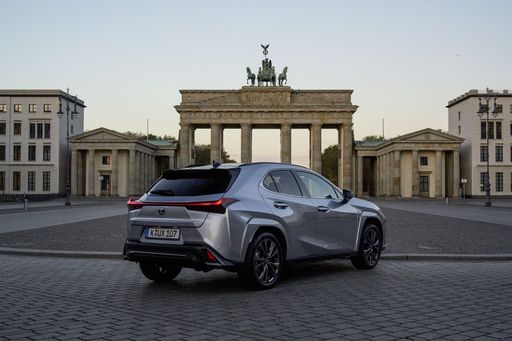
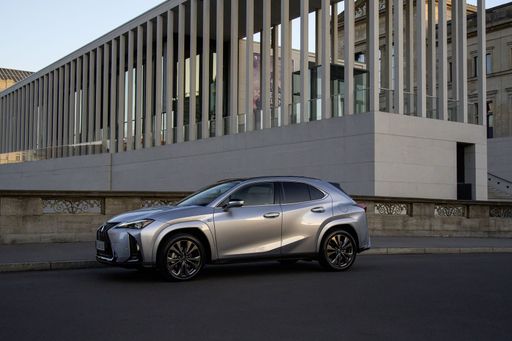
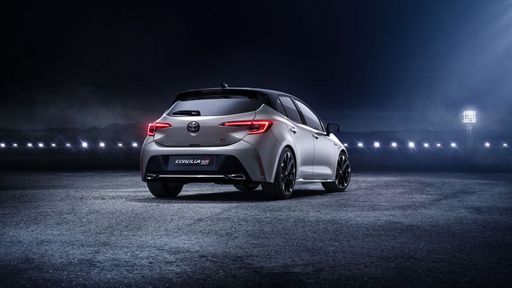
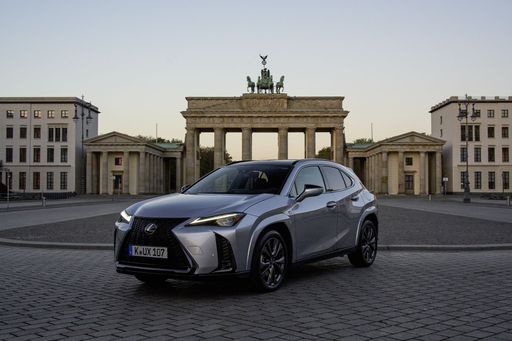
The automotive landscape is predominantly characterized by a myriad of options catering to diverse preferences and needs. In the spotlight today are the Lexus UX and the Toyota Corolla, two models from the same automotive family, yet designed to serve different markets. While the Lexus UX offers a luxurious SUV experience, the Toyota Corolla remains a practical and efficient hatchback. This article delves into a detailed comparison of their technical aspects, innovations, and overall performance.
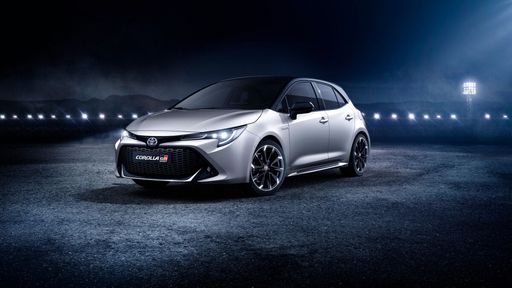
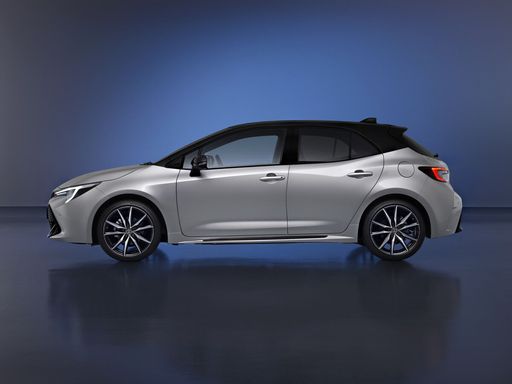
Corolla

Engine and Performance: Power Under the Hood

The Lexus UX boasts a power range of up to 204 HP with its electric and full hybrid engine options, providing an invigorating driving experience. Its acceleration from 0-100 km/h reaches impressive figures between 7.5 to 8.1 seconds, showcasing its sporty credentials.

In contrast, the Toyota Corolla's full hybrid engine generates a respectable 196 HP. It allows the Corolla to reach 0-100 km/h in a swift 7.5 seconds, revealing its spirited performance, despite its smaller engine capacity. The Corolla emphasizes efficiency with an impressive fuel consumption range of 4.4 to 4.6 L/100 km, making it a champion for environmentally conscious drivers.

UX

Transmission and Driving Dynamics

Both vehicles utilize an automatic transmission, but the Lexus UX offers an alternative in the form of a reduction gearbox along with a CVT, which enhances the driving experience significantly. The availability of both Front-Wheel Drive and All-Wheel Drive options provides versatility for various driving conditions.

The Toyota Corolla, being a front-wheel-drive hatchback, relies solely on its CVT. While it may lack the AWD option, its lightweight structure, with a curb weight ranging between 1,420 to 1,460 kg, contributes to agile handling and stability on the road.

Corolla

Fuel Efficiency: Saving at the Pump

When it comes to fuel efficiency, the Toyota Corolla outshines with an astonishing consumption rate of just 4.4 to 4.6 L/100 km. This affordability at the pump resonates well with daily commuters looking to minimize expenditure. In comparison, the Lexus UX, while still commendable with figures around 5 to 5.6 L/100 km, operates slightly higher, reflecting its additional luxury features and performance capabilities.

UX

Size and Space: Versatility Meets Comfort

In terms of dimensions, the Lexus UX is larger than the Toyota Corolla, measuring 4,495 mm in length compared to the Corolla's 4,370 mm. This increased size allows the UX to offer a trunk capacity of 367 liters, while the Corolla provides a slightly smaller space ranging from 313 to 361 liters depending on the variant.

Interior space is another critical factor where the UX provides seating for four passengers, emphasizing comfort and luxury, whereas the Corolla accommodates five, catering more towards practicality for families or those who frequently travel with companions.

Corolla

Innovative Technologies: Staying Ahead of the Curve

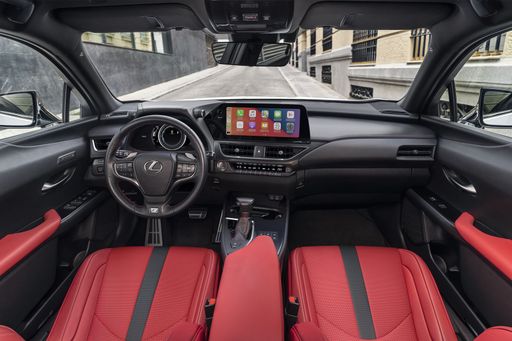
Both vehicles feature cutting-edge technology; however, the Lexus UX leans into luxury and innovation with premium materials and a sophisticated infotainment system tailored for an elevated driving experience. This commitment to innovation extends to its hybrid technology, with a maximum electric range of 449 km, a distinguishing factor for eco-conscious consumers.

The Toyota Corolla also includes advanced technology but remains focused on user-friendliness and practicality. Its innovative safety features and suite of driver assistance technologies ensure a safe and secure driving experience, reinforcing its longstanding reputation for reliability.

UX

Conclusion: Choosing Your Ideal Companion

The comparison between the Lexus UX and the Toyota Corolla highlights the unique attributes of each model. Those in search of a luxurious SUV with high-performance capabilities may gravitate towards the Lexus UX. Conversely, individuals looking for an efficient, reliable hatchback that fulfills daily commuting needs might find the Toyota Corolla to be their perfect match.

Ultimately, the choice falls to personal preference—luxury and innovation versus practicality and efficiency—both vehicles represent the best of their respective genres, poised to satisfy different drivers on the modern road.

Here’s where it gets real: The technical differences in detail

UX

Costs and Efficiency:

Price and efficiency are key factors when choosing a car – and this is often where the real differences emerge.

Toyota Corolla is markedly cheaper – starting at 28,600 £ , while the Lexus UX costs 38,700 £ . That’s a price difference of around 10,165 £.

Fuel consumption also shows a difference: the Toyota Corolla uses 4.4 L/100km and is moderately more efficient than the Lexus UX with 5 L/100km. The difference is about 0.6 L/100km.

Corolla

Engine and Performance:

Under the bonnet, it becomes clear which model is tuned for sportiness and which one takes the lead when you hit the accelerator.

When it comes to engine power, the Lexus UX offers somewhat more power – delivering 199 HP compared to 178 HP. That’s roughly 21 HP more horsepower.

When accelerating from 0 to 100 km/h, the Toyota Corolla is very slightly quicker – completing the sprint in 7.5 s, while the Lexus UX takes 7.9 s. That’s about 0.4 s quicker.

UX

Space and Everyday Use:

Cabin size, boot volume and payload all play a role in everyday practicality. Here, comfort and flexibility make the difference.

Both vehicles offer seating for 5 people.

In terms of curb weight, Toyota Corolla is very slightly lighter – 1,420 kg compared to 1,495 kg. The difference is around 75 kg.

Looking at boot space, the Toyota Corolla offers slightly more boot space – 361 L compared to 320 L. That’s a difference of about 41 L.

When it comes to payload, the Lexus UX carries visibly more – 615 kg compared to 450 kg. That’s a difference of about 165 kg.

Who wins the race in the data check?

The Toyota Corolla is slightly ahead in the objective data comparison.
This result only shows which model scores more points on paper – not which of the two cars feels right for you.

from £28,600
Corolla

Toyota Corolla

  • Engine Type : Full Hybrid
  • Transmission : Automatic
  • Drive Type : Front-Wheel Drive
  • Power HP : 140 - 178 HP
  • Consumption L/100km : 4.4 L/100km
Lexus UX
Toyota Corolla

Costs and Consumption

View detailed analysis

Engine and Performance

View detailed analysis

Dimensions and Body

View detailed analysis

Lexus UX

The Lexus UX is a compact luxury crossover that blends sharp styling with a quiet, comfortable cabin, perfect for urban buyers who want premium feel without shouting about it. It rides with poise, serves up plush materials and thoughtful tech, and—while it won’t satisfy anyone chasing track thrills—it's a smart, stylish choice for everyday driving.

details

Toyota Corolla

The Toyota Corolla remains the steady, no-nonsense compact that puts reliability and low running costs at the top of your shopping list, with a comfortable, well-built interior that won't embarrass you at the supermarket. It won't set your pulse racing, but it's an honest, easy-to-live-with car that makes smart sense for buyers who want dependability and sensible value with a dash of modern tech.

details
Lexus UX
Toyota Corolla

Costs and Consumption

Price
38,700 - 54,100 £
Price
28,600 - 34,900 £
Consumption L/100km
5 - 5.6 L/100km
Consumption L/100km
4.4 L/100km
Consumption kWh/100km
-
Consumption kWh/100km
-
Electric Range
-
Electric Range
-
Battery Capacity
-
Battery Capacity
-
co2
113 - 127 g/km
co2
100 g/km
Fuel tank capacity
-
Fuel tank capacity
43 L

Dimensions and Body

Body Type
SUV
Body Type
Hatchback
Seats
5
Seats
5
Doors
-
Doors
5
Curb weight
1,495 - 1,555 kg
Curb weight
1,420 - 1,460 kg
Trunk capacity
320 L
Trunk capacity
313 - 361 L
Length
-
Length
4,370 mm
Width
1,840 mm
Width
1,790 mm
Height
-
Height
1,435 mm
Max trunk capacity
-
Max trunk capacity
1,004 - 1,052 L
Payload
555 - 615 kg
Payload
400 - 450 kg

Engine and Performance

Engine Type
Full Hybrid
Engine Type
Full Hybrid
Transmission
Automatic
Transmission
Automatic
Transmission Detail
CVT
Transmission Detail
CVT
Drive Type
Front-Wheel Drive, All-Wheel Drive
Drive Type
Front-Wheel Drive
Power HP
199 HP
Power HP
140 - 178 HP
Acceleration 0-100km/h
7.9 - 8.1 s
Acceleration 0-100km/h
7.5 - 9.2 s
Max Speed
-
Max Speed
180 km/h
Torque
-
Torque
-
Number of Cylinders
4
Number of Cylinders
4
Power kW
146 kW
Power kW
103 - 131 kW
Engine capacity
1,987 cm3
Engine capacity
1,798 - 1,987 cm3

General

Model Year
2025
Model Year
2025
CO2 Efficiency Class
C, D
CO2 Efficiency Class
C
Brand
Lexus
Brand
Toyota
DriveDuel uses data analysis and artificial intelligence to evaluate vehicle data and create content. Content is regularly reviewed and improved. The displayed prices are estimates based on German list prices, adjusted to the respective country’s VAT. Country-specific registration taxes are not included. This information is not legally binding.