
 Deutschland
 France
 Nederland
 Great Britain
 Sverige
 Norge
Norge Danmark
 Suomi
Suomi Italia
 Polska
 España
VS
Maxus Euniq 6 vs XPeng P7 - Differences and prices compared
P7
@ XPeng Motors
Costs and Efficiency:
When it comes to price and running costs, the biggest differences usually appear. This is often where you see which car fits your budget better in the long run.
XPeng P7 has a slight advantage in terms of price – it starts at 42500 £, while the Maxus Euniq 6 costs 45800 £. That’s a price difference of around 3335 £.
In terms of energy consumption, the advantage goes to the XPeng P7: with 16.80 kWh per 100 km, it’s distinct more efficient than the Maxus Euniq 6 with 21.50 kWh. That’s a difference of about 4.70 kWh.
As for range, the XPeng P7 performs evident better – achieving up to 576 km, about 222 km more than the Maxus Euniq 6.
P7
@ XPeng Motors
Engine and Performance:
Power, torque and acceleration are the classic benchmarks for car enthusiasts – and here, some clear differences start to show.
When it comes to engine power, the XPeng P7 has a significantly edge – offering 473 HP compared to 177 HP. That’s roughly 296 HP more horsepower.
In acceleration from 0 to 100 km/h, the XPeng P7 is clearly quicker – completing the sprint in 4.10 s, while the Maxus Euniq 6 takes 10.50 s. That’s about 6.40 s faster.
In terms of top speed, the XPeng P7 performs slightly better – reaching 200 km/h, while the Maxus Euniq 6 tops out at 160 km/h. The difference is around 40 km/h.
There’s also a difference in torque: XPeng P7 pulls clearly stronger with 757 Nm compared to 310 Nm. That’s about 447 Nm difference.
P7
@ XPeng Motors
Space and Everyday Use:
Beyond pure performance, interior space and usability matter most in daily life. This is where you see which car is more practical and versatile.
Seats: offers more seating capacity – vs .
In curb weight, Maxus Euniq 6 is barely noticeable lighter – 1960 kg compared to 2020 kg. The difference is around 60 kg.
In terms of boot space, the Maxus Euniq 6 offers convincingly more room – 754 L compared to 440 L. That’s a difference of about 314 L.
When it comes to payload, XPeng P7 evident takes the win – 430 kg compared to 325 kg. That’s a difference of about 105 kg.
Who wins the race?
The XPeng P7 proves to be dominates this comparison and therefore becomes our DriveDuel Champion!
XPeng P7 is the better all-rounder in this comparison.
from about £42,500
 @ XPeng Motors
XPeng P7
Maxus Euniq 6
XPeng P7
Costs and Consumption
View detailed analysis
View detailed analysis
Engine and Performance
View detailed analysis
View detailed analysis
Dimensions and Body
View detailed analysis
View detailed analysis
Maxus Euniq 6
The Maxus Euniq 6 arrives as a practical, family-friendly electric MPV that blends sensible packaging with a surprisingly upmarket feel inside. It’s an easy choice for buyers after roomy versatility and low running costs, with a no-nonsense charm that makes daily driving less of a chore and more of a sensible pleasure.
detailsXPeng P7
4.9 (1 Reviews)
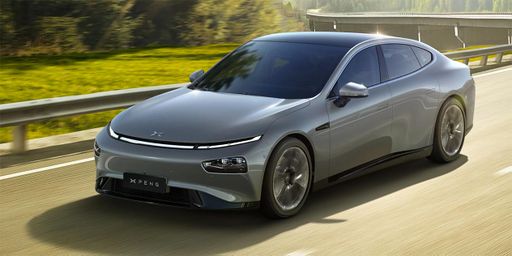
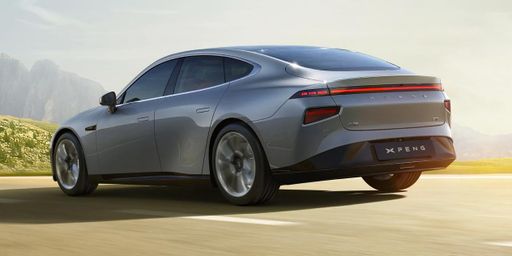
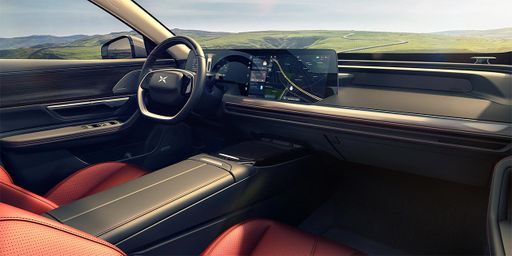
The XPeng P7 cuts a sleek, coupe-like silhouette that looks like a tech firm's idea of a stylish electric sedan, and its minimalist cabin packs smart screens and handy features that actually improve everyday life. Underneath the future-facing image it drives with surprising poise and comes loaded with advanced driver aids, making it a tempting choice for buyers who want electric charisma without the hype.
details
@ XPeng Motors
 @ XPeng Motors
 @ XPeng Motors
Maxus Euniq 6
XPeng P7
|
@ XPeng Motors
|
|
|
|
|
Costs and Consumption |
|
|---|---|
|
Price
45800 £
|
Price
42500 - 50200 £
|
|
Consumption L/100km
-
|
Consumption L/100km
-
|
|
Consumption kWh/100km
21.50 kWh
|
Consumption kWh/100km
16.8 - 19.2 kWh
|
|
Electric Range
354 km
|
Electric Range
505 - 576 km
|
|
Battery Capacity
-
|
Battery Capacity
82.70 kWh
|
|
co2
0 g/km
|
co2
0 g/km
|
|
Fuel tank capacity
-
|
Fuel tank capacity
-
|
Dimensions and Body |
|
|---|---|
|
Body Type
SUV
|
Body Type
Sedan
|
|
Seats
5
|
Seats
5
|
|
Doors
5
|
Doors
5
|
|
Curb weight
1960 kg
|
Curb weight
2020 - 2140 kg
|
|
Trunk capacity
754 L
|
Trunk capacity
440 L
|
|
Length
4735 mm
|
Length
4888 mm
|
|
Width
1860 mm
|
Width
1896 mm
|
|
Height
1736 mm
|
Height
1450 mm
|
|
Max trunk capacity
-
|
Max trunk capacity
-
|
|
Payload
325 kg
|
Payload
430 kg
|
Engine and Performance |
|
|---|---|
|
Engine Type
Electric
|
Engine Type
Electric
|
|
Transmission
Automatic
|
Transmission
Automatic
|
|
Transmission Detail
Reduction Gearbox
|
Transmission Detail
Reduction Gearbox
|
|
Drive Type
Front-Wheel Drive
|
Drive Type
Rear-Wheel Drive, All-Wheel Drive
|
|
Power HP
177 HP
|
Power HP
276 - 473 HP
|
|
Acceleration 0-100km/h
10.50 s
|
Acceleration 0-100km/h
4.1 - 6.7 s
|
|
Max Speed
160 km/h
|
Max Speed
200 km/h
|
|
Torque
310 Nm
|
Torque
440 - 757 Nm
|
|
Number of Cylinders
-
|
Number of Cylinders
-
|
|
Power kW
130 kW
|
Power kW
203 - 348 kW
|
|
Engine capacity
-
|
Engine capacity
-
|
General |
|
|---|---|
|
Model Year
2023
|
Model Year
2024
|
|
CO2 Efficiency Class
A
|
CO2 Efficiency Class
A
|
|
Brand
Maxus
|
Brand
XPeng
|
What drive types are available for the Maxus Euniq 6?
The Maxus Euniq 6 is offered with Front-Wheel Drive.
The prices and data displayed are estimates based on German list prices and may vary by country. This information is not legally binding.