VS

Mazda 6 Saloon vs Mercedes C Class Sedan comparison

Compare performance (258 HP vs 680 HP), boot space and price (38,500 £ vs 41,300 £ ) at a glance. Find out which car is the better choice for you – Mazda 6 Saloon or Mercedes C Class Sedan?

Mazda 6 Saloon vs Mercedes C Class Sedan: Key differences

Mazda 6 Saloon

  • only slightly cheaper
  • substantially more electric range

Mercedes C Class Sedan

  • significantly more power
  • considerably quicker 0–100 km/h
  • somewhat lighter
  • clearly more trunk space
6 Saloon

Mazda 6 Sedan vs. Mercedes C-Klasse Limousine: A Battle of Elegance and Performance

In the fiercely contested midsize luxury sedan segment, the Mazda 6 Sedan and the Mercedes C-Klasse Limousine are two titans that offer a blend of luxury, performance, and innovation. Both vehicles embody the spirit of their brands, bringing unique features to the table. Join us as we delve into the technical aspects and innovations that set these two models apart.
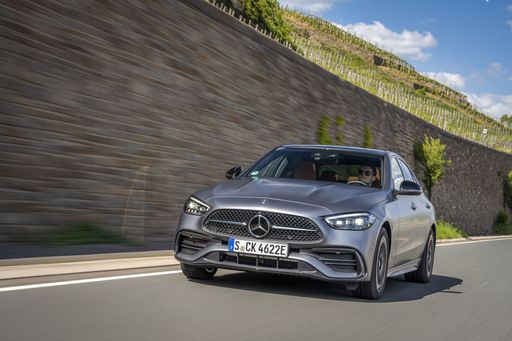
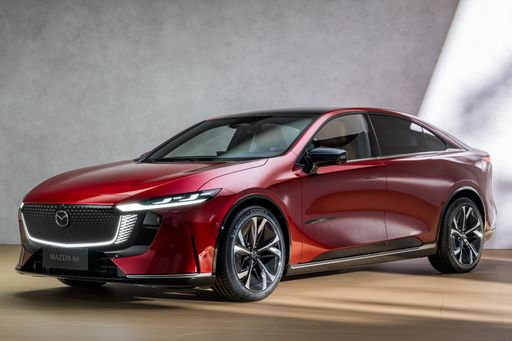
C Class Sedan

Under the Hood: Power and Performance

The Mazda 6 Sedan is equipped with a range of petrol engines, offering power outputs from 145 to 194 HP. With engine capacities of either 1998 cm3 or 2488 cm3, the Mazda 6 delivers a spirited driving experience. It takes advantage of a front-wheel-drive system and offers both manual and automatic transmissions, catering to driving purists and those enjoying a more laid-back ride.

On the other hand, the Mercedes C-Klasse Limousine offers a diverse range of mild hybrid and plug-in hybrid engines, delivering power from 183 to a remarkable 680 HP. This variety extends to different drive types, including rear-wheel drive and all-wheel drive, paired with an automatic gearbox to ensure a seamless driving experience.

Fuel Efficiency and Environmental Impact

Looking at fuel efficiency, the Mazda 6 Sedan achieves consumption figures ranging from 6.7 to 7.4 L/100km, with CO2 emissions between 152 and 167 g/km. These numbers indicate a balance between performance and efficiency, with room for improvement in reducing its environmental impact.

The C-Klasse Limousine benefits from its hybrid technology, with fuel consumption starting as low as 0.4 L/100km for the plug-in variants and CO2 emissions beginning at just 11 g/km. This makes the Mercedes an appealing choice for eco-conscious consumers, especially those interested in a modern hybrid driving experience.

Dimensions and Comfort: Space for All

The Mazda 6 Sedan boasts a length of 4870 mm, a width of 1840 mm, and a height of 1450 mm, offering ample interior space and a trunk capacity of 480 liters. It is designed to comfortably seat five passengers, making it a practical choice for families and long journeys.

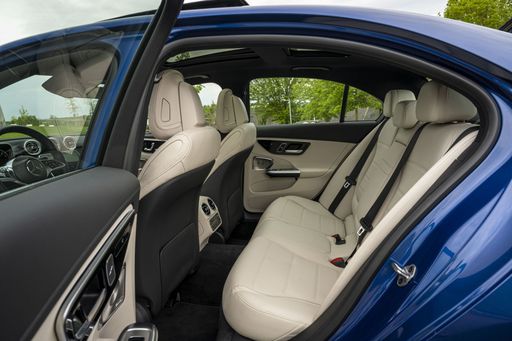
Meanwhile, the Mercedes C-Klasse Limousine's dimensions vary slightly depending on the model, reaching up to 4842 mm in length. Despite a smaller trunk capacity of up to 455 liters, the interior remains spacious and luxurious, befitting a vehicle with its premium branding.

Innovation and Technology

Mazda’s approach to innovation focuses on driving dynamics and safety features. The 6 Sedan is equipped with advanced technology such as adaptive cruise control, lane-keeping assist, and a comprehensive infotainment system to enhance the driving experience.

The Mercedes C-Klasse Limousine, with its emphasis on luxury and tech-savvy features, offers next-level innovations. From hybrid powertrains providing extended electric range to cutting-edge driver assistance systems, the C-Klasse showcases the pinnacle of automotive technology.

The Verdict: Choosing Between Elegance and Power

The decision between the Mazda 6 Sedan and Mercedes C-Klasse Limousine ultimately rests on individual preferences. The Mazda 6 appeals to those valuing cost-effectiveness, practicality, and precise handling. On the other hand, the Mercedes C-Klasse impresses with its hybrid efficiency, innovative technology, and luxurious appointments.

In conclusion, both vehicles surpass their segment expectations, yet cater to different tastes and priorities. Whichever you choose, you are backed by a legacy of automotive excellence from both Mazda and Mercedes-Benz.

Here’s where it gets real: The technical differences in detail

6 Saloon

Costs and Efficiency:

Looking at overall running costs, both models reveal some interesting differences in everyday economy.

Mazda 6 Saloon is only slightly cheaper – starting at 38,500 £ , while the Mercedes C Class Sedan costs 41,300 £ . That’s a price difference of around 2,840 £.

As for electric range, the Mazda 6 Saloon offers substantially more range – reaching up to 552 km, about 435 km more than the Mercedes C Class Sedan.

C Class Sedan

Engine and Performance:

Under the bonnet, it becomes clear which model is tuned for sportiness and which one takes the lead when you hit the accelerator.

When it comes to engine power, the Mercedes C Class Sedan offers significantly more power – delivering 680 HP compared to 258 HP. That’s roughly 422 HP more horsepower.

When accelerating from 0 to 100 km/h, the Mercedes C Class Sedan is considerably quicker – completing the sprint in 3.4 s, while the Mazda 6 Saloon takes 7.6 s. That’s about 4.2 s quicker.

Looking at top speed, the Mercedes C Class Sedan is visibly faster – reaching 250 km/h, while the Mazda 6 Saloon tops out at 175 km/h. The difference is around 75 km/h.

There’s also a difference in torque: the Mercedes C Class Sedan delivers significantly more torque with 1,020 Nm compared to 320 Nm. That’s about 700 Nm more.

Space and Everyday Use:

Cabin size, boot volume and payload all play a role in everyday practicality. Here, comfort and flexibility make the difference.

Both vehicles offer seating for 5 people.

In terms of curb weight, Mercedes C Class Sedan is somewhat lighter – 1,695 kg compared to 2,027 kg. The difference is around 332 kg.

Looking at boot space, the Mercedes C Class Sedan offers clearly more boot space – 455 L compared to 336 L. That’s a difference of about 119 L.

When it comes to payload, the Mercedes C Class Sedan carries visibly more – 570 kg compared to 360 kg. That’s a difference of about 210 kg.

Who wins the race in the data check?

The Mercedes C Class Sedan is far ahead overall in the objective data comparison.
This result only shows which model scores more points on paper – not which of the two cars feels right for you.

from £41,300
C Class Sedan

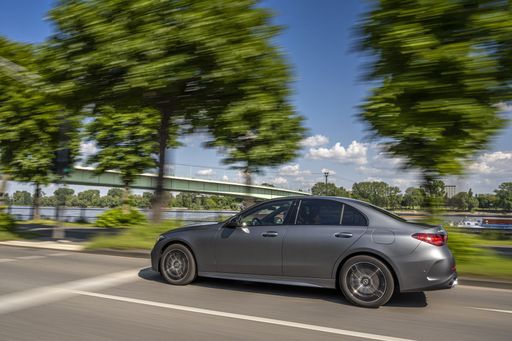
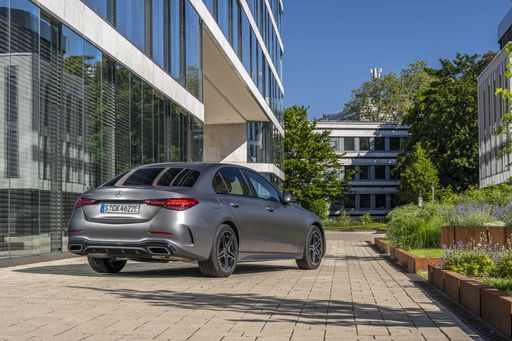
Mercedes C Class Sedan

  • Engine Type : Petrol MHEV, Plugin Hybrid, Diesel MHEV
  • Transmission : Automatic
  • Drive Type : Rear-Wheel Drive, All-Wheel Drive
  • Power HP : 183 - 680 HP
  • Consumption L/100km : 1.6 - 9 L/100km
  • Electric Range : 11 - 117 km
Mazda 6 Saloon
Mercedes C Class Sedan

Costs and Consumption

View detailed analysis

Engine and Performance

View detailed analysis

Dimensions and Body

View detailed analysis

Mazda 6 Saloon

The Mazda6 saloon feels like the sensible yet stylish choice for buyers who want a car that drives with poise and looks sharper than its badge suggests. It mixes engaging handling, a refined cabin and everyday practicality without shouting for attention — perfect for those who prefer understated class with a wink.

details

Mercedes C Class Sedan

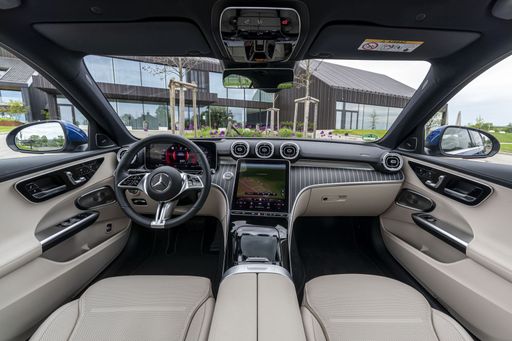
The Mercedes C‑Class is the compact executive that dresses like it owns the boulevard, with an interior that blends modern elegance and plush comfort to make everyday driving feel unexpectedly special. On the road it pairs poise with a hint of cheeky agility, rewarding drivers who want refinement without forfeiting a touch of fun — and yes, it still looks great in the driveway.

details
Mazda 6 Saloon
Mercedes C Class Sedan

Costs and Consumption

Price
38,500 - 41,600 £
Price
41,300 - 103,400 £
Consumption L/100km
-
Consumption L/100km
1.6 - 9 L/100km
Consumption kWh/100km
16.5 - 16.6 kWh/100km
Consumption kWh/100km
-
Electric Range
479 - 552 km
Electric Range
11 - 117 km
Battery Capacity
-
Battery Capacity
19.5 kWh
co2
0 g/km
co2
41 - 205 g/km
Fuel tank capacity
-
Fuel tank capacity
50 L

Dimensions and Body

Body Type
Sedan
Body Type
Sedan
Seats
5
Seats
5
Doors
5
Doors
4
Curb weight
2,027 - 2,028 kg
Curb weight
1,695 - 2,195 kg
Trunk capacity
336 L
Trunk capacity
315 - 455 L
Length
4,921 mm
Length
4,751 mm
Width
1,890 mm
Width
1,820 - 1,900 mm
Height
1,491 mm
Height
1,438 mm
Max trunk capacity
1,074 L
Max trunk capacity
-
Payload
359 - 360 kg
Payload
480 - 570 kg

Engine and Performance

Engine Type
Electric
Engine Type
Petrol MHEV, Plugin Hybrid, Diesel MHEV
Transmission
Automatic
Transmission
Automatic
Transmission Detail
Reduction Gearbox
Transmission Detail
Automatic Gearbox
Drive Type
Rear-Wheel Drive
Drive Type
Rear-Wheel Drive, All-Wheel Drive
Power HP
245 - 258 HP
Power HP
183 - 680 HP
Acceleration 0-100km/h
7.6 - 7.8 s
Acceleration 0-100km/h
3.4 - 8.6 s
Max Speed
175 km/h
Max Speed
235 - 250 km/h
Torque
320 Nm
Torque
250 - 1,020 Nm
Number of Cylinders
-
Number of Cylinders
4
Power kW
180 - 190 kW
Power kW
135 - 500 kW
Engine capacity
-
Engine capacity
1,496 - 1,999 cm3

General

Model Year
2,025
Model Year
2,024 - 2,025
CO2 Efficiency Class
A
CO2 Efficiency Class
E, B, D, G
Brand
Mazda
Brand
Mercedes-Benz
DriveDuel uses data analysis and artificial intelligence to evaluate vehicle data and create content. Content is regularly reviewed and improved. The displayed prices are estimates based on German list prices, adjusted to the respective country’s VAT. Country-specific registration taxes are not included. This information is not legally binding.