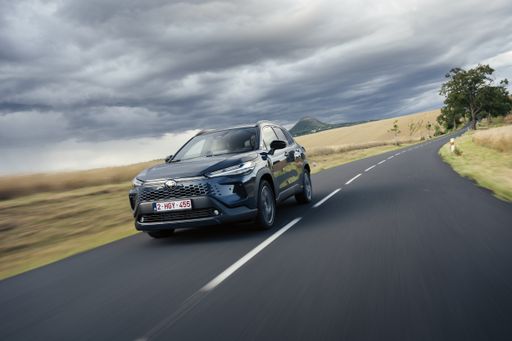
VS

Mercedes B Class vs Toyota Corolla Cross comparison

Compare performance (238 HP vs 180 HP), boot space and price (33,100 £ vs 31,700 £ ) at a glance. Find out which car is the better choice for you – Mercedes B Class or Toyota Corolla Cross?

Mercedes B Class vs Toyota Corolla Cross: Key differences

Mercedes B Class

4.9 (5 Reviews)
rate
  • markedly more power
  • somewhat quicker 0–100 km/h
  • very slightly more trunk space
details

Toyota Corolla Cross

4.8 (6 Reviews)
rate
  • barely cheaper
  • marginally more efficient
  • barely lighter
details

All details on performance, efficiency, range and trunk space can be found in the technical comparison below – including user reviews for both models.

By Achim Sedelmaier

B Class

The Ultimate Battle: Mercedes B-Klasse vs. Toyota Corolla Cross

When it comes to picking a versatile vehicle that fits the needs of modern drivers, the choice often zeroes in on two strong contenders: the Mercedes B-Klasse and the Toyota Corolla Cross. Both vehicles offer distinct features and innovations that cater to an array of preferences, making this a thrilling comparison. Read on as we dive into the technical aspects, driving dynamics, and innovative features of each model.
Corolla Cross

Design and Dimensions

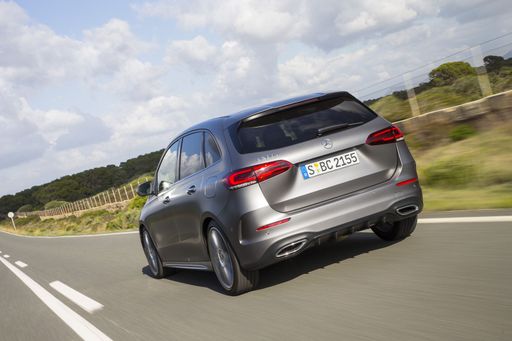
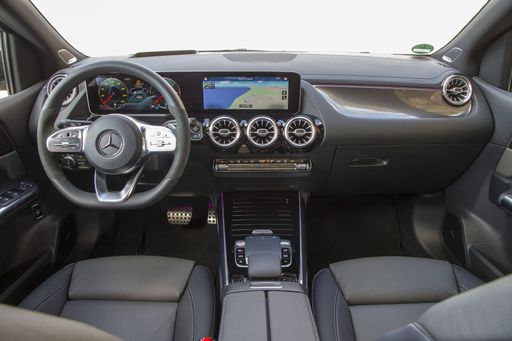
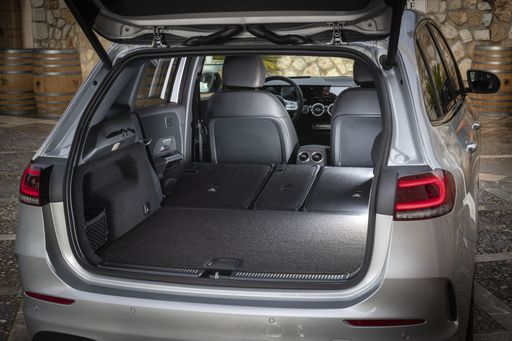
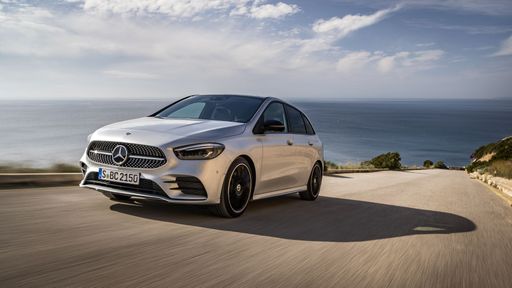
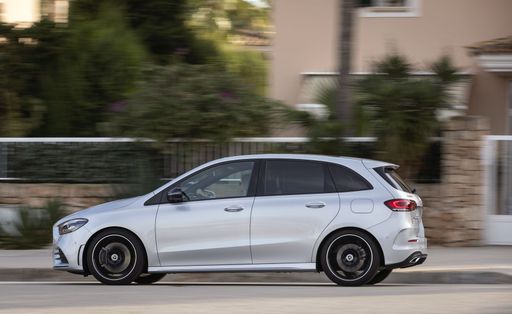
The Mercedes B-Klasse stands out as a compact MPV, offering a mixture of style and space efficiency. With dimensions of 4419 mm in length, 1796 mm in width, and 1562 mm in height, the B-Klasse is well-suited for city driving yet spacious enough for family trips. Inside, the capacity for five passengers is complemented by a trunk that ranges from 405 to 455 liters, depending on the version.

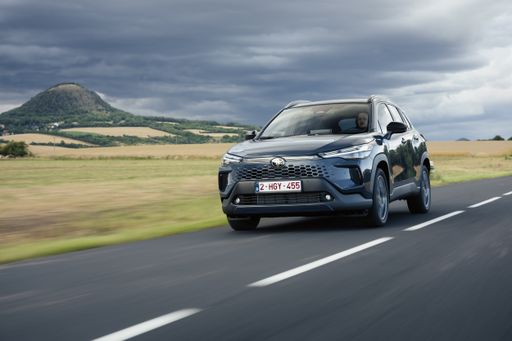
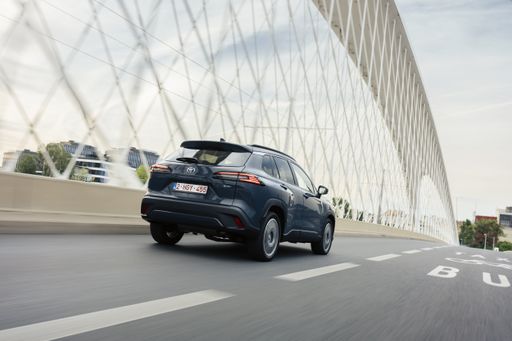
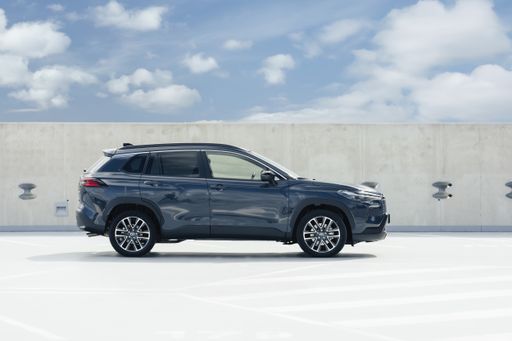
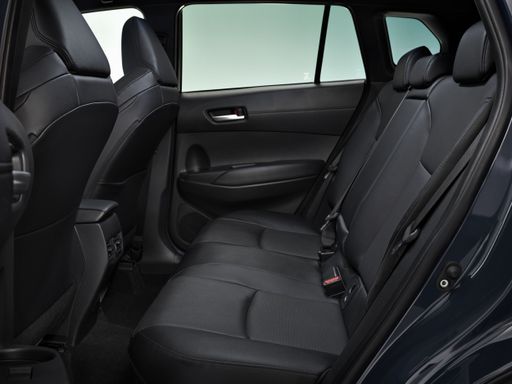
In contrast, the Toyota Corolla Cross is an SUV that adds a bit more height and width. Measuring 4460 mm long, 1825 mm wide, and 1620 mm tall, the Corolla Cross provides a robust stance. It too accommodates five passengers, with a cargo capacity of 414 to 425 liters, making it ideal for adventurous outings.

B Class

Performance and Powertrain

Under the hood, the Mercedes B-Klasse offers a variety of powertrains, including petrol mild hybrids, diesel, and plug-in hybrid options. Horsepower ranges from 116 to 238 HP, delivering a dynamic driving experience across the board. Its plug-in hybrid variant provides an electric range of 83 km, perfect for daily commutes. The power is harnessed via a dual-clutch automatic transmission, offering both front-wheel and all-wheel drive options for enhanced flexibility.

Meanwhile, the Toyota Corolla Cross offers a full hybrid system generating between 140 and 197 HP. Its Continuously Variable Transmission (CVT) supports both front and all-wheel drive systems, ensuring a smooth ride. The Corolla Cross focuses on fuel efficiency with consumption as low as 5.1 L/100 km, alongside commendable CO2 efficiency, placing it in classes C and D.

Corolla Cross

Driving Experience and Dynamics

The Mercedes B-Klasse promises a thrilling drive, with acceleration figures ranging from 6.5 to 10 seconds for 0-100 km/h, and a top speed extending up to 250 km/h in the highest specifications. Torque values from 200 to 450 Nm ensure a punchy and responsive performance that driving enthusiasts will appreciate.

The Toyota Corolla Cross, though not as ferocious in terms of speed, offers balanced dynamics with 0-100 km/h acceleration achieved in 7.6 to 9.4 seconds and a top speed of 180 km/h. This, coupled with a focus on comfort, makes the Corolla Cross ideal for both urban and suburban routes.

B Class

Efficiency and Ecology

For the eco-conscious, the Mercedes B-Klasse's plug-in hybrid option offers an incredibly low fuel consumption of just 0.8 L/100 km, with CO2 emissions pegged at an astonishing 18 g/km. Other variants fall within CO2 efficiency classes of B to F, depending on the specific engine choice.

The Toyota Corolla Cross impresses with its enhanced hybrid system, boasting CO2 emissions of 114 to 121 g/km and adhering strongly to eco-friendly driving protocols. It’s an excellent choice for those who value lower environmental impact without compromising on functionality.

Corolla Cross

Conclusion

Both the Mercedes B-Klasse and the Toyota Corolla Cross come packed with features tailored to different customer needs. The B-Klasse focuses on strong performance and cutting-edge hybrid technology, making it ideal for those who seek a dynamic and efficient ride. On the other hand, the Corolla Cross appeals with its remarkable efficiency, innovation in hybrid technology, and a slightly more rugged posture, suiting those who crave both city and suburban adventures.

Ultimately, the choice between these two vehicles will hinge on your personal preferences and driving priorities. Whichever you choose, rest assured that both the Mercedes B-Klasse and Toyota Corolla Cross will deliver a cutting-edge experience that aligns with modern automotive standards.

Here’s where it gets real: The technical differences in detail

B Class

Costs and Efficiency:

Looking at overall running costs, both models reveal some interesting differences in everyday economy.

Toyota Corolla Cross is barely cheaper – starting at 31,700 £ , while the Mercedes B Class costs 33,100 £ . That’s a price difference of around 1,424 £.

Fuel consumption also shows a difference: the Toyota Corolla Cross uses 4.9 L/100km and is marginally more efficient than the Mercedes B Class with 5.1 L/100km. The difference is about 0.2 L/100km.

Corolla Cross

Engine and Performance:

Power, torque and acceleration are the classic benchmarks for car enthusiasts – and here, some clear differences start to show.

When it comes to engine power, the Mercedes B Class offers markedly more power – delivering 238 HP compared to 180 HP. That’s roughly 58 HP more horsepower.

When accelerating from 0 to 100 km/h, the Mercedes B Class is somewhat quicker – completing the sprint in 6.5 s, while the Toyota Corolla Cross takes 7.6 s. That’s about 1.1 s quicker.

B Class

Space and Everyday Use:

Cabin size, boot volume and payload all play a role in everyday practicality. Here, comfort and flexibility make the difference.

Both vehicles offer seating for 5 people.

In terms of curb weight, Toyota Corolla Cross is barely lighter – 1,380 kg compared to 1,405 kg. The difference is around 25 kg.

Looking at boot space, the Mercedes B Class offers very slightly more boot space – 455 L compared to 425 L. That’s a difference of about 30 L.

When it comes to payload, the Toyota Corolla Cross carries barely more – 560 kg compared to 550 kg. That’s a difference of about 10 kg.

Who wins the race in the data check?

The Mercedes B Class stands out in the key areas in the objective data comparison.
This result only shows which model scores more points on paper – not which of the two cars feels right for you.

from £33,100
B Class

Mercedes B Class

  • Engine Type : Petrol MHEV, Diesel
  • Transmission : Automatic
  • Drive Type : Front-Wheel Drive, All-Wheel Drive
  • Power HP : 116 - 238 HP
  • Consumption L/100km : 5.1 - 6.9 L/100km
Mercedes B Class
Toyota Corolla Cross

Costs and Consumption

View detailed analysis

Engine and Performance

View detailed analysis

Dimensions and Body

View detailed analysis

Mercedes B Class

The Mercedes B-Class is a smart, grown-up compact people carrier that dresses everyday practicality in a near‑premium polish, perfect for buyers who want comfort and a classy badge without the theatrics. It won’t set your pulse racing on a back road, but it will make school runs, commutes and grocery hauls feel pleasantly civilized — a reliable, slightly posh companion for real life.

details

Toyota Corolla Cross

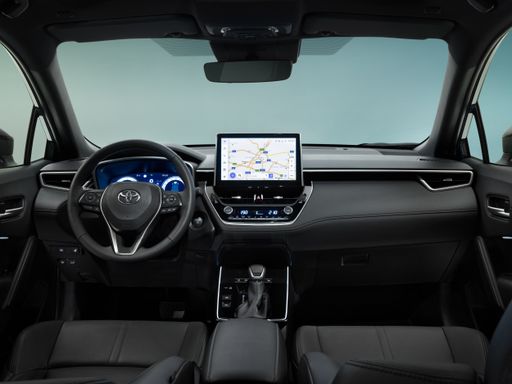
The Toyota Corolla Cross takes the familiar Corolla recipe, lifts it up and dresses it in SUV clothes — sensible, comfortable and blessedly unflashy. It won’t thrill the enthusiast, but its easy manners, clever packaging and dependable feel make it an ideal everyday car for shoppers who prefer sense over sass.

details
Mercedes B Class
Toyota Corolla Cross

Costs and Consumption

Price
33,100 - 52,500 £
Price
31,700 - 41,900 £
Consumption L/100km
5.1 - 6.9 L/100km
Consumption L/100km
4.9 - 5.3 L/100km
Consumption kWh/100km
-
Consumption kWh/100km
-
Electric Range
-
Electric Range
-
Battery Capacity
-
Battery Capacity
-
co2
133 - 156 g/km
co2
112 - 120 g/km
Fuel tank capacity
-
Fuel tank capacity
-

Dimensions and Body

Body Type
MPV
Body Type
SUV
Seats
5
Seats
5
Doors
-
Doors
-
Curb weight
1,405 - 1,565 kg
Curb weight
1,380 - 1,500 kg
Trunk capacity
445 - 455 L
Trunk capacity
414 - 425 L
Length
-
Length
-
Width
1,796 mm
Width
1,825 mm
Height
-
Height
-
Max trunk capacity
-
Max trunk capacity
-
Payload
515 - 550 kg
Payload
515 - 560 kg

Engine and Performance

Engine Type
Petrol MHEV, Diesel
Engine Type
Full Hybrid
Transmission
Automatic
Transmission
Automatic
Transmission Detail
Dual-Clutch Automatic
Transmission Detail
CVT
Drive Type
Front-Wheel Drive, All-Wheel Drive
Drive Type
Front-Wheel Drive, All-Wheel Drive
Power HP
116 - 238 HP
Power HP
140 - 180 HP
Acceleration 0-100km/h
6.5 - 10 s
Acceleration 0-100km/h
7.6 - 10 s
Max Speed
-
Max Speed
-
Torque
200 - 400 Nm
Torque
-
Number of Cylinders
4
Number of Cylinders
4
Power kW
85 - 175 kW
Power kW
103 - 132 kW
Engine capacity
1,332 - 1,991 cm3
Engine capacity
1,798 - 1,987 cm3

General

Model Year
2025
Model Year
2025
CO2 Efficiency Class
D, E, F
CO2 Efficiency Class
C, D
Brand
Mercedes-Benz
Brand
Toyota
DriveDuel uses data analysis and artificial intelligence to evaluate vehicle data and create content. Content is regularly reviewed and improved. The displayed prices are estimates based on German list prices, adjusted to the respective country’s VAT. Country-specific registration taxes are not included. This information is not legally binding.