@ Mercedes-Benz Group Media
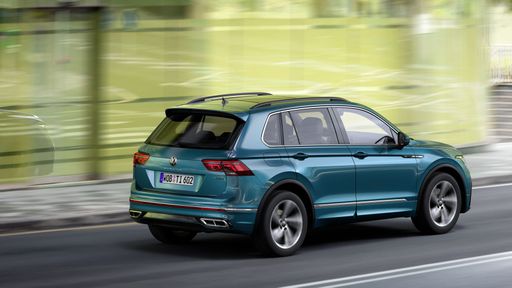
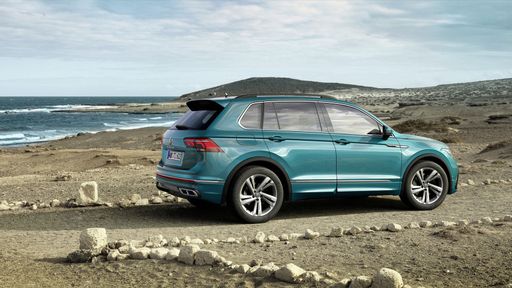
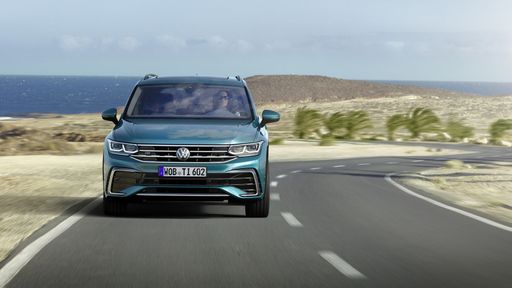
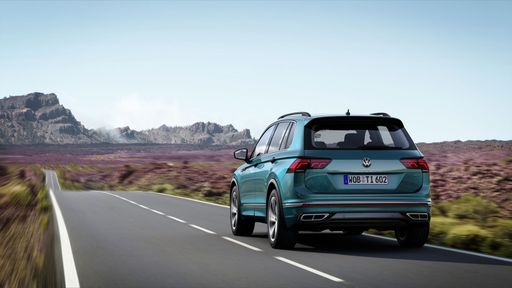
@ Volkswagen AG / VW Media
VS

Mercedes B Class vs VW Tiguan – Which one offers the better deal?

Compare performance, boot capacity, efficiency and price at a glance.
Find out which car is the better choice for you – Mercedes B Class or VW Tiguan?

B Class @ Mercedes-Benz Group Media

Mercedes B-Klasse vs. VW Tiguan: Which Delivers the Ultimate Driving Experience?

In the evolving landscape of the automotive world, the Mercedes B-Klasse and VW Tiguan both stand as popular choices for those who seek a blend of luxury and practicality. While the B-Klasse represents Mercedes's commitment to combining elegance with versatility, the Tiguan offers VW's promise of robust performance in an SUV body. Here, we dissect these models' technical aspects and innovations to understand which one might just be right for you.
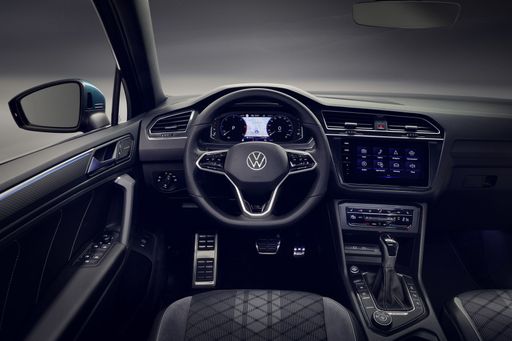
Tiguan @ Volkswagen AG / VW Media

Design and Body Type

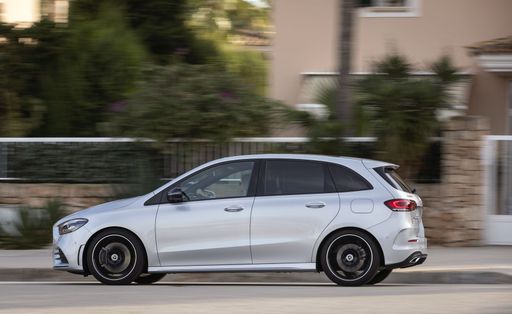
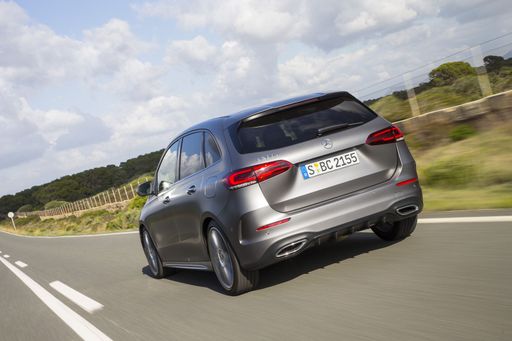
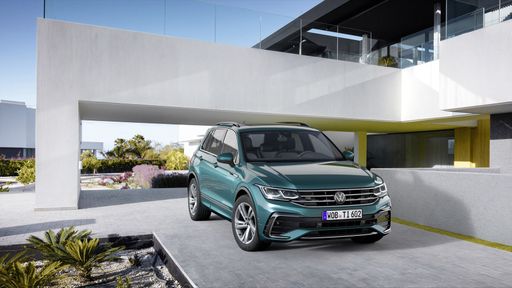
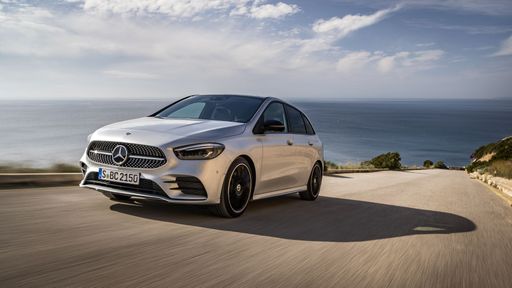
The Mercedes B-Klasse identifies as an MPV (multi-purpose vehicle) exuding sophistication in its compact design. It's tailored for drivers prioritizing spacious interiors within a sleek and manageable frame. Meanwhile, the VW Tiguan embraces its SUV identity with a more robust and commanding presence on the road, ideal for those seeking practicality without compromising on rugged aesthetics.

B Class @ Mercedes-Benz Group Media

Engine and Performance

The B-Klasse comes equipped with a variety of engine types, including petrol MHEV, diesel, and plug-in hybrid. It showcases power outputs ranging from 150 to 238 HP. Additionally, the efficiency in its consumption rates, especially with its hybrid variant, ensures excellent fuel economy, achieving as low as 0.8 L/100 km.

On the other hand, the VW Tiguan boasts a similar diversity in engine options, offering petrol MHEV, plug-in hybrid, diesel, and regular petrol engines. Powering between 130 to 272 HP, the Tiguan holds its ground firmly in performance. Remarkably, its hybrid edition shines with an even lower 0.4 L/100 km consumption rate, pushing the boundaries of eco-friendly driving with up to 113 km in electric range.

Tiguan @ Volkswagen AG / VW Media

Driving Dynamics and Efficiency

Both models offer dual-clutch automatic transmissions, ensuring smooth gear changes. The B-Klasse can be chosen with front-wheel or all-wheel drive, ensuring flexibility based on driver preference and road conditions. It also accelerates from 0-100 km/h between 6.5 and 10 seconds, depending on the variant.

Similarly, the Tiguan also presents options of front-wheel or all-wheel drive but leans slightly toward more aggressive acceleration times, clocking between 5.9 and 10.6 seconds. This subtle edge in dynamics may appeal to drivers who favor brisk performance.

B Class @ Mercedes-Benz Group Media

Interior and Comfort

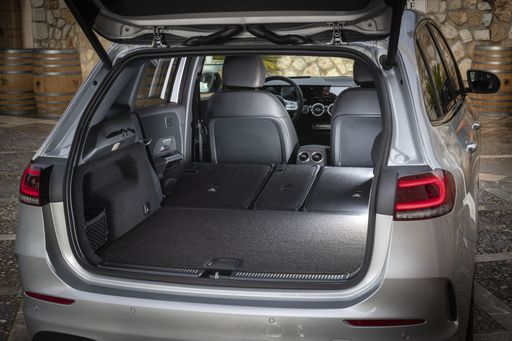
Both the B-Klasse and Tiguan offer seating for five, ensuring ample space for family and friends. However, the Tiguan's dimensions give it an edge in trunk capacity (up to 652 liters), making it a preferred choice for those who value storage. The B-Klasse, with a trunk capacity ranging from 405 to 455 liters, is still quite competitive, ensuring ample space for city commutes and weekend getaways alike.

Tiguan @ Volkswagen AG / VW Media

Technology and Innovation

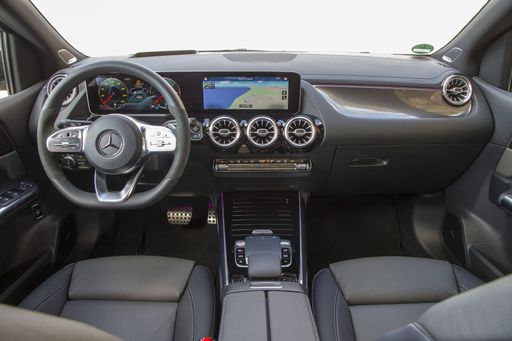
The Mercedes B-Klasse embodies Mercedes's technological prowess with features that optimize driving comfort and safety. Its design is focused on enhancing the driving experience with intuitive controls and advanced safety systems.

Contrastingly, VW’s Tiguan doesn’t lag far behind in offering a suite of tech-driven enhancements, from driver assistance technologies to infotainment systems designed for seamless connectivity and convenience.

B Class @ Mercedes-Benz Group Media

Final Verdict

While the Mercedes B-Klasse might appeal to those who prioritize a compact yet luxurious experience, with a focus on efficiency and style, the VW Tiguan offers versatility, ample space, and robust performance, making it an excellent choice for families and adventure enthusiasts alike. Ultimately, your choice will depend on which blend of these attributes aligns best with your lifestyle needs.

Here’s where it gets real: The technical differences in detail

Tiguan @ Volkswagen AG / VW Media

Costs and Efficiency:

Price and efficiency are key factors when choosing a car – and this is often where the real differences emerge.

VW Tiguan has a minimal advantage in terms of price – it starts at 32800 £, while the Mercedes B Class costs 33100 £. That’s a price difference of around 344 £.

Fuel consumption also shows a difference: VW Tiguan manages with 1.40 L and is therefore decisively more efficient than the Mercedes B Class with 2.50 L. The difference is about 1.10 L per 100 km.

As for range, the VW Tiguan performs noticeable better – achieving up to 126 km, about 43 km more than the Mercedes B Class.

B Class @ Mercedes-Benz Group Media

Engine and Performance:

Power, torque and acceleration say a lot about how a car feels on the road. This is where you see which model delivers more driving dynamics.

When it comes to engine power, the VW Tiguan has a slightly edge – offering 272 HP compared to 238 HP. That’s roughly 34 HP more horsepower.

In acceleration from 0 to 100 km/h, the VW Tiguan is somewhat quicker – completing the sprint in 5.90 s, while the Mercedes B Class takes 6.50 s. That’s about 0.60 s faster.

In terms of top speed, the Mercedes B Class performs barely noticeable better – reaching 250 km/h, while the VW Tiguan tops out at 242 km/h. The difference is around 8 km/h.

There’s also a difference in torque: Mercedes B Class pulls to a small extent stronger with 450 Nm compared to 400 Nm. That’s about 50 Nm difference.

Tiguan @ Volkswagen AG / VW Media

Space and Everyday Use:

Cabin size, boot volume and payload all play a role in everyday practicality. Here, comfort and flexibility make the difference.

Both vehicles offer seating for 5 people.

In curb weight, Mercedes B Class is a bit lighter – 1405 kg compared to 1599 kg. The difference is around 194 kg.

In terms of boot space, the VW Tiguan offers noticeable more room – 652 L compared to 455 L. That’s a difference of about 197 L.

In maximum load capacity, the VW Tiguan performs hardly perceptible better – up to 1650 L, which is about 110 L more than the Mercedes B Class.

When it comes to payload, Mercedes B Class minimal takes the win – 550 kg compared to 533 kg. That’s a difference of about 17 kg.

Who wins the race?

The VW Tiguan proves to be leaves the rival little chance and therefore becomes our DriveDuel Champion!
VW Tiguan is the better all-rounder in this comparison.

from about £32,800
Tiguan @ Volkswagen AG / VW Media

VW Tiguan

  • Engine Type : Petrol, Petrol MHEV, Diesel, Plugin Hybrid
  • Transmission : Automatic
  • Drive Type : All-Wheel Drive, Front-Wheel Drive
  • Power HP : 130 - 272 HP
  • Consumption L/100km : 1.4 - 8.4 L
  • Electric Range : 118 - 126 km

Mercedes B Class

5 (2)
rate

The Mercedes B-Class is a smart, grown-up compact people carrier that dresses everyday practicality in a near‑premium polish, perfect for buyers who want comfort and a classy badge without the theatrics. It won’t set your pulse racing on a back road, but it will make school runs, commutes and grocery hauls feel pleasantly civilized — a reliable, slightly posh companion for real life.

details

VW Tiguan

3.3 (3)
rate

The VW Tiguan blends sensible family practicality with a dash of German polish, delivering a calm, reassuring ride and a cabin that never feels like an afterthought. For buyers who want an SUV that’s easy to live with yet still nicely dressed, the Tiguan is the grown‑up choice that keeps a cheeky wink in reserve.

details
Mercedes B Class
VW Tiguan
B Class @ Mercedes-Benz Group Media
Tiguan @ Volkswagen AG / VW Media

Costs and Consumption

Price
33100 - 52500 £
Price
32800 - 51900 £
Consumption L/100km
2.5 - 6.9 L
Consumption L/100km
1.4 - 8.4 L
Consumption kWh/100km
-
Consumption kWh/100km
-
Electric Range
83 km
Electric Range
118 - 126 km
Battery Capacity
12.90 kWh
Battery Capacity
19.70 kWh
co2
56 - 156 g/km
co2
32 - 190 g/km
Fuel tank capacity
35 - 51 L
Fuel tank capacity
45 - 58 L

Dimensions and Body

Body Type
MPV
Body Type
SUV
Seats
5
Seats
5
Doors
5
Doors
5
Curb weight
1405 - 1745 kg
Curb weight
1599 - 1890 kg
Trunk capacity
405 - 455 L
Trunk capacity
490 - 652 L
Length
4419 mm
Length
4539 mm
Width
1796 mm
Width
1842 - 1859 mm
Height
1562 mm
Height
1656 - 1658 mm
Max trunk capacity
1440 - 1540 L
Max trunk capacity
1486 - 1650 L
Payload
505 - 550 kg
Payload
460 - 533 kg

Engine and Performance

Engine Type
Plugin Hybrid, Petrol MHEV, Diesel
Engine Type
Petrol, Petrol MHEV, Diesel, Plugin Hybrid
Transmission
Automatic
Transmission
Automatic
Transmission Detail
Dual-Clutch Automatic
Transmission Detail
Dual-Clutch Automatic
Drive Type
Front-Wheel Drive, All-Wheel Drive
Drive Type
All-Wheel Drive, Front-Wheel Drive
Power HP
116 - 238 HP
Power HP
130 - 272 HP
Acceleration 0-100km/h
6.5 - 10 s
Acceleration 0-100km/h
5.9 - 10.6 s
Max Speed
200 - 250 km/h
Max Speed
198 - 242 km/h
Torque
200 - 450 Nm
Torque
220 - 400 Nm
Number of Cylinders
4
Number of Cylinders
4
Power kW
85 - 175 kW
Power kW
96 - 200 kW
Engine capacity
1332 - 1991 cm3
Engine capacity
1498 - 1984 cm3

General

Model Year
2024 - 2025
Model Year
2024 - 2025
CO2 Efficiency Class
B, D, E, F
CO2 Efficiency Class
G, D, E, F, B
Brand
Mercedes-Benz
Brand
VW
What drivetrain options does the Mercedes B Class have?

The Mercedes B Class is offered with Front-Wheel Drive or All-Wheel Drive.

The prices and data displayed are estimates based on German list prices and may vary by country. This information is not legally binding.